
Exploring the Cosmos: A Comprehensive Scientific Guide to the Eight Planets of Our Solar System
Main Facts: Defining Our Celestial Neighborhood
Humanity has long gazed upward into the starry night sky, transfixed by the mysteries of the cosmos. From the iconic science-fiction battles of Star Wars featuring galactic troopers navigating distant star systems, to modern-day astronomical discoveries, outer space continues to capture our deepest curiosities. However, before humanity can dream of conquering interstellar space, understanding our immediate cosmic backyard—the Solar System—is essential.
At the center of our solar system lies the Sun, a massive yellow dwarf star whose immense gravitational pull binds together an array of celestial bodies. Among these are eight distinct planets. Scientifically defined, a planet is a celestial body that orbits a star, possesses sufficient mass for its self-gravity to overcome rigid body forces so that it assumes a hydrostatic equilibrium (nearly round) shape, and has cleared its neighborhood around its orbit.

Our solar system houses eight recognized planets, categorized traditionally into two distinct groups: the inner terrestrial (rocky) planets—Merkurius (Mercury), Venus, Bumi (Earth), and Mars—and the outer gas and ice giants—Jupiter, Saturnus (Saturn), Uranus, and Neptunus (Neptune). Each planet features unique atmospheric compositions, geological formations, temperatures, and orbital mechanics, creating a diverse planetary system unlike any other yet discovered in detail.
Chronology: The Evolution of Our Understanding of the Solar System
The journey of human comprehension regarding our solar system spans millennia, marked by paradigm shifts in philosophy, physics, and observational technology.

Ancient Observations and Geocentrism
In antiquity, ancient astronomers tracked the movement of wandering stars (from the Greek planētai, meaning "wanderers"). For centuries, classical models, notably formalized by Ptolemy in the 2nd century AD, championed a geocentric model where Earth sat motionless at the center of the universe, with the Sun, Moon, and planets revolving around it.
The Copernican Revolution
The modern cosmological framework began to take shape in the 16th century when Polish astronomer Nicolaus Copernicus proposed the heliocentric model. Copernicus posited that the Sun, not Earth, was the stationary center of the planetary system. This revolutionary concept simplified planetary motion mathematically, though circular orbits still presented observational discrepancies.

Kepler’s Laws and Newtonian Physics
In the early 17th century, Johannes Kepler utilized precise observational data collected by Tycho Brahe to formulate his three laws of planetary motion, proving that planets travel in elliptical orbits rather than perfect circles. Shortly after, Sir Isaac Newton introduced the Law of Universal Gravitation, providing the physical foundation explaining why planets remain bound to the Sun through gravitational attraction.
The Modern Era of Space Exploration
The 20th and 21st centuries transformed planetary science from an observational practice into an empirical, data-driven discipline. Through landmark missions such as NASA’s Voyager program, the Hubble Space Telescope, and modern rovers scouring the Martian surface, humanity has transitioned from mere speculation to direct exploration of the worlds sharing our cosmic neighborhood.

Supporting Data: The Anatomy of the Eight Planets
To fully comprehend the scale and diversity of our solar system, examining the specific data and characteristics of each planet is crucial.
1. Mercury (Merkurius)
- Position: 1st planet from the Sun.
- Size: The smallest planet in the solar system.
- Characteristics: Because of its proximity to the Sun, Mercury experiences extreme temperature fluctuations, ranging from scorching daytime highs to freezing nighttime lows. It lacks a substantial atmosphere to trap heat, resulting in a heavily cratered surface resembling Earth’s Moon.
2. Venus (Venus)
- Position: 2nd planet from the Sun.
- Characteristics: Often visible during morning and evening twilight, Venus is historically known as the "Morning Star" or "Evening Star." It features a runaway greenhouse effect driven by a thick, toxic carbon dioxide atmosphere wrapped in sulfuric acid clouds, making it the hottest planet in the solar system despite not being the closest to the Sun.
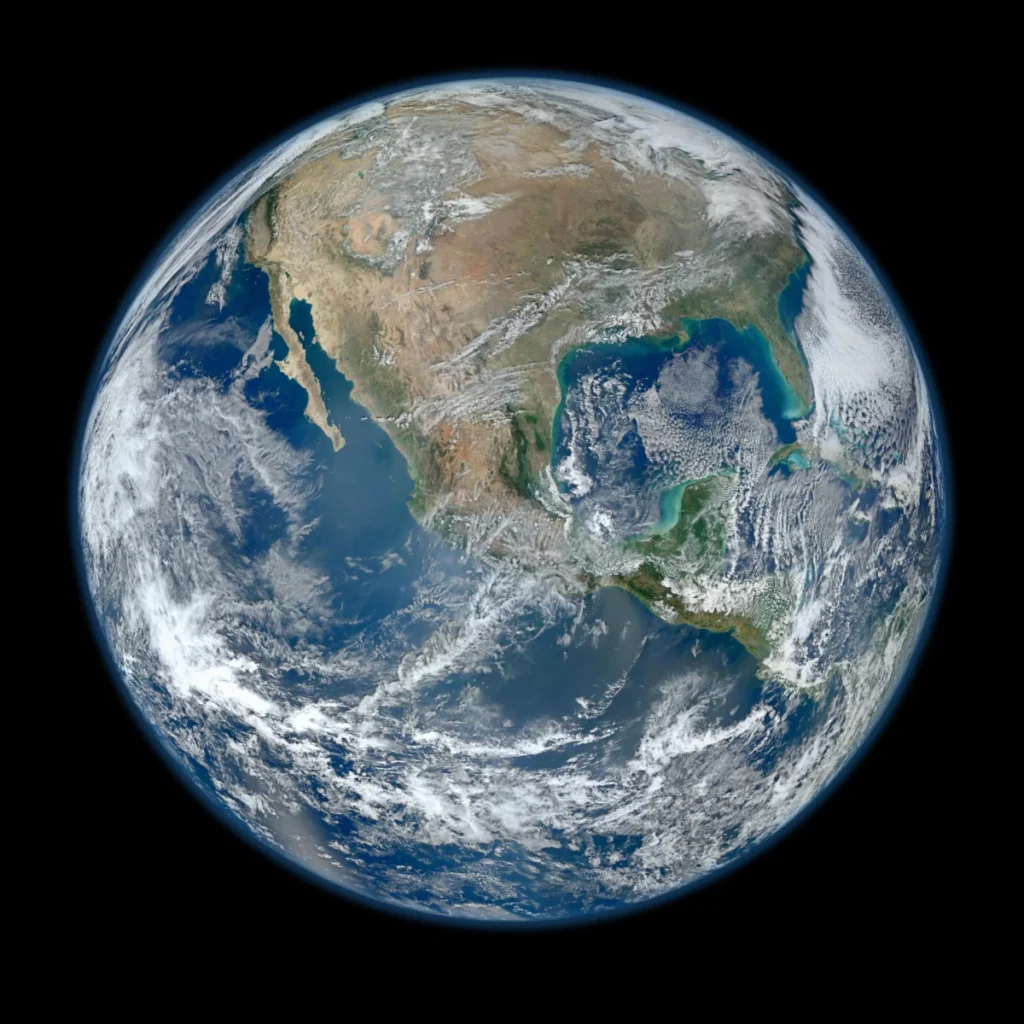
3. Earth (Bumi)
- Position: 3rd planet from the Sun.
- Characteristics: Our home planet is uniquely suited for life. Composed of approximately 70% liquid water and 30% landmass, Earth maintains an optimal distance from the Sun and possesses a protective nitrogen-oxygen atmosphere that regulates temperature and shields the surface from harmful solar radiation.
4. Mars (Mars)
- Position: 4th planet from the Sun.
- Characteristics: Known as the "Red Planet" due to iron oxide (rust) prevalent on its surface, Mars features a thin, cold atmosphere primarily composed of carbon dioxide. Geological evidence suggests that ancient Mars once harbored liquid water, making it a primary target in the search for past microbial life.
5. Jupiter (Jupiter)
- Position: 5th planet from the Sun.
- Characteristics: The undisputed giant of the solar system, Jupiter is a gas giant with a mass greater than all other planets combined. It is famous for its iconic Great Red Spot—a massive, centuries-old storm—and a faint ring system accompanied by dozens of moons, including the volcanically active Io and the ocean-bearing Europa.
6. Saturn (Saturnus)
- Position: 6th planet from the Sun.
- Characteristics: Saturn is globally renowned for its spectacular, complex ring system composed predominantly of water ice particles and rocky debris. As a gas giant with a density lower than water, Saturn is remarkably buoyant.
7. Uranus (Uranus)
- Position: 7th planet from the Sun.
- Characteristics: Classified as an ice giant, Uranus holds the record for the coldest planetary atmosphere in the solar system, with temperatures plunging to approximately -224°C. Its most distinctive feature is its extreme axial tilt; Uranus rotates almost entirely on its side, likely the result of a catastrophic collision in its distant past.
8. Neptune (Neptunus)
- Position: 8th planet from the Sun.
- Characteristics: Located at the outer frontier of our planetary system—roughly 4.45 billion kilometers from the Sun—Neptune is a dynamic ice giant characterized by striking azure coloration, supersonic winds, and a complex system of faint rings.
(A helpful mnemonic device frequently used by students to memorize the planetary order from the Sun outward—Mercury, Venus, Earth, Mars, Jupiter, Saturn, Uranus, Neptune—translates conceptually to remembering the sequence through structured learning frameworks).

Official Responses: Scientific Consensus and Educational Initiatives
Space agencies worldwide, including NASA, the European Space Agency (ESA), and national educational bodies, continually emphasize the importance of astronomy in modern school curricula. Recognizing the rapid evolution of space sciences, international scientific panels stress that public engagement with astronomy fosters critical thinking, technological innovation, and environmental stewardship of our own planet.
Educational frameworks increasingly incorporate interactive digital learning tools, artificial intelligence-assisted tutoring systems, and immersive visual simulations. These technologies bridge the gap between complex astrophysical data and student comprehension, ensuring that foundational scientific concepts—such as orbital mechanics, gravitational forces, and planetary atmospheres—are accessible to learners globally.

Implications: Why Studying Our Solar System Matters for Earth’s Future
The study of planetary science extends far beyond academic curiosity; it holds profound practical implications for the future of humanity.
- Understanding Climate Dynamics: By studying the runaway greenhouse effect on Venus or the thin, desiccated atmosphere of Mars, climatologists gain critical comparative models to better understand Earth’s delicate atmospheric balance and climate change mechanisms.
- Resource Management and Astrobiology: Exploring celestial bodies aids in the search for extraterrestrial resources and habitability. Understanding how planets form and evolve provides vital context regarding the uniqueness of Earth and the potential for life elsewhere in the universe.
- Technological Spillover: The engineering demands of space exploration—ranging from advanced robotics and telecommunications to materials science and solar energy capture—directly drive technological advancements that improve daily life on Earth.
Ultimately, looking outward into our solar system serves as a powerful reminder of Earth’s fragility and uniqueness. By deciphering the characteristics of our neighboring planets, humanity secures a deeper appreciation of our cosmic home and the responsibilities required to safeguard its future.