Ecological Crisis at Waduk Manggar: Invasive Weeds Threaten Balikpapan’s Vital Water Reservoir and Tourism Hub
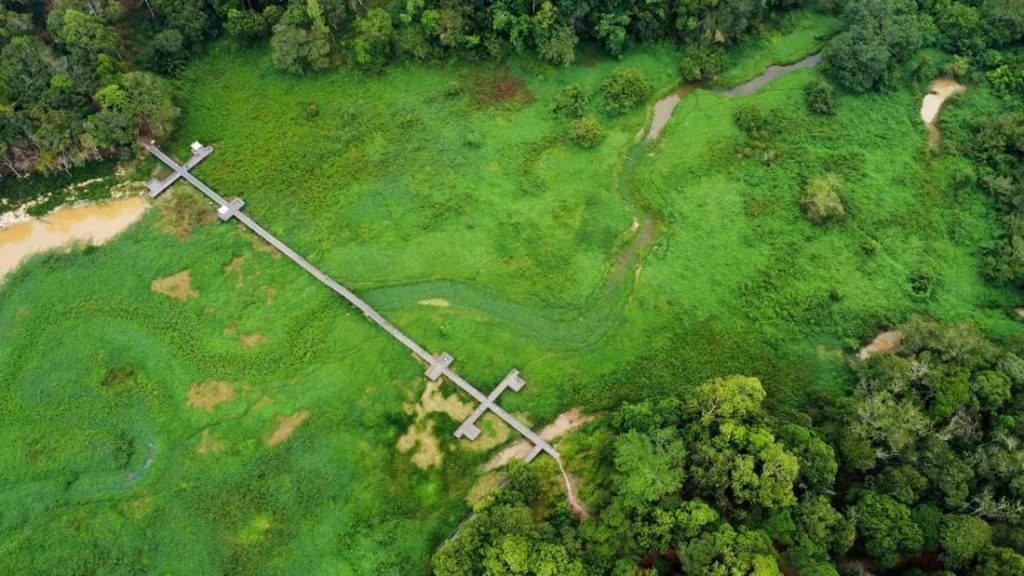
Balikpapan, East Kalimantan — Waduk Manggar (Manggar Reservoir), a sprawling 500-hectare artificial water body situated in the scenic Meranti Tourism Area of Balikpapan, East Kalimantan, is currently facing a severe ecological emergency. Recent aerial observations captured on Wednesday, September 16, 2026, reveal a deeply concerning landscape: expansive blankets of invasive weeds and wild aquatic plants have aggressively overtaken the vast surface of the reservoir.
This unchecked botanical invasion has crippled local economic activities, particularly stalling the thriving boat-tour industry that local communities heavily rely upon. Beyond the immediate disruption to tourism, experts and local stakeholders warn that the proliferation of weeds is accelerating severe reservoir sedimentation, triggering ecological degradation, and critically threatening raw water supplies and agricultural irrigation channels across the surrounding regions.
Main Facts
The ongoing crisis at Waduk Manggar is characterized by several critical developments affecting both the environment and the local socio-economic framework:
- Geographical and Environmental Scope: The infestation covers significant portions of the 500-hectare reservoir, turning crucial open water zones into dense, impassable green carpets of invasive aquatic vegetation.
- Tourism Paralysis: The popular Meranti Tourism Area, known for its scenic boat tours and recreational water activities, has come to a near-standstill. Tour boats find it physically impossible to navigate through the thick matting of weeds.
- Economic Devastation: Local micro-entrepreneurs, boat operators, and vendors who depend directly on daily tourist footfall have suffered immediate and catastrophic drops in revenue.
- Infrastructure and Resource Threats: The massive accumulation of plant biomass contributes directly to rapid siltation and reservoir shallowing, which in turn diminishes the overall water storage capacity needed for local municipal supplies and agricultural irrigation networks.
Chronology of the Infestation
While the dramatic visual confirmation of the overgrowth was documented in mid-September 2026, environmentalists note that the crisis is the culmination of months of unmitigated biological accumulation.

Early Indicators and Unchecked Growth (Early to Mid-2026)
During the transitional weather patterns earlier in the year, localized nutrient runoff—driven by surrounding land development and agricultural activities—began seeping into the catchment areas of Waduk Manggar. Elevated levels of nitrogen and phosphorus in the water created a eutrophic environment, acting as an optimal breeding ground for aggressive aquatic weeds. Without early intervention or regular harvesting protocols, localized patches of floating vegetation rapidly multiplied, propelled by favorable tropical temperatures and sunlight exposure.
Peak Infestation and Operational Gridlock (September 2026)
By September 2026, the situation reached a tipping point. Aerial documentation from the area on Wednesday, September 16, 2026, exposed the true gravity of the situation: vast expanses of the 500-hectare reservoir were completely choked by thick layers of flora. Local tour operators realized that standard wooden and motorized tourist boats could no longer traverse the waters without getting entangled, effectively shutting down the waterway for recreational purposes.
Supporting Data and Environmental Context
Understanding the gravity of the situation at Waduk Manggar requires looking closely at the ecological metrics and the multifaceted functions the reservoir serves for the municipality of Balikpapan and the broader East Kalimantan province.
| Parameter | Metric / Description |
|---|---|
| Total Surface Area | Approximately 500 hectares |
| Primary Location | Meranti Tourism Area, Balikpapan, East Kalimantan |
| Primary Functions | Raw water supply (drinking water), agricultural irrigation, local tourism, flood mitigation |
| Main Threat | Rapid proliferation of invasive aquatic weeds leading to eutrophication and shallowing |
| Socio-Economic Impact | Loss of livelihoods for local boat operators, reduced municipal water security, agricultural stress |
The Mechanics of Eutrophication
Aquatic weeds thrive in environments burdened by nutrient enrichment. When organic matter, fertilizers, and urban runoff wash into a closed water system like Waduk Manggar, it triggers eutrophication. The plants grow exponentially, consuming dissolved oxygen in the water. As these massive quantities of weeds eventually die and decompose, they sink to the bottom, compounding the problem of shallowing and creating a biological feedback loop that makes the water increasingly murky, shallow, and difficult to manage.
Implications of the Crisis
The unfolding situation at Waduk Manggar extends far beyond an aesthetic or recreational setback. It presents cascading consequences for ecology, local economics, and regional infrastructure.
1. Socio-Economic Disruption for Local Communities
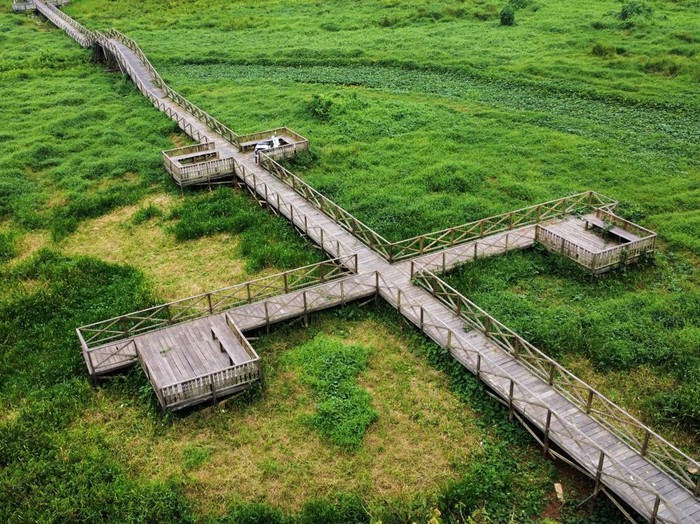
For the residents living around the Meranti Tourism Area, Waduk Manggar is the heartbeat of their local economy. Families operating boat rentals, floating eateries, souvenir stalls, and guided tours rely entirely on visitors coming to experience the reservoir’s natural beauty. With perches and pathways blocked by dense greenery, tourist arrivals have plummeted. For daily-wage earners and small-scale entrepreneurs, the sudden loss of income threatens household financial stability, plunging families into economic distress as long as the waterways remain blocked.
2. Threat to Municipal Water Security and Irrigation
Balikpapan is a rapidly growing urban center, especially with its proximity to the country’s developing new capital region, Nusantara. Water security is paramount. Waduk Manggar serves as a critical raw water reservoir meant to sustain municipal water treatment facilities. When invasive weeds take over:
- Water Volume Reduction: The physical mass of the weeds displaces water, while the accelerated evaporation rates from dense plant canopies reduce net water yields.
- Sedimentation and Shallowing: Decomposing plant matter adds to the silt layer at the bottom of the reservoir, drastically cutting down its total water storage capacity over time.
- Agricultural Strain: Downstream farming communities that rely on the reservoir’s discharge channels for irrigation face impending water shortages, risking crop failures and regional food security issues.
3. Long-Term Ecological Degradation
Left unchecked, a severe weed takeover alters the aquatic food web. Native fish species and aquatic fauna struggle to survive in oxygen-depleted zones beneath the weed canopy. The transformation of a clean, open water reservoir into a swampy, choked wetland alters the local microclimate and biodiversity index of the Meranti conservation zone.
Looking Ahead: The Need for Urgent Remediation
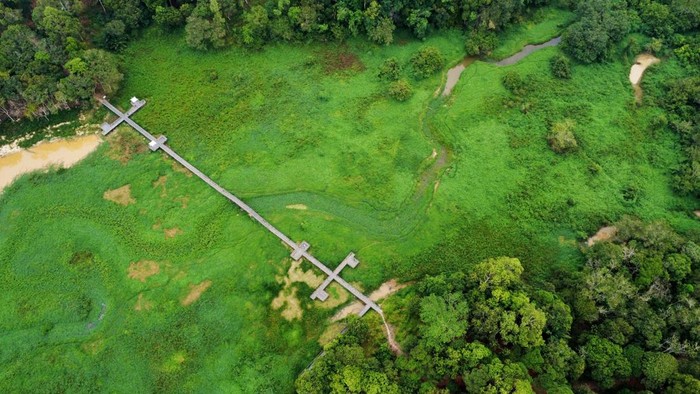
As the visual evidence from Waduk Manggar circulates, pressure is mounting on regional environmental agencies, local government bodies, and water management authorities to implement comprehensive remediation strategies.
Experts emphasize that temporary manual clearing using small sickles or basic nets will not suffice given the 500-hectare scale of the reservoir. Long-term solutions demand a multi-pronged approach:
- Mechanical Harvesting: Deploying heavy-duty aquatic weed harvesters to systematically clear the surface biomass.
- Dredging Operations: Removing accumulated silt and decayed organic matter from the lakebed to restore its original depth and storage volume.
- Catchment Area Management: Implementing stricter zoning laws and buffer strips around the reservoir to filter out agricultural and urban runoff, thereby cutting off the nutrient supply feeding the weeds at its source.
The situation at Waduk Manggar serves as a stark reminder of the delicate balance required in managing multi-use natural resources. Protecting this vital ecosystem is no longer just a matter of preserving a tourist attraction, but an urgent necessity for safeguarding Balikpapan’s water future.