Beyond the Consumer: Indonesia’s Strategic Ambition to Architect the Global AI Future
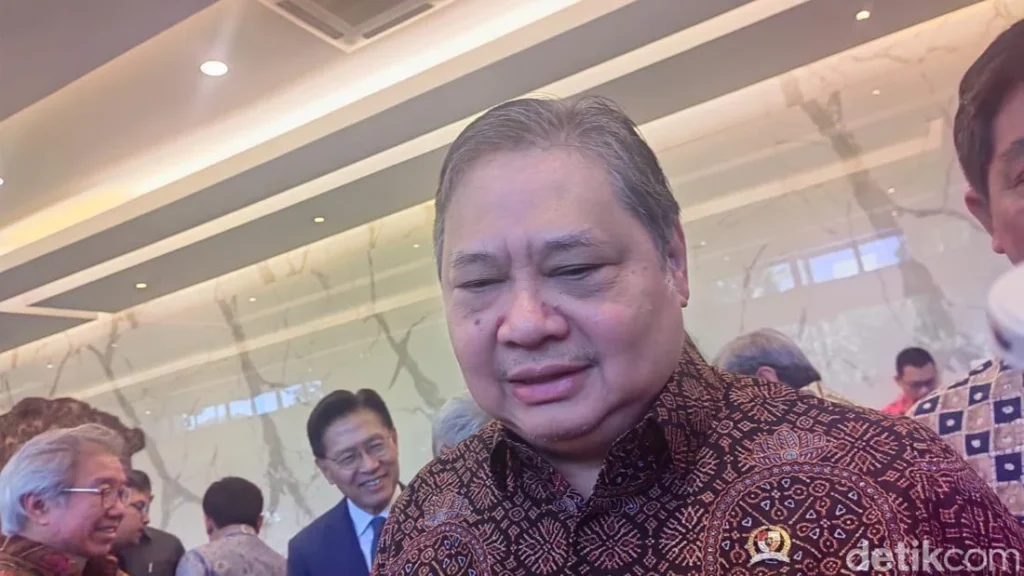
JAKARTA – Indonesia is firmly signaling its transition from a passive consumer of global technology to a proactive architect of the digital age. In a definitive statement at the High-Level Meeting of the World Artificial Intelligence Cooperation Organization (WAICO) Founding States, Coordinating Minister for Economic Affairs Airlangga Hartarto articulated a vision where Indonesia plays a central, steering role in the global governance and development of Artificial Intelligence (AI).
As the global economy undergoes a tectonic shift driven by generative AI, machine learning, and automated infrastructure, Indonesia is positioning itself not merely as a market for international tech giants, but as a sovereign powerhouse capable of shaping the digital landscape of the future.
1. Main Facts: A Paradigm Shift in Digital Strategy
The core of Indonesia’s current policy pivot is the rejection of the "consumer-only" trap. For years, emerging economies have been relegated to the role of end-users for technology developed in the Global North. Under the current administration, Indonesia is moving toward a model of "technological sovereignty."
Minister Airlangga emphasized that AI is no longer a peripheral utility; it is the backbone of future economic structures, global competitiveness, and national security. "Indonesia does not want to be a mere spectator or consumer in this AI race," Airlangga stated on Sunday (July 19, 2026). "We are the active architects of the digital era’s front line."
This commitment is underscored by three primary pillars:
- Active Governance: Participating in international forums like WAICO to define ethical and operational standards for AI.
- Infrastructure Investment: Expanding the physical capacity required to support AI computation, including a massive network of data centers.
- Economic Integration: Linking AI development directly to the nation’s 5.4% projected economic growth for 2026.
2. Chronology of the Digital Ambition
The current push for AI leadership is not a sudden policy shift but the culmination of a deliberate, multi-year strategy initiated at the start of President Prabowo’s administration.
- Early 2026 (The Strategic Pivot): Recognizing that semiconductors and AI are the "dual pillars" of modern industrialization, the Indonesian government solidified a landmark collaboration with ARM Holdings. This partnership was designed to secure access to essential IP and hardware architectures required to build indigenous AI systems.
- Mid-2026 (The WAICO Integration): Indonesia formally joined the High-Level Meeting of the WAICO Founding States. This served as the primary platform for Minister Airlangga to advocate for an inclusive global AI framework that balances innovation with national interests.
- Ongoing (Roadmap Implementation): Throughout 2026, the government has been actively drafting and refining the National AI Roadmap. This document serves as the regulatory and strategic compass for the nation’s technological trajectory, focusing on talent development, R&D, and responsible AI governance.
3. Supporting Data: The Pillars of Potential
Indonesia’s ambition is supported by cold, hard data. With a massive population and a rapidly maturing digital economy, the country offers a unique value proposition for AI developers and investors.
The Human Capital and Market Scale
As of 2026, Indonesia has reached a critical digital threshold. With approximately 235 million internet users, the nation enjoys a penetration rate of 81%. This vast, digitally native population provides the "data fuel" required to train robust AI models that are culturally and linguistically relevant to Southeast Asia.
Physical Infrastructure
The "brain" of AI is the data center. Indonesia has rapidly expanded its footprint to ensure that data residency and processing can happen locally. Current data indicates:
- Total Facilities: 182 operational data centers nationwide.
- Geographic Concentration: Jakarta remains the primary hub with 94 facilities, followed by the strategic digital corridor of Batam, which hosts 16 facilities.
- Future Outlook: The exponential growth in cloud computing and AI services is expected to trigger a secondary wave of investment in hyper-scale data centers, as the demand for processing power continues to outpace supply.
Economic Projections
The government’s confidence is rooted in a stable macroeconomic environment. Despite global volatility, Indonesia is maintaining a growth projection of 5.4% for 2026. This stability is crucial for attracting the long-term capital required for AI infrastructure, which is capital-intensive and requires multi-year horizons.
4. Official Responses and Policy Framework
The National AI Roadmap, currently the centerpiece of Indonesia’s technological policy, is designed to be a comprehensive ecosystem builder. According to Minister Airlangga, the roadmap addresses four critical bottlenecks:
- Investment in Infrastructure: Providing incentives for the construction of sustainable, green-energy-powered data centers.
- Talent Development: Partnering with academia and the private sector to bridge the gap in data science and AI engineering skills.
- Research and Innovation: Creating "sandbox" environments where startups can test AI applications without the burden of restrictive legacy regulations.
- Responsible Governance: Establishing ethical guidelines that ensure AI deployment respects data privacy and promotes social equity.
Minister Airlangga noted that Indonesia’s role in WAICO is intended to ensure that the voices of emerging economies are heard when global standards for AI are set. By maximizing its market strength and strategic resources, Indonesia aims to be a leader in "AI for the people," ensuring that the economic dividends of the technology are shared equitably.
5. Implications: What This Means for the Future
The implications of Indonesia’s aggressive AI stance are profound, both domestically and internationally.
For the Domestic Economy
By moving up the value chain, Indonesia is attempting to avoid the "middle-income trap." Instead of just exporting raw commodities or providing low-cost digital labor, the country is looking to export AI-driven solutions. This transition could lead to higher-paying jobs in the tech sector, a surge in local software development, and a significant increase in the digital contribution to the national GDP.
For Global Geopolitics
In a world often divided between American and Chinese technological spheres, Indonesia is positioning itself as a neutral, third-pole player. By emphasizing international cooperation through WAICO, Jakarta is signaling that it wants to be a bridge—a place where AI innovation is open, transparent, and globally collaborative rather than exclusionary.
The Risk of the "Digital Divide"
However, the path forward is not without challenges. The success of this vision depends heavily on the execution of the National AI Roadmap. Issues such as energy requirements for data centers, cybersecurity threats, and the potential displacement of traditional jobs are significant hurdles. The government’s ability to manage these risks while fostering a vibrant innovation culture will determine whether Indonesia truly becomes an AI hub or merely a well-connected outpost for foreign tech giants.
Final Thoughts
As Minister Airlangga concluded at the WAICO meeting: "Together, let us translate this technological commitment into tangible results that drive mutual prosperity and increase economic growth for all countries."
Indonesia’s pivot toward becoming an AI architect is a bold realization that in the 21st century, the most valuable resource is not oil or nickel—it is the capacity to process, interpret, and leverage information through artificial intelligence. By betting on its own infrastructure and human potential, Indonesia is ensuring that it will be a defining force in the next chapter of human history.
Strategic Summary:
- Vision: Transition from consumer to architect.
- Action: Joining WAICO, launching the National AI Roadmap, and partnering with ARM Holdings.
- Foundation: 235 million internet users, 182 data centers, and a 5.4% GDP growth projection.
- Goal: Technological sovereignty and sustainable digital growth for the region.