Indonesia Secures 4.8 Million Tons of Rice Supply, Ensuring National Food Security Through Year-End
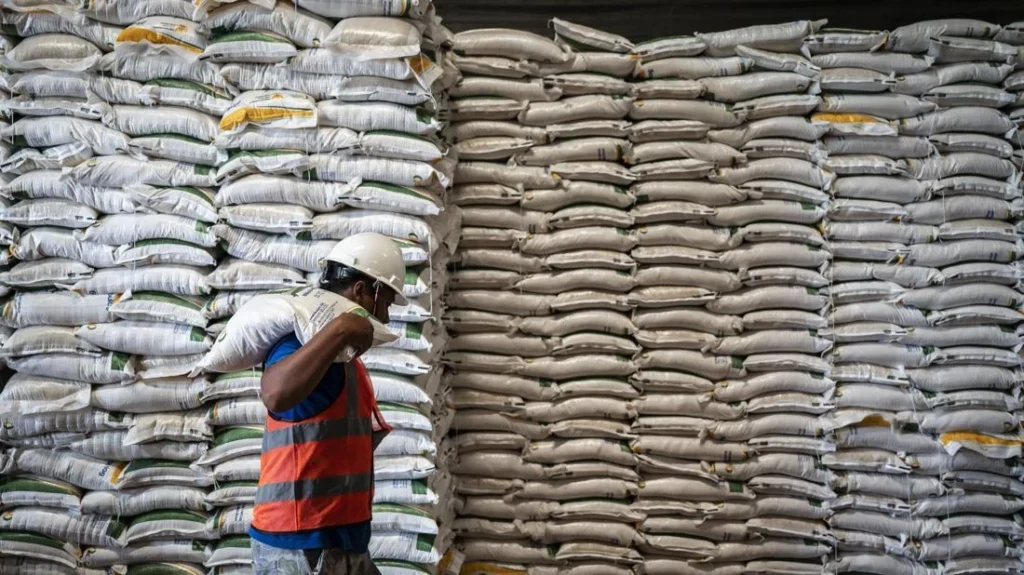
JAKARTA — Indonesia’s national food logistics landscape has reached a historic milestone in inventory management, with total managed rice stocks surging to an unprecedented 4.8 million tons. This robust volume guarantees sufficient supply to meet domestic consumption demands, stabilize market prices, and sustain expansive social welfare initiatives through the remainder of the year.
Ahmad Rizal Ramdhani, President Director of state logistics enterprise Perum Bulog, delivered the reassuring update, emphasizing that the current stockpile reflects meticulous supply chain management and proactive procurement strategies.
"Alhamdulillah, our national rice stock today remains abundant, standing at approximately 4.8 million tons," Ahmad stated, drawing from official data released on Saturday, September 26, 2026.
This immense volume not only safeguards the nation against potential weather-related agricultural disruptions and global supply chain volatility, but it also provides a resilient buffer for government intervention programs designed to protect vulnerable socioeconomic groups amid fluctuating macroeconomic conditions.
Main Facts
The current state of Indonesia’s national rice reserves is defined by several critical metrics and logistical realities:
- Total National Inventory: Perum Bulog manages a massive stockpile totaling 4.8 million tons of rice, distributed across state and private storage facilities.
- Storage Capacity Constraints: The volume is so expansive that Bulog’s proprietary warehouses have exceeded maximum capacity, necessitating the strategic rental of private storage facilities nationwide.
- Social Assistance Target: The stockpiles are earmarked to fuel the government’s upcoming targeted food assistance initiative, set to benefit 33.2 million designated households from October through December 2026.
- Market Stabilization: An additional 1 million tons of rice will be injected into the market via the Stabilisasi Pasokan dan Harga Pangan (SPHP) program.
- Year-End Projections: Even after fully executing these massive distribution programs, Bulog projects a healthy minimum ending inventory of approximately 3.2 million tons by the close of 2026.
Chronology of Inventory Accumulation and Strategic Storage
The accumulation of 4.8 million tons of rice did not happen overnight; it is the culmination of months of calculated domestic harvesting acquisitions, strategic international trade negotiations, and intensive logistical coordination by Perum Bulog.
Early 2026: Anticipating Global and Domestic Shifts
At the onset of the year, government agricultural boards anticipated potential climatic challenges, including irregular rainfall patterns and lingering effects of global weather phenomena that historically threaten Southeast Asian crop yields. Under the direction of the Ministry of Agriculture and Perum Bulog, procurement teams intensified their domestic purchases during the primary and secondary harvest seasons. Farmers across key agricultural heartlands in Java, Sulawesi, and Sumatra were met with competitive government purchase prices, incentivizing them to channel their yields directly into state reserves rather than speculative private markets.
Mid-2026: The Storage Capacity Crisis
By mid-year, successful domestic procurement efforts, combined with strategic international import quotas designed to preemptively secure the nation’s food security, created an unexpected logistical challenge: a severe shortage of state-owned storage space. Bulog’s traditional warehouse network, built decades ago to handle moderate reserve levels, quickly reached saturation point.
Faced with millions of tons of high-quality grain arriving from both domestic mills and international shipping ports, Bulog’s executive board made the decisive move to lease private storage infrastructure.
"The warehouses belonging to Bulog itself can no longer accommodate all of Bulog’s rice," Ahmad explained. "Therefore, Bulog must rent private warehouses to place these rice supplies."
This agile logistical pivot ensured that incoming grain was stored under optimal temperature and humidity conditions, preventing spoilage and maintaining pristine nutritional and commercial quality.
Late September 2026: Reaching the 4.8 Million Ton Milestone
By late September 2026, the consolidation of state reserves, private storage integration, and ongoing supply verification culminated in the official tally of 4.8 million tons. This figure represents one of the healthiest reserve positions Indonesia has maintained in recent memory, providing unprecedented leverage for national food administrators.
Supporting Data: Distribution Dynamics and Year-End Projections
To understand the true significance of the 4.8 million-ton inventory, it is vital to analyze how this volume will be systematically deployed across the Indonesian archipelago over the final quarter of 2026. Food security is not merely a matter of accumulation; velocity and precision in distribution are equally paramount.
The 33.2 Million Beneficiary Food Assistance Program
The primary allocation channel for the current stockpile is the government’s nationwide food assistance program, scheduled for execution between October and December 2026. This comprehensive social safety net targets 33.2 million low-income families and vulnerable beneficiaries across Indonesia’s 38 provinces.
Each eligible household will receive regular monthly distributions of subsidized or free rice, directly mitigating the impact of inflation on household purchasing power. By securing the supply chain months in advance, Bulog ensures that distribution logistics—often complicated by Indonesia’s vast archipelagic geography—can proceed without bottlenecks or supply shortages.
The 1 Million Ton SPHP Expansion
Simultaneously, Perum Bulog is scaling up its flagship price stabilization initiative: the Food Supply and Price Stabilization (SPHP) program. An additional 1 million tons of SPHP rice will be released into traditional markets, modern retail chains, and neighborhood cooperatives.
The SPHP program acts as a direct market intervention tool. When commercial rice prices exhibit inflationary tendencies due to seasonal gaps between planting and harvesting seasons, the influx of government-backed SPHP rice caps retail prices, ensuring that staple food items remain affordable for the general public.
Sustainable Year-End Buffer Projections
Critics of large state stockpiles often raise concerns regarding fiscal efficiency and the risk of grain spoilage over extended storage periods. However, Bulog’s operational models account for rapid inventory turnover.
Ahmad projected that even after executing the massive fourth-quarter distributions—comprising the 33.2 million-beneficiary food assistance package and the 1 million-ton SPHP rollout—the national reserve will maintain a robust ending inventory.
"Hopefully, with the future distribution of additional food assistance to 33.2 million beneficiaries, plus the additional 1 million tons of SPHP, Bulog’s stock is expected to be a minimum of around 3.2 million tons at the end of the year," Ahmad affirmed.
A year-end buffer of 3.2 million tons serves as the gold standard for Indonesian food security, providing an unshakeable foundation as the nation transitions into the planting cycle of the following year.
Official Responses and Institutional Coordination
The announcement of the 4.8-million-ton stockpile has drawn widespread commentary and validation from various stakeholders within Indonesia’s agricultural, economic, and legislative sectors.
Perum Bulog’s Operational Reassurance
Perum Bulog has underscored its commitment to transparency and operational readiness. By proactively leasing private storage and coordinating closely with regional logistics hubs, the state enterprise has sought to quell public anxiety regarding potential holiday price spikes during the upcoming year-end festive season. Regional Bulog branches have been instructed to conduct continuous quality audits of both proprietary and rented warehouses to guarantee zero tolerance for grain deterioration.
Ministry of Agriculture Alignment
The Ministry of Agriculture has praised Bulog’s logistical agility, noting that the synergy between farm-gate procurement and state reserve management has successfully protected farmers from post-harvest price crashes while simultaneously shielding urban consumers from inflationary pressures. Agricultural economists point out that maintaining high reserve levels during periods of global climatic unpredictability is a vital macro-prudential policy.
Consumer and Market Reactions
Indonesian consumer associations have welcomed the news, noting that market stability is the single most critical factor for working-class families navigating economic adjustments. The dual approach of direct targeted assistance (for the bottom tier of society) and broad market stabilization via SPHP (for the general populace) ensures a comprehensive safety net that leaves no demographic unshielded.
Implications for National Stability and the Broader Economy
The maintenance of a 4.8 million-ton rice reserve carries profound implications that extend far beyond agricultural logistics, touching upon macroeconomic stability, social welfare, and political confidence.
1. Dampening Inflationary Pressures
Rice is the single most heavily weighted commodity in the calculation of Indonesia’s Consumer Price Index (CPI). When rice prices remain stable, core inflation is anchored. By injecting 1 million tons of SPHP rice into the open market, Bulog effectively creates a ceiling price, preventing speculative hoarding and price gouging by intermediate traders. This containment of food inflation directly protects the purchasing power of millions of Indonesian workers.
2. Strengthening the Social Safety Net
In developing economies, social unrest and economic vulnerability are frequently tied to food insecurity. By guaranteeing that 33.2 million families will receive reliable food assistance through the final quarter of 2026, the government reinforces the social contract. This targeted intervention ensures that poverty alleviation targets are met, malnutrition risks are minimized, and vulnerable households can redirect scarce disposable income toward other essential needs, such as healthcare and education.
3. Mitigating Climate and Geopolitical Vulnerabilities
Global agriculture faces unprecedented challenges from shifting weather patterns, El Niño phenomena, and geopolitical tensions affecting international fertilizer and shipping markets. By maintaining a domestic stockpile that exceeds immediate consumption needs—and preserving a projected 3.2 million-ton buffer heading into the new year—Indonesia insulates itself from external shocks. While other nations may be forced into frantic, high-priced international spot-market bidding wars during regional crop failures, Indonesia’s robust reserves afford it strategic self-reliance.
4. Logistical Innovation and Infrastructure Lessons
The necessity of renting private storage facilities has inadvertently highlighted structural shifts in Indonesia’s food logistics ecosystem. While Perum Bulog’s reliance on third-party warehouses demonstrates admirable operational flexibility, it also serves as a strategic wake-up call for future infrastructure investments. Policymakers are increasingly recognizing the need to modernize and expand state-owned, climate-controlled warehousing facilities equipped with modern inventory-tracking technology to streamline future reserve management.
Conclusion
As Indonesia navigates the final months of 2026, the nation’s food security framework stands as a model of proactive planning and robust institutional execution. With 4.8 million tons of rice securely stored across state and private facilities, Perum Bulog has successfully insulated the country against both domestic distribution bottlenecks and external market shocks.
The seamless integration of the 33.2-million-beneficiary food assistance initiative and the aggressive 1-million-ton SPHP market stabilization rollout demonstrates a comprehensive strategy that balances direct welfare support with broad economic stabilization. Even after fulfilling these massive commitments, a projected year-end reserve of 3.2 million tons ensures that Indonesia will step into the future with confidence, resilience, and an unwavering commitment to the welfare of its citizens.