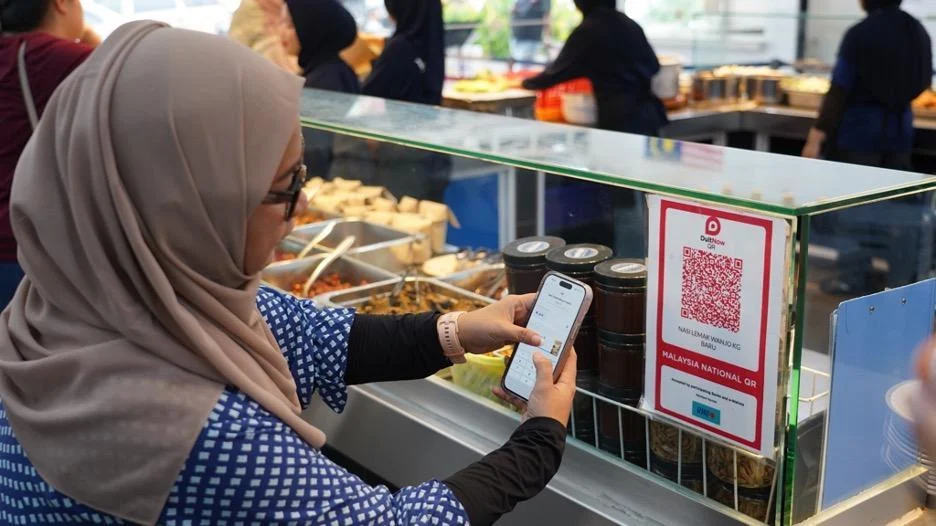
JAKARTA — Stepping into the bustling culinary hotspot of Nasi Lemak Wanjo in Kampung Baru, Kuala Lumpur, Indonesian tourist Gustidha faced a familiar travel dilemma: she had not yet visited a money changer to exchange her rupiah for Malaysian ringgit. However, instead of worrying about physical currency or high administrative conversion fees, she simply pulled out her smartphone, opened her domestic mobile banking application, and pointed her camera at a DuitNow QR code affixed to the cash register.
Within seconds, her screen flashed a successful transaction confirmation. No physical ringgit changed hands, no time was wasted at currency exchange kiosks, and her domestic bank account was debited automatically in real-time.
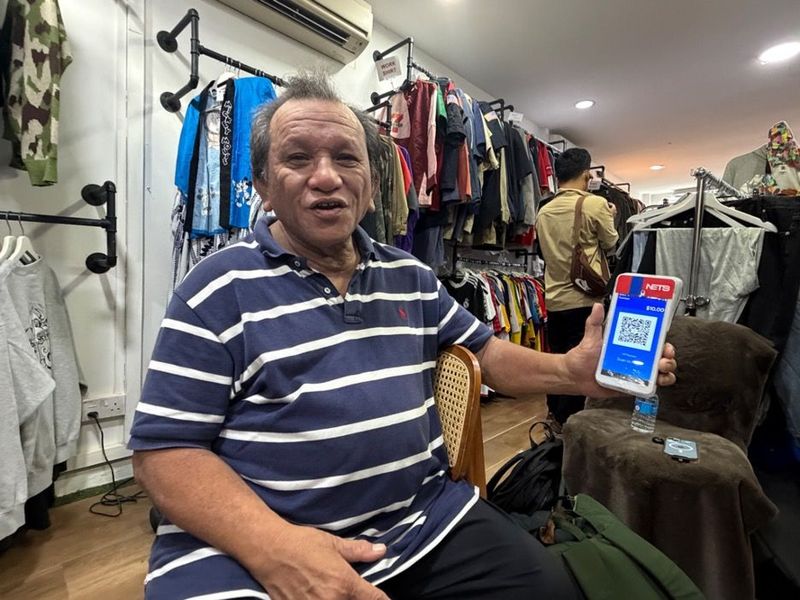
Scenes like this are becoming increasingly commonplace across Southeast Asia. From culinary destinations in Malaysia to trendy vintage shops in Singapore, Indonesian travelers are shedding their reliance on cash and traditional money changers. This seamless financial metamorphosis is driven by QRIS Cross-Border (Quick Response Code Indonesian Standard), an ambitious financial technology initiative spearheaded by Bank Indonesia (BI). By bridging domestic payment gateways with international networks like DuitNow in Malaysia and NETS in Singapore, BI is redefining regional mobility, boosting micro, small, and medium enterprises (MSMEs), and paving the way for a deeply integrated digital economy across ASEAN and beyond.
Main Facts: The Mechanics of Seamless Cross-Border Payments
The QRIS Cross-Border system operates on a remarkably straightforward yet technologically sophisticated premise. When an Indonesian tourist scans a foreign partner’s QR code—such as DuitNow in Malaysia or NETS in Singapore—the underlying banking infrastructure instantly recognizes the transaction currency and executes an automated, real-time currency conversion based on competitive bank exchange rates.
For travelers, the benefits are immediate and manifold:
Elimination of Physical Cash: Tourists no longer need to carry bulky wallets filled with foreign banknotes or stress over finding open money changers upon arrival.
Transparent Real-Time Conversion: Users can view the exact transaction amount in foreign currency (e.g., Malaysian Ringgit or Singapore Dollars) directly on their mobile banking apps, with the equivalent rupiah automatically calculated and deducted without hidden fees.
Frictionless Merchant Integration: Merchants abroad experience shorter checkout lines, enhanced transaction transparency, and a significantly expanded customer base drawn from the massive demographic of Indonesian travelers.
Chronology: The Evolution of QRIS from Domestic Standard to Regional Powerhouse
The journey of QRIS from a localized Indonesian payment standard to an international cross-border tool represents a strategic masterclass in regional monetary cooperation.
August 2019: Bank Indonesia officially launches QRIS, unifying various digital QR code payment methods from different Payment System Operators (PJP) into a single, interoperable standard to boost financial inclusion nationwide.
2022–2023: Recognizing the potential for regional integration, BI initiates cross-border linkage frameworks. Collaborating with central banks in Thailand, Malaysia, and Singapore, BI lays the technical groundwork to connect QRIS with regional systems like PromptPay (Thailand), DuitNow (Malaysia), and NETS (Singapore).
2023 Onward: Cross-border QRIS officially goes live, allowing Indonesian travelers to make purchases in neighboring ASEAN economies using their local mobile banking apps, while regional tourists traveling to Indonesia can similarly use their home country’s QR systems via QRIS-enabled merchants.
January–July 2026: Adoption accelerates exponentially. Bank Indonesia records nearly 10 million cross-border QRIS transactions across its primary regional jurisdictions (Singapore, Malaysia, and Thailand), highlighting massive consumer and merchant uptake.
Mid-2026: BI introduces targeted acceleration strategies, such as the GARUDA (Gerakan Akseptasi QRIS Antarnegara untuk Digitalisasi dan Akselerasi) movement in Singapore, to aggressively scale adoption through airline partnerships, localized telecommunication notifications, and stakeholder education.
Supporting Data: Surging Volumes and Economic Impact
The statistical reality of QRIS Cross-Border illustrates a profound shift in consumer behavior and merchant profitability across destination countries.
According to Widi Agustin S., Head of the Bank Indonesia Representative Office in Singapore, the growth trajectory has been staggering:
"If we look at the data from January to July 2026, for all countries managed by our Singapore office—namely Singapore, Malaysia, and Thailand—the total has almost reached 10 million transactions. For Singapore specifically, transactions up to July have reached 407,000."
Despite Singapore’s impressive tech adoption, Widi notes that Malaysia currently leads in total transaction volume and nominal value due to higher bilateral tourism mobility.
Merchant Perspectives: Malaysia and Singapore
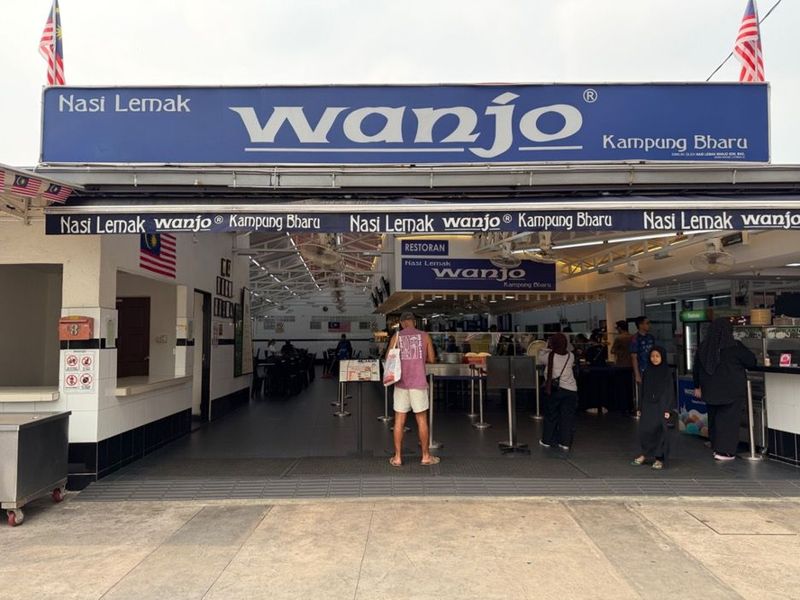
On the ground, business owners are reaping the rewards. Mohammad Nazri, owner of the legendary Nasi Lemak Wanjo in Kampung Baru, Kuala Lumpur, reports that approximately 80% of Indonesian tourists visiting his restaurant now pay via DuitNow QRIS.
"We warmly welcome this payment method because it makes things much easier for us and our visitors. There is no need to carry cash or go to a money changer. It has a very positive impact on our business," Nazri stated.
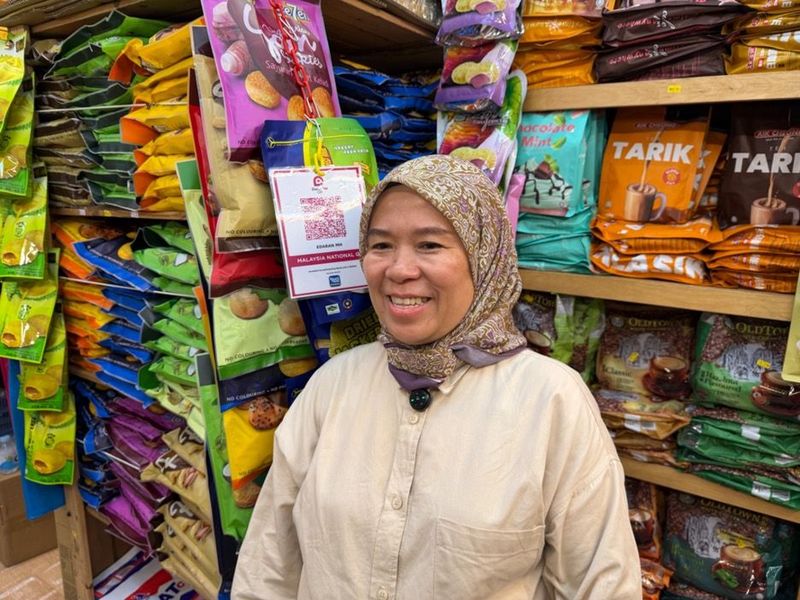
Similar sentiments echo through Central Market in Kuala Lumpur, where souvenir vendor Wiwi notes that tour groups arriving by the busload increasingly rely on QRIS.
"If we go back, sometimes Umrah pilgrims or tourists from Indonesia couldn’t shop if they ran out of ringgit. But ever since QRIS arrived, everything has smoothed out. Cash is taking a backseat to digital scans," Wiwi explained.
In Singapore, the narrative is equally robust. Dohartua Parlindungan Sihombing, a vintage goods merchant in the vibrant Haji Lane district, notes that about 30% of his clientele consists of Indonesian tourists. Because bank exchange rates via QRIS often outperform traditional money changers, Indonesian shoppers—who routinely log high single-transaction tickets between SGD 200 and SGD 300—prefer the digital route.
"They know bank exchange rates are better than money changers. They don’t need to carry stacks of rupiah notes, so they feel much lighter using QRIS. Operationally, the system runs smoothly without hiccups as long as the internet connection is stable," Dohartua remarked. His monthly revenue from vintage sales alone frequently touches SGD 10,000.
Official Responses: Strategic Vision from Bank Indonesia
Bank Indonesia views cross-border payment integration not merely as a technological convenience, but as a core pillar of regional economic stability, local currency settlement (LCS), and financial digitalization.
To sustain this momentum, BI’s Representative Office in Singapore has rolled out the GARUDA Movement. Widi Agustin S. detailed the multi-pronged approach used to build consumer awareness:
Airline Partnerships: Collaborating with national carriers operating Jakarta-Singapore routes to educate passengers mid-flight about cross-border QRIS availability.
Telecommunication Integration: Partnering with telecommunication providers in both Jakarta and Singapore to send automated welcome SMS notifications to Indonesian travelers the moment they land, alerting them that they can use QRIS immediately.
Central Bank and Switcher Collaboration: Partnering with regional central banks and payment switchers to continuously widen the merchant acceptance network.
Looking forward, BI is not resting on its laurels. With ASEAN integration proving successful, the central bank is actively planning expansions into other high-potential Asian economies, most notably India.
"Going forward for our Singapore work area, in line with the plan to expand local currency transactions to India, Cross-Border QRIS will also be expanded there. Given the growing number of Indian tourists visiting Indonesia, this represents a massive growth potential," Widi projected.
However, BI stresses that technical infrastructure alone is insufficient. Building robust awareness remains critical. According to Widi, efforts must target both ends of the transaction spectrum: educating travelers on how to utilize the service abroad, and training foreign merchants to actively offer QRIS as a primary, frictionless checkout option for Indonesian visitors.
Implications: Reshaping Regional Tourism, Trade, and Financial Sovereignty
The rapid adoption of QRIS Cross-Border carries profound macroeconomic and geopolitical implications for Indonesia and the broader ASEAN region:
Enhancing Financial Inclusion and Sovereignty: By linking domestic payment rails directly with regional partners, Indonesia reduces its reliance on dominant Western credit card networks (such as Visa and Mastercard), cutting down intermediary processing fees and keeping financial data security tightly regulated.
Boosting MSME Competitiveness: Small-scale merchants in foreign tourist hubs—from food stalls in Kuala Lumpur to antique dealers in Singapore—are directly empowered to capture high-spending Indonesian tourist segments that previously walked away due to currency mismatches.
Promoting Local Currency Settlement (LCS): Cross-border QR codes naturally encourage trade and tourism settlement in local currencies rather than depending entirely on third-party anchor currencies like the US Dollar, thereby mitigating exchange rate volatility risks.
A Blueprint for Global South Connectivity: As BI eyes expansions into India and potentially other parts of Asia, QRIS stands out as a pioneering model of how emerging economies can build interoperable, cost-effective, and sovereign digital payment ecosystems.
Ultimately, what began as a domestic initiative to streamline payments across the Indonesian archipelago has blossomed into a regional digital bridge. For travelers like Gustidha, the ability to scan a code in a foreign country as easily as buying coffee at home is a testament to how financial technology, guided by visionary central banking policy, is successfully shrinking borders and knitting Southeast Asia closer together.