Razer Redefines Precision: The Return of the Tartarus with the All-New V2 Pro
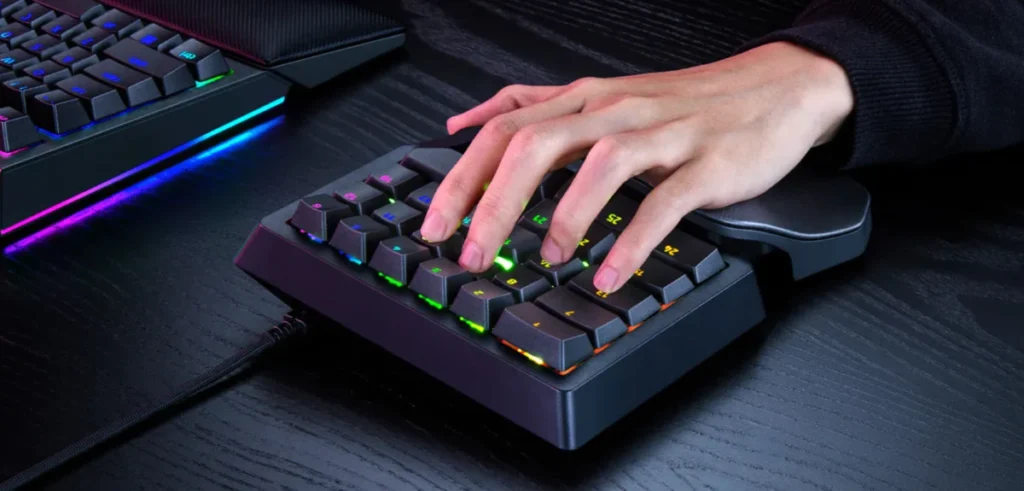
In the ever-evolving landscape of PC gaming peripherals, few devices have maintained as dedicated—yet niche—a following as the gaming keypad. After a thirteen-year hiatus since the original Razer Tartarus first bridged the gap between a standard QWERTY layout and a specialized gaming controller, Razer has officially broken its silence. The company has unveiled the Razer Tartarus V2 Pro, a high-performance gaming keypad that represents a massive leap in engineering, combining cutting-edge analog optical technology with an unprecedented level of input customization.
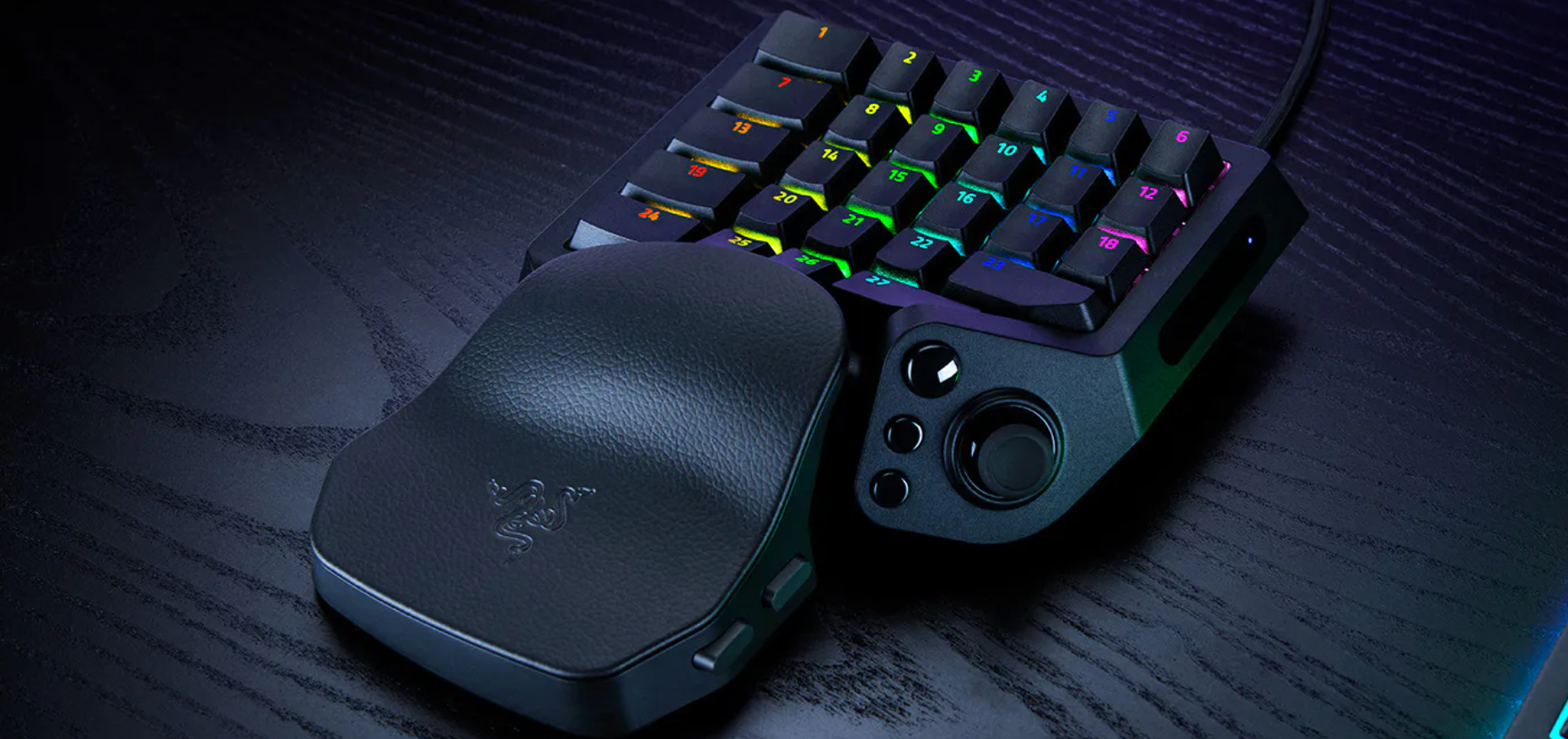
For competitive gamers who demand absolute mastery over their character’s movement and ability execution, the Tartarus V2 Pro arrives as a sophisticated solution. With 31 programmable keys, an advanced TMR (True Motion Response) thumbstick, and a staggering 8,000 Hz polling rate, this device is designed to transform the way users interact with complex titles, from fast-paced FPS shooters to intricate MMOs.
The Evolution: A Chronology of the Tartarus Line
To understand the significance of the Tartarus V2 Pro, one must look back at the origins of the form factor. When the original Tartarus launched in 2013, it was a revelation for gamers struggling with the ergonomic constraints of a standard keyboard. It introduced the concept of the "one-handed" gaming station, allowing players to keep their hands in a static, comfortable position while maximizing key accessibility.
For over a decade, Razer iterated on the concept, but the core architecture remained largely consistent. However, the gaming industry’s demands have shifted dramatically since 2013. The rise of eSports, the demand for higher refresh rates, and the integration of analog movement in PC titles have necessitated a hardware revolution. The Tartarus V2 Pro is the culmination of these thirteen years of user feedback, technological breakthroughs, and design refinement. It is not merely an update; it is a fundamental reimagining of what a gaming keypad should be.
Technical Mastery: Under the Hood of the V2 Pro
The cornerstone of the Tartarus V2 Pro’s performance lies in its hardware specs, which place it firmly in the premium category of gaming peripherals.
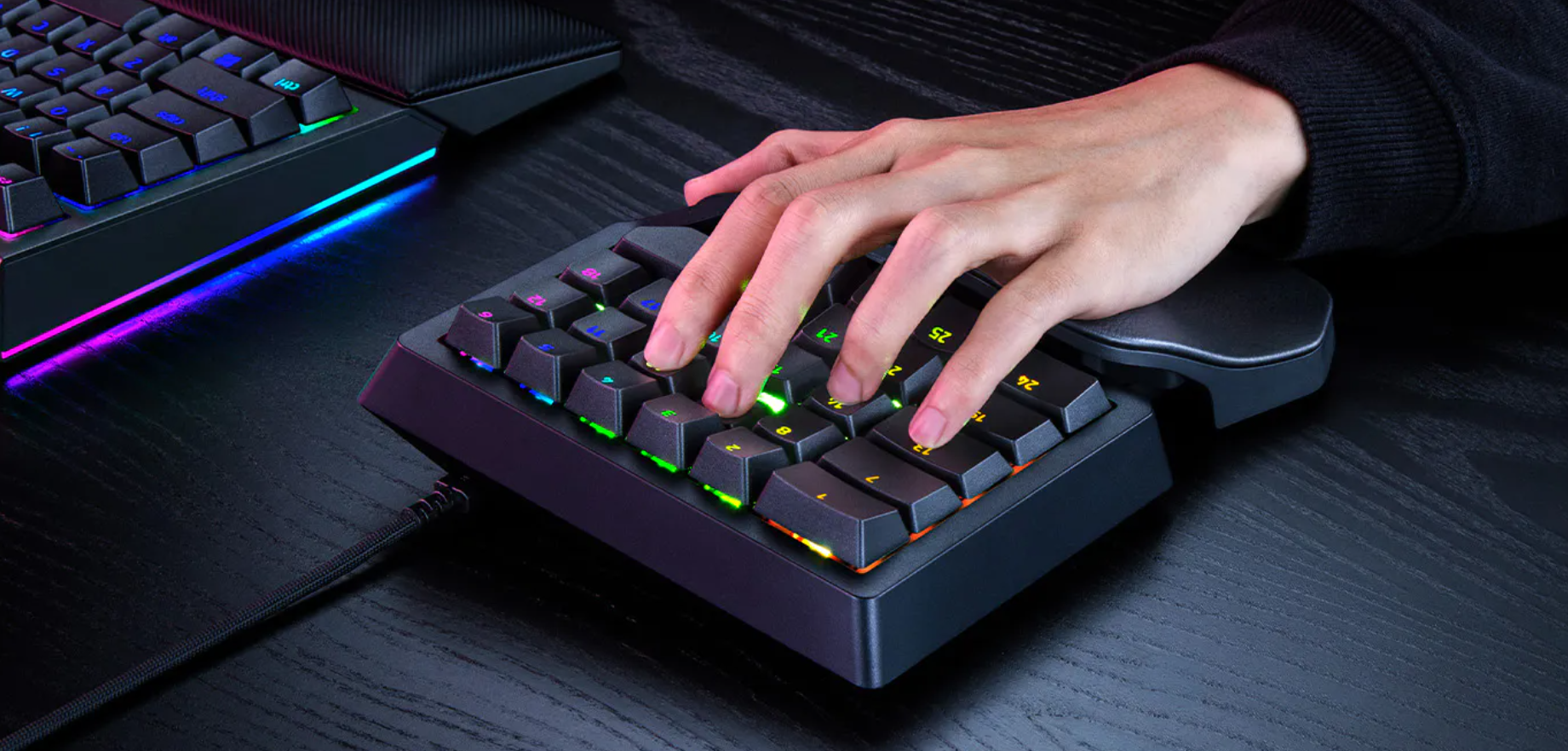
Analog Optical Switch Gen-2
The most significant upgrade is the inclusion of Razer’s second-generation Analog Optical Switches. Unlike traditional mechanical switches that actuate at a fixed point, these switches allow for adjustable actuation distances ranging from 0.1mm to 4.0mm.
This customization is a game-changer. Players can set "light" touches for rapid-fire abilities or deeper, deliberate keystrokes for high-impact actions. Furthermore, the device supports Rapid Trigger technology with 0.1mm sensitivity, allowing keys to reset the instant they are released. This eliminates the "dead zone" inherent in standard switches, ensuring that inputs are registered with near-instantaneous response times. With a rated durability of 100 million keystrokes, these switches are built to withstand the most grueling marathon sessions.
TMR Thumbstick and Precision Input
Razer has integrated a full-sized TMR thumbstick that promises to be entirely "anti-drift." Surrounding this stick are three dedicated buttons, providing extra layers of control that were previously impossible on a standard keyboard. By delegating movement and navigation to the thumb, the user’s fingers are freed entirely for ability casting and complex macros. This creates a hybrid control scheme that mimics the fluid movement of a controller while retaining the precision of a mouse.
HyperPolling 8,000 Hz
While many high-end gaming mice have adopted 8,000 Hz polling rates, the Tartarus V2 Pro is the first keypad to integrate this technology. By sending data to the PC up to 8,000 times per second, the device reduces input latency to a fraction of a millisecond. For competitive players, this provides a measurable advantage, ensuring that every movement is reflected on-screen with the highest possible temporal accuracy.
Software and Ergonomics: The User Experience
Hardware is only as good as the software that controls it, and Razer has packed the V2 Pro with a suite of features designed for the power user.

Advanced Macro and Keymapping Features
The V2 Pro introduces a variety of proprietary software features:
- Snap Tap & Snap Flex: These features allow for advanced input logic, letting a single key perform different functions depending on how deep or fast the key is pressed.
- Dynamic Keystroke (DKS): Users can map multiple commands to a single key press, effectively allowing for "combo" execution that is physically impossible on a standard keyboard.
- Onboard Storage: With the ability to store up to 24 keymaps across three onboard profiles, players can transition between different game genres—or even different characters within a game—without needing to open Razer Synapse.
Ergonomic Innovation
Recognizing that gaming keypads are used for extended periods, Razer has redesigned the wrist rest. The new unit is fully adjustable, allowing it to be shifted or rotated to accommodate different hand sizes and grip styles. This "quality of life" improvement is crucial for preventing fatigue and ensuring that the 31 programmable keys remain within comfortable reach at all times.
Official Perspective and Market Positioning
In their official launch statement, Razer emphasized that the Tartarus V2 Pro is a tool for "professional-grade optimization." By positioning the device at a retail price of US$199.99 / £199.99, Razer is clearly targeting the enthusiast segment—gamers who view their equipment as an investment in their performance rather than a simple utility.
The company has explicitly designed this for users who feel "keyboard-constrained." By offloading complex key-bindings to the left hand, Razer aims to reduce the "hand-travel" distance that often slows down players in high-stakes environments.
Implications: A New Standard or a Niche Curiosity?
The release of the Tartarus V2 Pro poses an interesting question for the PC gaming market: Is the gaming keypad finally ready for a mainstream resurgence?
Competitive eSports Impact
In the world of professional eSports, where victory is often measured in milliseconds, the Tartarus V2 Pro offers a compelling case. Its ability to combine the ergonomic advantages of a joystick with the tactical speed of optical switches is unique. If top-tier players begin to adopt the device for its Rapid Trigger and 8,000 Hz polling capabilities, we may see a shift in the standard "mouse and keyboard" configuration that has dominated PC gaming for decades.
Market Challenges
Despite its impressive specs, the Tartarus V2 Pro faces the same hurdle as its predecessors: the learning curve. Transitioning from a standard keyboard to a keypad requires a significant period of "muscle memory retraining." For a casual player, the cost and the time required to master the device may be prohibitive.
However, for the target audience—MMO players who need to manage dozens of spells, or FPS enthusiasts who want a competitive edge—the V2 Pro is an enticing piece of hardware. It represents a rare instance of a company taking a "niche" product category and treating it with the same engineering rigor as their flagship mice and keyboards.
Final Thoughts
Whether you see the Razer Tartarus V2 Pro as the ultimate optimization tool or a specialized peripheral for the dedicated hobbyist, one thing is clear: Razer has successfully modernized a classic concept. By integrating industry-leading optical switches, high-polling technology, and superior ergonomics, the V2 Pro sets a new benchmark for what gaming keypads can achieve. As the boundaries between controller and keyboard continue to blur, devices like the Tartarus V2 Pro may very well be the future of high-performance PC gaming.