Danantara Addresses Rumors of Acquiring 40.12% Stake in Indonesia Stock Exchange Amid Demutualization Process
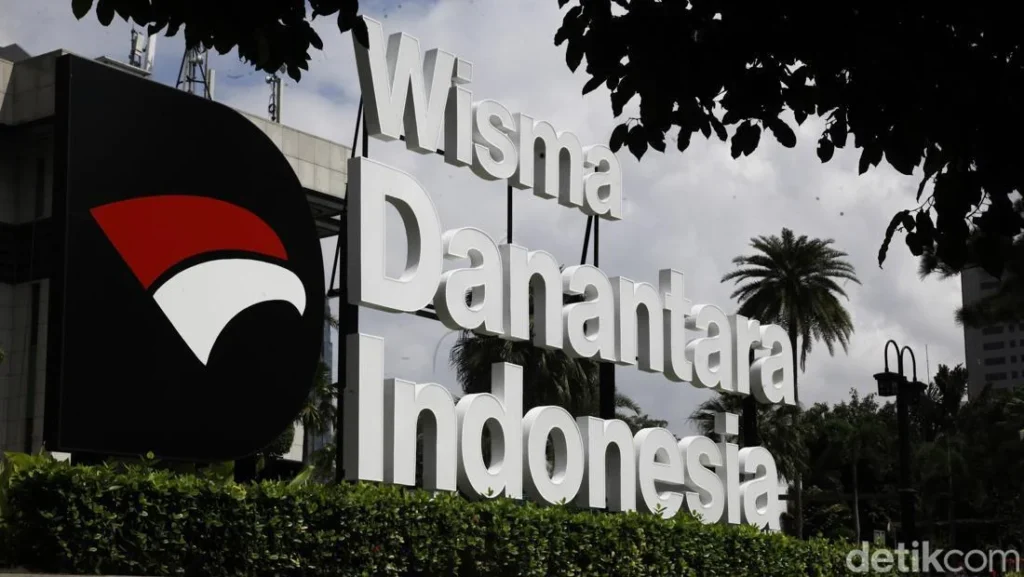
JAKARTA — The emerging sovereign wealth fund of Indonesia, the Badan Pengelola Investasi (BPI) Daya Anagata Nusantara (commonly known as Danantara), has officially responded to widespread media reports claiming it is poised to acquire a dominant 40.12% equity stake in the Indonesia Stock Exchange (IDX)—internationally recognized as Bursa Efek Indonesia (BEI).
The rumors, which have circulated widely across financial circles and mainstream news platforms, suggested that Danantara was nearing a finalized agreement to assume a major shareholding position following the long-anticipated structural transformation of the national bourse.
In an official written statement issued to the press, Danantara’s Communications Team addressed the ongoing speculation. The state investment body clarified that while strategic restructuring discussions are indeed underway, no definitive decisions have been reached. The institution emphasized that it is closely monitoring public reports concerning the structural shift, noting that internal evaluations are still ongoing.
"To date, the discussion process is still ongoing and has not produced a final decision, as internal reviews and the implementation of due diligence are still underway," the Danantara Communications Team stated.
Furthermore, Danantara underlined that its ultimate involvement remains contingent upon regulatory frameworks that are yet to be fully established, specifically awaiting the issuance of governing regulations by the Financial Services Authority (Otoritas Jasa Keuangan or OJK).
Consequently, Danantara asserted that the specific ownership figures circulating in the public domain do not reflect the institutional position or any final policy determinations of the agency. "Any material developments will be communicated through official communication channels in accordance with applicable regulations," the statement concluded.
1. Main Facts
The current discourse surrounding the structural evolution of the Indonesia Stock Exchange centers on several key pillars mandated by national legislative reforms:
- The Rumored Acquisition: Unofficial reports and leaked documents suggest that Danantara is slated to secure 69 shares of the IDX, equating to a massive 40.12% ownership stake.
- The Demutualization Mandate: The transition of the IDX from a mutual association model to a demutualized, profit-oriented corporate entity is a direct legal mandate outlined in the landmark Law on the Development and Strengthening of the Financial Sector (UU P2SK).
- Potential State Shareholders: Under the framework of the UU P2SK, three primary state-backed entities are legally permitted to hold equity in the newly demutualized stock exchange: Danantara, the Ministry of Finance (Kemenkeu), and Bank Indonesia (BI).
- Execution Mechanism: According to internal documents reviewed by media sources, the demutualization process is projected to be executed via a rights issue mechanism, officially known as Pre-emptive Rights (Hak Memesan Efek Terlebih Dahulu or HMETD).
- Current Status: Danantara has explicitly stated that the process is still in the internal review and due diligence phase, awaiting crucial regulatory milestones from the OJK before any binding decisions are formalized.
2. Chronology of Events
The journey toward the potential acquisition and the broader demutualization of the Indonesia Stock Exchange is rooted in years of legislative reform and institutional restructuring within Indonesia’s financial sector architecture.
The Legislative Foundation (2023)
The catalyst for the current structural debate was the enactment of Undang-Undang Nomor 4 Tahun 2023 tentang Pengembangan dan Penguatan Sektor Keuangan (UU P2SK). Passed in early 2023, this omnibus-style financial law was designed to overhaul Indonesia’s capital markets, banking sector, and non-bank financial industries to enhance global competitiveness, deepen market liquidity, and strengthen regulatory oversight. Within the UU P2SK, specific provisions were carved out to mandate the demutualization of stock exchanges operating within the country, paving the way for institutional shareholding by the state.
The Establishment of Danantara (2024–2025)
Parallel to the implementation of the UU P2SK, the Indonesian government moved to consolidate its state-owned enterprise (SOE) investments and sovereign wealth management under a single, highly integrated umbrella organization. This vision materialized with the formal establishment of the Badan Pengelola Investasi (BPI) Daya Anagata Nusantara, or Danantara. Modeled after elite global sovereign wealth funds, Danantara was designed to manage strategic state assets, drive domestic capital formation, and execute high-impact investments, positioning it as a natural candidate to hold foundational stakes in core national infrastructure, including the capital market.
Leak of Internal Documents and Speculation (Late 2025 – Early 2026)
As regulatory preparations progressed behind closed doors, internal working documents detailing the mechanics of the IDX demutualization began circulating among market participants and media outlets. These documents outlined a projected corporate action involving a rights issue (HMETD). Within these preliminary models, projections indicated that Danantara would emerge as the single largest institutional shareholder, capturing a 40.12% stake through the acquisition of 69 shares.
Official Clarification (September 2026)
Following a surge in market speculation and media inquiries regarding Danantara’s impending takeover of nearly half of the nation’s premier stock exchange, the sovereign fund’s communications division intervened. On Monday, September 14, 2026, Danantara released an official written clarification to cool market anxieties, confirming that while structural evaluations are active, no finalized agreements or acquisitions have been legally executed.
3. Supporting Data and Regulatory Framework
To fully comprehend the magnitude of the potential 40.12% acquisition, it is necessary to examine the underlying mechanics of exchange demutualization and the legal parameters established by Indonesian law.
Understanding Demutualization
Traditionally, the Indonesia Stock Exchange has operated as a mutual organization. In a mutual exchange model, the members of the exchange (typically licensed securities brokerages and trading members) are simultaneously the owners and the primary users of the exchange services. While this model historically ensured member governance, global trends over the past two decades have seen major international bourses—such as the London Stock Exchange, Singapore Exchange, and Australian Securities Exchange—transitioning into demutualized, for-profit corporate entities.
Demutualization separates the trading rights of member brokers from the ownership rights of shareholders. This structural shift transforms the exchange into a publicly listed or widely held corporation, allowing it to:
- Raise external capital more efficiently through equity issuances.
- Form strategic international alliances and technological partnerships.
- Improve operational agility, corporate governance, and commercial responsiveness.
- Diversify revenue streams beyond traditional transaction fees.
The Legal Framework: UU P2SK
The legal authorization for the IDX demutualization is embedded within the UU P2SK. The statute provides the statutory basis for transforming the bourse’s legal identity. Crucially, the law specifies which entities are eligible to hold equity during and after the demutualization phase.
Unlike typical market privatizations where shares are sold entirely to private institutional investors or the general public, the Indonesian government has ensured strategic state oversight by explicitly naming three state-linked entities as eligible shareholders:
- Danantara (BPI Daya Anagata Nusantara): Positioned as the primary state investment vehicle to manage strategic sovereign holdings.
- The Ministry of Finance (Kemenkeu): Representing the fiscal authority of the state and direct custodian of national assets.
- Bank Indonesia (BI): The central bank, ensuring macroeconomic stability and systemic alignment within core financial infrastructure.
The Rights Issue Mechanism (HMETD)
According to leaked operational drafts, the transformation is planned to be executed via a Pre-emptive Rights Issue (Hak Memesan Efek Terlebih Dahulu – HMETD). In this corporate action, existing members and newly designated eligible state entities will be granted rights to subscribe to the newly issued shares of the demutualized entity.
The allocation model projected in these preliminary documents places Danantara at the forefront, designating it 69 shares that translate directly into a 40.12% controlling or substantial block of equity. However, financial analysts note that valuation metrics, share par values, and the exact distribution ratio among Danantara, the Ministry of Finance, and Bank Indonesia remain subject to final regulatory approvals and comprehensive asset appraisals.
4. Official Responses and Institutional Stance
The cautious posture adopted by Danantara reflects the high stakes involved in restructuring Indonesia’s singular capital market operator. Financial regulators and market participants are closely monitoring every procedural step to ensure transparency, fairness, and market confidence.
Danantara’s Position: Due Diligence First
Danantara’s official communication emphasizes a disciplined approach to asset acquisition. By explicitly stating that internal reviews and due diligence are still underway, the sovereign fund is managing market expectations and distancing itself from premature valuations. The agency has reiterated that it will not be rushed by speculative reports and that any official updates will be disseminated strictly through authorized corporate channels.
The Role of the Otoritas Jasa Keuangan (OJK)
A central theme in Danantara’s response is the reliance on forthcoming regulations from the Financial Services Authority (OJK). Under the Indonesian regulatory hierarchy, the demutualization of the stock exchange cannot proceed operationally until the OJK issues detailed technical regulations governing:
- The conversion of mutual membership rights into corporate shares.
- Ownership caps and governance structures for state-backed entities within the exchange.
- Licensing, compliance, and capital adequacy requirements for the newly structured corporate bourse.
Until the OJK promulgates these binding rules, all restructuring plans—including the rumored 40.12% allocation—remain theoretical models rather than actionable transactions.
5. Implications for the Indonesian Capital Market
The prospect of Danantara securing a 40.12% stake in the Indonesia Stock Exchange through a demutualization process carries profound implications for the domestic financial landscape, foreign investors, and local securities brokerages.
Enhanced Institutional Backing and Market Confidence
Should Danantara ultimately finalize a 40.12% equity stake, it would firmly anchor the stock exchange within the state’s strategic economic architecture. For domestic and international investors, a strong sovereign presence can be interpreted as a sign of institutional stability, systemic backing, and long-term government commitment to the growth and security of the capital market. It aligns with Indonesia’s broader ambition to deepen its financial markets, increase market capitalization, and elevate the IDX’s status as a premier regional financial hub in Southeast Asia.
Governance and Operational Agility
Demutualization inherently shifts the governance paradigm of the exchange. By transitioning away from a traditional member-owned mutual model, the IDX can streamline decision-making processes, modernize its technological infrastructure more rapidly, and pursue aggressive commercial strategies. However, the presence of a dominant state shareholder holding over 40% of the equity will inevitably spark discussions regarding corporate governance, potential conflicts of interest, and the balance between public policy objectives and commercial profitability. Market analysts will be watching closely to ensure that regulatory independence and fair access for all market participants are rigorously maintained.
Impact on Trading Members and Brokerages
For existing trading members (securities firms) who historically held collective ownership and control over the mutual exchange, demutualization represents a significant structural disruption. Their historical membership privileges must be legally and financially converted into tradeable shares or financial compensation. The implementation of the rights issue (HMETD) will determine how existing members retain economic interests in the transformed exchange relative to the massive blocks assigned to state entities like Danantara, the Ministry of Finance, and Bank Indonesia.
Conclusion
As Indonesia’s financial sector navigates this historic legislative and structural transition, Danantara’s measured response serves as a reminder that the demutualization of the Indonesia Stock Exchange is a complex, highly regulated undertaking. While the internal documents and legal frameworks of the UU P2SK clearly point toward a future where state entities—led potentially by a 40.12% stake held by Danantara—will govern the nation’s primary bourse, final execution remains contingent upon thorough due diligence, rigorous asset valuations, and the formal issuance of OJK regulations. Market stakeholders and investors will continue to await official announcements from authorized channels as this monumental financial transformation unfolds.