Desil Bukan Satu-satunya Kriteria dalam Penyaluran Bansos
JAKARTA — In a major policy shift aimed at improving the accuracy and fairness of state-funded welfare, the Indonesian Ministry of Social Affairs (Kemensos) has officially announced that economic stratification groupings, known as desil, will no longer serve as the absolute sole criteria for determining social assistance (bansos) beneficiaries.
While official statistical data from Statistics Indonesia (BPS) remains a vital cornerstone of government planning, the Ministry is aggressively pivoting toward a hybrid model. This new framework heavily prioritizes rigorous on-the-ground validation and an on-demand application mechanism, empowering citizens to proactively request assistance while implementing strict administrative screening to weed out ineligible recipients.
The announcement was detailed by Andy Kurniawan, a Senior Expert at the Ministry of Social Affairs, during a public discussion titled "Methodology of Desil Determination and Poverty Measurement in Indonesia," held at the Politeknik Statistika STIS in East Jakarta. The policy restructuring signals a transformative era for Indonesia’s social safety net, addressing historical inclusion and exclusion errors that have long plagued national welfare distribution.
Main Facts: Redefining Welfare Eligibility
The core takeaway from the Ministry’s latest policy overhaul is the decoupling of rigid statistical categorizations from direct welfare delivery. For years, the government relied primarily on broad socio-economic groupings derived from administrative databases. However, the Ministry has recognized that numbers on a spreadsheet often fail to capture dynamic, real-world economic realities.
- Desil Data is a Baseline, Not a Mandate: While the Ministry utilizes the National Social and Economic Single Data (DTSEN) managed by BPS to map poverty, Andy emphasized that it is merely a reference tool rather than the final word on who receives aid.
- The Rise of On-Demand Welfare: Under the new system, individuals who believe they qualify for assistance but have been omitted from existing registries must actively apply. As Andy bluntly summarized: "Those who need it, please apply. If you don’t apply, you are assumed not to need it."
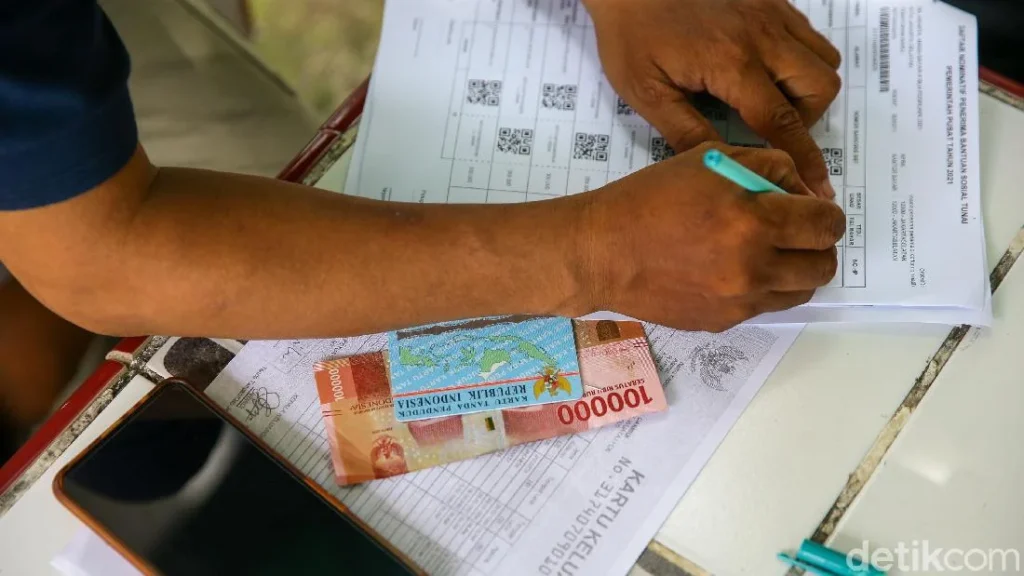
- Rigorous Digital Administrative Cross-Checks: Applicants will not simply take government funds on good faith. The application process will feature advanced data-matching capabilities—evaluating everything from electricity consumption patterns and property ownership to vehicular assets using National Identity Numbers (NIK) and biometric verification.
- Targeted Implementation Timeline: The Ministry aims to fully operationalize this modernized, streamlined, and verification-heavy distribution system by 2027, following a phased rollout of digital integration platforms.
Chronology: From Legacy DTKS to the New 2027 DTSEN Framework
The path toward this current policy reform has been marked by progressive institutional self-correction, transitioning from older legacy databases to sophisticated, real-time data tracking systems.
The Transition Phase and Ground-Truthing
The overhaul began in earnest during the transition from the older Integrated Social Welfare Data (DTKS) system to the newer DTSEN framework. Recognizing potential discrepancies in the transition, the Ministry initiated an unprecedented ground-truthing (groundcheck) operation across the archipelago.
To execute this massive undertaking, Kemensos mobilized approximately 34,000 Family Hope Program (PKH) companion workers right around a major festive holiday period (Ramadhan and Eid al-Fitr). Their specific mission was to investigate suspected cases of exclusion error (truly poor families left off the rolls) and inclusion error (well-off households incorrectly receiving state funds).
Discovering the Hidden Vulnerable
The results of this massive field audit exposed significant systemic flaws, but also presented an immediate opportunity for corrective justice. By cross-referencing field reports with actual household conditions, the Ministry successfully identified and purged thousands of ineligible recipients while discovering millions of overlooked citizens.
According to Ministry data, approximately 4.3 million new Beneficiary Families (KPM)—individuals who had never previously received state welfare—have successfully been integrated into the active beneficiary pool since the adoption of the DTSEN framework.
Building upon this momentum, the Ministry is now engineering a digital architecture that transitions the entire system into an active, application-based model, culminating in a fully integrated nationwide rollout targeted for 2027.
Supporting Data: Uncovering Inclusions, Exclusions, and Administrative "Game Changers"
Statistical discrepancies have historically plagued social assistance programs in developing nations. Indonesia is no exception. The reliance on static macroeconomic indicators frequently creates two major operational hurdles:
- Inclusion Errors: Wealthier households that have experienced economic shifts or managed to slip through administrative cracks continue to siphon resources meant for the destitute. Field verifications by Kemensos field officers repeatedly unmasked households possessing motorcycles, cars, or commercial properties while still listed as primary welfare recipients.
- Exclusion Errors: Extremely vulnerable citizens living in remote or peri-urban areas who fall outside traditional census mapping are left completely unassisted.
To permanently correct these errors, the Ministry is introducing what Andy termed administrative "game changers." When an applicant registers for assistance programs like the Family Hope Program (PKH) via the newly minted digital welfare portal, the system bypasses bureaucratic red tape through automated data synchronization.
By entering a citizen’s NIK and biometric data, the verification engine instantly queries interconnected national databases. The system can autonomously flag anomalies, such as:
- Ownership of multiple land deeds or property certificates.
- Registration of two or more four-wheeled motor vehicles.
- Household electricity consumption exceeding high-voltage thresholds (e.g., above 14,000 kWh).
This multi-layered validation ensures that limited state budgets are strictly reserved for genuine families in need, mitigating corruption and human error in local-level reporting.
Official Responses and Ministerial Philosophy
The Ministry’s stance reflects a pragmatic philosophy: social welfare must be dynamic, responsive, and participatory rather than static and paternalistic.
During his address at Politeknik Statistika STIS, Andy Kurniawan elaborated on the philosophical necessity of blending macroeconomic statistics with micro-level accountability. "If we want to distribute social assistance, our data bows to BPS. But it cannot be the only thing. Therefore, desil is not the sole criterion for distributing social assistance," he stated firmly.
This perspective addresses long-standing complaints from local community leaders who often found themselves helpless when regional data failed to match local realities. By decentralizing the initiative through the on-demand framework, the Ministry is effectively transferring a degree of agency back to the populace, while retaining absolute administrative authority over final validation.
Furthermore, academic and institutional responses from statistical experts have largely welcomed the move. Statisticians note that while desil categorizations are scientifically sound tools for measuring macroeconomic poverty thresholds, they are inherently prone to temporal decay—meaning a household’s economic status can shift drastically between census updates. Incorporating real-time administrative data bridges this structural vulnerability.
Implications: What This Means for Citizens and Local Governance
The comprehensive overhaul of Indonesia’s welfare architecture carries profound implications for millions of citizens, local administrators, and the broader national economy.
Empowering the Marginalized Through Digital Access
For ordinary citizens, the message is clear: passive waiting is no longer a viable strategy for receiving state support. Vulnerable families must engage with digital platforms or coordinate with local social workers to ensure their data is captured. While this introduces a digital literacy hurdle, the Ministry’s reliance on straightforward NIK and biometric checks is designed to keep the application process as frictionless as possible.
Alleviating Fiscal Pressure on the State Budget
By aggressively rooting out inclusion errors—such as wealthy households siphoning off electricity and automotive subsidies or undeserved cash transfers—the Indonesian government can optimize its fiscal space. Money saved from erroneous disbursements can be redirected toward expanding coverage for the newly uncovered 4.3 million marginalized families and bolstering long-enduring human capital initiatives like health and education grants.
Raising Standards for Local Governance
Local government bodies, village chiefs (lurah and kepala desa), and regional social service offices (Dinas Sosial) will face heightened accountability. They can no longer rely on outdated, static lists. Instead, they must work hand-in-hand with field-level companions (pendamping sosial) to facilitate accurate on-demand submissions and prevent local favoritism or data manipulation.
As Indonesia marches toward the 2027 full-system integration target, this policy evolution marks a maturing social welfare state—one that balances large-scale macro-analytics with targeted, compassionate, and technologically secure grassroots execution.