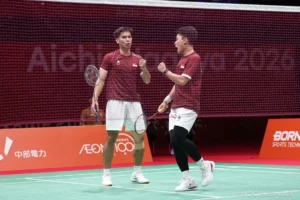
Indonesia Ups the Stakes: President Prabowo Announces Record-Breaking Incentives for 2026 Asian Games Athletes
By Binti Mufarida
Jakarta, September 10, 2026
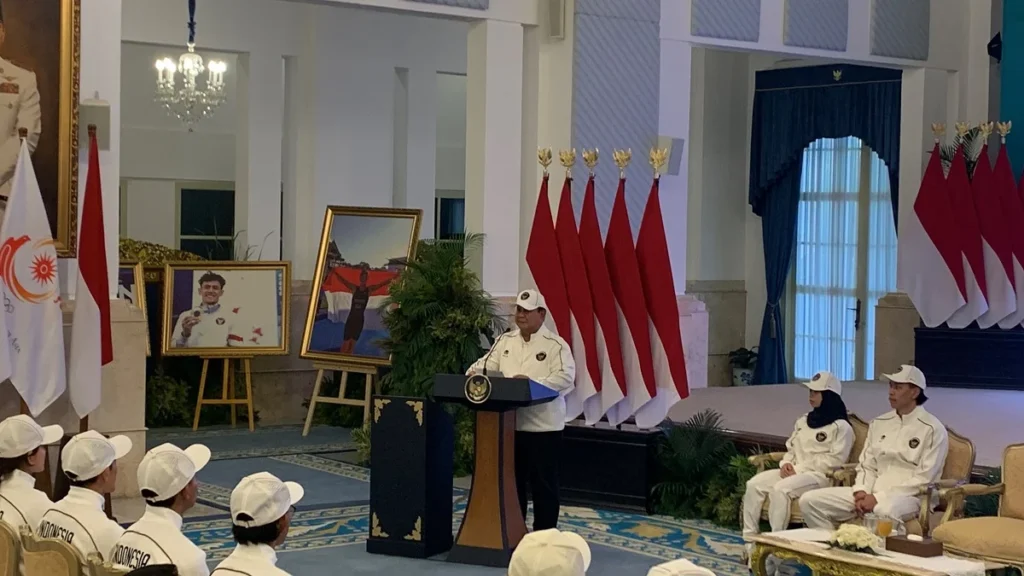
In a move designed to galvanize the nation’s sporting spirit and elevate Indonesia’s standing on the international stage, President Prabowo Subianto has announced a significant increase in financial incentives for national athletes competing in the 2026 Asian Games in Aichi-Nagoya, Japan. During the official send-off ceremony at the State Palace in Jakarta, the President declared that gold medalists would receive a reward of Rp3 billion, a substantial leap from previous reward structures.
The announcement serves as a clear signal of the government’s commitment to prioritizing sports development as a core component of national pride and soft power. With 432 athletes representing a population of 287 million, the pressure—and the potential rewards—have never been higher.
1. The Financial Commitment: A Strategic Investment in Excellence
The decision to raise the gold medal bonus to Rp3 billion was disclosed by President Prabowo following consultations with Minister of State-Owned Enterprises and former sports official, Erick Thohir. During his address, the President recounted the internal deliberations regarding the bonus structure.
"I received a report from Mr. Erick, who noted that for the SEA Games, the gold medal bonus is set at Rp1 billion. However, this is the Asian Games—a much more competitive and prestigious stage. For the Asian Games, the gold medal bonus will be Rp3 billion," President Prabowo stated.
This figure reflects a shift in the government’s philosophy regarding sports funding. Rather than viewing bonuses as mere expenses, the administration is positioning them as investments in the professional longevity and social welfare of the country’s elite athletes. The President emphasized that the administration’s policy is rooted in the belief that the state should not be "stingy" when it comes to honoring those who bring glory to the Indonesian flag.
2. Beyond Gold: A Holistic Approach to Athlete Welfare
Recognizing that the spirit of competition is not defined solely by the color of the medal, President Prabowo clarified that the government’s appreciation would extend to silver and bronze medalists, as well as those who demonstrate exceptional commitment.
A critical component of this support package is the assurance of career security. The President confirmed that the government is implementing a "career acceleration" program for medalists, ensuring that those who dedicate their youth to sports are not left behind in the professional job market.

"Ask any sports leader—the career paths for those who win silver and bronze medals will also be accelerated by the government," he promised. This policy addresses a long-standing concern in the Indonesian sporting community: the "post-retirement void," where athletes often struggle to integrate into the workforce after their physical peak. By linking athletic performance to career advancement, the government hopes to provide a safety net that encourages young talent to pursue professional sports as a viable life path.
3. Chronology of the Send-Off: Preparing for Aichi-Nagoya
The road to the 2026 Asian Games has been one of rigorous selection and preparation. The send-off ceremony at the State Palace, held on September 9, 2026, marked the final milestone in a months-long training cycle.
- Initial Selection Phase (Q1 2026): National Sports Federations across Indonesia conducted intensive training camps, filtering thousands of potential candidates down to the elite group of 432 athletes.
- Preparation Phase (Q2 2026): Athletes underwent localized training and participated in regional warm-up tournaments to acclimatize to international competition standards.
- Government Consultation (August 2026): Discussions between the Ministry of Youth and Sports and the President’s office finalized the incentive packages, aimed at boosting morale ahead of the departure.
- Official Send-Off (September 9, 2026): President Prabowo officially handed the national flag to the contingent, marking the transition from preparation to active competition.
As the athletes prepare to face competitors from across Asia, the focus remains on the logistical and psychological readiness of the team. The delegation includes not only the athletes but a robust support system of coaches, medical staff, and performance analysts tasked with ensuring that the Indonesian team arrives in Japan in peak condition.
4. The Weight of 287 Million Expectations
In his speech, President Prabowo reminded the athletes of the gravity of their mission. "You are not just competing for yourselves, your coaches, or your families," he stated. "You are carrying the name of 287 million Indonesian people on your shoulders."
The Asian Games in Aichi-Nagoya represent a significant geopolitical opportunity for Indonesia. In recent years, Indonesia has sought to establish itself as a regional sporting powerhouse, building on the momentum of the 2018 Asian Games hosted in Jakarta and Palembang. The 2026 iteration is seen as a benchmark for how well the nation has maintained its sporting infrastructure and athlete development pipelines since that historic event.
5. Official Responses and Industry Implications
The announcement has been met with widespread optimism among sports stakeholders. Observers note that the Rp3 billion incentive is among the most competitive in Southeast Asia, potentially acting as a catalyst for other nations in the region to re-evaluate their own athlete remuneration packages.
The Economic Impact:
Economic analysts suggest that while the budgetary impact of these bonuses is significant, the intangible returns—such as national morale, increased tourism interest, and the promotion of a healthy, active lifestyle among the youth—far outweigh the direct costs.
Infrastructure and Support:
Minister Erick Thohir, who has been instrumental in the coordination between the state and the sporting bodies, highlighted that the government’s role is not just to provide the "carrot" of bonuses, but to ensure that the "stick" of discipline and high-performance training is strictly enforced. The Ministry is currently working on a long-term plan to ensure that the training facilities provided to these athletes remain world-class, even after the games conclude.

6. Looking Toward the Future: The Legacy of the 2026 Games
The implications of this policy are profound. By elevating the status of athletes to that of national heroes—worthy of significant financial support and career pathways—the government is fundamentally changing the cultural perception of sports in Indonesia.
Professionalizing the Industry:
The focus on career advancement for medalists suggests that the Indonesian government is moving toward a professionalized sports model. This involves closer cooperation between the private sector and state institutions, allowing for dual-career programs where athletes can study or work while maintaining their training schedules.
A New Benchmark for Success:
With the bar now set at Rp3 billion for a gold medal, the expectation for high-performance results has increased. Pressure will be on the various sports federations to deliver, as the public and the government now expect a correlation between the financial investment and the medal count.
Conclusion: A Turning Point for Indonesian Sports
As the Indonesian contingent departs for Aichi-Nagoya, they do so with the full weight of executive backing. The promise of financial reward, while secondary to the honor of representing the nation, provides a necessary incentive in the highly demanding world of elite sports.
President Prabowo’s message was clear: Indonesia is ready to compete, and it is ready to reward excellence. Whether this financial infusion leads to a historic medal haul remains to be seen, but the intent to transform the landscape of Indonesian sports is undeniable. The nation now watches with bated breath, waiting to see if its athletes can turn this newfound support into gold, silver, and bronze on the international stage.
The 2026 Asian Games will be more than just a series of athletic contests; for Indonesia, it is a statement of intent—a declaration that in the arena of global competition, the country is prepared to invest in its best and brightest to ensure that the red and white flag flies high.
For more updates on the Indonesian contingent at the 2026 Asian Games, follow our dedicated sports coverage as we track the progress of our athletes throughout the tournament.