MRT Jakarta to Transform Kota Tua Using Successful Blok M Placemaking Model While Preserving Heritage Identity
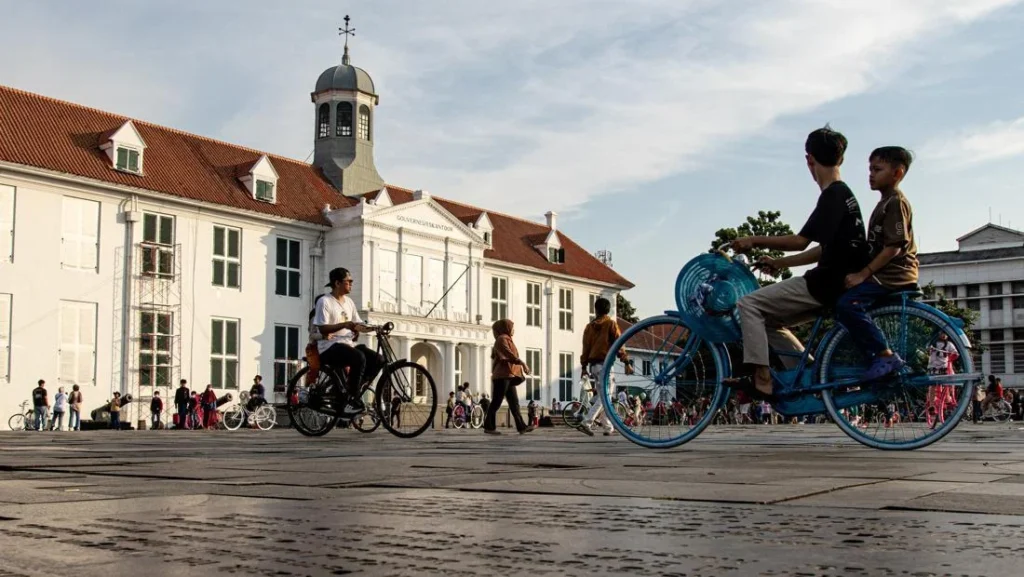
JAKARTA — PT MRT Jakarta (Perseroda) is gearing up for a major urban rejuvenation project that will bring the vibrant, community-centric placemaking concept successfully deployed in Blok M to the historic district of Kota Tua. This comprehensive spatial development initiative aims to breathe new life into Jakarta’s most storied historical quarter, blending modern commercial vitality with deep-rooted cultural heritage as part of the broader North-South MRT line extension project.
The announcement was made by R. Samuel Ryan Pradipta Pranowo, Head of Business Planning & Expansion at MRT Jakarta, during the MRT Fellowship 2026 Workshop held at Wisma Nusantara, Jakarta. According to company executives, the upcoming revitalization of Kota Tua and Glodok represents a strategic evolution in transit-oriented development (TOD) within the Indonesian capital, prioritizing human-centric urban design over mere physical infrastructure.
Main Facts
The core objective of the Kota Tua revitalization project is to integrate the arrival of the upcoming Mass Rapid Transit (MRT) network with a culturally sensitive, community-driven urban renewal strategy.
- The Core Concept: MRT Jakarta will apply a placemaking framework—a methodology that transforms public spaces into vibrant hubs with distinct character, economic utility, and emotional resonance—similar to the model currently transforming Blok M into a youth and culinary destination.
- Preserving Identity: Despite integrating modern elements such as retail spaces and contemporary art hubs, the historic identities of "Little Amsterdam" (the old Batavia colonial core) and the historic Chinatown (Glodok) will be meticulously preserved.
- Timeline and Milestones: While preliminary placemaking interventions are slated to roll out around the Thamrin and Monas stations by December 2027, the full-scale revitalization of Kota Tua is synchronized with the projected completion of the MRT line extension to Kota Tua by 2029.
- Strategic Approach: Development will rely heavily on activity generation partnerships, actively engaging local and thematic communities (such as painters, performing artists, and heritage film enthusiasts) to organically populate and activate the urban spaces.
Chronology of the MRT Expansion and Urban Revitalization
The journey toward transforming Jakarta’s northern heritage corridor is part of the massive North-South MRT construction phases, carefully sequenced to manage urban disruption while maximizing transit-led economic growth.
Phase 1: Establishing the Blueprint (Present – 2026)
MRT Jakarta has spent considerable effort studying the socio-economic demographics of various transit nodes. The success of the Blok M TOD model—turning a legacy transit hub into an urban youth and culinary destination—provided the operational blueprint. During this phase, planning teams are mapping out community stakeholders, identifying historical preservation boundaries, and conceptualizing how modern retail can coexist with centuries-old architecture.
Phase 2: Central Jakarta Station Openings (December 2027)
Before the heavy focus shifts to Kota Tua, MRT Jakarta will hit a major milestone with the operational launch of Thamrin and Monas Stations in December 2027. According to Samuel, these central stations will serve as immediate testing grounds for localized placemaking initiatives right after the extended concourses are completed next year.
Phase 3: The Northern Push and Kota Tua Revitalization (2028 – 2029)
As engineering works push further north toward the historic heart of the city, urban revitalization efforts will ramp up in tandem. The physical transformation of public plazas, pedestrian walks, and commercial zones around Glodok and Kota Tua will accelerate, designed to culminate precisely when the underground trains begin ferrying passengers into the historic terminal station in 2029.
Supporting Data & Urban Planning Framework
To understand why MRT Jakarta is pivoting toward placemaking in Kota Tua, one must look at the mechanics of urban transit integration and community engagement.
The Science of Placemaking
In modern urban planning, transit-oriented development (TOD) often falls short if it only focuses on physical assets—such as concrete platforms, escalators, and retail corridors. Placemaking addresses the human element by curating spaces that foster social interaction, economic exchange, and cultural expression.
[Physical Infrastructure: MRT Stations]
       ↓
[Placemaking Framework: Activity Generation]
       ↓
[Community Engagement: Local Art & Heritage Groups]
       ↓
[Sustainable Urban Ecosystem: Economic & Cultural Vitality]
By tailoring spatial design to local demographics, a neighborhood retains its soul. In Blok M, this manifested as an urban youth hub that successfully bridged generational divides, offering nostalgic spaces for older generations while serving as a trendy creative outlet for Gen Z and Millennials.
Balancing Opposites: Heritage Meets Modernity
Kota Tua and Glodok present a unique urban design paradox: how to merge historical preservation with futuristic convenience.
- The Heritage Pillar: The Dutch colonial architecture of the old Batavia square ("Little Amsterdam") and the cultural heritage of the archipelago’s largest Chinatown (Glodok) will remain untouched in their structural essence.
- The Modern/Futuristic Pillar: Glodok has historically been known as Jakarta’s premier electronic and trade center. MRT Jakarta plans to weave modern technological and commercial elements into select zones of the district, creating a dynamic contrast between the ancient and the avant-garde.
Official Responses and Strategic Vision
Detailing the strategy behind community involvement, Samuel emphasized that top-down urban planning rarely succeeds without grassroots participation. MRT Jakarta is intentionally moving away from sterile commercial developments in favor of organic community integration.
"That area of Kota Tua will also be revitalized. Hopefully, it will remain vibrant while preserving its heritage identity," Samuel Ryan Pradipta Pranowo stated during the workshop at Wisma Nusantara. "So the Chinatown heritage and Little Amsterdam will not disappear. Instead, the area will be brought to life through a combination of retail, local communities, and other synergistic elements."
Explaining the step-by-step methodology for community activation, Samuel noted that outreach will begin with local stakeholders before expanding outward.
"Regarding what communities will be involved—for instance, in Kota Tua later on, there will be a strong focus on heritage, cinema, and the arts. These will likely be the first communities we reach out to: painters and performance artists. Once the placemaking theme is firmly established and local communities are embraced, we will then invite broader, theme-aligned communities from outside the area."
This phased community onboarding ensures that the district’s natural cultural guardians are not displaced by commercialization, but rather become the primary beneficiaries and curators of the revitalized public spaces.
Implications of the Project
The execution of the Kota Tua placemaking and MRT expansion project carries profound implications for Jakarta’s urban future, tourism sector, and economy.
1. Economic Revitalization and the Creator Economy
By integrating retail spaces with art, film, and heritage communities, the project will generate micro-economies within the station catchment areas. Small businesses, independent artists, culinary vendors, and creative entrepreneurs will find sustainable ecosystems to showcase their work, driving foot traffic that benefits both daytime commuters and weekend visitors.
2. Sustainable Urban Mobility and Tourism
Kota Tua is one of Jakarta’s most heavily visited tourist destinations, yet traffic congestion and poor pedestrian connectivity have long plagued the area. Linking it directly to the North-South MRT line will drastically reduce carbon emissions, ease vehicular congestion in North and Central Jakarta, and offer international and domestic tourists seamless access to historical sites via public transit.
3. A Blueprint for Future Transit Projects in Indonesia
The integration of the Blok M youth-hub model with the historical preservation model of Kota Tua establishes a versatile template for future urban transit projects across Indonesia. It proves that public infrastructure can act as a cultural custodian, preserving the historical DNA of a city while propelling it into a modern, connected future.
As the 2029 deadline approaches, Jakarta stands on the cusp of a renaissance where the past and future will literally meet at the platform of an MRT station.