Bridging the Educational Gap: Kemensos and Kemenpar Launch Landmark "Sekolah Rakyat" Initiative in Bandung
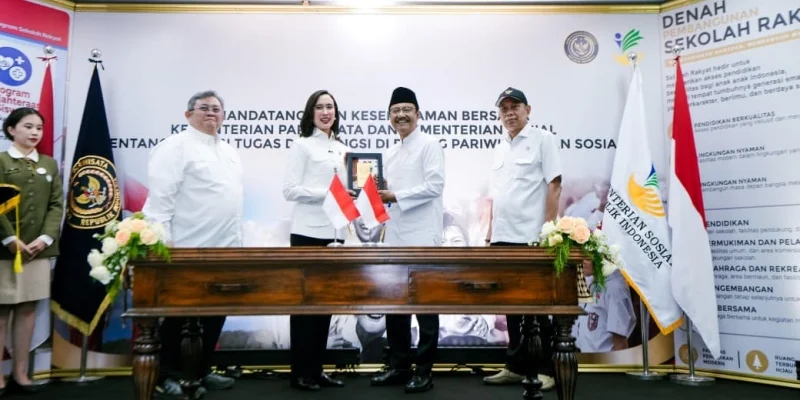
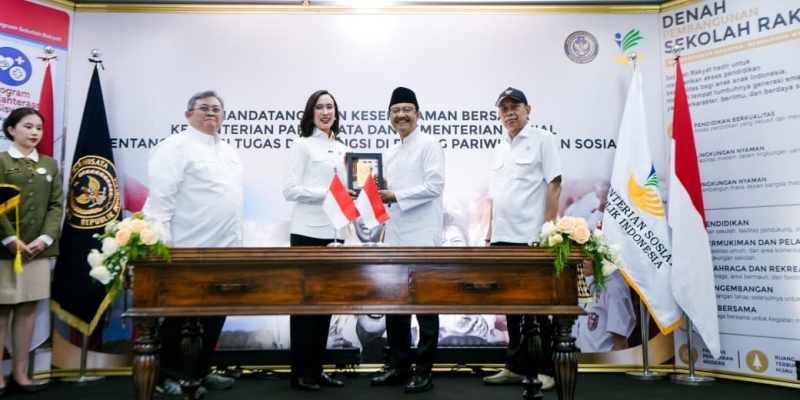
BANDUNG, Indonesia – In a significant move aimed at dismantling the cycle of poverty through education, the Ministry of Social Affairs (Kemensos) and the Ministry of Tourism (Kemenpar) have formalized a strategic partnership. The collaboration, marked by the signing of a Memorandum of Understanding (MoU) on Thursday, July 23, 2026, at the Politeknik Pariwisata (Poltekpar) NHI Bandung campus, signals the official commencement of the "Sekolah Rakyat" (People’s School) project—a nationwide initiative designed to provide high-quality education to children from underprivileged backgrounds.
The Strategic Alliance: Merging Social Welfare and Tourism
The partnership between the two ministries represents a holistic approach to national development. By utilizing assets owned by the Ministry of Tourism to house educational facilities, the government is optimizing state resources to address a critical social deficit: the lack of access to formal, quality education for the most vulnerable segments of society.
The signing ceremony was attended by high-ranking officials, including Minister of Social Affairs Saifullah Yusuf, Minister of Tourism Widiyanti Putri Wardhana, Deputy Minister of Social Affairs Agus Jabo Priyono, Secretary-General of the Ministry of Social Affairs Robben Rico, and the Vice Regent of Bandung, Ali Syakieb. The location of the signing—the Dayeuhkolot campus of Poltekpar NHI—serves as the flagship site for this ambitious project, which aims to become a blueprint for similar installations across Indonesia.
Chronology of the Initiative: From Vision to Execution
The conception of the Sekolah Rakyat project stems from the government’s commitment to achieving the "Indonesia Emas 2045" (Golden Indonesia 2045) vision. Recognizing that the demographic dividend cannot be fully realized if a significant portion of the youth remains uneducated or marginalized, the Ministry of Social Affairs began identifying high-risk populations through the Integrated Social Welfare Data (DTSEN) system.
On July 23, 2026, the collaboration moved from the planning phase to formal institutionalization. Following the signing, the Ministry of Tourism officially pledged a five-hectare land parcel at the Poltekpar NHI campus for the construction of the school, with an additional two hectares earmarked for shared sports facilities. This infrastructure project will now enter the assessment phase, with the Ministry of Public Works (Kemen PU) tasked with ensuring the facility meets rigorous national standards for educational buildings.
Structural Design and Academic Excellence
The proposed facility in Bandung is not merely a school; it is designed to be a comprehensive, full-service educational ecosystem. According to Minister Saifullah Yusuf, the campus is projected to accommodate approximately 2,000 students, spanning elementary, middle, and high school levels.
A Holistic Learning Environment
The school will operate on a residential (boarding) model, ensuring that students receive 24-hour support and supervision. This is particularly crucial for children coming from unstable home environments or those who have been victims of systemic neglect. By providing a stable, structured, and safe environment, the government aims to mitigate the environmental factors that contribute to school dropout rates.
Digital Integration and Modern Pedagogy
The curriculum will be augmented by advanced educational technology, including a robust Learning Management System (LMS). This digital integration is intended to bridge the "digital divide" often experienced by students in low-income brackets, ensuring they have the same access to information and modern learning techniques as their peers in private or elite urban institutions.
Official Responses and Strategic Commitments
Minister of Social Affairs, Saifullah Yusuf: "A Path to 2045"
In his statement, Minister Saifullah emphasized that the Sekolah Rakyat is not a traditional enrollment-based system. Instead, it utilizes proactive outreach through the DTSEN database. "We are not waiting for students to sign up; we are going out and finding those who are out of school, at risk of dropping out, or those who have never had the chance to step into a classroom," Saifullah stated. He reiterated that the goal is to create a high-quality process that prepares the next generation to be the pillars of a developed Indonesia by 2045.
Minister of Tourism, Widiyanti Putri Wardhana: "Investing in Human Capital"
Minister Widiyanti highlighted the role of the tourism sector in fostering social mobility. By dedicating five hectares of land for the school and two for sports, the Ministry of Tourism is taking an active role in local community development.
Crucially, the partnership includes a pathway to higher education. Widiyanti announced a scholarship scheme where 20% of the Sekolah Rakyat graduates will be guaranteed admission to the Politeknik Pariwisata, fully funded. This creates a tangible "ladder" for underprivileged youth, moving them from basic education directly into vocational training in the booming tourism industry.
Socio-Economic Implications: Beyond the Classroom
The implications of the Sekolah Rakyat initiative are far-reaching. By targeting children from families categorized as "prasejahtera" (low-income/vulnerable), the government is implementing a targeted intervention strategy that addresses the root causes of poverty.
Addressing Structural Inequality
Education is the most potent tool for breaking the cycle of poverty. By providing free, high-quality, residential education, the government is removing the economic barriers that force families to prioritize immediate labor over long-term schooling. The integration of vocational tourism training ensures that when these students graduate, they enter the workforce with skills that are in high demand, thus ensuring their economic self-sufficiency.
Synergizing Ministerial Roles
This collaboration marks a shift in how Indonesian ministries operate. Instead of working in silos, the Ministry of Social Affairs and the Ministry of Tourism have created a cross-sectoral model. The social ministry provides the target population and pedagogical framework, while the tourism ministry provides the physical infrastructure and professional pathway. This model of resource-sharing could potentially be scaled to other sectors, such as agriculture, manufacturing, or digital technology, providing a blueprint for future governmental cooperation.

Strengthening Local Communities
The inclusion of sports facilities that will be shared between the Sekolah Rakyat students and the university students of Poltekpar NHI creates a social bridge between different socio-economic groups. This exposure is vital for fostering empathy and social cohesion, ensuring that the students of Sekolah Rakyat are not isolated but are integrated into the broader campus community.
Looking Ahead: Challenges and Future Expansion
While the project is ambitious, its success will depend on long-term funding, administrative transparency, and the ability to maintain the quality of instruction at scale. The involvement of the Ministry of Public Works in ensuring building standards is a positive sign, suggesting a focus on durability and safety.
Furthermore, the government will need to manage the expectations of the 2,000-student capacity. As the demand for such programs is likely to be high, the "pilot project" in Bandung will be under intense scrutiny. If successful, the government intends to expand this model to other regions, utilizing under-utilized state lands across the archipelago to build a network of Sekolah Rakyat.
Conclusion
The collaboration between the Ministry of Social Affairs and the Ministry of Tourism represents a proactive and visionary approach to education. By blending social welfare with vocational opportunity, the government is taking a concrete step toward ensuring that "Indonesia Emas 2045" is not just a slogan, but a reality for the children who need it most. As the construction begins, the nation watches with anticipation to see how this model of "education as a right, not a privilege" transforms the lives of the thousands of students who will call this campus home.
Through this initiative, the state is sending a clear message: that no child, regardless of their family’s economic status, should be left behind in the pursuit of knowledge and a prosperous future.