Strategic Leadership Transition: Sudaryono Appointed to Lead Indonesia’s "Makan Bergizi Gratis" Initiative
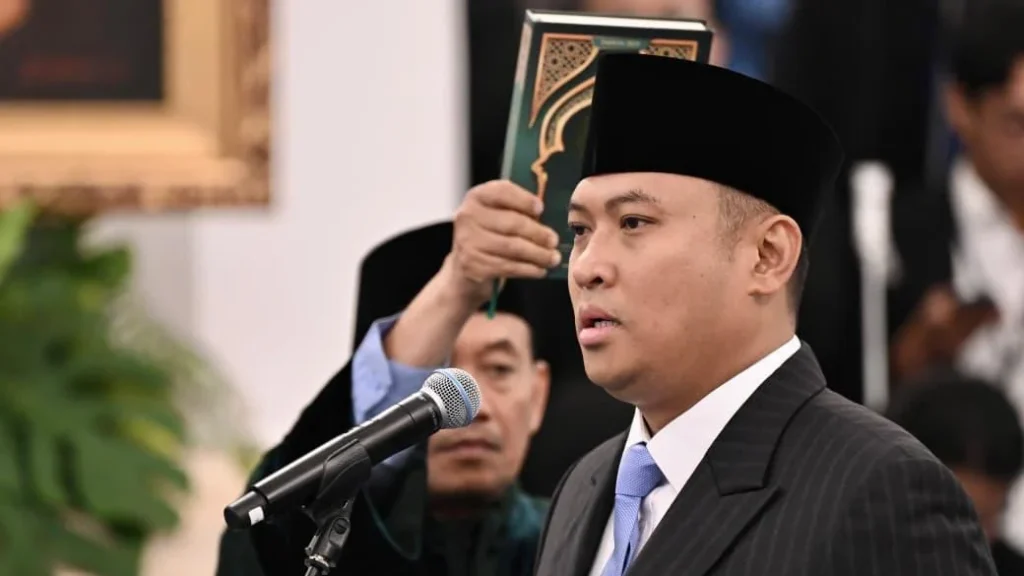
JAKARTA – In a significant administrative reshuffle, President Prabowo Subianto has appointed Sudaryono as the new Head of the National Nutrition Agency (Badan Gizi Nasional/BGN). Sudaryono, who previously served as the Deputy Minister of Agriculture, steps into the role to succeed Nanik Sudaryati Deyang, who stepped down from the position due to health-related concerns.
The appointment marks a pivotal shift in the execution of the administration’s flagship program, "Makan Bergizi Gratis" (MBG), as the government seeks to solidify the operational framework of a project that is arguably the most ambitious social welfare initiative in recent Indonesian history.
The Strategic Rationale Behind the Appointment
The decision to install Sudaryono at the helm of the BGN was not taken lightly. According to Minister of State Secretary Prasetyo Hadi, the selection process was guided by a need for continuity, technical expertise, and cross-sectoral synergy. Speaking from the Presidential Palace in Jakarta on Wednesday (July 22, 2026), Prasetyo outlined three primary reasons for the appointment.
1. Eliminating Leadership Voids
The BGN occupies a highly strategic position within the executive branch. Tasked with the nationwide delivery of nutritious meals to students and vulnerable populations, the agency cannot afford a leadership vacuum. With Nanik Sudaryati Deyang’s sudden resignation, the government sought a figure who could hit the ground running without a protracted transition period.
2. Deep Institutional Knowledge
Sudaryono was not a late addition to the MBG project. He has been deeply embedded in the planning phases of the program since its inception. His involvement includes extensive discussions, brainstorming sessions, and the drafting of the technical framework required to implement such a massive logistical operation.
"Since the very beginning, he has been part of the team that conceptualized the birth of the Makan Bergizi Gratis program," Prasetyo explained. "He has been involved in every step—from the conceptual discourse to the technical implementation strategies."
3. Synergizing Agricultural Infrastructure
Perhaps the most crucial factor in the President’s decision is the intersection between the BGN and the Ministry of Agriculture. As the former Deputy Minister of Agriculture, Sudaryono possesses a unique understanding of the supply chain dynamics necessary to sustain the MBG program. The success of the meal program relies entirely on the availability and consistent supply of raw agricultural products. By appointing an individual who intimately understands the domestic food ecosystem, the government aims to ensure that the MBG program serves as an engine for the national agricultural sector.
The "Pac-Man" Philosophy: Sudaryono’s Vision for Economic Impact
Following his official inauguration at the State Palace, Sudaryono offered a glimpse into his vision for the agency. He emphasized that the MBG program should be viewed through a dual-lens: as a public health imperative and as a massive economic stimulus for the grassroots sector.
An Engine for Economic Absorption
Sudaryono famously characterized the MBG program as resembling the iconic video game character Pac-Man. In his view, the program’s massive scale and budget function like a perpetually hungry force that "consumes" everything in its path—specifically, the surplus production of Indonesian farmers, ranchers, and fishermen.
"This is a grande program. In several discussions, I have described it as a Pac-Man; it eats everything in its path," Sudaryono noted.
Solving the Surplus Crisis
Historically, Indonesian farmers and livestock producers have struggled with market volatility, often leading to the tragic dumping of perishable goods. From farmers disposing of carrots and onions due to falling prices to dairy farmers forced to pour out milk, the lack of a stable buyer has been a perennial issue in the agricultural sector.
Sudaryono is confident that the MBG program will permanently alter this dynamic. By guaranteeing demand, the government intends to provide a safety net for producers. "If we look back, there were instances of people throwing away milk, or farmers dumping vegetables and onions. God willing, those days are over. With this program, those surpluses will be absorbed," he asserted.
He clarified that the primary challenge for his new administration will not be the lack of supply, but rather the efficiency of the distribution network. By connecting local producers directly to the BGN’s supply chain, the government hopes to create an integrated ecosystem that benefits both the consumers—who receive improved nutrition—and the producers, who gain a reliable, high-volume market.
Implications of the Shift: Challenges and Future Outlook
The transition of leadership at the BGN comes at a time when the pressure to deliver tangible results for the MBG program is at its peak. The program is a centerpiece of President Prabowo’s administration, and its success is viewed as a litmus test for the effectiveness of his governance.
Logistical Complexity
The logistical challenge of providing nutritious meals to millions of students across the Indonesian archipelago is unprecedented. While Sudaryono’s background in the Ministry of Agriculture is a significant asset, he faces the daunting task of building a supply chain that can operate reliably in both urban centers and the most remote corners of the nation.
Inter-Agency Coordination
The success of the BGN under Sudaryono will depend heavily on his ability to foster collaboration between the Ministry of Agriculture, the Ministry of Finance, and local government units. The transition from a policy-drafting phase to an execution phase requires a shift from conceptualizing to managing complex, daily operational workflows.
Long-term Sustainability
Economists have noted that the sheer scale of the MBG budget is a significant factor in the national fiscal landscape. Critics and supporters alike will be watching closely to see how Sudaryono manages the agency’s budget. If the program succeeds in stimulating local agricultural economies as predicted, it could potentially offset the high costs of the program by reducing poverty in rural areas and improving human capital outcomes through better nutrition.
Conclusion: A New Chapter for National Nutrition
The appointment of Sudaryono to lead the National Nutrition Agency represents a calculated strategic move by President Prabowo Subianto. By placing a seasoned administrator with deep ties to the agricultural sector at the helm of the MBG program, the government is signaling that it intends to treat the initiative as a pillar of both public health and economic development.
As Sudaryono transitions from his role as Deputy Minister of Agriculture to Head of the BGN, the eyes of the nation will be on him. The mandate is clear: ensure the meals are nutritious, the distribution is efficient, and the "Pac-Man" effect—the absorption of local agricultural produce—becomes a reality for the thousands of farmers and fishers who serve as the backbone of Indonesia’s food security.
For now, the transition has been met with optimism, bolstered by the belief that a well-executed food program can, in fact, be the catalyst for a broader economic revitalization in Indonesia’s provinces. The success of this program will not only define the tenure of Sudaryono at the BGN but will also serve as a defining legacy of the current administration’s commitment to its people.