
Pelindo’s Strategic Pivot: A Masterclass in Operational Efficiency and National Logistics Integration
Executive Summary: The Financial Surge of 2026
In a remarkable display of corporate agility, PT Pelabuhan Indonesia (Persero)—widely known as Pelindo—has reported a stellar financial performance for the first half of 2026. Under the strategic guidance of Danantara Indonesia, the state-owned port operator has successfully navigated the complexities of global supply chain shifts to post a net profit of IDR 2.57 trillion. This figure represents a staggering 60.44% increase compared to the same period in the previous year, signaling a robust recovery and successful internal restructuring.
This growth is not merely a product of favorable market conditions but a direct consequence of a multi-pronged transformation strategy. By focusing on core business activities, streamlining organizational hierarchies, and embracing digital transformation, Pelindo has solidified its position as the backbone of Indonesia’s maritime economy.
The Chronology of Transformation: Building a Unified Entity
To understand the current success of Pelindo, one must look back at the overarching mandate of the Indonesian government to consolidate port operations.
- The Consolidation Era: Following the merger of the four regional Pelindo entities (I, II, III, and IV) into a single unified national entity, the company began a rigorous process of standardizing operations across the archipelago.
- The Danantara Mandate: Under the direction of Danantara Indonesia, Pelindo moved beyond simple consolidation toward "corporate streamlining." This phase involved pruning non-core assets and focusing on high-impact logistics services.
- H1 2026 Milestones: By the first half of 2026, the cumulative effect of these initiatives reached a tipping point. Operational efficiency gains began to manifest clearly in the balance sheet, as the company moved from a period of "post-merger integration" to "high-performance execution."
Supporting Data: Operational Excellence Drives Revenue
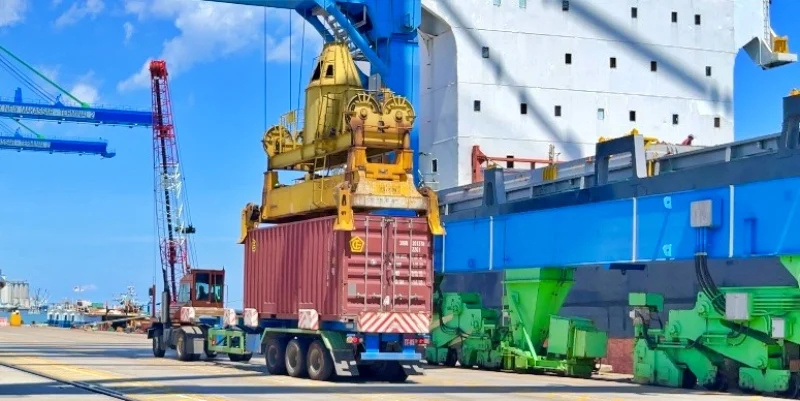
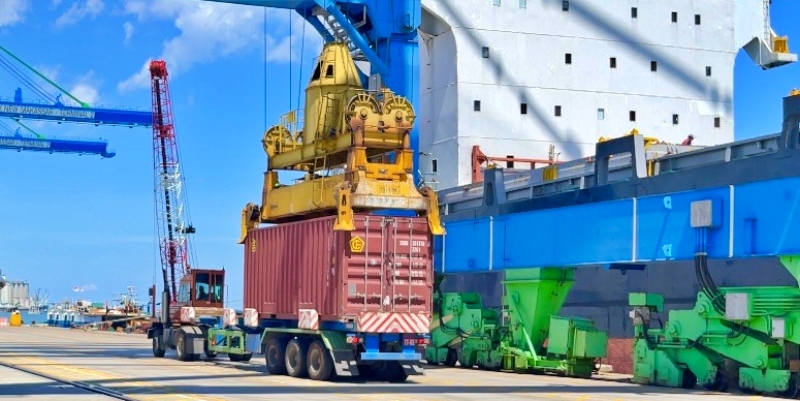
The financial surge of 2026 is rooted firmly in operational data. The most critical metric—container throughput—serves as the ultimate barometer for the health of Indonesia’s real economy.
Key Performance Indicators (KPIs)
- Container Throughput: As of June 2026, Pelindo recorded a container volume of approximately 9.96 million TEUs (Twenty-foot Equivalent Units). This represents a 7% year-on-year growth.
- Profit Margin Expansion: The 60.44% increase in net profit far outstrips the 7% growth in container volume. This disparity highlights a crucial takeaway: Pelindo is not just moving more cargo; it is moving cargo more profitably through rigorous cost-control measures and enhanced operational discipline.
- Efficiency Ratios: By optimizing terminal productivity and reducing turnaround times for vessels, the company has managed to lower the "cost-per-move," directly contributing to the bottom line.
This correlation between physical volume and financial health proves that the company’s focus on the "real economy" is yielding tangible results. When ports move goods efficiently, the entire national supply chain benefits, reducing the cost of logistics for businesses across Indonesia.
Official Perspective: Leadership Insights from Achmad Muchtasyar
In an exclusive briefing on Tuesday, July 21, 2026, Pelindo’s President Director, Achmad Muchtasyar, provided clarity on the drivers of this success. He emphasized that the financial gains were not accidental but the result of a deliberate, disciplined approach to business management.
"The growth in Pelindo’s profit is supported by a combination of revenue increases aligned with operational performance and more disciplined control of business expenses," Muchtasyar stated.
The Philosophy of Corporate Streamlining
Muchtasyar further elaborated on the strategy of "corporate streamlining." According to the President Director, the previous structure of Pelindo was often burdened by administrative overlaps. By simplifying the corporate hierarchy, the company has empowered individual business units to specialize.
"With a simpler structure, each entity can become more focused on its core business and value creation," he added. This decentralization of focus allows terminal managers to react faster to local market demands while adhering to the overarching national standards set by the headquarters.
The Pillars of Transformation: A Deep Dive
Pelindo’s transformation is not a singular event but a continuous process built on four pillars:
1. Digitalization and Standardization
The era of fragmented port operations is coming to an end. Pelindo has implemented a standardized Service Level Agreement (SLA) framework across its major ports. Coupled with advanced digital platforms that allow for real-time tracking of container movements, the company has significantly reduced the "information asymmetry" that once plagued Indonesian logistics.
2. Operational Productivity
Terminal productivity is the heartbeat of a port. By optimizing the planning and control of operations—using predictive analytics to manage berth occupancy and yard storage—Pelindo has ensured that ships spend less time waiting and more time loading and unloading.
3. The Hub and Spoke Model
Pelindo is actively developing a "Hub and Spoke" network. By designating specific ports as international hubs capable of handling large-capacity vessels and using smaller, regional ports as spokes, the company is creating a more resilient logistics network. This ensures that cargo moves seamlessly from industrial hubs to international markets without unnecessary bottlenecks.
4. Integration with Industrial Ecosystems
Ports do not exist in a vacuum. Recognizing this, Pelindo has moved to integrate its services with industrial estates, logistics centers, and intermodal transport systems (rail and road). This creates a "total logistics solution" rather than just a docking service, providing customers with a door-to-door efficiency level that was previously unattainable.

Implications for the National Economy
The performance of Pelindo is a proxy for the resilience of the Indonesian economy. As the country aims to lower the "Logistics Performance Index" (LPI) rankings, Pelindo’s success has far-reaching implications:
- Lowering National Logistics Costs: As Pelindo achieves higher efficiency, the cost of moving goods throughout the archipelago drops. This makes Indonesian products more competitive in the global market.
- Attracting Foreign Investment: A streamlined, efficient port network is a prerequisite for foreign direct investment. By proving that it can manage large volumes with high efficiency, Pelindo makes Indonesia a more attractive destination for multinational manufacturing firms.
- Supply Chain Stability: The integration of ports with industrial estates ensures that domestic supply chains are less susceptible to external shocks. This provides a buffer for Indonesian businesses, especially in times of global economic volatility.
Future Outlook: Sustaining the Momentum
As Pelindo enters the second half of 2026, the focus will shift from "streamlining" to "scaling." The company faces the challenge of maintaining this growth rate while navigating global economic pressures and the ongoing need for infrastructure upgrades.
Achmad Muchtasyar’s vision for the future remains clear: "Through the development of networks and service integration, we want to strengthen the role of ports as the main node of national logistics while creating a more efficient flow of goods."
The transition from a state-owned operator to a world-class logistics powerhouse is well underway. For stakeholders, investors, and the general public, the 2026 H1 results serve as a powerful indicator that the strategic pivot under Danantara Indonesia is delivering on its promise. As long as the discipline in cost control and the focus on core operational excellence remain the guiding principles, Pelindo is well-positioned to remain a cornerstone of Indonesia’s economic growth for the next decade.
Conclusion
Pelindo’s journey in 2026 serves as a compelling case study on how structural reform, when coupled with digital innovation and disciplined management, can transform massive, complex state enterprises. The 60.44% profit growth is not merely a financial achievement; it is a signal that Indonesia’s maritime sector has reached a new level of maturity, ready to support the nation’s ambitious development goals. As the company continues to refine its "hub and spoke" strategy, the impact will be felt not just in the corporate offices of Pelindo, but in every factory, warehouse, and consumer household that relies on the smooth movement of goods across the Indonesian archipelago.