Unveiling the Hidden Serpent: A Rare Encounter with the Javanese Mountain Kukri in Wonosalam
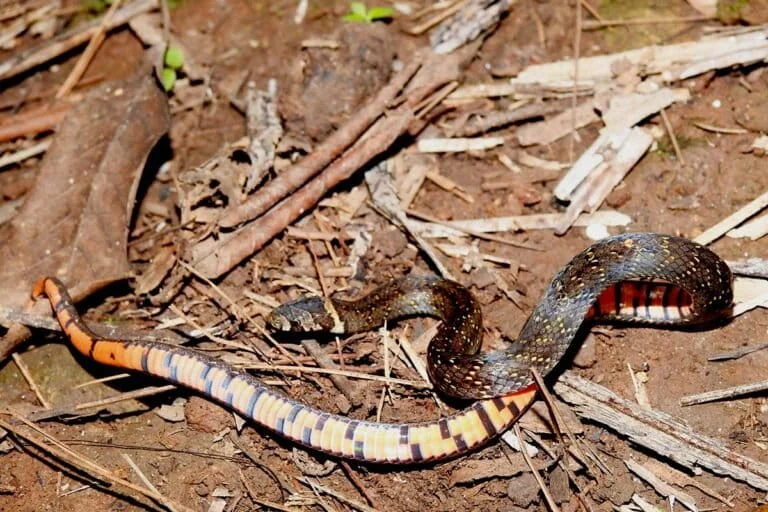
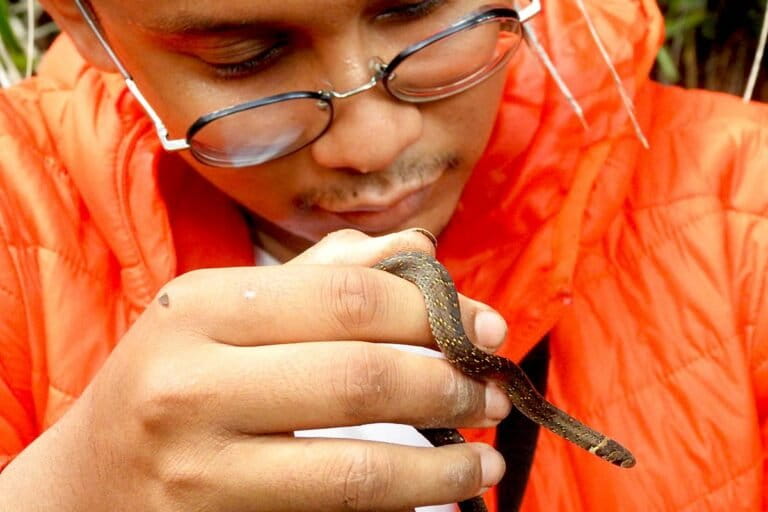
Deep within the secondary forests cloaking the slopes of Mount Anjasmoro in Jombang, East Java, a quiet, ground-dwelling drama unfolded. Amidst the damp decay of leaf litter, a small, unassuming serpent moved with deliberate grace. For Muhammad Asyraf Rijalullah, a 26-year-old Master of Biology graduate from Universitas Brawijaya, the sight was nothing short of a milestone. It was his first direct encounter with the elusive Javanese Mountain Kukri (Oligodon bitorquatus), a species rarely documented and often misunderstood by those who traverse the fringes of Java’s highland forests.
As an independent researcher who has previously collaborated with the Wildlife Conservation Society (WCS) Indonesia, Asyraf was not expecting such a significant find during a routine field survey conducted on April 5–6, 2026. The expedition was intended as a preliminary biodiversity assessment—a foundational check to catalogue the fauna inhabiting the region. What he discovered, however, provided a vital piece of the puzzle regarding the ecological health of the Anjasmoro highlands.
A Chance Encounter: The Chronology of Discovery
The survey began with modest expectations. The first day of observation passed without any major breakthroughs. The team noted that the secondary forest conditions on the slopes of Mount Anjasmoro were unique; while not as humid as the lush rainforests of the lowlands, the habitat possessed a distinct microclimate that clearly supported a specialized suite of organisms.
The "unexpected meeting" occurred on the second day, under the canopy of a crisp, post-rain morning. By 10:00 AM, the team was navigating the slippery, mud-slicked paths as they prepared to return to their base camp. The previous night’s rainfall had rendered the terrain treacherous, forcing the researchers to tread carefully. It was in this moment of physical exertion that Asyraf’s sharp eyes caught a subtle, rhythmic movement beneath a decaying log at the edge of the trail.
"I moved the wood, and there it was—a snake," Asyraf recalled during an interview on July 2, 2026.
What followed was a disciplined approach characteristic of professional field biologists. Despite the snake’s diminutive size, Asyraf maintained a cautious distance. In the realm of herpetology, the rule of thumb is universal: treat every unknown specimen as potentially dangerous until it is positively identified.
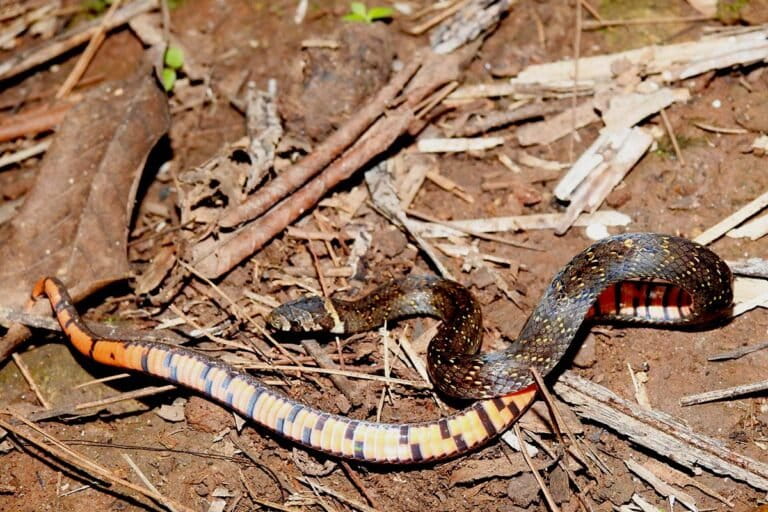
Using a professional snake hook, the team performed a careful examination. They analyzed the scale patterns, the morphology of the head, and the ventral coloration. Only after the team confirmed that the specimen lacked the distinct features of the dangerous coral snakes or cobras did they proceed with closer observation. For Asyraf, the adrenaline of the moment was tempered by the realization that he was standing in the presence of a species he had only ever read about in academic literature.
The Anatomy of the Kukri: Nature’s Precision Tool
The Javanese Mountain Kukri is not a creature that draws immediate attention. Its coloration is earthy and muted, designed specifically to camouflage with the forest floor’s mosaic of dead leaves and soil. However, its biological claim to fame lies in its specialized dentition.
The genus Oligodon, to which the Javanese Mountain Kukri belongs, is famously named for its unique teeth, which resemble the kukri—the iconic, curved traditional knife of the Gurkhas in Nepal. This evolutionary adaptation is not merely for defense; it serves a highly specific dietary purpose. These snakes are specialized egg-predators. Their razor-sharp, blade-like teeth are designed to pierce and slice through the shells of reptile eggs, allowing the snake to consume the contents efficiently.
This functional anatomy highlights the snake’s role in the food web as a predator of other reptiles, maintaining the delicate balance of the forest ecosystem.
Challenging Established Scientific Paradigms
Perhaps the most compelling aspect of this discovery was the time of the encounter. Scientific literature consistently categorizes the Javanese Mountain Kukri as a crepuscular species—an animal primarily active during the twilight hours of dawn and dusk. This behavioral pattern is an evolutionary strategy to avoid the intense heat of the midday sun and the high activity levels of diurnal predators.
However, Asyraf’s team encountered the specimen in full daylight. "This is quite interesting," Asyraf noted. "We saw it active at 10:00 AM, which deviates significantly from the typical crepuscular behavior documented in existing research."
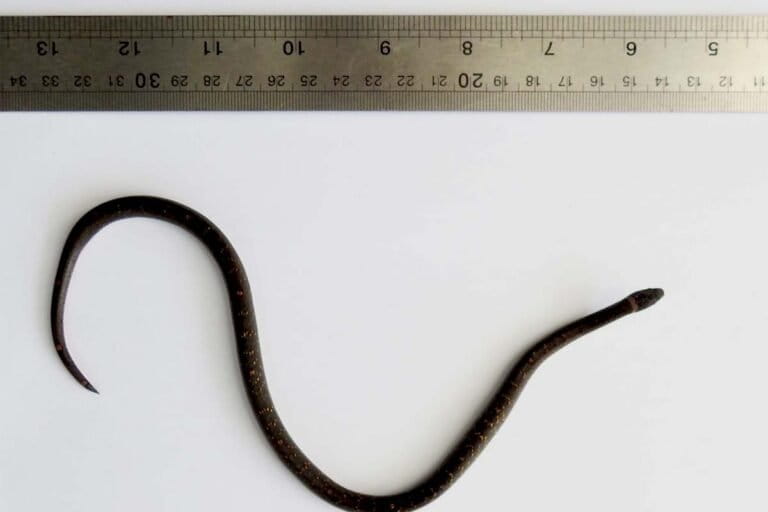
This discrepancy suggests that our understanding of the Javanese Mountain Kukri’s behavioral plasticity remains incomplete. It raises questions about whether environmental stressors, localized temperature shifts in the secondary forest, or specific hunting opportunities are forcing these snakes to adapt their activity cycles. While the IUCN Red List classifies the species as "Least Concern," the scarcity of documented sightings implies that much of its life cycle remains a mystery, underscoring the need for further, more intensive field studies.
Habitat and Ecological Significance
The location of the find is just as important as the snake itself. Agus Nurrofik, a researcher from the organization Sahabat Alam Indonesia, provided further context. The discovery occurred in a buffer zone—an essential transition area between productive forest and protected forest on the slopes of Mount Anjasmoro.
"This area is located near the borders of the Raden Soerjo Grand Forest Park (Tahura)," Agus explained. The habitat is characterized by a mix of Pinus merkusii (Sumatran pine), Eucalyptus sp., and various indigenous mountain trees that provide a dense, protective canopy. This specific vegetation structure creates a stable micro-habitat that supports not only the Javanese Mountain Kukri but a wide array of herpetofauna.
However, the team expressed deep concern regarding the encroaching human activity. The expansion of agroforestry in Wonosalam—specifically the conversion of forest margins into coffee and citrus plantations—poses a tangible threat to these sensitive habitats.
"The expansion of agroforestry is the most visible threat right now," Agus stated. "As forest patches are fragmented and converted into monoculture plantations, the corridors that these snakes and other small vertebrates rely on are disappearing. We are losing the biodiversity before we even have the chance to document it fully."
Implications: From Academic Research to Community Action
The documentation of the Javanese Mountain Kukri serves as more than just a data point for biology journals. It acts as a barometer for the health of the Wonosalam ecosystem. Agus and his team at Sahabat Alam Indonesia believe that this data is crucial for developing a comprehensive profile of the region’s biodiversity, encompassing everything from dragonflies and butterflies to reptiles and amphibians.
The ultimate goal, however, extends beyond the academic community. The researchers are pushing for a collaborative model that involves local communities and coffee farmers. By integrating scientific findings with eco-tourism and education, they hope to foster a sense of stewardship among the local populace.
"We want the community to recognize the rare and unique wildlife that lives in their own backyard," Agus added. "When people understand that their coffee plantations or agricultural plots are connected to the survival of rare species like the Mountain Kukri, they are more likely to support sustainable practices that preserve these habitats."
Conclusion: A Call for Conservation
The encounter on the slopes of Mount Anjasmoro is a poignant reminder of the hidden wonders existing within our rapidly changing landscapes. The Javanese Mountain Kukri may be small, but its presence is a significant indicator of ecological integrity.
As urban and agricultural expansion continues to push into the highlands of East Java, the survival of such species depends on our ability to balance economic needs with environmental preservation. The work of researchers like Asyraf and organizations like Sahabat Alam Indonesia is vital in providing the scientific backbone necessary for effective conservation policies.
If the forests of Wonosalam are to remain a sanctuary for the Javanese Mountain Kukri, the path forward must be one of co-existence. Protecting these creatures is not merely about preserving a single species; it is about safeguarding the complex, interconnected web of life that sustains our natural world. The Javanese Mountain Kukri may have been hiding in the shadows of a log, but its story is one that must be brought into the light of public awareness and policy action.