Justice in Limbo: The Ordeal of Misran Toni and the Fight Against Coal Hauling Exploitation
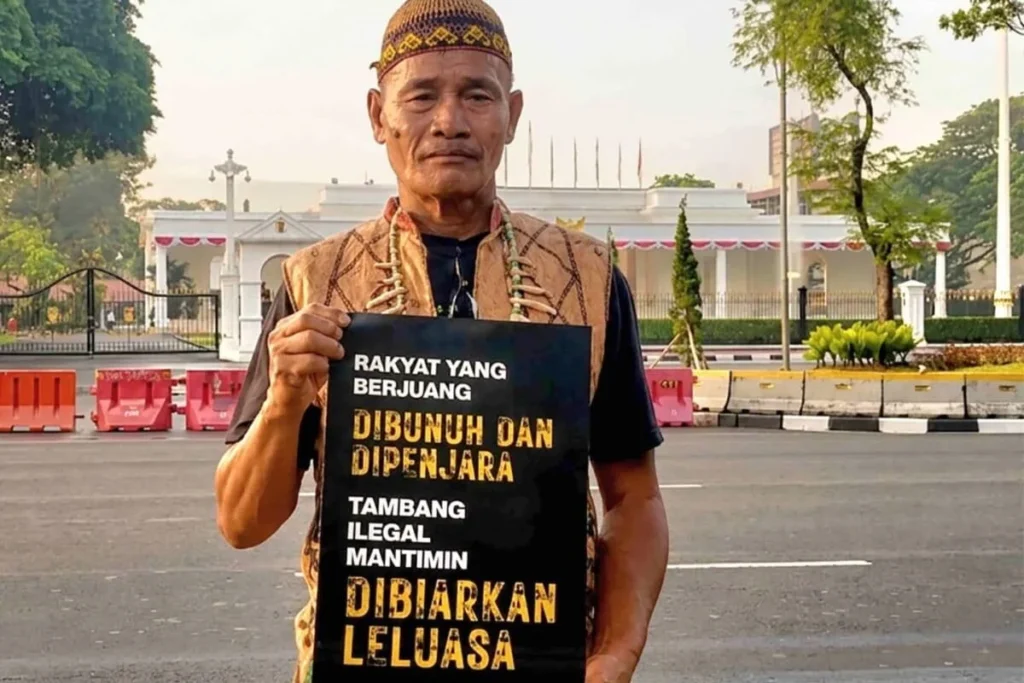
The acquittal of Misran Toni—locally known as "Imis"—by the Tanah Grogot District Court in East Kalimantan on April 19, 2026, was meant to be the end of a nightmare. After nine months of wrongful imprisonment, accused of a murder he did not commit, the activist expected to return to his life in the village of Muara Langon, Paser Regency. Instead, he found himself entangled in a labyrinthine struggle against a judicial system that seems determined to keep him in its crosshairs.
What followed his release was a chilling reminder of the fragility of justice for those standing against the extractive industry. Despite the court’s clear verdict of innocence regarding the tragic death of Russel—a fellow activist killed at a coal-hauling protest site in November 2024—the Prosecutor’s Office has pursued a cassation appeal. This legal maneuver, compounded by allegations of forged signatures on court documents and systemic harassment, suggests that the case against Imis was never about truth, but about silencing dissent.
A Chronicle of Coerced Confessions and Fabricated Evidence
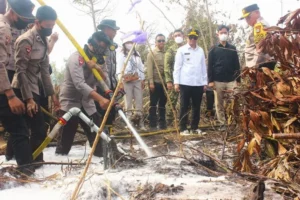
The ordeal began in the wake of the murder of Russel on November 15, 2024, at 4:00 AM. Russel and another guard, Anson, were attacked by unidentified assailants while sleeping at a blockade site, where local residents had gathered to protest the use of public roads for coal-hauling trucks. Russel succumbed to his injuries, while Anson suffered severe wounds.
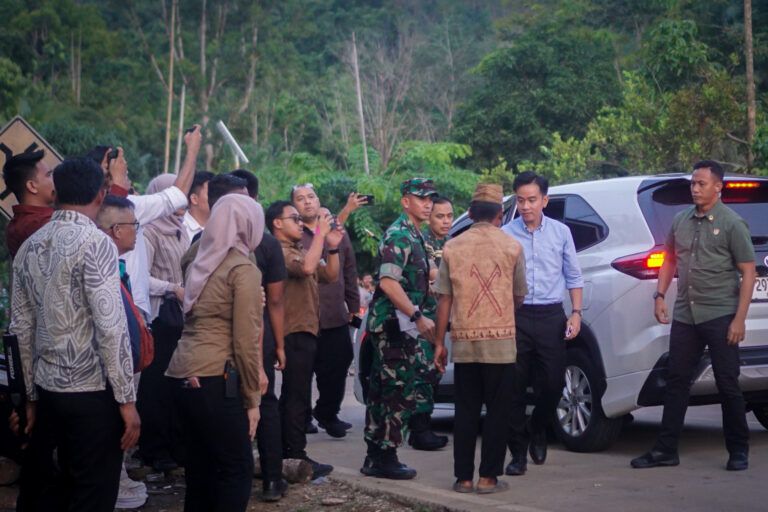
Imis, who had briefly stepped away from the post, was among those who rushed to the scene to provide aid. However, the tragedy was swiftly weaponized by local authorities. Following a visit by Vice President Gibran Rakabuming Raka on June 14, 2025, to address the unrest in Muara Kate, police pressure intensified to "solve" the case quickly.
The Anatomy of Criminalization
According to Fathul Huda Wiyashadi, a member of Imis’s legal team, the prosecution’s case against their client was devoid of factual substance. The police investigation was characterized by:
- Coercion: During his detention at the East Kalimantan Regional Police (Polda Kaltim), Imis was subjected to multiple interrogation sessions where officers attempted to force a confession. They resorted to intimidation, threats, and even illicit offers of alcohol and women to extract a guilty plea.
- Arbitrary Psychiatric Testing: Without notifying his family or legal counsel, police transferred Imis to a mental health facility in Samarinda. Despite the blatant attempt to declare him mentally unfit or unstable to discredit his testimony, Imis completed psychological assessments in record time, with doctors confirming his mental soundness.
- Unlawful Detention: Even when his legal detention period expired on November 12, 2025, police refused to release him. When his family and supporters attempted to secure his release, authorities responded with physical violence, dragging Imis from his vehicle and throwing him onto the asphalt before forcibly returning him to custody.
The "Ghost" Signature: Procedural Malpractice
The most alarming development occurred after Imis’s acquittal. For over a week, the defense team waited for any official notice of a cassation appeal. None arrived. However, when legal counsel investigated the post office in Muara Komam on May 18, 2026, they discovered that the notice had been held there for weeks.
Even more disturbing was the discovery that the document already bore a signature purportedly belonging to Imis. It was a forgery. Imis had never signed the document, and the handwriting was clearly inconsistent with his own. The postal service cited a lack of resources—specifically transport and fuel—as the reason for the failed delivery. For Imis and his advocates, this "administrative failure" appears to be a deliberate attempt to expire the legal window for filing a counter-memorandum, effectively sabotaging his right to defense.
The Wider Struggle: Public Roads vs. Private Profits
The case of Misran Toni is not an isolated incident; it is a symptom of a systemic conflict between the rights of indigenous communities and the insatiable demand of the coal industry.
Legislative Roots of Conflict
The catalyst for the ongoing unrest is the contentious Article 91, Paragraph 3, of Law Number 2/2025 concerning Mineral and Coal Mining (Minerba Law). This provision effectively legalizes the use of public infrastructure for heavy industrial coal-hauling trucks.
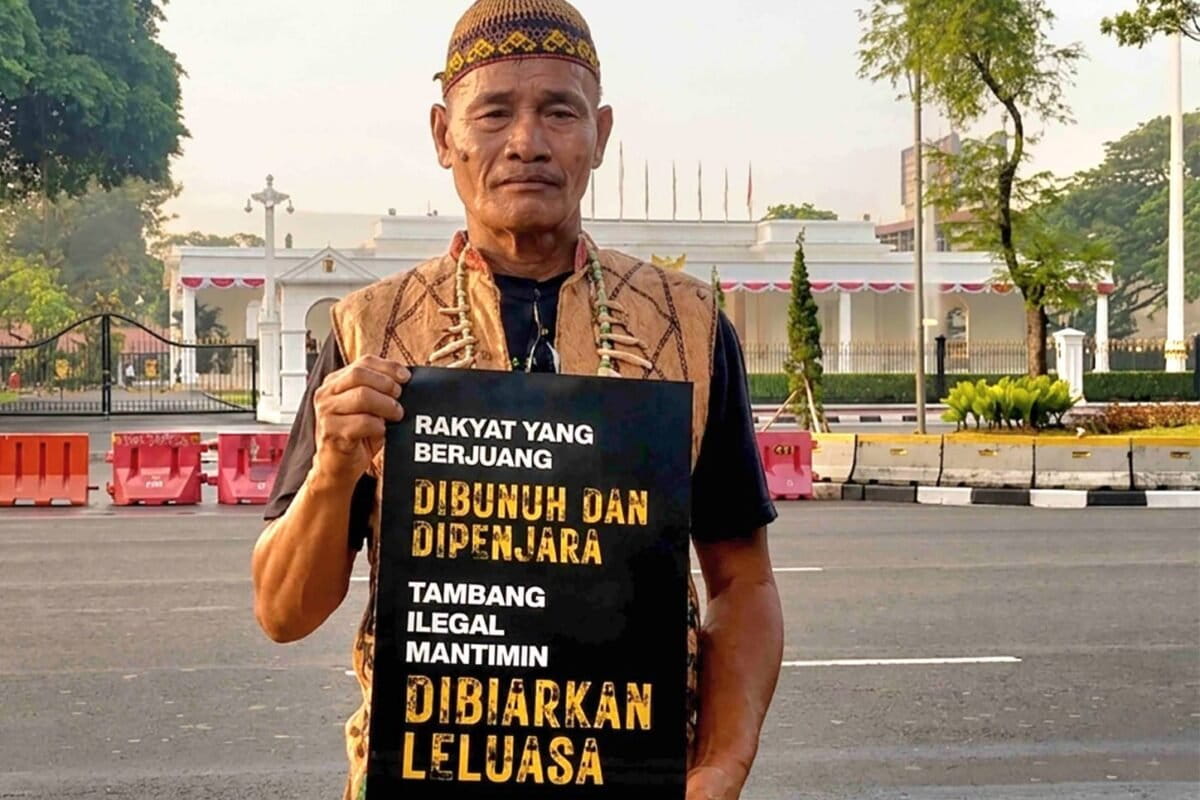
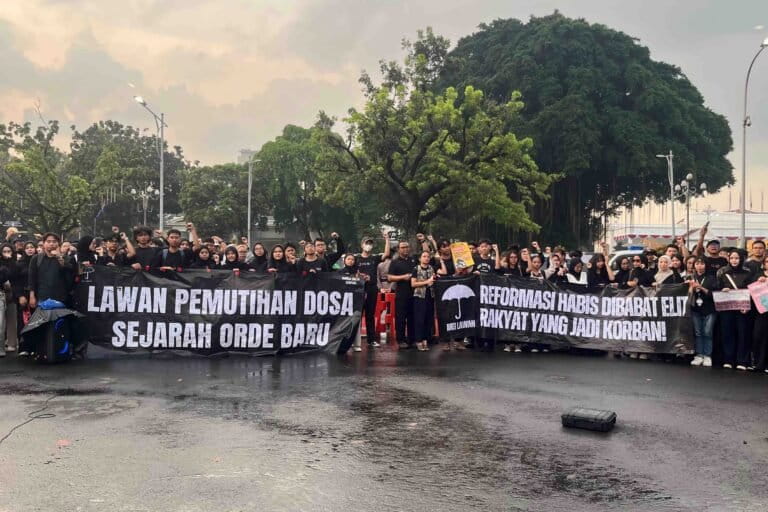
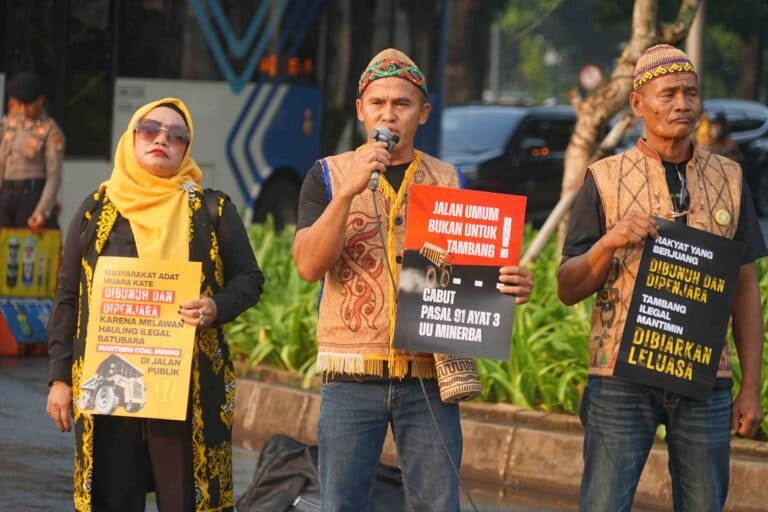
Warta Linus, a comrade of Imis, argues that the law serves as a "license to kill" for mining companies. "It is deeply regrettable," Warta stated during the recent Aksi Kamisan (Thursday Protest) at the Presidential Palace in Jakarta. "The government creates laws from air-conditioned offices without feeling the misery on the ground. These roads are for the people, yet they are turned into death traps by coal trucks that have claimed countless lives."
Environmental and Social Impact
In regions like Batu Kajang and Muara Kate, the presence of these trucks is a constant, lethal threat. Women in these villages have been forced to sleep on the asphalt in protest, risking their lives to block the passage of heavy vehicles. Jatam Kaltim (Mining Advocacy Network of East Kalimantan) reports that this conflict spans multiple regencies, including Kutai Timur, Kutai Kartanegara, and Kutai Barat. The state, they argue, has consistently prioritized the interests of mining giants over the safety and constitutional rights of its citizens.
Demanding Accountability: The Path to Justice
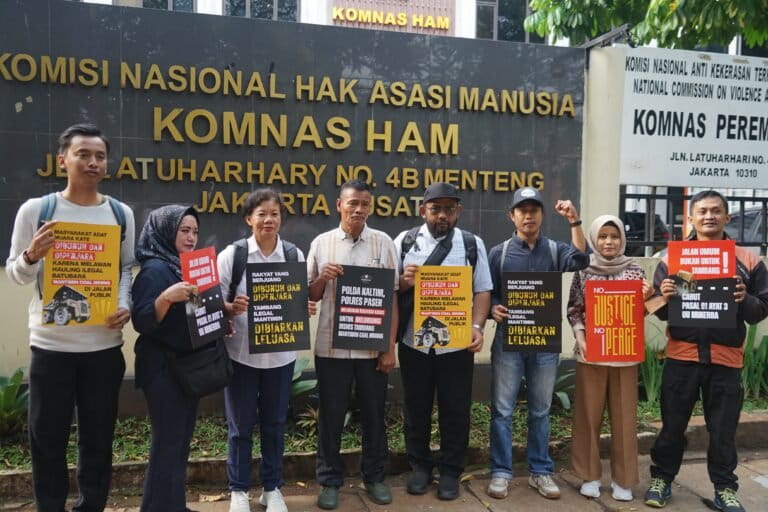
In June 2026, Imis, accompanied by representatives from the Legal Aid Institute (LBH) of Samarinda and Jatam Kaltim, embarked on a series of advocacy missions in Jakarta. Their objectives were clear: to expose the judicial re-engineering of the Muara Kate case and to push for a judicial review of the Minerba Law.
Official Responses and Stagnation
The delegation met with officials from:
- The National Commission on Human Rights (Komnas HAM): While Commissioner Saurlin P. Siagian acknowledged the reports of systemic violations and agreed to discuss the findings internally, there has been little tangible action to date.
- The National Police (Mabes Polri): The delegation filed formal complaints regarding the conduct of officers in the Paser Regency, who they believe acted with impunity throughout the detention and trial process.
- YLBHI (Indonesian Legal Aid Foundation): The activists held an examination of the court decision to educate the public on how the prosecution manipulated facts to fit a narrative of criminality.
The Stakes for Indonesia’s Legal Future
The case of Misran Toni has become a litmus test for the integrity of the Indonesian judiciary. As the matter heads to the Supreme Court (MA), the eyes of civil society are fixed on whether the court will uphold the initial acquittal or bow to political and industrial pressures.
"If the Supreme Court validates the actions taken by the Paser Police and the District Prosecutor, then the very marrow of justice in this country has been hollowed out," warned Fathul Huda Wiyashadi. "The dignity of the rule of law is being put to the test."
For Imis, the fight is not just about his personal freedom—it is about the village of Muara Kate and the safety of the residents who refused to be bullied by the coal industry. The real killers of Russel remain at large, protected by a system that finds it easier to prosecute an innocent activist than to investigate powerful mining interests.
As the nation waits for the final verdict, the message from the activists is clear: the struggle will continue. They are preparing for more rigorous, potentially more forceful, demonstrations against the Minerba Law and the ongoing criminalization of environmental defenders. For the people of Muara Kate, justice delayed is justice denied, but justice manipulated is an injustice that will not be tolerated silently.
Key Timeline Summary:
- November 15, 2024: Russel is killed and Anson is injured at a blockade against coal hauling.
- June 14, 2025: Vice President Gibran visits Muara Kate; police pressure to find a "culprit" increases.
- November 12, 2025: Imis is denied release, physically assaulted by police, and returned to detention.
- April 19, 2026: Tanah Grogot District Court acquits Misran Toni.
- May 18, 2026: Defense team discovers a forged signature on a cassation notice held at the post office.
- June 21–26, 2026: Imis and advocates hold series of actions in Jakarta, including filing reports with Komnas HAM and participating in the Aksi Kamisan.