The Paradox of the Slow Loris: Why Asia’s "Cute" Primate Is a Deadly Evolutionary Marvel
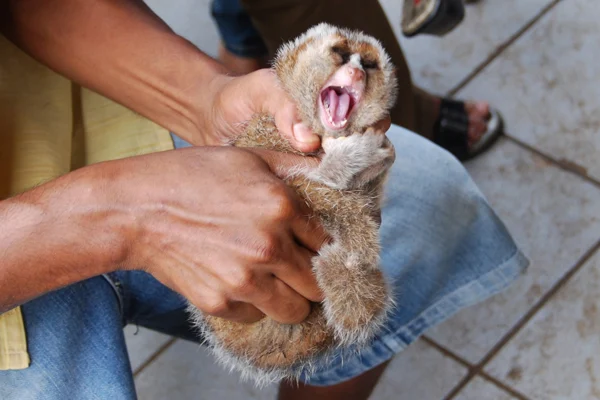
At a fleeting glance, the slow loris (Nycticebus) appears to be the epitome of innocence. With its oversized, soulful eyes, diminutive frame, and deliberate, measured movements, it has captured the hearts of millions across social media platforms. However, beneath this disarming exterior lies one of the most sophisticated and misunderstood defense mechanisms in the animal kingdom. The slow loris is not the cuddly pet that viral videos suggest; it is a highly specialized, venomous predator that has evolved to survive in the dense, competitive shadows of Southeast Asia’s rainforests.
The Hidden Arsenal: Understanding the "Cute" Defensive Stance
Many observers mistake the slow loris’s defensive posture for a sign of affection or a request to be held. When a loris feels threatened, it often raises its arms above its head. To the uninitiated, this looks like a playful gesture. In reality, it is a calculated, life-saving maneuver. By raising its arms, the loris is not asking for a hug; it is shielding its head while simultaneously gaining access to the brachial glands located on the inside of its elbows.
These glands secrete a pungent, oily substance that, when mixed with the loris’s saliva, becomes a potent toxin. This chemical defense is a rarity among mammals. When threatened, the loris licks these glands, coating its teeth in a cocktail of toxins capable of causing severe anaphylactic shock or necrotic wounds in predators—and even in humans. This evolutionary adaptation serves as the loris’s primary line of defense, compensating for its inability to flee at high speeds. While other primates rely on agility and group dynamics to escape threats, the loris relies on its chemistry.
Evolutionary Adaptations: The Master of the Night
The slow loris is a consummate nocturnal specialist. Its large, orb-like eyes are not merely an aesthetic trait; they are complex biological tools designed to capture the faintest glimmers of light in the forest canopy. This allows the loris to navigate the dark, hunt for insects, and forage for fruit and tree gum with precision.
Its physiological makeup is a study in energy efficiency. Unlike the frantic, high-octane movements of monkeys or apes, the slow loris moves with an agonizingly slow, rhythmic pace. This "slow-motion" lifestyle is an energy-saving strategy that allows it to thrive in nutrient-poor environments. Its hands and feet, equipped with powerful, vise-like grips, allow it to remain suspended from branches for hours, waiting for the perfect moment to strike at a beetle or access a patch of tree sap. By consuming everything from insects and bird eggs to tree exudates—which they access using specialized "tooth-combs"—the loris occupies a unique ecological niche that few other primates can exploit.
A Chronology of Peril: From Canopy to Cage
The history of human-loris interaction is a narrative of escalating threat. For centuries, these primates lived in relative obscurity, protected by the density of the rainforests and their own elusive nocturnal nature. However, the 21st century brought new dangers:
- Pre-2000s: Slow lorises lived largely undisturbed, known primarily to indigenous communities as creatures of the night.
- The Early 2000s: The rise of the internet and social media began to showcase the "cute" side of the loris. Videos of captive lorises being tickled went viral, creating a dangerous global demand for them as exotic pets.
- The 2010s: Conservation organizations, including the International Animal Rescue (IAR), began documenting the brutal realities of the pet trade. To prevent these animals from biting their owners, traffickers began the cruel practice of forcibly pulling out the loris’s teeth—often without anesthesia—leading to systemic infections and death.
- Present Day: Deforestation and the illegal wildlife trade have decimated populations. According to the International Union for Conservation of Nature (IUCN), the slow loris is in a state of crisis.
Supporting Data: The Fragility of a Species
The biological reality of the slow loris makes it uniquely ill-suited for captivity. Their specific dietary requirements, need for vast territorial ranges, and sensitive nocturnal biological clocks mean that they suffer immensely when removed from the wild.
Current IUCN data paints a grim picture:
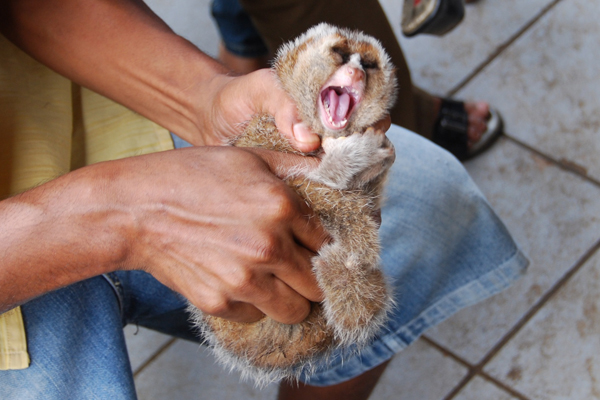
- There are five recognized species of slow loris.
- Four of these species are officially listed as "Vulnerable" to extinction.
- The Javan slow loris (Nycticebus javanicus) is categorized as "Endangered," facing the immediate threat of total extinction due to the dual pressures of habitat fragmentation and illegal capture.
The fragmentation of their habitat—driven by palm oil plantations and urban expansion—creates "islands" of forest that are too small to sustain healthy breeding populations, leading to genetic bottlenecks and increased vulnerability to disease.
Official Responses and Conservation Efforts
Conservation bodies and government agencies across Southeast Asia have ramped up efforts to combat the illicit trade. Organizations such as the Yayasan International Animal Rescue (IAR) Indonesia have been at the forefront, conducting rescue operations, rehabilitating mistreated individuals, and educating the public about the dangers of the pet trade.
"The slow loris is not a toy," conservationists emphasize. Law enforcement agencies in Indonesia and beyond have implemented stricter anti-trafficking measures, yet the profit margins in the illegal exotic pet market remain a powerful incentive for poachers. Official policy is now shifting toward a "Zero Tolerance" approach, where the focus is not only on rescuing animals but on dismantling the social media marketing campaigns that drive the demand for them in the first place.
Implications: A Future in the Balance
The survival of the slow loris carries significant implications for the health of Southeast Asian ecosystems. As seed dispersers and insect controllers, their presence is vital for the regeneration of the forests they inhabit. Their existence proves that "survival of the fittest" does not always equate to "survival of the fastest."
However, the future of the species remains precarious. The ongoing destruction of their forest homes, coupled with the persistent, misguided desire of humans to own them as pets, creates a two-front war against their survival. If we fail to protect them, we do not just lose a unique evolutionary marvel; we lose a key component of the rainforest’s delicate biodiversity.
The slow loris serves as a mirror for our own relationship with nature. We are often drawn to what is beautiful, but we rarely respect what is wild. To ensure that these silent, nocturnal masters continue to navigate the canopy, we must accept that their place is not in our living rooms, but in the dark, mysterious depths of the forests where they have evolved for millions of years.
The battle to save the slow loris is a race against time. It requires a shift in global perspective: moving away from the consumerist view of wildlife as entertainment and toward a model of conservation that respects the autonomy, the chemistry, and the complex, quiet life of one of the most extraordinary mammals on Earth.