The Last Salt Farmers of Kusamba: A Dying Legacy Against the Rising Tide
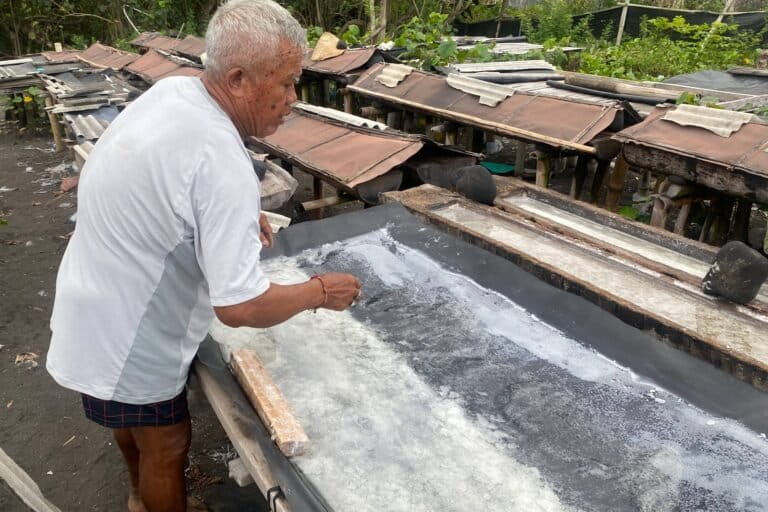
In the coastal village of Kusamba, Klungkung, Bali, the rhythmic sound of the waves has long been the heartbeat of a unique cultural heritage. Here, under the unrelenting equatorial sun, Nengah Bantat (71) and his wife, Ketut Keprug, perform a ritual that has defined their community for generations. With hands calloused by decades of labor, they meticulously fold sheets of black geomembrane—a synthetic polymer used to trap seawater.
This is the life of the traditional salt farmer, a profession that once supported hundreds of families along the stretch from Kusamba to Pesinggahan. Today, however, that number has dwindled to a mere handful. As the ocean creeps closer to their doorsteps and the economic viability of the craft wanes, the salt farmers of Kusamba are fighting a losing battle against the dual forces of environmental degradation and modernization.
A Vanishing Craft: From Hundreds to a Handful
To understand the scale of this decline, one must look back to the 1990s. For Nengah Bantat, who entered the industry in 1979 at the age of 24, the memory of a bustling coastline is vivid. "Back in the 1990s, there were hundreds of us making salt, spanning from the shores of Kusamba all the way to Pesinggahan," he recalls in his native Balinese.
Bantat is a repository of indigenous knowledge, having learned the craft from his father—who was self-taught—and later perfected it under the tutelage of his father-in-law. Yet, this knowledge is unlikely to be passed down to the next generation. His daughter, Nengah Sudarmini, helps only in her spare time, viewing the profession as a precarious gamble. "I feel for my children, but making salt is simply too uncertain," Bantat admits with a heavy heart. Sudarmini echoes this sentiment, noting that when the waves grow high and the weather turns, the income vanishes entirely.
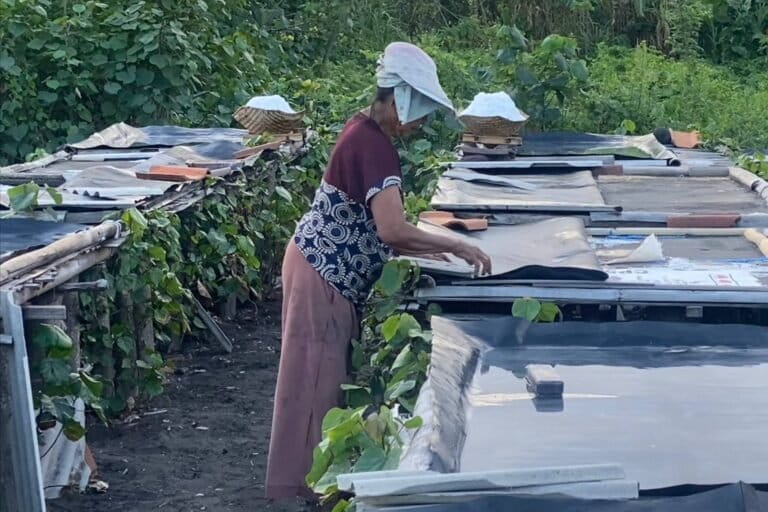
The statistical decline is stark. Research from the local government and independent studies indicate that in the 1970s, there were approximately 180 salt farmers in Kusamba. By 2022, that number had fallen to 19. Recent field reports from 2026 suggest there are now only 14 individuals still holding onto the trade.
The Art of the Palung: A Unique Coastal Technology
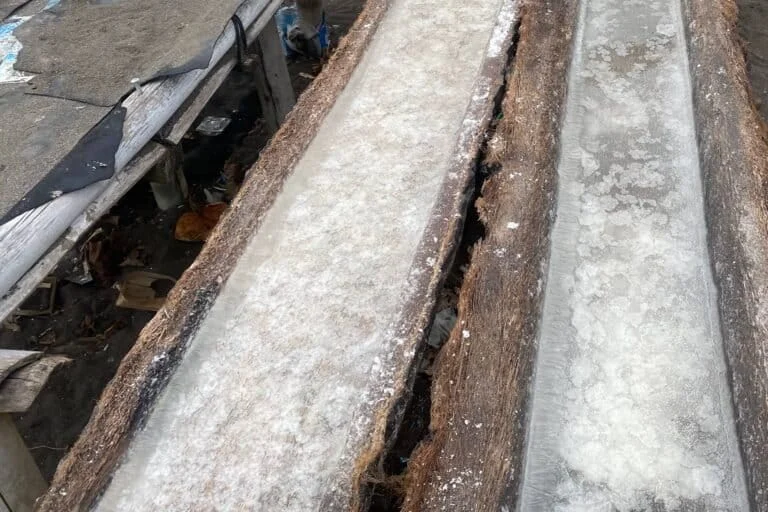
The salt production in Kusamba is distinct from other regions in Bali, such as Amed (Karangasem) and Tejakula (Buleleng). While all three regions utilize the palung—a trough-like hollowed-out tree trunk—the methods of purification and refinement differ.
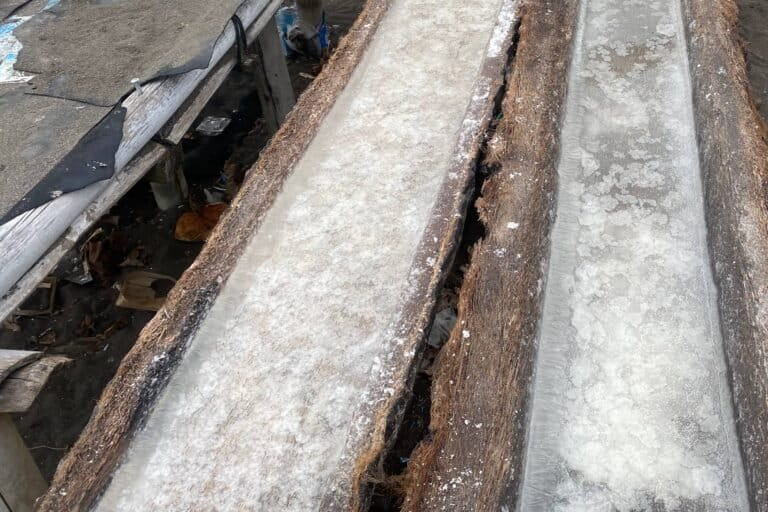
In Kusamba, the process is a labor-intensive sequence:
- Extraction: Seawater is pumped through pipes (a modern improvement over the ancient practice of carrying buckets by hand) onto a prepared sandy beach.
- Evaporation: The sand, saturated with seawater, is left to dry under the intense tropical sun.
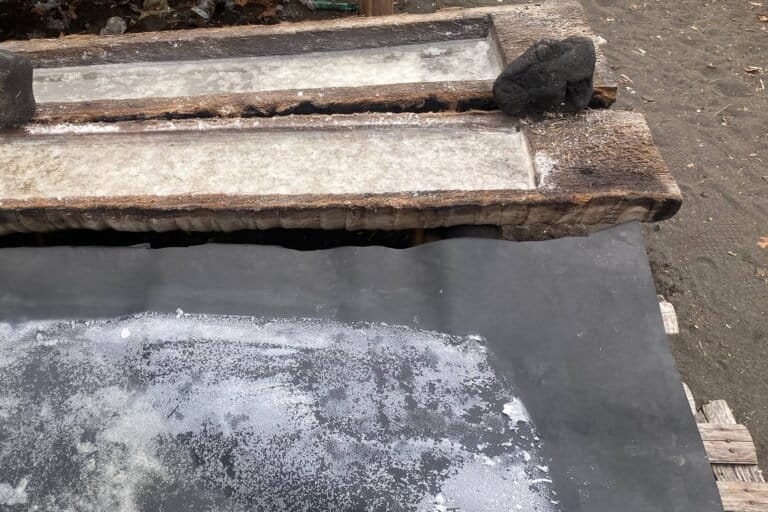
- Concentration: The saline-crusted sand is collected and placed in a reservoir, where "aged" seawater is added to leach out a highly concentrated brine.
- Crystallization: This brine is then poured into palungs and left to evaporate until the pure, white salt crystals form.
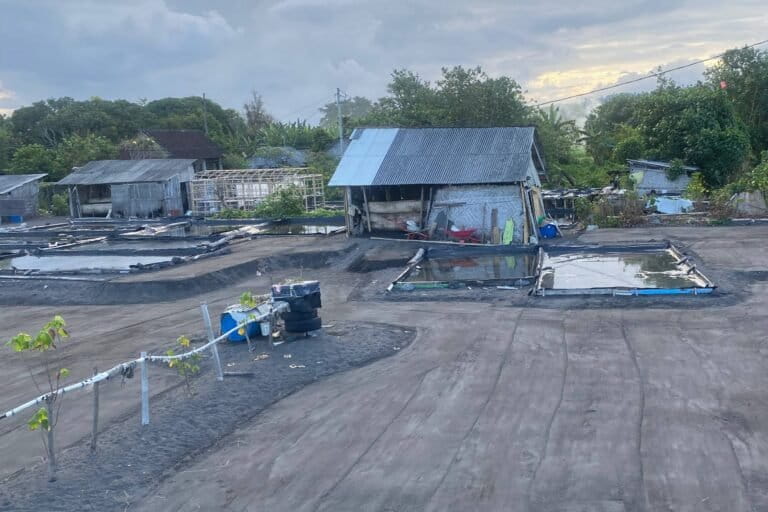
The Kusamba method is unique because the palungs are covered to protect them from dust and wind-blown debris, resulting in a cleaner, brighter final product. Despite the introduction of geomembrane technology in 2020—which allows for faster, more efficient evaporation—many farmers continue to use the traditional palung because a niche market of connoisseurs specifically requests the hand-processed variety.
Chronology of a Crisis: Abrasion and Infrastructure
The decline of salt farming is not merely a result of generational shifts; it is a story of environmental survival. The coastline of Klungkung has undergone drastic transformations over the last two decades.
- 2014–2018: Klungkung reached its peak as the highest salt-producing regency in Bali.
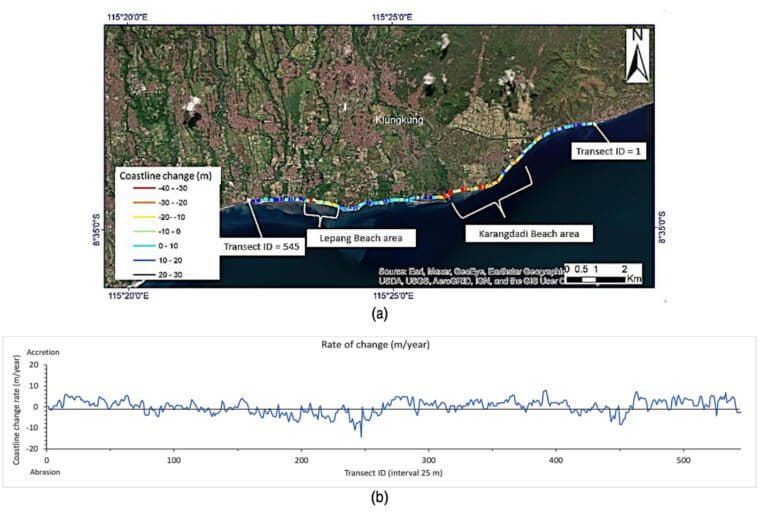
- 2015–2020: Studies by the Journal of Marine and Aquatic Sciences recorded a coastal retreat due to abrasion ranging from 0.05 to 1.8 meters per year.
- 2020: The construction of the Tribuana Port, designed to facilitate tourism travel to the island of Nusa Penida, significantly reduced the available land for salt production.
- 2023: A year of record-breaking abrasion. Farmers reported waves leaping over protective walls, flooding the production sites with seawater and debris, rendering the land unusable for weeks as farmers struggled to clear the rocks and sand.
- 2024: Production figures hit a record low, with some reports suggesting a nearly 100% drop compared to 2014 levels, as the physical space for the craft literally disappeared into the sea.
The impact of the port development is perhaps the most painful irony. While the infrastructure project was intended to boost the regional economy through tourism, it effectively marginalized the traditional salt farmers, pushing them into smaller and smaller pockets of land until they could no longer expand or maintain their operations.
Official Responses and the Failure of Mitigation
Ni Made Candrawati, Head of the Fisheries Division at the Klungkung Food Security and Fisheries Agency, acknowledges the gravity of the situation. "There are already two former salt-producing areas that are completely non-functional due to extreme abrasion," she stated during an interview.
In 2022, the government attempted to stem the tide by constructing a 10.64-kilometer sea wall from Sidayu to Kusamba, overseen by the Bali-Penida River Basin Agency (BWS). While the two-meter-high barrier offered initial hope, it has proved insufficient. In several areas, the wall has already begun to crumble under the force of the waves, and the construction process itself has left behind rocky debris that makes it difficult for farmers to prepare their sandy evaporation beds.
"We provide support in the form of facilities and equipment," Candrawati explained, "but addressing the root cause—the rapid coastal erosion—requires complex, multi-agency coordination that has yet to yield a long-term solution."
Implications: The Loss of Cultural Identity
The implications of this decline extend far beyond the economic loss of a few tons of salt. The salt of Kusamba is a living artifact of Balinese history. It represents a harmonious, albeit difficult, interaction between the people and the sea. When the last salt farmer hangs up their wooden ladle, the palung technology will likely vanish with them, taking a piece of the village’s soul into history books.
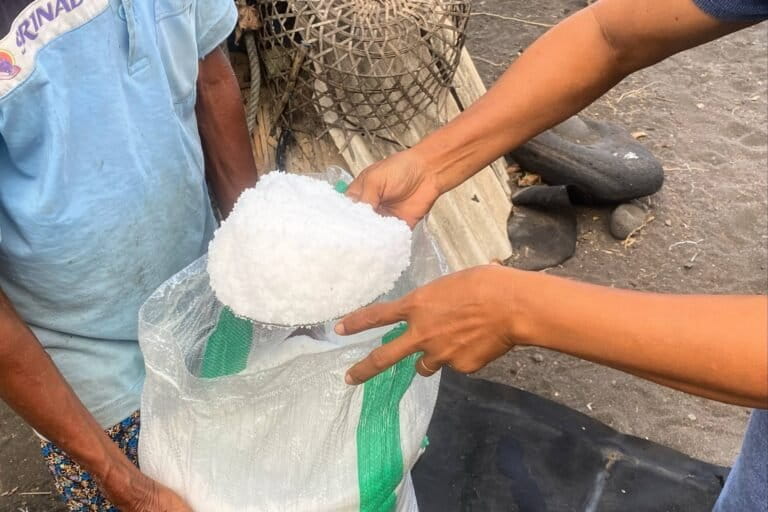
For Nengah Bantat, the future is uncertain, but the present is non-negotiable. He continues to weigh his salt, load it onto his head, and carry it toward the city markets. It is a humble, fading trade that has sustained his family for a lifetime. When asked why he continues despite the mounting odds, his answer is simple and profoundly human: "This is what I have. It is enough to feed me. That is all that matters for now."
As the concrete walls crumble and the ocean edges closer, the story of Kusamba’s salt farmers serves as a stark warning. It is a microcosm of the global struggle between traditional, sustainable livelihoods and the relentless, often destructive, march of modern infrastructure and climate change. Without a more robust intervention, the "white gold" of Kusamba will soon become nothing more than a memory, washed away by the very tides that once gave it life.