Queen Máxima of the Netherlands Concludes Strategic Visit to Indonesia: A Mission for Financial Inclusion
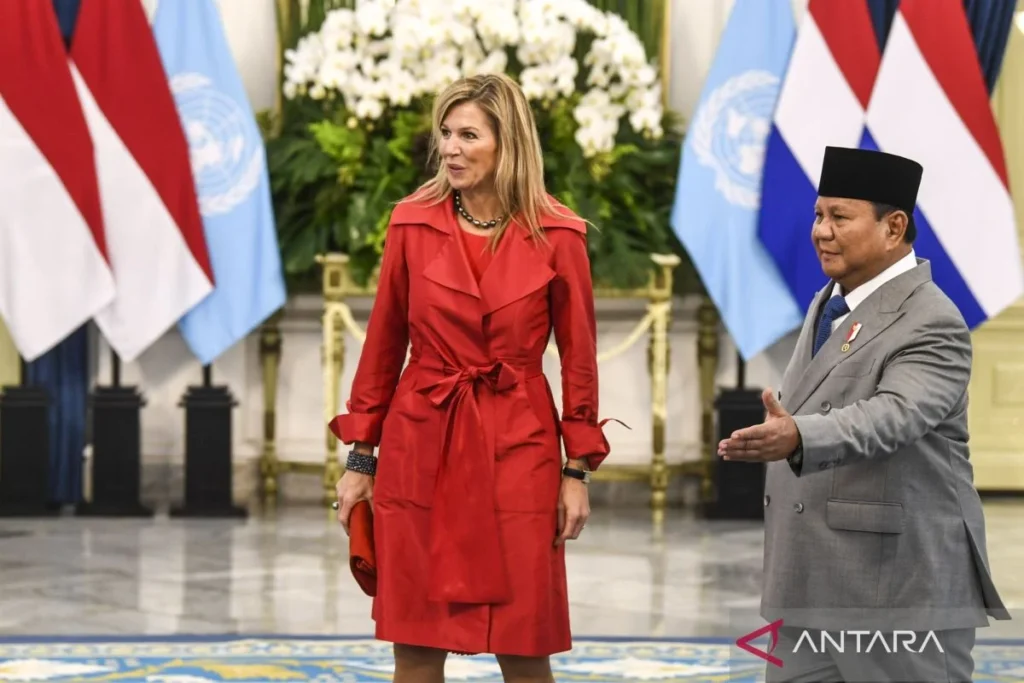
JAKARTA – Queen Máxima of the Netherlands has officially concluded a high-stakes four-day diplomatic and humanitarian mission to Indonesia, spanning from November 24 to 27, 2025. While she is a global icon of the Dutch monarchy, her presence in the archipelago was not in the capacity of a royal representative, but rather as the United Nations Secretary-General’s Special Advocate (UNSGSA) for Financial Health.
This visit, the fifth in her storied history with the nation, underscored a deepening commitment to fostering financial inclusivity—a pillar essential for the sustainable development of emerging economies. From the bustling streets of Jakarta to the industrious workshops of Central Java, Queen Máxima’s itinerary served as a diagnostic review of Indonesia’s current financial landscape and a catalyst for future policy improvements.
The Core Mission: Financial Health as a Development Pillar
Queen Máxima’s role as the UNSGSA is dedicated to ensuring that all people, particularly those in underserved communities, have access to affordable, effective, and safe financial services. During her stay, her focus was not merely on "financial inclusion"—the act of having a bank account—but on "financial health," which refers to the ability of individuals to manage day-to-day expenses, absorb financial shocks, and invest in their future.
Her mission sought to address systemic gaps in the Indonesian economy, specifically regarding how technology and banking products can better serve micro-entrepreneurs, low-income earners, and youth populations. By engaging with stakeholders ranging from government officials to local garment workers, the Queen sought to highlight the correlation between robust financial management and national economic stability.
A Chronological Overview of the Four-Day Mission
The visit was a logistical feat, requiring the Queen to travel across diverse socio-economic landscapes to capture a holistic view of the Indonesian financial ecosystem.
Tuesday, November 25: The Heart of the Local Economy
The journey began in Central Java, where the focus was on the grassroots economy. In Sragen, the Queen visited a local garment factory to understand the financial hurdles faced by industrial workers. This was followed by a visit to the historic Kampung Batik Laweyan in Solo, a hub of traditional craftsmanship. Here, she engaged with artisans to discuss how digital financial literacy could help stabilize their income cycles.
The day culminated at the Pura Mangkunegaran in Solo, where she participated in a Women’s World Banking forum. This event was pivotal; the Queen engaged in candid dialogues with students, young entrepreneurs, and women business owners. These conversations provided the Queen with qualitative data on the barriers to credit, the complexity of loan products, and the varying levels of digital literacy among the Indonesian youth.
Wednesday, November 26: Strategic Policy and Urban Development
Mid-week saw a shift toward high-level policy discussions and urban infrastructure. In the morning, Queen Máxima participated in a roundtable discussion at the UN offices in Jakarta, bringing together international development organizations to harmonize efforts toward sustainable financial growth.
A subsequent meeting with the International Finance Corporation (IFC), a member of the World Bank Group, focused on the macro-financial implications of credit expansion. The discussion centered on how financial institutions can develop more responsive loan products that mitigate risk while fostering economic growth.
Perhaps the most tangible highlight of the day was her visit to the Gran Harmoni Cibitung housing complex in Bekasi, West Java. The project is an exemplar of sustainable development, offering low-emission homes to low-to-middle-income families. The Queen conducted a site visit, entering the homes of residents to witness the real-world application of housing financing. Notably, she observed an innovative "waste-to-equity" program, where residents can pay a portion of their mortgage installments through a bank-run recycling initiative. This circular economy model drew significant praise for its ingenuity in alleviating the financial burden on low-income buyers.
The afternoon concluded at the offices of Deloitte Indonesia, where she urged private sector leaders to view the "financial health" of their employees not just as a corporate social responsibility (CSR) metric, but as an essential component of human resource retention and productivity.
Thursday, November 27: The High-Level Conclusion
The final day was dedicated to policy integration. The Queen met with representatives from the Financial Services Authority (OJK), Bank Indonesia (BI), and the Ministry of Finance to synthesize her findings. The mission reached its zenith at the Merdeka Palace, where she was received by President Prabowo Subianto. During their bilateral meeting and working lunch, the Queen presented her observations on the state of financial inclusion in Indonesia, offering recommendations on how the government can continue to scale digital finance and consumer protection.
Historical Context: A Decade of Engagement
Queen Máxima’s relationship with Indonesia is extensive. This trip marked her fifth visit, but only the second in a different capacity.
- 2012, 2016, 2018: She visited in her capacity as the UNSGSA, consistently advocating for the implementation of the National Strategy for Financial Inclusion (SNKI).
- 2020: She accompanied King Willem-Alexander during a state visit, which solidified the diplomatic ties between the Netherlands and Indonesia at the highest level.
Her consistent presence over the last 13 years has allowed her to witness the rapid evolution of Indonesia’s digital financial sector—from the early days of basic mobile banking to the current explosion of fintech platforms and digital payment systems.
Implications for Indonesia’s Financial Future
The findings Queen Máxima shared with the Indonesian government are expected to influence national policy in several key areas:
1. Digital Literacy and Consumer Protection
As Indonesia rapidly digitizes, the risk of financial fraud and predatory lending increases. The Queen’s advocacy for robust consumer protection frameworks is timely, as the government seeks to balance innovation with safety.
2. The Circular Economy as a Financial Tool
The success of the "mortgage payment via trash" model in Bekasi serves as a scalable blueprint. By linking environmental sustainability with financial obligations, Indonesia can potentially unlock new ways for the informal sector to participate in the formal economy.
3. SME Empowerment
The feedback gathered from the artisans in Solo and the factory workers in Sragen serves as a reminder that financial products must be tailored to the irregular income streams of the informal sector. Future collaborations with the OJK are likely to focus on "micro-tailored" credit products.
Official Responses and Public Impact
The government of Indonesia has expressed deep appreciation for the Queen’s input. President Prabowo Subianto noted that the insights provided by the UNSGSA are vital for the administration’s goal of achieving broad-based economic growth. By aligning national policies with the UN’s Sustainable Development Goals (SDGs), Indonesia aims to reduce poverty and increase the resilience of its citizens against global economic shocks.
Industry leaders, particularly those in the banking and fintech sectors, have also responded positively. The emphasis on "financial health" has shifted the narrative from mere profit-seeking to "customer-centric" growth. Institutions are increasingly looking at how they can incentivize saving and responsible borrowing rather than just increasing loan volume.
Conclusion: A Lasting Legacy
Queen Máxima’s 2025 visit was more than a diplomatic courtesy; it was a diagnostic check-up on the financial health of the Indonesian nation. By bridging the gap between the rural artisans of Central Java and the policymakers of the Merdeka Palace, she has provided a roadmap that is both aspirational and practical.
As Indonesia continues to navigate the complexities of the 21st-century economy, the lessons from this mission—that financial inclusion is the bedrock of societal resilience—will undoubtedly remain a core element of the nation’s economic agenda. Through the continued partnership with the UNSGSA, Indonesia is better positioned to transform its financial landscape, ensuring that prosperity is not just an indicator, but a lived reality for all citizens.
Reported by Melalusa Susthira Khalida | Edited by Alviansyah Pasaribu
Copyright © ANTARA 2025