Empowering Financial Resilience: Queen Máxima Concludes High-Level Diplomatic Mission to Indonesia
JAKARTA – Her Majesty Queen Máxima of the Netherlands, acting in her distinguished capacity as the United Nations Secretary-General’s Special Advocate for Financial Health (UNSGSA), has successfully concluded a rigorous four-day working visit to Indonesia. Spanning from November 24 to November 27, 2025, the mission underscored a deepening partnership between international financial bodies and the Indonesian government, focused on the critical intersection of economic inclusion, sustainability, and personal financial well-being.
Unlike her previous state visits accompanying King Willem-Alexander, this journey was defined by a technical, policy-oriented mandate. Queen Máxima’s presence in Indonesia served as a catalyst for dialogue on how digital financial services, affordable housing, and micro-entrepreneurship can be leveraged to uplift millions of citizens into a state of long-term financial stability.
The Core Mandate: Championing Financial Inclusion
Queen Máxima’s work as the UNSGSA is rooted in the belief that financial health is the cornerstone of human development. For the UN, "financial health" transcends mere access to a bank account; it encompasses the ability of individuals to manage day-to-day expenses, cope with financial shocks, and invest in their future.
Throughout her five visits to Indonesia—a country that has become a global laboratory for financial technology and grassroots economic empowerment—the Queen has consistently highlighted the transformative power of digital banking. Her visit this November was no exception, as she engaged with stakeholders ranging from local garment workers in Sragen to high-level policymakers at the State Palace in Jakarta.
Chronology of the Mission: A Deep Dive into the Indonesian Landscape
Day 1: Tuesday, November 25 – From Factory Floors to Cultural Hubs
The mission began in the heart of Central Java. In Sragen, Queen Máxima visited a garment manufacturing facility, observing firsthand how employees—predominantly women—manage their wages and navigate the complexities of financial services.
Later, in the historic city of Solo, the focus shifted to cultural and economic integration at the Kampung Batik Laweyan. Here, she explored how traditional artisans are transitioning into the digital economy. The day culminated at the Pura Mangkunegaran, where she participated in a Women’s World Banking forum. The session served as a candid roundtable, allowing the Queen to listen to the lived experiences of students, young entrepreneurs, and local workers regarding the accessibility of credit and the hurdles of financial literacy in a post-pandemic economy.
Day 2: Wednesday, November 26 – Strategic Partnerships and Sustainable Housing
Wednesday was marked by high-level institutional engagement and grassroots field observations. The morning began at the United Nations office in Jakarta for a roundtable discussion with various development agencies, where the focus was on aligning global development goals with local economic realities.
Following this, the Queen met with representatives from the International Finance Corporation (IFC), a member of the World Bank Group. The discussion centered on innovative financing models that support economic growth while maintaining institutional stability.
In a poignant display of how finance can intersect with climate action, Queen Máxima visited the "Gran Harmoni Cibitung" residential complex in Bekasi, West Java. This project is notable for its focus on low-emission, affordable housing for low-to-middle-income families. The Queen engaged directly with residents, witnessing the implementation of a "trash-to-cash" circular economy model, where residents can pay a portion of their mortgage installments through contributions to a local waste bank. This innovative mechanism received particular praise from the Queen as a scalable model for sustainable, inclusive housing.
The day concluded with a visit to Deloitte Indonesia, where the dialogue shifted to the corporate sector’s role in promoting financial wellness as an employee benefit, emphasizing that a financially healthy workforce is a more productive and stable one.
Day 3: Thursday, November 27 – Institutional Synthesis and Presidential Dialogue
The final day was dedicated to policy synthesis. Queen Máxima engaged in a high-level session with the Financial Services Authority (OJK), Bank Indonesia (BI), and the Ministry of Finance. These discussions were aimed at distilling the observations from the previous days into actionable policy recommendations for the Indonesian government.
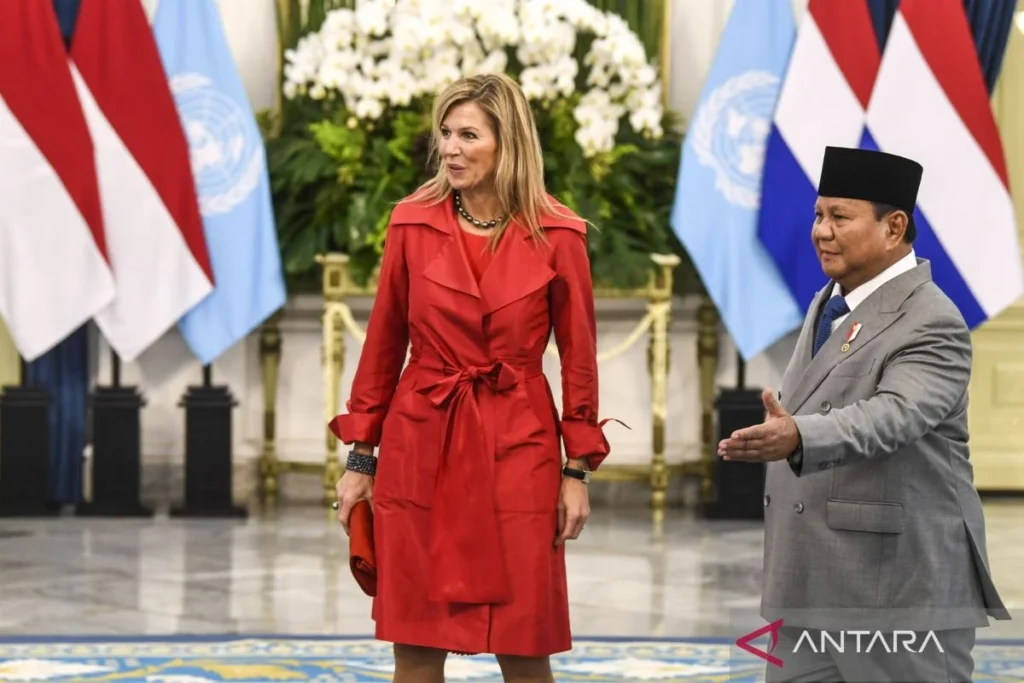
The culmination of the visit was a formal meeting at the Merdeka Palace with President Prabowo Subianto. During this private audience and subsequent working lunch, the Queen shared her comprehensive findings from the field, offering insights into how Indonesia might continue to refine its national financial inclusion strategy.
Supporting Data: Why Indonesia Matters
Indonesia has made remarkable strides in financial inclusion over the last decade. Data suggests that the percentage of the adult population with access to formal financial services has grown significantly, thanks largely to the proliferation of mobile banking and fintech startups.
However, the "Financial Health" index—a more nuanced metric than simple access—remains a challenge. Many Indonesians, while banked, remain vulnerable to predatory lending and unexpected economic shocks. By focusing on the "last mile" of financial inclusion, Queen Máxima’s mission sought to address these systemic gaps. Her emphasis on the "trash-to-cash" mortgage model in Bekasi is a prime example of addressing the affordability gap while simultaneously tackling environmental sustainability, a priority for both the UN and the Indonesian administration.
Official Responses and Strategic Implications
The Government’s Perspective
President Prabowo Subianto welcomed the Queen’s visit, acknowledging that the insights provided by the UNSGSA are vital for the "Asta Cita" (the eight-point mission) of his administration, which prioritizes poverty alleviation and economic growth. The meeting at the Merdeka Palace signaled a strong intent to integrate the UN’s recommendations into the national roadmap for 2026 and beyond.
The Financial Sector’s Role
The OJK and Bank Indonesia have expressed their commitment to fostering an environment where innovation is balanced with consumer protection. The collaboration between these institutions and the Queen serves to bolster investor confidence, signaling to the international community that Indonesia remains a prime destination for sustainable development investment.
Implications for the Future
The implications of this visit are twofold:
- Policy Refinement: The government is expected to leverage the Queen’s observations to strengthen consumer protection laws, particularly in the realm of digital lending, which has faced scrutiny in recent years.
- Global Model: The successful integration of waste management into mortgage payments, as seen in Bekasi, is being touted as a potential "Global Best Practice." Indonesia is positioning itself as a leader in "Green Finance" that is accessible to the common citizen, not just the elite.
Conclusion: A Legacy of Advocacy
This visit represents the fifth time Queen Máxima has traveled to Indonesia, a testament to the enduring relationship between the two nations and the unique position Indonesia holds in the global effort to achieve the Sustainable Development Goals (SDGs).
By acting as a bridge between the grass-roots experiences of batik makers in Solo and the policy-making chambers of the Merdeka Palace, Queen Máxima has once again demonstrated that true financial inclusion is not merely an economic exercise—it is a human right. As she departs Jakarta, she leaves behind a framework that, if executed with the rigor discussed during her visit, could fundamentally alter the financial trajectory of millions of Indonesians, ensuring that as the nation’s economy grows, no one is left behind.
About the UNSGSA:
The United Nations Secretary-General’s Special Advocate for Financial Health (UNSGSA) was established in 2009. The position is held by Queen Máxima of the Netherlands, who works globally to raise awareness, encourage leadership, and foster action toward universal access to and responsible usage of affordable, effective, and safe financial services.
Editor’s Note: This report summarizes the events of November 24–27, 2025. All engagements were conducted in a professional capacity, adhering to the protocols of both the United Nations and the Republic of Indonesia.