Global Methane Crisis: Indonesia’s Bantargebang Named World’s Second-Largest Landfill Emitter
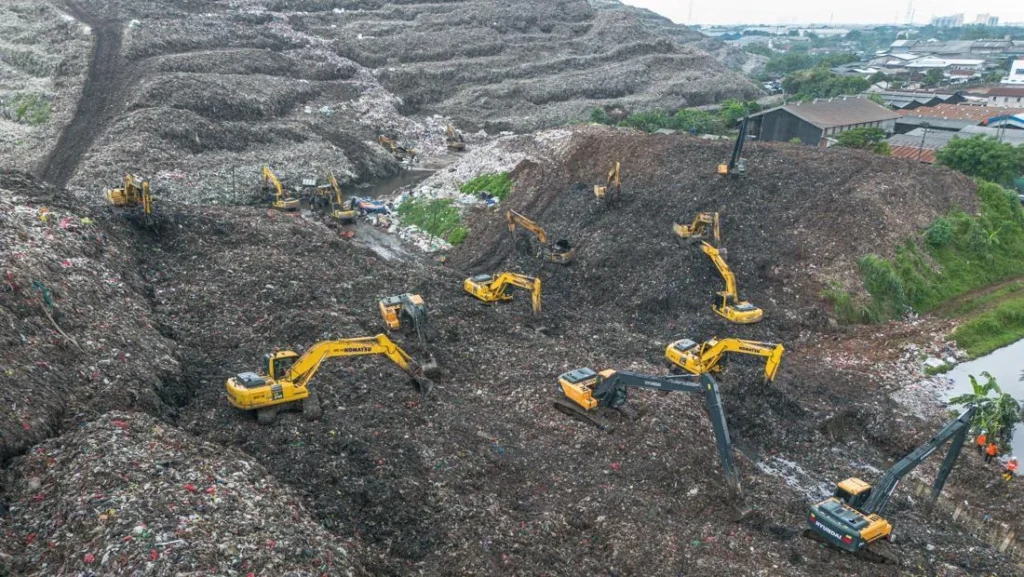
JAKARTA – A sobering reality for global climate efforts has emerged from the skies above. In April 2026, the Emmett Institute at the University of California, Los Angeles (UCLA), released a landmark report via the "STOP Methane Project," identifying the world’s most significant methane-emitting landfills. The findings, which utilized cutting-edge space technology, have placed Indonesia in the global spotlight, ranking the nation second among the top 25 countries contributing to methane emissions from waste management sites.
At the heart of this environmental crisis lies the Bantargebang Integrated Waste Treatment Facility (TPST) in Bekasi, West Java. Data analyzed by the non-profit organization Carbon Mapper reveals that Bantargebang releases a staggering 6.3 tons of methane every hour, posing a significant challenge to global efforts to curb short-lived climate pollutants.
The Technological Leap: How We See the Invisible
For decades, methane—a potent greenhouse gas—remained largely "invisible," often escaping detection due to a lack of granular, real-time monitoring. The UCLA study changes this paradigm by leveraging sophisticated satellite technology.
The research relied on data from the Tanager-1 satellite and NASA’s EMIT (Earth Surface Mineral Dust Source Investigation) instrument. These tools are capable of mapping over 2,900 distinct methane emission plumes across 707 locations worldwide. By integrating this data, Carbon Mapper was able to provide an unprecedented look at how waste management infrastructure contributes to atmospheric warming.
Cara Horowitz, Executive Director of the UCLA Emmett Institute, emphasized the significance of this technological breakthrough. "For a long time, methane has been a hidden pollutant. Now, we can see these massive emissions using satellites and use them as a wake-up call for the world," Horowitz stated in a release from UCLA Law on July 3, 2026.
Chronology: From Dumping Grounds to Global Hotspots
The emergence of this data follows years of mounting international pressure to address "super-emitters." While the global community has focused heavily on the energy and agricultural sectors for methane reduction, the waste management sector has frequently been overlooked.
- Pre-2026: Scientific concern grows regarding the role of municipal solid waste landfills in methane production, yet data remains localized and often self-reported.
- Early 2026: Deployment of Tanager-1 and integration of NASA’s EMIT data allow researchers to create a global heat map of methane leaks.
- April 2026: The STOP Methane Project officially publishes its findings, naming 25 nations with the most egregious landfill emissions. Indonesia is identified as the second-largest contributor, with the Bantargebang facility pinpointed as a primary source.
- July 2026: Public discourse intensifies in Indonesia as officials and environmentalists grapple with the implications of the report, leading to calls for an immediate overhaul of waste management strategies.
Supporting Data: Why Bantargebang?
To understand the scale of the issue, one must look at the biological process occurring within the facility. Dr. Hanifrahmawan Sudibyo, a bio-refinery expert from Universitas Gadjah Mada (UGM), explains that methane is a natural byproduct of organic waste decomposition.
"The mounds of trash at Bantargebang are damp and compacted," Dr. Sudibyo noted. "This creates the ideal environment for microorganisms called archaea to thrive. These organisms process organic waste and release methane into the atmosphere as part of their metabolic cycle."
The danger is not just in the volume, but in the potency of the gas. Methane is significantly more effective at trapping heat than carbon dioxide (CO2). Over a 20-year period, methane’s global warming potential is roughly 80 times greater than that of CO2. Consequently, a leak of 6.3 tons per hour is not merely a local nuisance; it is a significant contributor to the global climate crisis.
Official Responses and Political Pressure
The Bantargebang facility, while geographically located in Bekasi, is managed by the Jakarta Provincial Government through the Environmental Agency (DLH) of DKI Jakarta. The report has triggered an immediate political reaction in the capital.
Hardiyanto Kenneth, a member of the Jakarta Regional House of Representatives (DPRD) from the PDI-P faction, has described the findings as a "momentum for total change." He argues that the current system is unsustainable and that the government must pivot away from a "collect-transport-dump" model.
"It is time for Jakarta to undergo a revolution in waste management," Kenneth asserted. "This must be based on reduction at the source, household-level waste sorting, strengthening recycling infrastructure, and the utilization of modern, eco-friendly processing technologies."
The pressure on the Jakarta administration is mounting, as the city faces the challenge of managing the waste of over 10 million people while simultaneously attempting to meet national and international climate commitments.
Implications: A Call for Urgent Policy Reform
The implications of the UCLA/Carbon Mapper study extend far beyond the borders of Indonesia. The findings serve as a microcosm of a global systemic failure in waste management.
1. Public Health Concerns
The proximity of major landfills like Bantargebang to densely populated residential areas poses a dual threat. Beyond climate change, the release of methane and other landfill gases can affect local air quality, potentially impacting the health of residents living in the facility’s shadow.
2. The Need for Technological Investment
The study highlights that we can no longer plead ignorance regarding emission sources. The availability of satellite data means that operators of large landfills will face increasing scrutiny. For the Indonesian government, this necessitates a shift toward "Waste-to-Energy" (WtE) projects that capture methane for power generation, or biological treatment methods that prevent the gas from forming in the first place.
3. Economic and Regulatory Shifts
The international climate community is increasingly tying trade and development aid to environmental performance. By being ranked as a top methane emitter, Indonesia faces potential pressure to accelerate its Nationally Determined Contributions (NDCs) under the Paris Agreement. This could lead to a influx of international green financing if the country demonstrates a clear roadmap for methane mitigation.
Conclusion: The Path Forward
The identification of Bantargebang as a global "super-emitter" is a wake-up call that the era of ignoring municipal waste is over. As the world transitions toward a circular economy, the management of organic waste stands out as a critical frontier for climate action.
For Jakarta and the Indonesian government, the task ahead is twofold. First, they must implement immediate technical interventions—such as gas collection systems and landfill capping—to stem the flow of methane from existing mounds. Second, they must address the root of the problem: consumption patterns and the lack of systemic waste sorting at the household level.
As Cara Horowitz noted, these satellites act as an alarm. The question remains whether the policymakers in Jakarta and their counterparts in the other 24 listed nations will hit the snooze button, or whether they will finally initiate the structural revolution required to ensure that our waste does not jeopardize our collective future. The data is clear, the alarm is sounding, and the world is watching.