The Last Guardian of the Archipelago: Unveiling the Truth Behind the Sumatran Tiger
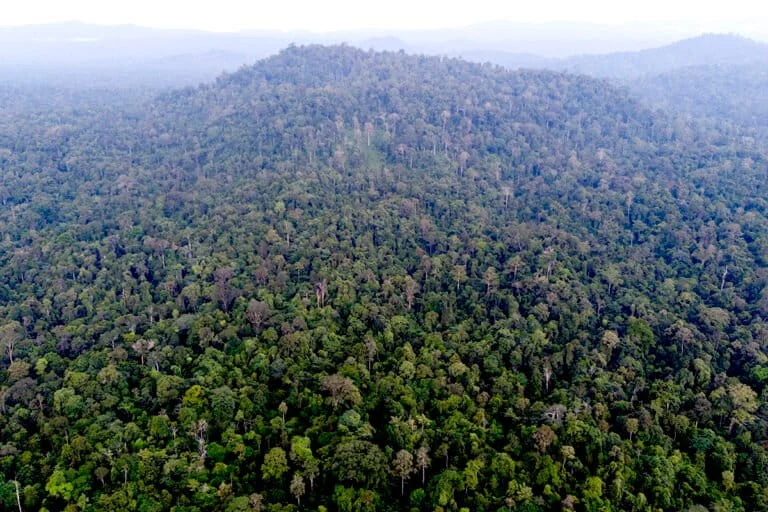
The Sumatran tiger (Panthera tigris sumatrae) stands as the final sentinel of Indonesia’s great tiger lineage. Following the tragic extinction of the Javan and Balinese tigers, this charismatic apex predator represents the last hope for tiger conservation within the Indonesian archipelago. However, as deforestation, infrastructure development, and human encroachment accelerate, the survival of this subspecies hangs by a thread.
Recent reports of tiger sightings in residential areas near Gayo Lues and other parts of Sumatra have sparked fear among local communities. These encounters are frequently labeled as signs of "aggressive" behavior or imminent danger. Yet, beneath the headlines of conflict lies a more complex, nuanced reality: the Sumatran tiger is not a mindless man-eater, but a cornered inhabitant of a rapidly shrinking world.
The Myth of Aggression: Understanding Behavioral Ecology
For decades, the public perception of the tiger has been colored by fear. But is the Sumatran tiger truly aggressive? Scientific consensus suggests otherwise. Studies, including research from the University of Padang (2024), indicate that the tiger is naturally inclined to avoid human contact. Conflicts arise almost exclusively as a secondary symptom of habitat fragmentation and the depletion of natural prey species.
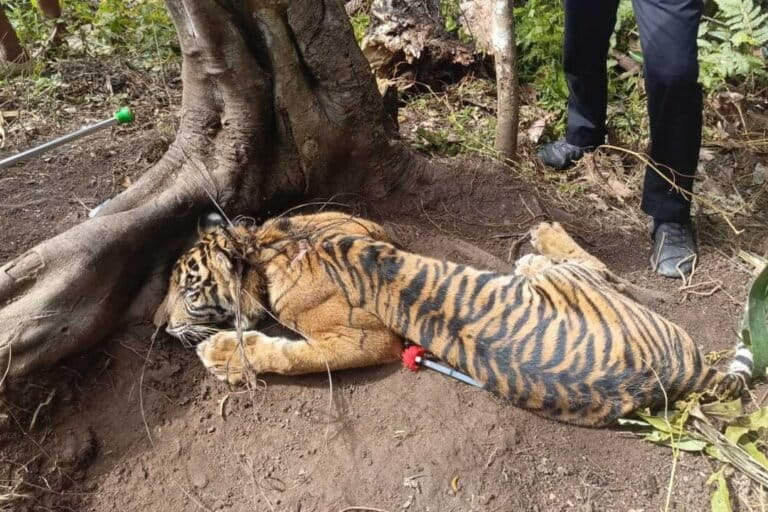
When a tiger ventures into a plantation or a village, it is rarely an act of malice. It is a desperate search for food in a landscape where its natural prey has been hunted out and its forest home has been bisected by roads and palm oil concessions. The "aggressive" label often applied to them is a human construct—a reaction to the intrusion of a predator into our domain, forgetting that we have already intruded into theirs.
Biological Adaptations: A Product of the Equator
The Sumatran tiger is a marvel of evolutionary biology. As the smallest of the surviving tiger subspecies, it has evolved distinct physical characteristics to thrive in the dense, hot, and humid jungles of the equator.
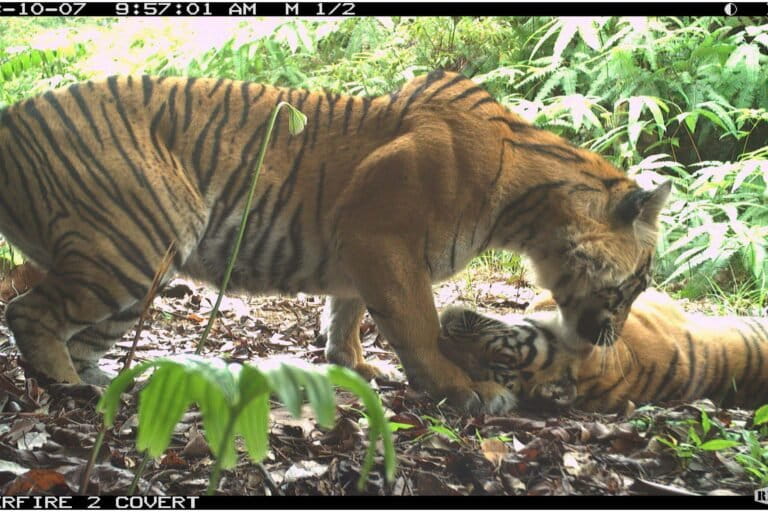
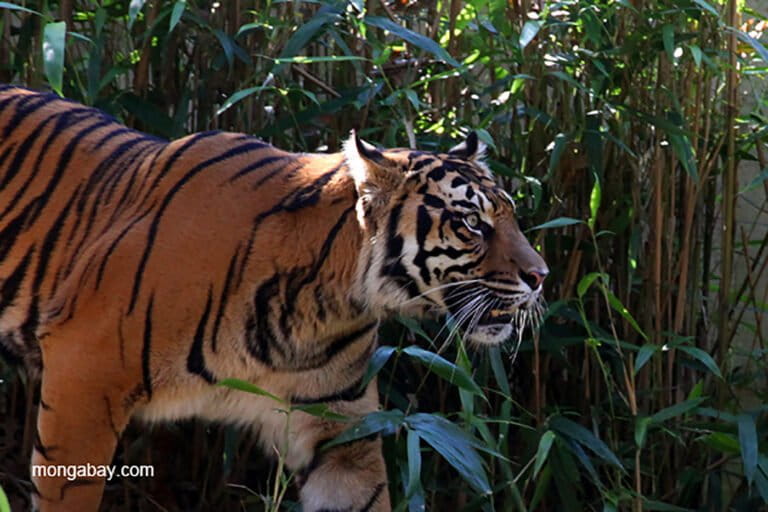
Male tigers typically weigh between 100 to 140 kg with lengths ranging from 140 to 280 cm, while females are slightly smaller. A notable feature is their darker, more densely packed coat of stripes compared to their mainland relatives. Research by Fathoni (2022) highlights that these physical traits are not merely aesthetic; they are critical adaptations that allow the tiger to navigate the dense, low-light understory of the Sumatran rainforest.
Chronology of Crisis: From Majesty to Marginalization
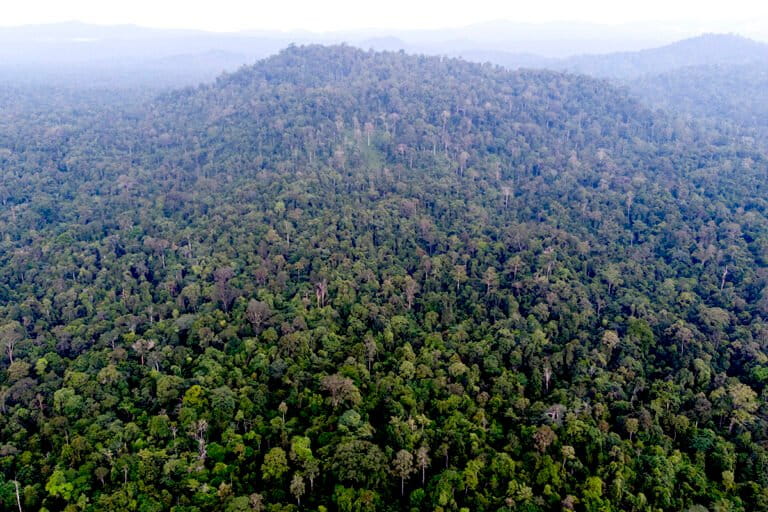
The decline of the Sumatran tiger has been a gradual, systematic erosion of their territory.
- The Pre-2000s: While habitat loss was occurring, large contiguous forest blocks like the Leuser Ecosystem and Kerinci Seblat still allowed for stable populations.
- 2000–2015: Rapid expansion of industrial plantations and illegal logging began to fracture these forest blocks, leading to the first significant "human-wildlife conflict" reports as tigers were trapped in "islands" of forest.
- 2016–2024: Illegal poaching reached a peak, driven by the black-market demand for tiger parts, while the "human-tiger conflict" narrative became a standard headline, often leading to retaliatory killings or, at best, difficult relocations.
- 2025–Present: Current estimates place the population at roughly 400–600 individuals. The focus has shifted toward corridor creation and community-based monitoring, yet the threat of the "snare"—a simple, lethal tool used by poachers—remains the primary killer.
The Quiet Life of a Forest Ghost
Contrary to the popular image of a relentless, prowling hunter, the Sumatran tiger is surprisingly sedentary. Research indicates that these animals spend nearly 50% of their day resting. During the intense heat of the midday sun, they conserve energy by finding cool, shaded spots.
This behavioral trait confirms their status as crepuscular or nocturnal hunters. They prefer to traverse their territory and hunt for prey during the cooler hours of the dusk or dawn. This, perhaps, is the greatest irony of our conflict with them: we complain of their "presence" in our areas, yet they are animals that spend half their lives sleeping in the deepest, quietest parts of the forest, doing everything in their power to avoid us.
Cultural Reverence: The "Nenek" Tradition
In many parts of Sumatra, particularly in Jambi and South Sumatra, local communities have long held a deep, spiritual, and respectful relationship with the tiger. They are often referred to as Nenek (Grandmother) or other terms of seniority. This cultural wisdom dictates that the tiger is a guardian of the forest, a figure to be feared and respected, but not hunted.
However, as traditional knowledge fades and rural demographics shift due to migration, this protective cultural barrier is weakening. Reconnecting with these traditional conservation values could be a powerful, underutilized tool in modern wildlife protection efforts.
Official Responses and Conservation Failures
The Indonesian government, through the Ministry of Environment and Forestry (KLHK) and various BKSDA (Natural Resources Conservation Agency) offices, has implemented several strategies, including the creation of tiger corridors and the enforcement of the Law No. 5 of 1990 concerning the Conservation of Living Natural Resources and Their Ecosystems.
However, the efficacy of these measures is consistently hampered by two factors:
- Lack of Deterrence: Penalties for poaching and the illegal trade of tiger parts have historically failed to provide sufficient deterrence. A five-year prison sentence is often insufficient to stop a repeat offender, as the financial incentives from international illegal wildlife syndicates are astronomical.
- Enforcement Gaps: While patrol units exist, the vastness of the Leuser Ecosystem makes it nearly impossible to cover every inch against snare-hunters.
Implications for Ecosystem Stability
The loss of the Sumatran tiger would be more than a loss of biodiversity; it would be a collapse of a keystone species. As an apex predator, the tiger regulates the population of wild pigs and deer, which, if left unchecked, would overgraze the forest understory, hindering the regeneration of trees.
The implication of their disappearance is the gradual degradation of the forest’s ability to sequester carbon and manage water cycles—services that are essential for the survival of the very human communities that currently view the tiger as a threat.

The Path Forward: Beyond Conflicts
To secure the future of the Sumatran tiger, we must shift the paradigm from "managing conflicts" to "restoring landscapes." This involves:
- Aggressive Corridor Development: Ensuring that fragmented forest patches are reconnected so that tigers can move between hunting grounds without crossing agricultural land.
- Snare-Free Patrols: Moving from passive monitoring to active, community-led anti-poaching patrols that focus on removing the thousands of illegal snares littering the forest floor.
- Economic Incentives: Providing direct financial support or insurance to farmers who live near the forest edge, so that a tiger depredation event does not result in the total financial ruin of a family, which currently leads to retaliatory poaching.
The Sumatran tiger is not our enemy. It is a fellow inhabitant of an island that is changing too quickly for it to keep up. If we continue to treat these majestic cats as intruders rather than as the rightful, ancestral guardians of the forest, we will lose them—and in losing them, we will lose a fundamental part of Indonesia’s natural identity.
References and Further Reading
- Fathoni, M. N. I. (2022). Dampak alih fungsi lahan dalam studi kasus konflik manusia dan harimau sumatera di Sumatera. Universitas Negeri Malang.
- Paiman, A., et al. (2018). Faktor kerusakan habitat dan sumber air terhadap populasi harimau sumatera. Jurnal Silva Tropika.
- Usman, H., et al. (2014). Mitos harimau dalam tradisi lisan masyarakat Kerinci di Jambi, Sumatera. Jurnal Pengajian Melayu.
- Zaharani, A., et al. (2024). Kajian perilaku harimau sumatera (Panthera tigris sumatrae). Journal BIOnatural.