Operation Pangolin: Exposing the Global Illicit Trade Behind a 3-Ton Scale Smuggling Ring
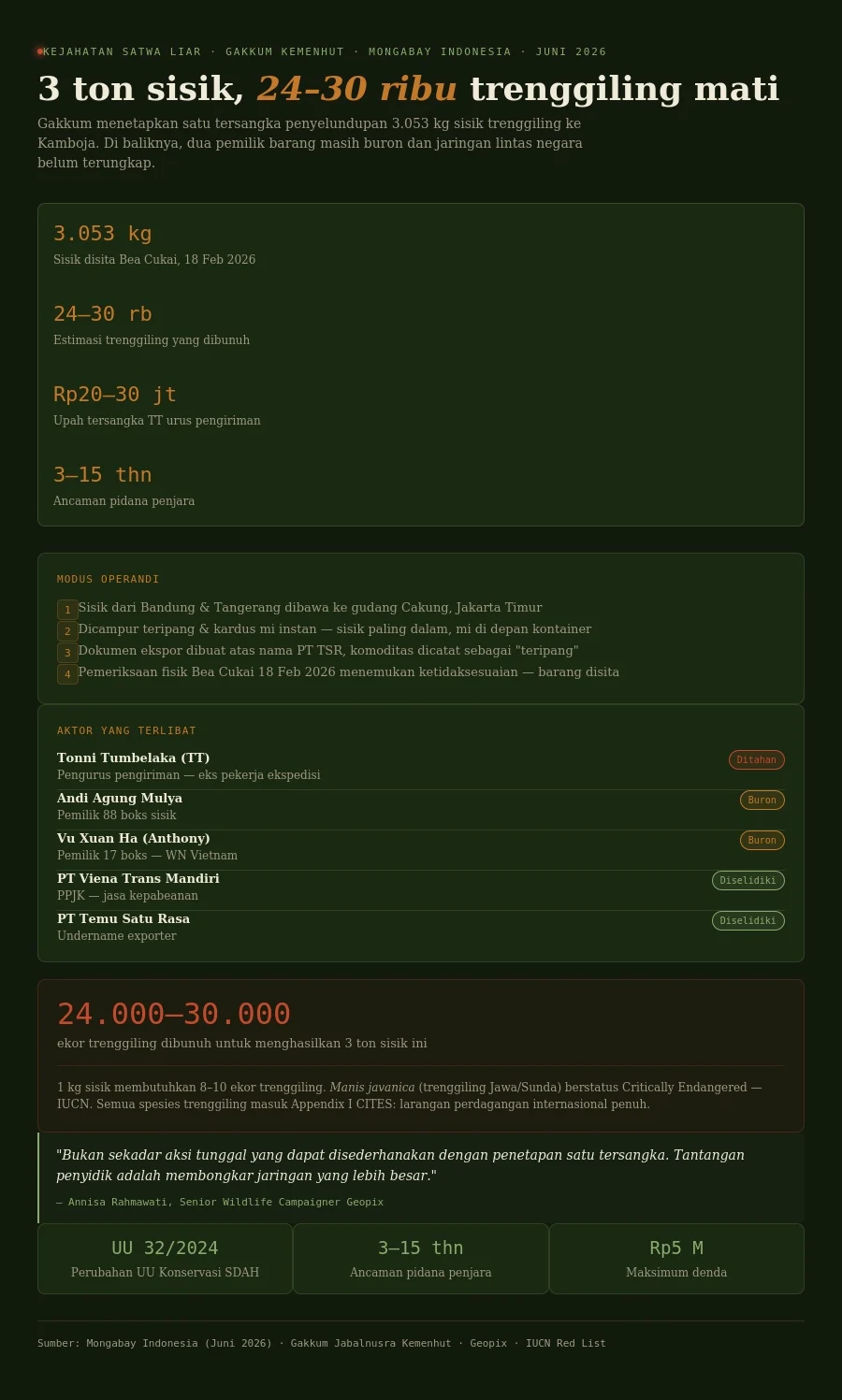
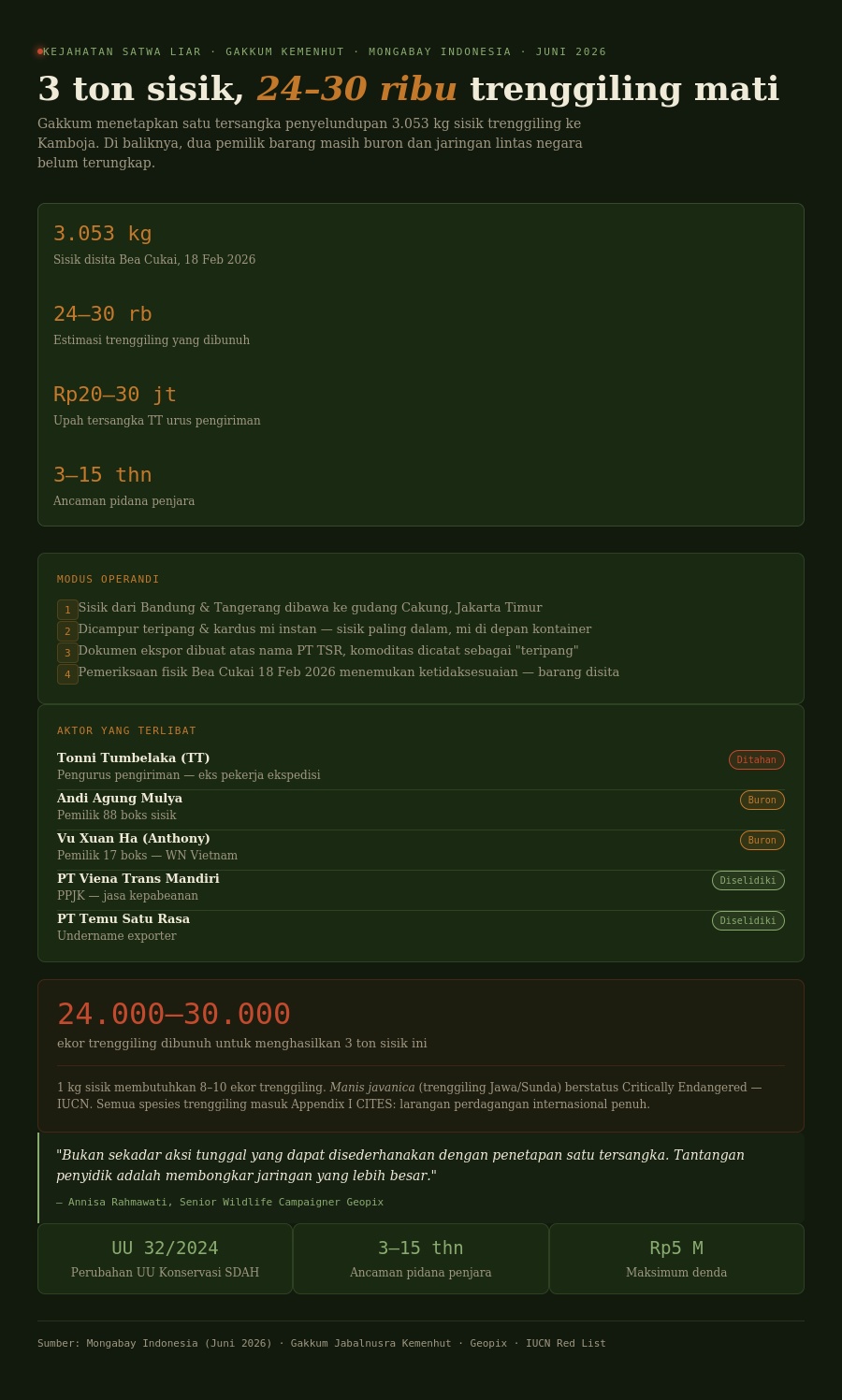
JAKARTA – The illegal wildlife trade, a multi-billion-dollar global shadow economy, has suffered a significant, albeit incomplete, blow in Indonesia. The Law Enforcement Agency (Gakkum) of the Ministry of Forestry for the Java, Bali, and Nusa Tenggara (Jabalnusra) region has officially named a Bandung resident, Tonni T., as the primary suspect in a massive attempt to smuggle three tons of pangolin scales to Cambodia.
While the arrest marks a tactical victory for conservationists, the investigation has peeled back layers of corporate complicity, revealing a sophisticated logistics network that spans from local warehouses to international borders. As Tonni T. sits in Salemba Detention Center, investigators are racing to dismantle the broader syndicate that facilitated the slaughter of tens of thousands of these critically endangered animals.
The Anatomy of a Smuggling Operation
The case, which broke open following a high-stakes interception at Tanjung Priok Port, is characterized by a level of meticulous planning that suggests a well-oiled criminal enterprise. According to Bambang Ari Wibowo, Coordinator of Investigators for Section I (Jakarta) of the Balai Gakkum Jabalnusra, the evidence against Tonni T. is robust, supported by witness testimonies from customs officials, customs brokerage firms (PPJK), and the export companies involved.
"Tonni confessed from the beginning that he knew exactly what was inside those crates: pangolin scales," Bambang stated. "The evidence is corroborated by the customs agents and the logistics providers who identified him as the orchestrator of the shipment."
The scale of the crime is staggering. Investigators revealed that the shipment originated from two primary owners: an individual named Andi Agung M., and a Vietnamese national, Vu Xuan Ha, alias Anthony. The duo had tapped into the services of Tonni, a former employee of an expedition firm, to navigate the complexities of international export.
The Art of Deception: "Sea Cucumber" Facade
The modus operandi was a masterclass in bureaucratic manipulation. When Tonni initially approached PT Viena Trans Mandiri (VTM), a customs brokerage firm, he was reportedly told that pangolin scales were prohibited items (Lartas) and could not be legally exported. Rather than abandoning the scheme, the conspirators pivoted to fraud.
Under Tonni’s direction, the manifest was falsified, labeling the high-value illicit cargo as "sea cucumbers" (teripang). The physical preparation of the shipment was equally calculated. The scales were consolidated at a warehouse in the Cakung industrial area of East Jakarta.
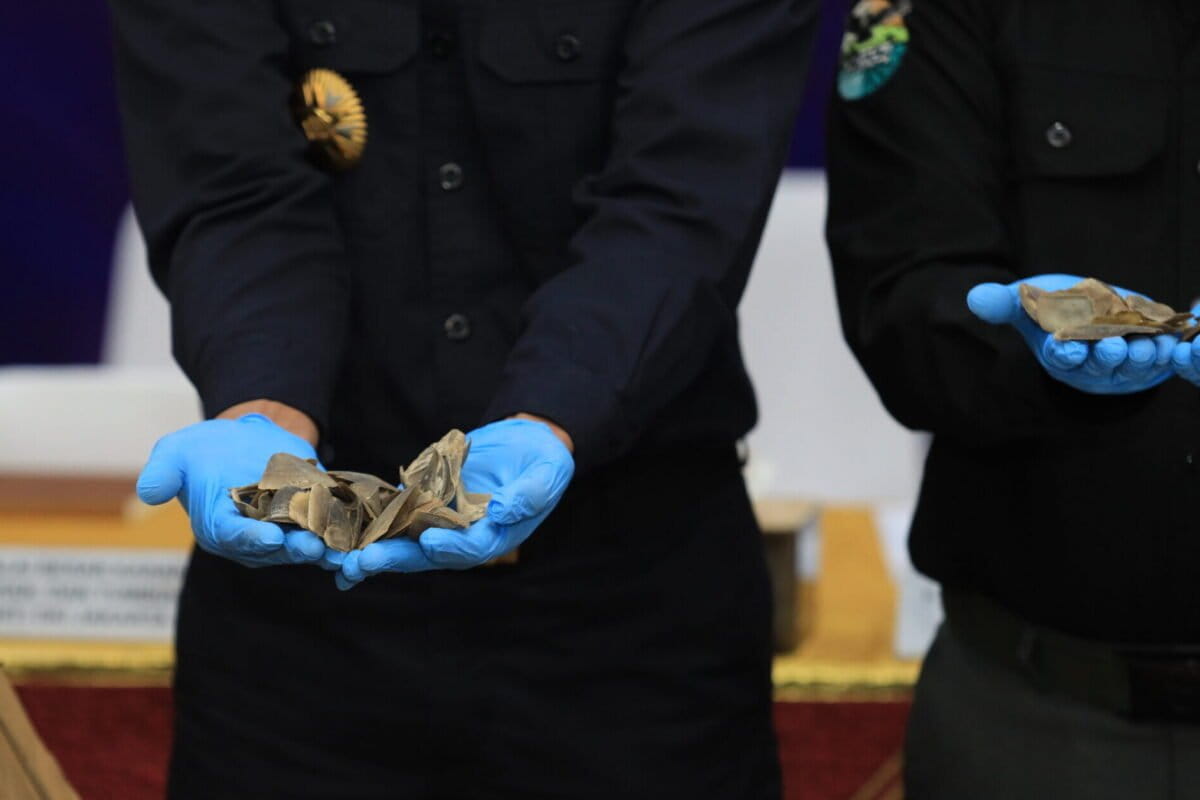
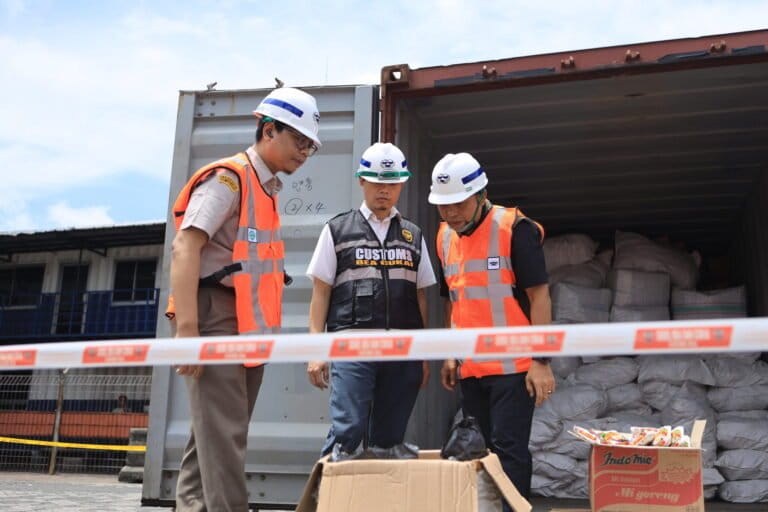
Inside the containers, the cargo was layered to evade inspection. Pangolin scales were placed at the deepest recesses of the containers, shielded by sacks of sea cucumbers. To provide a final layer of cover, the front of the containers was filled with boxes of instant noodles—a common, innocuous commodity unlikely to trigger aggressive scrutiny. Despite these efforts, on February 18, 2026, eagle-eyed customs officers at Tanjung Priok discovered the 3,053-kilogram hoard hidden behind the facade.
Corporate Complicity: The Undername Export Scheme
A critical focus of the ongoing investigation is the role of the companies involved: PT Viena Trans Mandiri (VTM) and PT Temu Satu Rasa (TSR). In Indonesia’s export sector, the practice of undername exporting—where a company allows another entity to use its license for a fee—has long been a loophole exploited by illicit actors.
PT Temu Satu Rasa (TSR) reportedly acted as the undername exporter. When contacted, representatives from the firm denied direct involvement, claiming they were merely providing the "name service." However, investigators are far from satisfied with this defense.
"We are scrutinizing the potential criminal liability of both the brokerage and the export firms," Bambang noted. "If we find evidence of intentional complicity or criminal negligence, we will not hesitate to elevate this to a new phase of prosecution, which could lead to additional suspects."
The director of VTM has attempted to distance the firm from the crime, arguing that they had no legal obligation to physically inspect the contents of the client’s cargo. Investigators, however, point to the initial communication where the suspect explicitly declared the nature of the goods. This contradiction forms the bedrock of the potential case against the companies involved.
The Human Cost: A Silent Massacre
Beyond the legal technicalities, the environmental implications of this case are cataclysmic. Annisa Rahmawati, a Senior Wildlife Campaigner at Geopix, emphasizes that the seizure represents only a fraction of the actual damage to the ecosystem.
"To obtain a single kilogram of pangolin scales, poachers must slaughter between 8 and 10 pangolins," Rahmawati explained. "With three tons of scales seized, we are looking at the death of approximately 24,000 to 30,000 pangolins. This is not a petty crime; it is an ecological catastrophe."
Pangolins, often called "scaly anteaters," are the most trafficked mammals in the world. Their scales, composed of keratin—the same substance as human fingernails—are highly prized in traditional medicine markets, despite having no proven medical efficacy. The sheer volume of this shipment suggests a highly organized, international syndicate that treats biodiversity as a disposable resource for profit.
Challenges in the Pursuit of Justice
While the case against Tonni T. proceeds toward the court, the path to the "masterminds" remains fraught with obstacles.
The Missing Links: Andi Agung and "Anthony"
The primary source of the cargo remains at large. Andi Agung M., a resident of Bandung, has become the subject of a nationwide manhunt. Despite multiple summons, he has vanished from his registered address. Similarly, the whereabouts of the Vietnamese national, Vu Xuan Ha, remain unknown. The Gakkum has engaged the National Police (Mabes Polri) to assist in locating the pair, who are believed to hold the key to the origins of the seized scales.
"Tonni was a facilitator, a logistics middleman," said Bambang. "He was paid between IDR 20 to 30 million for his services. But he cannot tell us where the scales were poached, nor can he lead us to the primary buyers. That is why Andi and Anthony are the most critical pieces of this puzzle."
The Legal Framework
The suspect is being charged under Article 40A paragraph (1) letter f, in conjunction with Article 21 paragraph (2) letter c of Law Number 32/2024, an amendment to the seminal Law Number 5/1990 on the Conservation of Biological Natural Resources and Their Ecosystems. If convicted, Tonni faces between 3 and 15 years in prison and a fine ranging from IDR 200 million to IDR 5 billion.
However, conservationists argue that unless the corporate entities that facilitate such smuggling are held accountable under the same rigorous standards, the systemic nature of the trade will persist.
Implications: A Call for Systemic Reform
The Tanjung Priok incident serves as a stark reminder that Indonesia remains a vital—and vulnerable—hub in the international wildlife trade. The use of legitimate logistics companies to mask illegal activity underscores a failure in supply chain transparency.
Geopix and other environmental NGOs are calling for a tightening of the undername export regulations. They argue that the "we didn’t know" defense used by export companies should be legally inadmissible when the broker has been informed of the prohibited nature of the cargo.
"If the investigation ends with only one courier in jail, the network will simply replace him with another," Rahmawati warned. "This case must be the catalyst for a broader crackdown on the shipping companies, warehouses, and the middle-men who treat the extinction of a species as a business opportunity."
As the case moves to the Attorney General’s office and eventually to the courts, the eyes of the global conservation community remain fixed on Indonesia. The outcome of this trial will not only determine the fate of Tonni T. but will likely set a precedent for how the Indonesian legal system handles the nexus between organized crime, corporate logistics, and the protection of its most vulnerable wildlife.
For now, the three tons of scales remain in custody—a silent, grim testimony to the thousands of lives extinguished to satisfy a dark, global demand. The fight to dismantle the network behind the scales is far from over.