The Illusion of Reform: Why Integrating Illegal Mining into State Programs Risks Normalizing Environmental Crime
The Indonesian government’s recent proposal to integrate illegal gold miners into the supply chain of the "Makan Bergizi Gratis" (MBG)—a flagship national free nutritious meal program—has ignited a fierce debate regarding the trajectory of environmental law enforcement. Critics, including civil society organizations and legal experts, warn that this "rehabilitation" strategy is not only fundamentally flawed but could also institutionalize moral hazard, effectively rewarding illicit activities with state-sanctioned legitimacy.
At the heart of the controversy is Rilke Jeffri Huwae, Director General of Law Enforcement at the Ministry of Energy and Mineral Resources (KESDM). Huwae suggests that rather than relying solely on punitive measures, the state should pivot toward economic alternatives, transitioning illegal miners into agriculture and livestock sectors. These miners would then supply the raw materials for the MBG program in their respective regions.
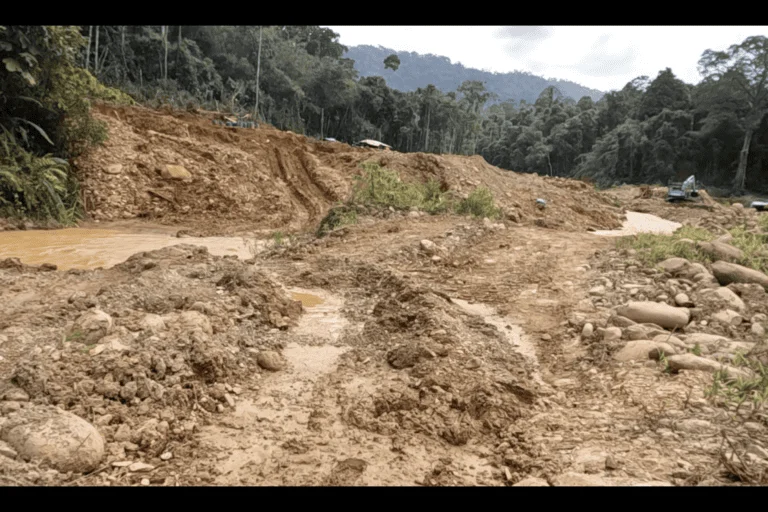
This proposal arrives at a time when Indonesia’s environmental integrity is under immense strain. With thousands of illegal mining sites operating in protected forest zones and the persistent, toxic legacy of mercury contamination, the move to "formalize" these actors has been met with skepticism. Is this a pragmatic solution to a deep-seated socio-economic crisis, or is it an abdication of the state’s responsibility to uphold the rule of law?
Chronology of a Crisis: From Enforcement to Economic Barter
For decades, the state’s approach to illegal mining—or Pertambangan Emas Tanpa Izin (PETI)—has been characterized by sporadic raids, seizures of equipment, and occasional arrests. However, these efforts have largely failed to curb the practice.
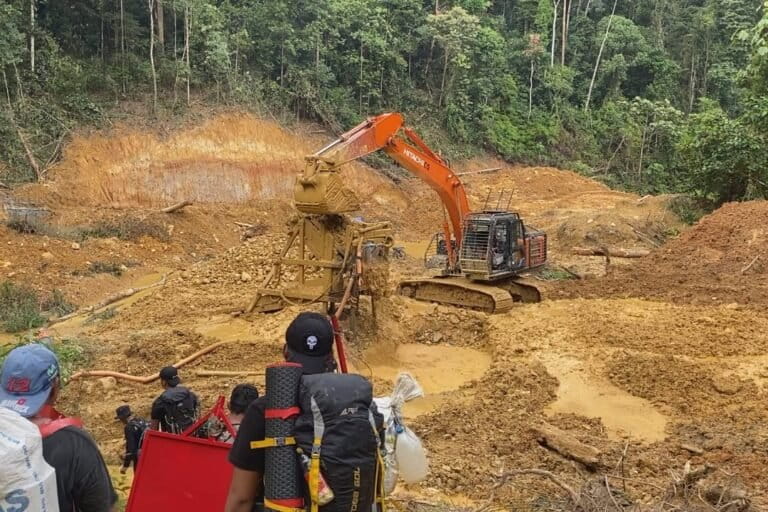
- Historical Context: Government focus has historically been on "chasing" miners, which officials argue is unsustainable. Without providing alternative livelihoods, miners inevitably return to the sites once the authorities depart.
- The Shift in Strategy: In recent months, the Ministry of ESDM announced a pilot project focusing on the Agincourt Resources Martabe Gold Mine area in North Sumatra. This initiative seeks to involve local governments and private corporations in transitioning miners into the agricultural sector.
- The "Legalization" Alternative: For miners whose physical health—often ravaged by long-term mercury exposure—prevents them from pursuing agricultural labor, the government is exploring a different path: encouraging mining companies to provide designated areas within their concessions where miners can operate under legal, controlled, and monitored conditions.
The Anatomy of Illegal Mining: A Complex Economic Web
To understand why critics view the government’s plan as dangerously simplistic, one must look at the structure of the illegal mining industry. Muhammad Jamil, Head of the Legal and Advocacy Division at the Mining Advocacy Network (JATAM), argues that PETI is not merely a collection of desperate individuals digging in the dirt. It is a sophisticated, multi-layered economic machine.
The Missing Links
"If you only move the field workers to a farm while the business chain remains intact, the state is simply relocating people, not dismantling the illicit industry," Jamil explains. A typical illegal mining operation involves:
- The Financiers: The individuals who provide the capital.
- Equipment Suppliers: Entities providing heavy machinery and chemicals like mercury.
- The Logistics Chain: Those responsible for transporting and storing illicit ore.
- The Buyers: The end-market actors, often operating in the shadows, who process and sell the gold.
By focusing on the "last mile" (the laborers) and ignoring the "first mile" (the financiers and profiteers), the government risks leaving the structural core of the illegal mining industry untouched.
Supporting Data: The Scale of Destruction
The environmental and economic costs of failing to properly address illegal mining are staggering. Government data suggests there are at least 1,063 illegal mining locations currently operating within forest areas across Indonesia. The estimated potential loss to the state—through lost royalties, taxes, and environmental damage—is projected at approximately IDR 300 trillion (roughly USD 19 billion).

Furthermore, the reliance on administrative sanctions over criminal prosecution has proven ineffective. According to data from the Directorate General of Forestry Law Enforcement (2026), there were 101 administrative sanctions issued compared to only 61 criminal cases reaching the P21 (prosecution) stage. Critics argue that these fines are often viewed by large-scale illegal operators as a "cost of doing business" rather than a deterrent.
Official Responses and the "Multi-Doors" Approach
Rizal Irawan, Deputy of Security, Law Enforcement, and Environmental Recovery at the Ministry of Environment (KLH), defends the current approach as a "multi-doors" strategy. He emphasizes that law enforcement is not strictly synonymous with imprisonment.
"There is a misconception in the public that law enforcement equals jail time," Irawan asserts. "Administrative sanctions, such as the revocation of environmental permits, are a significant and powerful tool in our arsenal." He notes that government efforts have already generated IDR 1.6 billion in fines.
However, the efficacy of this approach is heavily contested. Former KPK (Corruption Eradication Commission) Deputy Chair Laode M. Syarif argues that fines are insufficient. "Even if the state imposes fines worth trillions, if the mining operation continues, the state has simply become a recipient of illicit profits. It does not solve the environmental degradation."

The "Moral Hazard" and Institutional Implications
The most scathing criticism of the MBG integration plan is the message it sends to the public. Jatam and other NGOs warn of a "moral hazard"—a situation where actors are incentivized to break the law because the state will eventually provide them with a safety net or a government contract.
The Dangers of Policy Normalization:
- Legitimizing Crime: If illegal miners are absorbed into state-funded supply chains, it effectively tells future perpetrators that violating the law is a viable path to government assistance.
- Neglect of Victims: The focus on the miners’ livelihoods often obscures the victims of their actions: communities suffering from water contamination, mercury poisoning, and the destruction of ancestral lands.
- Political Interventions: As Laode M. Syarif noted, the environmental law sector is fraught with political pressure. "The ghosts of intervention are everywhere," he said, referring to the difficulty of prosecuting well-connected financiers.
Conclusion: Toward a Holistic Solution
The path toward eliminating illegal mining requires more than a simple shift in vocational training. It demands a systemic approach that addresses the entire lifecycle of the illegal trade.
- Transparency in Supply Chains: The government must trace and shut down the market for illicit gold, holding the buyers and processors accountable.
- Genuine Restoration: The priority must shift from "re-employing" miners to restoring the land they have degraded. Environmental recovery should be the primary benchmark for success.
- Targeting the Architects: Law enforcement efforts must move beyond field workers and aggressively target the financiers, equipment providers, and corrupt officials who enable these operations.
- Separating Social and Legal Solutions: While providing alternative livelihoods is a noble social goal, it cannot be used as a substitute for criminal justice. Those who have profited from environmental destruction should not be shielded from the law by being folded into state programs.
Indonesia stands at a crossroads. The temptation to reach for "quick fixes" like the MBG integration plan is high, given the complexity of the mining crisis. However, without a robust commitment to punishing the architects of environmental crime and prioritizing ecological restoration over political optics, these policies risk cementing the very problems they claim to solve. True progress will not be measured by how many miners become farmers, but by how effectively the state can restore its forests and dismantle the illicit networks that threaten the nation’s future.