Victory at the Precipice: Pakel Farmers Defeat Corporate Lawsuit as Century-Old Land Conflict Persists
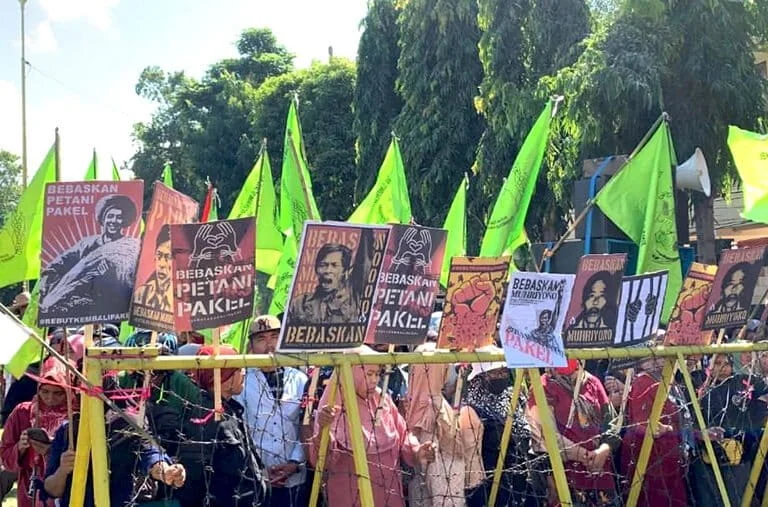
BANYUWANGI – In a significant legal victory for the agrarian movement in East Java, the Banyuwangi District Court issued a pivotal ruling on Tuesday, October 20, 2026, declaring the lawsuit filed by PT Bumisari Maju Sukses (BMS) against two members of the Rukun Tani Sumberejo Pakel (RTSP), Suwarno and Sagidin, "unacceptable" (niet ontvankelijke verklaard).
The decision, recorded under case number 305/Pdt.G/2025/PN Byw, effectively dismissed the company’s claims of illegal occupation and destruction of property. In the same hearing, the court also dismissed a separate lawsuit filed by the company against Harun, another prominent farmer from the Pakel village. This ruling serves as a vital morale boost for the farming community, echoing a similar judicial victory achieved in June of the same year.
However, beneath the jubilant atmosphere in the courtroom, activists and farmers alike are sounding a sobering alarm: while the courtroom battle has been won, the underlying systemic conflict over land tenure remains unresolved, leaving the residents of Pakel in a state of perpetual legal and existential uncertainty.
The Legal Battle: A Case of Strategic Litigation?
The lawsuit brought by PT BMS accused the three farmers—Suwarno, Sagidin, and Harun—of trespassing into the company’s designated Hak Guna Usaha (HGU) or Business Use Rights area. The company further alleged that the farmers had engaged in the destruction of coffee and clove plantations, seeking damages amounting to Rp 1 billion.
Pradipta Indra A, a representative from the Advocacy Team for Agrarian Sovereignty (Tekad Garuda), welcomed the ruling but framed the lawsuit within a broader, more cynical context.
"The ruling is a validation of the farmers’ struggle and a confirmation of the truth they have held onto for decades," Indra stated. "However, we must look at this critically. The legal burden placed on these farmers—the costs, the time, the psychological stress—suggests a pattern of Strategic Lawsuit Against Public Participation (SLAPP). Law should be an instrument of justice, not a weapon to silence those demanding their rights."

Revolver Langit Akbar, another member of the Tekad Garuda legal team, emphasized that these lawsuits are designed to wear down the resistance of the local community. By forcing farmers into protracted civil disputes, corporations often hope to exhaust their financial resources and resolve the matter through attrition rather than merit.
A Century of Contention: The Historical Roots
To understand the tenacity of the Pakel farmers, one must look back nearly a century. The conflict is not a recent phenomenon but a multi-generational struggle rooted in colonial-era policies.
Historical documents held by the community trace their claims to 1925, when their ancestors were granted permission by the Dutch Colonial Government to open the Pakel region. On January 11, 1929, the colonial authorities officially authorized the development of 3,000 hectares of land. This document, known as the Acta van Verwijzing or the "1929 Act," serves as the cornerstone of the villagers’ claim to their ancestral lands.
Throughout the decades, the villagers maintained their livelihoods through farming, weathering the transition through the Japanese occupation and the birth of the Republic of Indonesia. However, the 1980s marked a dark turning point. As PT Bumi Sari (BMS) entered the region, the community faced systematic displacement.
Bagiman, a local elder born in 1947, recalls the period with bitterness. "Before the company arrived in 1982, we lived normal lives in our homes and worked our productive gardens," he testified. According to Bagiman, who briefly worked as a security guard for the company between 1983 and 1985, no transparent land measurement was ever conducted in the field prior to the issuance of the company’s HGU.
The community also notes that the political climate of the late 20th century, specifically the lingering stigma of the 1965 political purges, was frequently weaponized as a tool of intimidation to silence land rights claimants.
The Human Impact: Farmers in Limbo
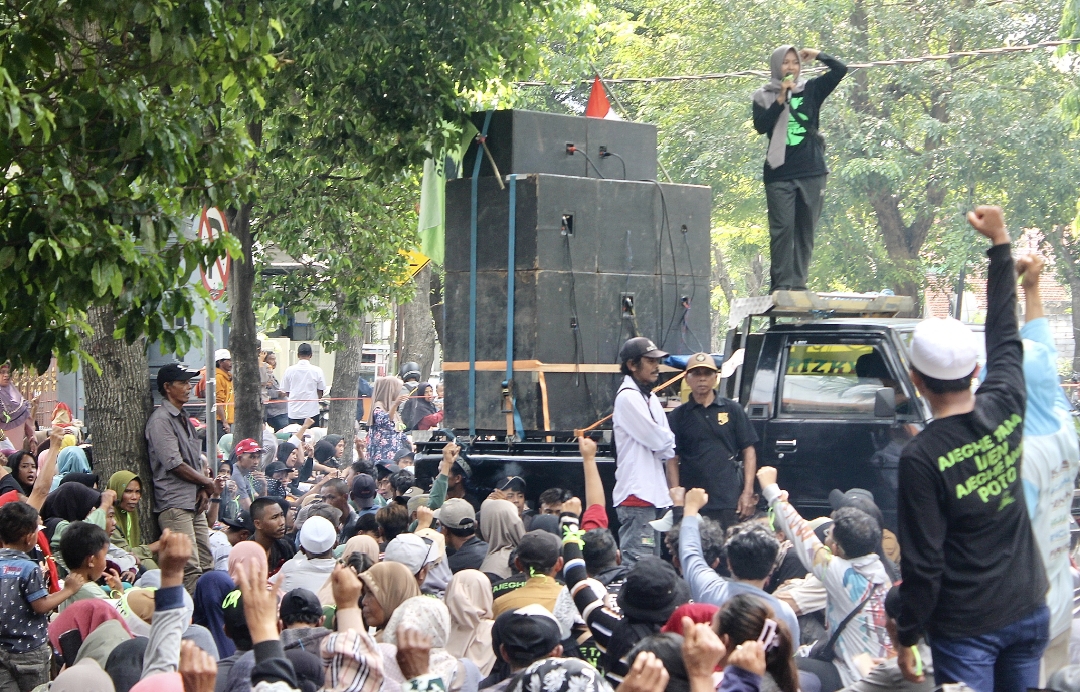
For Harun, the head of the RTSP and a primary target of the company’s litigation, the court’s decision is a moment of relief, but not closure.
"I am happy, and the community is relieved," Harun said in a telephone interview. "But the uncertainty remains. Our land is our life. We want the land that we have managed for generations to be officially returned to the community so that it is no longer an object of dispute."
The emotional and economic toll has been heavy. The Rp 1 billion claim, while dismissed, represented a figure that could have bankrupted the farmers. Beyond the money, there is the fear for the future of the younger generation. Harun emphasizes that this is not just about today’s harvest; it is about the right of their children to inherit a sustainable livelihood.
The community has remained resilient, holding meetings and continuing their daily agricultural work despite the looming threat of the lawsuit. They have been supported by various civil society groups, including the Tekad Garuda team, which argues that the state’s failure to act has effectively allowed this "perpetual conflict" to continue.
Official Responses and Demands for Reform
In the wake of the latest court ruling, Tekad Garuda has issued a formal set of demands to both national and regional authorities, urging them to move beyond passive observation.
1. The Ministry of Agrarian Affairs and Spatial Planning/National Land Agency (ATR/BPN)
The advocacy team has called for a comprehensive audit of the HGU held by PT BMS. They demand a transparent examination of the historical basis, the issuance process, and the actual implementation of the land rights on the ground. "The audit must consider the history of occupation, community claims, and relevant land documents to provide true legal certainty," the team stated.

2. The Ministry of Forestry
If any portion of the disputed land falls within a designated forest zone, the Ministry of Forestry is expected to provide clear mapping and clarification of status to ensure that land management rights do not clash with national conservation or forestry laws.
3. Local Government (Banyuwangi Regency and East Java Province)
The team is urging the local government to act as a mediator. This includes facilitating cross-agency coordination, establishing a formal dialogue between the farmers and the company, and actively advocating for a resolution at the ministerial level in Jakarta.
4. Human Rights Oversight (Komnas HAM)
There are grave concerns regarding alleged intimidation, threats to the safety of residents, and the curtailment of the right to participate in public life. Tekad Garuda has requested that the National Commission on Human Rights (Komnas HAM) monitor the situation to ensure that the struggle for land does not lead to human rights violations or the criminalization of the farmers.
5. Law Enforcement
The team has explicitly called on the East Java Regional Police and the Banyuwangi City Police to maintain neutrality. "Any alleged criminal act must be handled based on objective evidence, not by using the citizens’ participation in agrarian struggles as a pretext for criminalization," the statement emphasized.
The Path Forward: Justice Beyond the Courtroom
The recent victory at the Banyuwangi District Court is, at best, a tactical success. It prevents immediate displacement and financial ruin for the three farmers involved, but it does not address the core of the issue: the structural inequality of land distribution in Pakel.
As legal expert Revolver Langit Akbar notes, the state’s tendency to hide behind "formal legality" while ignoring "substantive justice" is the primary driver of this conflict. By granting massive land concessions to corporations without properly vetting the existing land rights of indigenous or local farming communities, the state creates a vacuum of justice that eventually leads to violence and protracted legal battles.

For the people of Pakel, the goal is clear: the recognition of their ancestral rights and the restoration of their land. They are not merely asking for a reprieve from lawsuits; they are asking for the right to exist on their own land without the threat of being labeled "invaders" in their own home.
The government is now at a crossroads. It can continue to allow the conflict to fester, risking further social unrest, or it can take the bold steps necessary to conduct a fair land reform. Until the state intervenes to provide definitive legal status to the farmers of Pakel, the "victory" celebrated in the courtroom will remain a fragile one, overshadowed by the reality that the struggle for their soil—and their future—is far from over.
As the sun sets on the hills of Pakel, the farmers remain in their fields, watching, waiting, and hoping that the next time they appear before a state authority, it will be to receive the deeds to their land, not a summons to court.