Empowering Through Innovation: Four Indonesian Undergraduates Create AI-Powered Mathematics Tutor for Visually Impaired Students
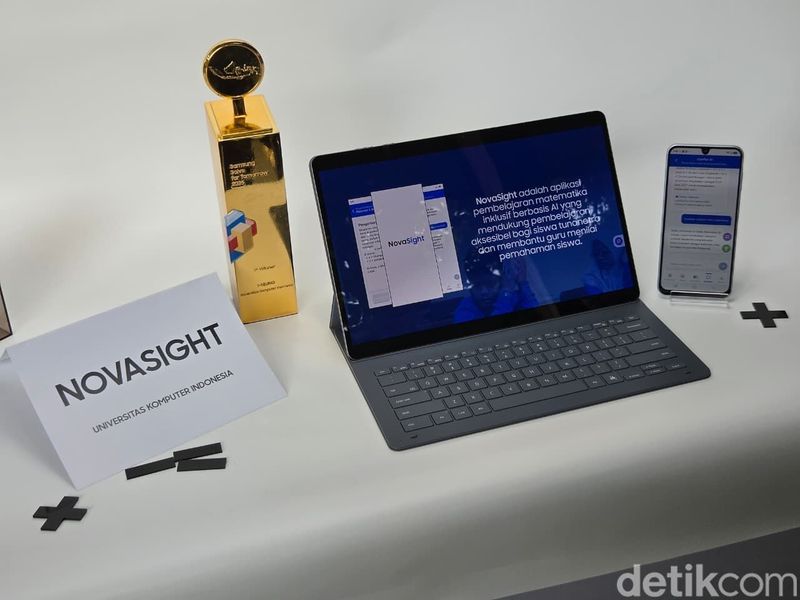
JAKARTA — In an inspiring leap forward for educational technology and digital inclusion, a team of four undergraduate students from the Universitas Komputer Indonesia (Unikom) has developed NovaSight—an innovative artificial intelligence (AI) application designed specifically to help visually impaired students learn mathematics independently.
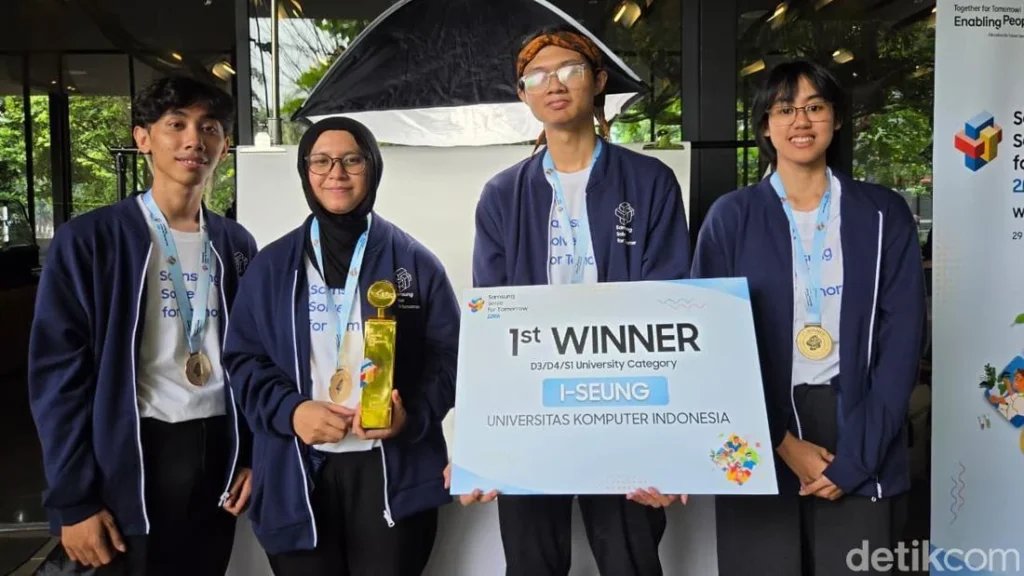
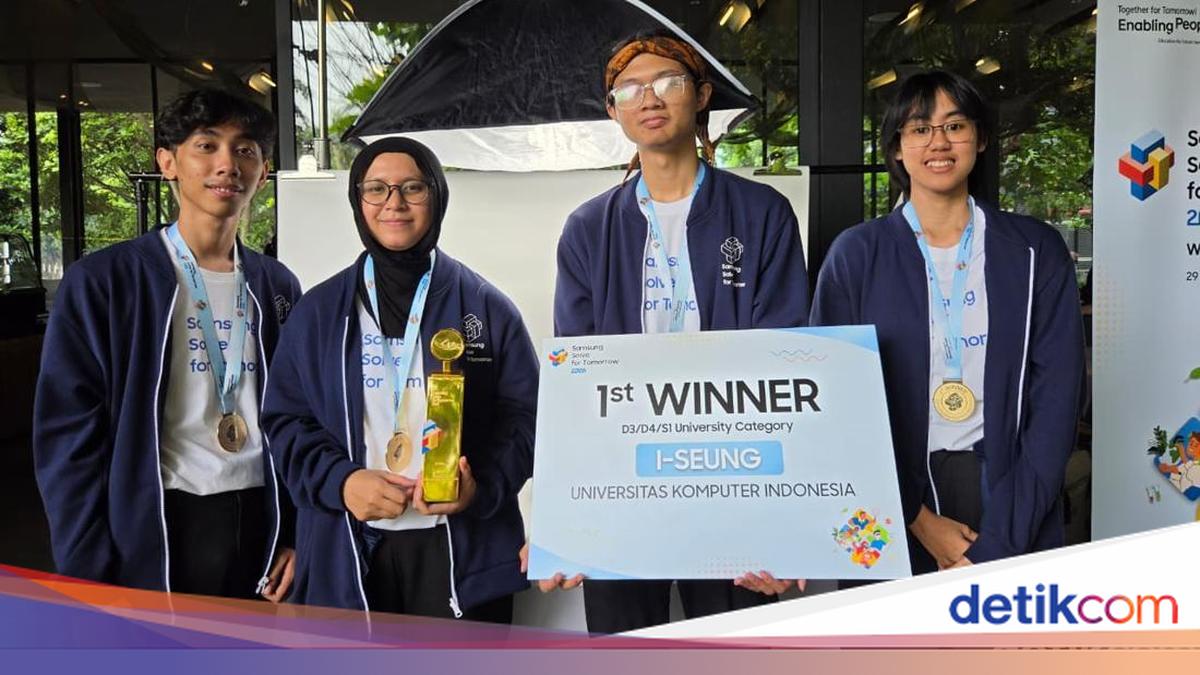
The groundbreaking creation not longer serves merely as an academic project; it has successfully captured the highest accolade, winning first place in the prestigious Samsung Solve for Tomorrow (SFT) 2026 competition under the D3/D4/S1 category.
Developed by the student-led "Team I-SEUNG"—comprising Ratuayu Nurfajar, Regia Qolbu Rivita Atmowidjaja, Mohamad Zaki Zakiran, and Damar Fikri Haikal, under the academic mentorship of lecturer Dian Dharmayanti—NovaSight was officially announced as the winning innovation in Jakarta. The triumph marks a monumental milestone not just for the young technologists, but for the broader landscape of inclusive education in Indonesia.
Main Facts and Core Innovation
At its core, NovaSight bridges a severe accessibility gap in traditional classrooms: the inability of blind and low-vision students to seamlessly interact with visual mathematical concepts such as graphs, geometric diagrams, and complex multi-step arithmetic calculations.
Built using cutting-edge frameworks including Flutter, Azure OpenAI, and integrating seamlessly with TalkBack screen readers, NovaSight incorporates five core AI-driven features:
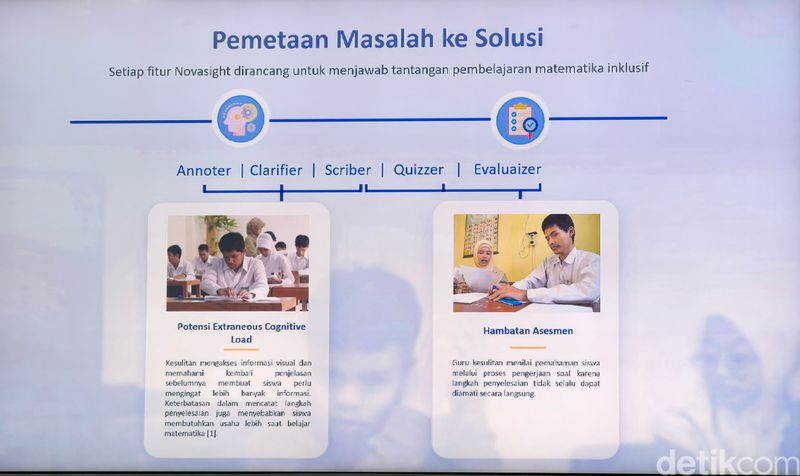
- Annoter: Transforms dense mathematical materials, including complex graphs and diagrams, into descriptive text that can be accurately articulated by screen readers.
- Scriber: Empowers students to record and document their step-by-step problem-solving processes using a specialized, accessibility-optimized virtual keyboard.
- Clarifier: Acts as an interactive AI assistant, providing immediate contextual answers to student queries derived from the core learning syllabus.
- Quizzer: Assists educators in generating comprehensive quizzes complete with automated answer keys tailored to specific learning modules.
- Evaluaizer: Deeply analyzes student inputs, assessing intermediate calculation steps to pinpoint exact errors and provide constructive feedback.
The application addresses a stark demographic need. According to data from the Indonesian Ministry of Primary and Secondary Education (Kemendikdasmen) cited during the team’s presentation, there are approximately 4,229 visually impaired students currently enrolled in Special Schools (SLB) across the country. Historically, these students have faced profound structural barriers when attempting to master STEM (Science, Technology, Engineering, and Mathematics) subjects due to the visual-heavy nature of the curriculum.
Chronology of Development: From Concept to Triumph
The journey of NovaSight from a mere spark of an idea to an award-winning national innovation is a testament to rigorous field research, iterative design thinking, and sheer resilience.
Phase 1: Field Research and Hypothesis Testing
The project originated when Team I-SEUNG conducted a series of qualitative studies, reviewing academic literature and interviewing both educators and students at SLB Negeri A Citeureup in Cimahi, West Java. Their preliminary findings confirmed a severe bottleneck: visually impaired learners heavily struggled with abstract graphical representations and structural calculation tracking.
"We conducted prior research, utilizing both literature reviews and internet databases to formulate our hypotheses. Afterward, to validate those hypotheses, we went straight into the field," recalled Ratuayu Nurfajar during an interview following the SFT 2026 award ceremony.
Phase 2: Iterative Design and Accessibility Adjustments
The development phase spanned approximately four months. However, the path was not without hurdles. Initially, the team designed a custom keyboard layout that they assumed would be intuitive for blind users. However, field testing proved otherwise.
"Initially, we designed a layout ourselves, thinking it would be comfortable for them. But when we returned to the field, we realized they were simply not accustomed to it," shared Regia Qolbu Rivita Atmowidjaja.
Listening closely to user feedback, the team completely overhauled the interface, redesigning the keyboard layout to strictly adhere to the Web Content Accessibility Guidelines (WCAG) to ensure maximum digital usability and ergonomic comfort for visually impaired learners.
Phase 3: Pilot Testing and Promising Results
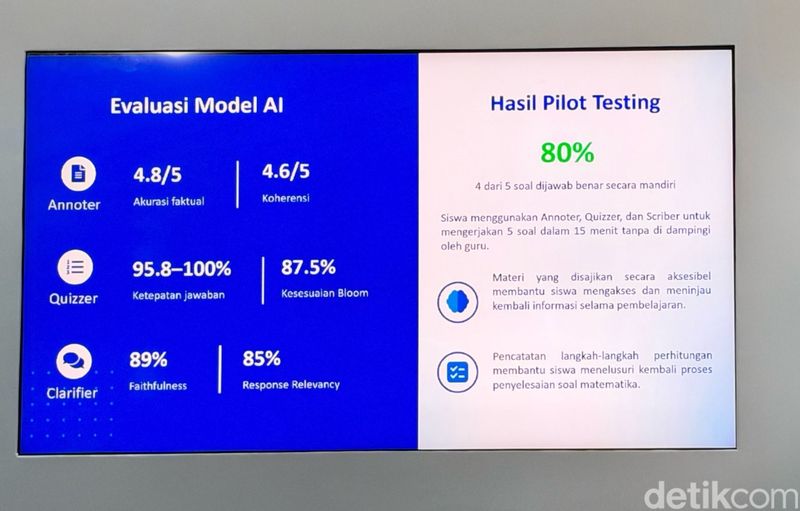
Upon finalizing the beta version, NovaSight underwent initial pilot testing with actual students. The results yielded remarkably encouraging metrics. In a controlled test session presented by Team I-SEUNG, a blind student successfully solved four out of five complex mathematics problems within a 15-minute window entirely unassisted by a teacher.
The test successfully leveraged the Annoter, Quizzer, and Scriber modules, proving that AI-assisted tools can drastically accelerate comprehension and execution times for disabled learners.
Phase 4: A Near-Miss Entry Turned Victory
Interestingly, the team’s participation in Samsung Solve for Tomorrow 2026 almost never happened. Having discovered the competition via Instagram, the members initially procrastinated on their application submission. It was only due to a last-minute extension of the registration window that they managed to submit their proposal.
"We were actually a team that almost missed the deadline because we delayed registering. Fortunately, the registration period was extended. And SFT has brought us all the way to this point. We honestly didn’t expect it—Alhamdulillah, we won first place," Regia remarked with gratitude.
Supporting Data and Testimonials
The real-world impact of NovaSight was further validated by testimonials from students and educators who experienced the application firsthand during testing phases.
Student Perspective
Irman, an 11th-grade visually impaired student at SLB Negeri A Citeureup, Cimahi, expressed profound relief and newfound academic confidence after utilizing the application:
"Alhamdulillah, with the presence of NovaSight, I have been greatly helped in understanding mathematical materials, especially when encountering graphs and diagrams. I am now also able to tackle problems and record step-by-step solutions independently without constantly needing a teacher by my side," Irman stated in a testimonial presented during the team’s pitch.
Educator Perspective
Professional endorsement also arrived from Bayu, a mathematics teacher who evaluated the software:
"The features are clear and easy to understand, making it simple for both teachers and students to use. Furthermore, applications like this are still very rarely encountered, especially those specifically designed to assist mathematics learning for visually impaired students," Bayu noted.
Despite these glowing early reviews, the development team maintains a grounded scientific perspective. They acknowledge that while the pilot metrics—such as a student solving 4 out of 5 math questions—are promising, they do not yet represent a comprehensive statistical baseline for universal effectiveness across all visually impaired student demographics. Extensive longitudinal studies and broader field tests remain planned for the future.
Official Responses and Strategic Implications
The success of Team I-SEUNG highlights a growing shift in Indonesia’s higher education landscape toward tech-driven social impact. Competitions like Samsung Solve for Tomorrow serve as crucial catalysts, transforming theoretical computer science knowledge into pragmatic civic solutions.
Implications for Inclusive Education
NovaSight addresses a profound socioeconomic and educational challenge: the digital divide in special-needs education. Traditional assistive technologies for the blind have historically focused heavily on literary reading (such as text-to-speech for language arts) or basic audio navigation, frequently sidelining complex mathematical and spatial reasoning. By tackling STEM education head-on, NovaSight opens new avenues for visually impaired students to pursue careers in science, technology, engineering, and mathematics—fields that were previously perceived as heavily restricted due to visualization barriers.
Future Roadmap and Commercialization
Following their victory at SFT 2026, Team I-SEUNG has laid out an ambitious roadmap for the future:
- Regional Expansion: The immediate goal is to scale the deployment of NovaSight across special schools throughout West Java before launching a nationwide rollout.
- Refining the Software: The app is currently operating in a closed beta phase and is not yet available for public download on mainstream app stores. The team aims to optimize system stability, expand natural language processing accuracy, and enhance Azure OpenAI integrations.
- Seeking Strategic Investors: To transition from a prototype to a fully sustainable enterprise, the team is actively seeking partnerships, grants, and venture capital investment to subsidize operational costs, server upkeep, and continuous AI development.
Conclusion
The victory of Team I-SEUNG at the Samsung Solve for Tomorrow 2026 competition transcends the boundaries of a standard collegiate hackathon. It stands as a powerful demonstration of how empathetic design, combined with advanced artificial intelligence, can dismantle barriers and foster a more equitable society.
Through NovaSight, these four Unikom undergraduates have not only claimed a prestigious national title but have also illuminated a path forward—proving that technology, when directed with purpose, possesses the extraordinary capacity to make learning universally accessible to all.