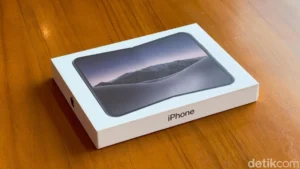
Apple’s Foldable Debut Marred by Early Hardware Failures: Users Report Cracking Screens on New ‘iPhone Duo’
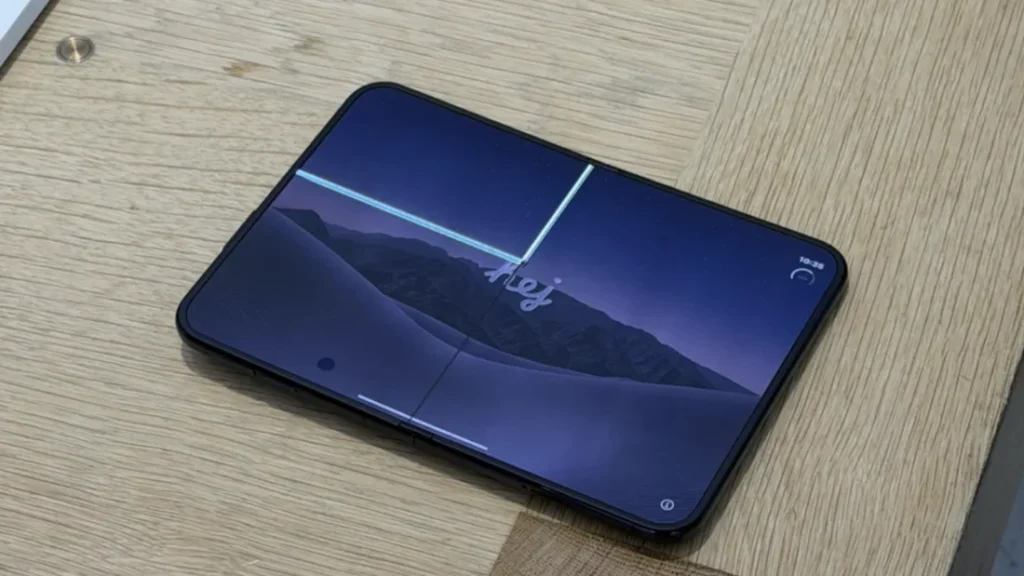
JAKARTA — Apple’s highly anticipated leap into the foldable smartphone market has hit an early turbulence. Just days after the global release of the company’s first-ever foldable device, the "iPhone Duo," a growing number of early adopters have taken to social media and online forums to report catastrophic inner-screen failures.
While Apple has officially acknowledged that a small batch of units is affected, tech industry analysts and consumers alike are closely watching to see whether these incidents represent isolated manufacturing defects or a systemic engineering flaw reminiscent of early foldable hiccups seen in competing brands.
Main Facts: What is Happening with the iPhone Duo?
The iPhone Duo represents a monumental shift for Apple, marking the Cupertino-based tech giant’s official entry into the burgeoning foldable phone segment. However, the device’s rollout has been overshadowed by reports of inner displays cracking spontaneously along the central crease.
Key facts surrounding the unfolding situation include:
- The Core Issue: Users are experiencing sudden, unprovoked fractures or dead pixels along the internal vertical hinge of the flexible OLED display.
- Geographic Spread: Reports have surfaced globally, originating from Australia, the United States, and India, indicating that the issue is not limited to a single manufacturing batch or regional distribution hub.
- Apple’s Official Stance: Apple has confirmed that a "small percentage" of units are affected by inner-screen anomalies and has urged impacted customers to utilize AppleCare for immediate device replacements.
- Market Demand: Despite the early hardware complaints, consumer demand for the iPhone Duo remains exceptionally high. Reports from major manufacturing partners in Taiwan indicate that initial stock has completely sold out, with the next wave of shipments pushed back to January.
Chronology of the Crisis: From Unboxing to ‘Crackgate’ Fears
The timeline of the iPhone Duo’s rocky debut began almost simultaneously with its worldwide retail release on Friday.
Day One: The First Reports Emerge
Within hours of the device hitting shelves globally, early buyers in the Asia-Pacific region began posting troubling accounts online. One of the earliest and most widely shared reports came from an Australian consumer who took to Reddit less than six hours after purchasing the device.
According to the user, the incident occurred while demonstrating the device to a friend:
"I was showing it to a friend, and when I unfolded it, I felt something strange around the inner hinge, right underneath the display," the user wrote, accompanying the post with photographs displaying a stark white pressure line stretching across half of the screen.
"As I continued to unfold it, there was an audible cracking sound, and the screen shattered directly along the crease line."
Local Apple Store representatives quickly replaced the device under warranty. However, this user was not alone. Another Australian consumer reported hearing a similar structural snap during a routine unfolding motion, which immediately resulted in identical display failure.
Weekend Escalation: US and Indian Markets Affected
By Saturday and Sunday, the problem transcended regional boundaries. Bloomberg and various tech journalism outlets began highlighting parallel complaints from users across the United States and India. The uniformity of the damage—invariably centered on the vertical hinge mechanism—sparked intense debate across Reddit, X (formerly Twitter), and specialized tech forums, with some users coining speculative terms like "Crackgate."
Supporting Data and Industry Context
To put these early hardware failures into perspective, industry analysts urge calm while monitoring the scale of the issue.
Francisco Jeronimo, Vice President of Data and Analytics at market research firm IDC, noted that hardware issues during the launch window of a radically new form factor are not entirely unprecedented.
"This is quite common when a completely new product category enters the market," Jeronimo explained. "Samsung faced severe hurdles with the first-generation Galaxy Fold back in 2019. However, Samsung also proved that a swift, transparent corporate response can successfully mitigate long-term damage to the product category."
The Fragility Factor of Foldables
Industry experts point out inherent physical limitations in foldable technology. Unlike traditional slab smartphones protected by rigid Corning Gorilla Glass or ceramic shields, foldables require ultra-thin, flexible glass (UTG) or specialized polymer layers that inherently possess different durability thresholds.
Furthermore, the iPhone Duo is serving as the first foldable device for millions of consumers. Transitioning from standard glass displays to complex mechanical hinges means users are still adapting to the tactile nuances of handling a folding device—raising questions about whether user error or excessive initial pressure might be contributing factors in some cases.
Official Responses and Corporate Strategy
Apple’s public relations and support infrastructure have swung into motion to contain the narrative and assist affected consumers.
In an official statement released to media outlets, Apple addressed the situation directly:
"We are aware of an issue affecting the inner display on a very small percentage of iPhone Duo units. If users experience any issues with their iPhone Duo display, they should reach out to AppleCare to arrange a prompt replacement."
By immediately funneling affected users through AppleCare for hassle-free swaps, Apple is mirroring the playbook established by its competitors during past hardware debuts. Analysts view this rapid, no-questions-asked replacement policy as a crucial first step in preserving consumer trust.
Meanwhile, supply chain realities complicate the replacement process. Reports from Taiwan—where Foxconn assembles the majority of Apple’s flagship devices—indicate that retail channels are currently stripped bare. With the initial production run entirely exhausted, customers requiring a replacement unit may face inventory delays extending into January.
Implications: Engineering Defect vs. Isolated Incident
As technicians and teardown experts analyze the returned units, the root cause of the iPhone Duo screen failures remains officially undetermined. The technical community is currently divided into three primary hypotheses:
- Design Flaw: Because every reported failure appears to manifest at the exact same structural point—along the inner hinge—critics argue there may be a fundamental stress-point miscalculation in the chassis design. If true, this would represent a major hurdle for Apple, requiring potential manufacturing redesigns for future production lines.
- Manufacturing Defect: A more optimistic scenario for Apple points toward isolated quality control lapses at specific assembly plants. If debris or microscopic impurities entered the hinge mechanism during factory sealing, it would explain why only a "small percentage" of devices are failing while the vast majority remain pristine.
- Consumer Adaptation / User Error: Given the novelty of foldables, improper opening techniques or accidental particulate trapping (such as dust or grit lodging in the hinge during pocket carry) could exert localized pressure that cracks the flexible substrate.
The Road Ahead for Apple’s Foldable Ambitions
The iPhone Duo was designed to cement Apple’s dominance in the ultra-premium smartphone tier, proving that it could successfully enter a market pioneered by Samsung, Google, and various Chinese manufacturers.
Whether these early screen-cracking reports balloon into a historic hardware scandal or fade into a footnote of tech history depends entirely on the true failure rate of the devices currently in consumers’ hands. For now, Apple is banking on its robust customer service framework and the immense brand loyalty of its user base to weather the storm.
Consumers eyeing the device are advised to purchase with warranty protection firmly in place, while current owners should handle their new folding investments with extra care until Apple provides a definitive technical autopsy of the faulty units.