
Indonesia’s Capital Market at a Crossroads: OJK Rejects Potential MSCI Downgrade Amid Structural Reforms
JAKARTA — The Indonesian capital market is facing one of its most critical historical junctures. Following a surprise consultation announcement by global index provider Morgan Stanley Capital International (MSCI) regarding a potential downgrade of Indonesia’s stock market classification from an "Emerging Market" to a "Standalone Market," financial authorities have firmly pushed back.
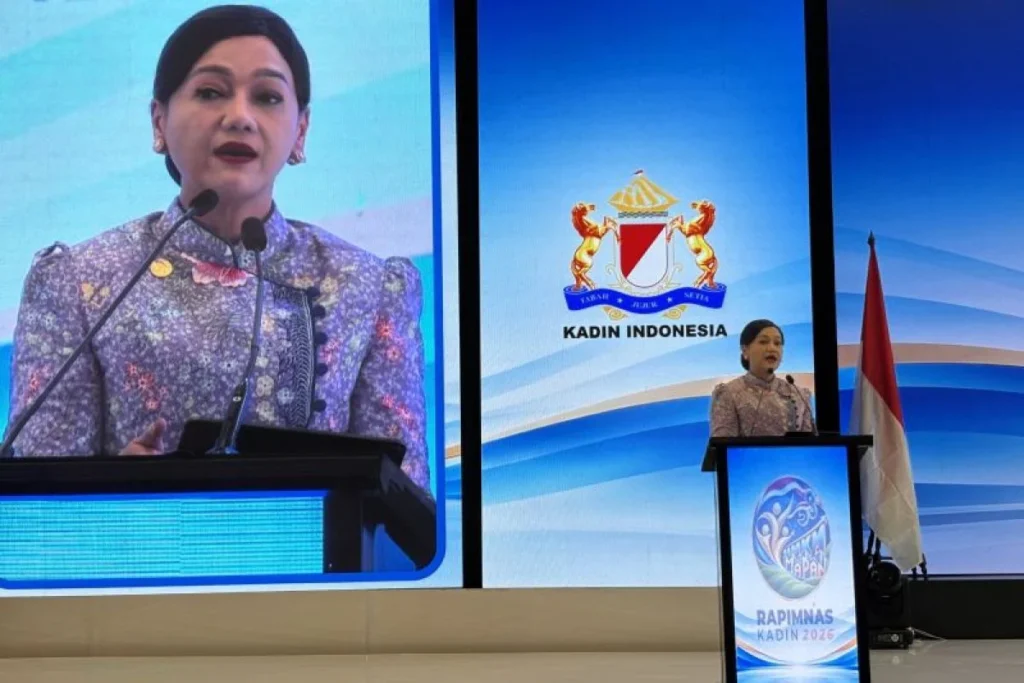
The Financial Services Authority (Otoritas Jasa Keuangan/OJK) has openly questioned the fairness and logic of the proposed reclassification. Speaking at a high-profile national leadership meeting (Rapimnas) hosted by the Indonesian Chamber of Commerce and Industry (KADIN) in Jakarta, OJK Board of Commissioners Chairperson Friderica Widyasari Dewi argued that Indonesia’s robust economic fundamentals and massive market capitalization make it completely uncomparable to nations currently residing in the standalone category.
As domestic regulators scramble to address MSCI’s core concerns regarding market transparency, shareholding structures, and regulatory enforcement, the coming months will dictate not only Indonesia’s standing in global investment portfolios but also the future maturity of its financial ecosystem.
Main Facts: The Core Conflict Between MSCI and Indonesia
The crux of the tension lies in a fundamental disagreement between how global index gatekeepers evaluate market accessibility and how domestic regulators view the actual health of Southeast Asia’s largest economy.
On October 15, 2026, MSCI dropped a bombshell on the Indonesian financial community by initiating a formal consultation process to downgrade the country’s market classification. If enacted, Indonesia would slip from the Emerging Market tier—sharing a category with economic heavyweights and peers like South Korea, Malaysia, Turkey, and the Philippines—into the Standalone Market category.
A Standalone Market designation typically groups countries that, due to various structural, economic, or geopolitical impediments, do not fit standard emerging or frontier market criteria. These can include nations experiencing severe macroeconomic distress, active conflict, or extreme regulatory isolation.
OJK’s leadership immediately highlighted the absurdity of this potential grouping. Pointing to Indonesia’s vibrant economic growth, controlled inflation rates, and expanding market capitalization, Friderica posed a rhetorical question that resonated throughout the financial sector:
"Would Indonesia be on equal footing with countries like Zimbabwe, nations plagued by active warfare like Ukraine, or Argentina, which has suffered inflation rates exceeding 33 percent? This is something we must truly reflect upon."
Despite these stark macroeconomic contrasts, MSCI’s rationale for the downgrade centers around micro-level structural integrity and market mechanics. Specifically, the global index provider has flagged persistent issues surrounding:
- The transparency of share ownership structures.
- Allegations and concerns regarding coordinated trading practices.
- The demonstrable, consistent implementation and enforcement of market rules by local authorities.
For global institutional funds that track MSCI indices, a downgrade would trigger mandatory portfolio rebalancing, potentially leading to significant foreign capital outflows and forcing Indonesian assets to re-quote under a severely restricted visibility umbrella.
Chronology of Events: From Index Reviews to Consultation Deadlines
Understanding how the relationship between MSCI and the Indonesian capital market reached this critical juncture requires tracking a precise timeline of reviews, warnings, and regulatory responses.
- June 2026 (MSCI Accessibility Review): During a periodic market accessibility review, MSCI evaluated Indonesia across various operational and regulatory parameters. Data showed that Indonesia successfully met 16 out of the 18 specific indicators utilized by the index provider, indicating that the baseline framework of the Indonesian exchange was broadly aligned with global norms.
- October 15, 2026 (The Downgrade Consultation Announcement): Despite passing 16 of 18 indicators, MSCI officially announced a broad-based market consultation concerning the demotion of Indonesia from Emerging Market to Standalone Market status. The announcement cited lingering opacity in shareholding patterns, enforcement gaps, and potential coordinated trading behaviors.
- Late 2026 – Early 2027 (Intensive Regulatory Overhaul): In response to the MSCI warning, the OJK, alongside the Indonesia Stock Exchange (BEI) and other self-regulatory organizations (SROs), accelerated capital market reforms. These included tightening free-float requirements, expanding disclosure mandates, and mapping high shareholding concentrations.
- April 30, 2027 (MSCI Feedback Window Closes): MSCI established a prolonged feedback window, allowing regulatory bodies, institutional investors, and market participants to submit structural updates, empirical data, and arguments regarding the proposed reclassification.
- June 30, 2027 (Final Verdict Scheduled): MSCI has slated the release of its final decision regarding the classification of the Indonesian stock market for no later than June 30, 2027. This leaves a narrow window for domestic authorities to prove that ongoing reforms have definitively resolved structural vulnerabilities.
Supporting Data: Economic Fundamentals vs. Market Mechanics
To substantiate its resistance to the downgrade, the OJK has leaned heavily on comparative economic data that underscores Indonesia’s structural resilience.
When evaluated through a macroeconomic lens, Indonesia consistently outperforms many nations currently residing in the emerging market bracket. With consistent GDP growth hovering around the 5% threshold, a remarkably stable inflation rate relative to global post-pandemic shocks, and a burgeoning domestic investor base, the Indonesian economy presents a compelling long-term narrative.
Furthermore, the scale of Indonesia’s capital market cannot be understated. Market capitalization has expanded significantly over the past decade, backed by waves of high-profile initial public offerings (IPOs) from technology, energy, and financial sectors.
However, the divergence between macro-strength and micro-governance becomes apparent when examining MSCI’s 18 indicators:
- Passed Indicators (16/18): These include baseline components such as clearing and settlement efficiency, transferability of funds, capital mobility, and general account operability.
- Challenged Indicators (2/18 + Qualitative Flags): The remaining friction points do not stem from institutional insolvency or capital controls—traditionally the triggers for emerging market downgrades—but rather from market transparency. Issues such as hidden beneficial ownership through complex nominee structures, concentrated stock holdings among a handful of controlling entities (often referred to locally as "freak shares" or tightly held blocks), and perceived vulnerabilities to price manipulation have repeatedly drawn scrutiny from global index watchers.
OJK’s Friderica noted that while meeting 16 of 18 indicators proves that the physical plumbing of the Indonesian exchange is sound, the remaining qualitative bottlenecks concerning enforcement and transparency carry heavy weight in global index calculations.
Official Responses: OJK and BEI Stand Firm
The Indonesian regulatory apparatus—led by the OJK and supported by the Indonesia Stock Exchange (BEI)—has adopted a dual-pronged approach: firmly rejecting the "Standalone" label as fundamentally unjust while aggressively implementing sweeping internal reforms.
The OJK Perspective: Beyond Index Compliance
The OJK has taken pains to communicate to the public and institutional stakeholders that the ongoing regulatory overhaul is not merely a box-ticking exercise designed to appease a single foreign ratings agency. Instead, structural modernization is being pursued as a strategic necessity for the nation’s financial sovereignty.
"The reforms we are undertaking are not just because of one global index provider," Friderica emphasized. "Indeed, we want to execute these reforms so that our capital market continues to grow larger, yet remains resilient, transparent, efficient, and fair."
To directly address MSCI’s grievances, the OJK has initiated major policy shifts:
- Lowering Ownership Disclosure Thresholds: Regulatory requirements for major shareholders have been tightened, lowering the reporting threshold of share ownership transparency from the previous 5% mark down to 1%. This aims to unmask hidden beneficial owners and curb systemic market abuse.
- Strengthening Free Float Rules: Strict mandates have been introduced to ensure that listed corporations maintain a genuine, liquid public share distribution, reducing the risk of market manipulation via artificial scarcity.
- High Shareholding Concentration Monitoring: The OJK has established specialized watchlists and monitoring systems for equities displaying extreme ownership concentration, making it easier for regulators to detect collusive trading and coordinated volume spikes.
The BEI Perspective: Contextualizing "Standalone"
Echoing the regulator’s stance, officials from the Indonesia Stock Exchange have stepped forward to calm domestic investors. BEI leadership noted that while a transition to a Standalone Market designation would present logistical hurdles for passive foreign funds, it does not represent an institutional collapse or a classification of default. Rather, it functions as a designation of "special surveillance" by the global index community. BEI continues to collaborate closely with listed firms to ensure compliance with the new, rigorous disclosure rules before the June 2027 deadline.
Implications: What a Downgrade Means for Investors and the Economy
The potential reclassification of Indonesia from an Emerging Market to a Standalone Market carries profound multi-layered implications for the domestic and international financial landscapes.
1. Capital Outflows and Passive Fund Rebalancing
The most immediate and tangible impact of an MSCI downgrade would be felt in institutional portfolio flows. Numerous global exchange-traded funds (ETFs) and mutual funds are strictly mandated to track MSCI Emerging Market indices. If Indonesia is stripped of its emerging status, these passive funds will be forced to sell their Indonesian holdings to rebalance their portfolios in accordance with their charters. This could trigger short-term downward pressure on blue-chip Indonesian equities, testing local market liquidity.
2. Shift Toward Domestic Investor Resilience
Paradoxically, past episodes of foreign capital flight have underscored the growing maturity of Indonesia’s domestic investor base. Over the past five years, retail participation through digital brokerage platforms has surged. While a foreign sell-off would undoubtedly cause localized volatility, domestic institutional investors (such as pension funds, state insurance entities, and local mutual funds) and retail investors are increasingly positioned to absorb sudden shocks, providing a vital structural cushion.
3. Long-Term Governance and Market Integrity
In the long run, the friction with MSCI may serve as a blessing in disguise for the Indonesian capital market. For years, domestic regulators have battled issues relating to thin free-floats, insider dominance, and market manipulation—phenomena that deter sophisticated, long-term institutional capital. By forcing a rigorous overhaul of transparency rules, beneficial ownership tracking, and enforcement mechanisms, the OJK’s response to the MSCI consultation is accelerating governance standards that are essential for a modern, world-class exchange.
4. International Credibility and Regional Competitiveness
Indonesia is currently positioning itself as Southeast Asia’s premier economic powerhouse, boasting ambitious infrastructure projects, a booming digital economy, and a strategic role in the global green transition. A downgrade to a Standalone Market status—a category more commonly associated with isolated or conflict-ridden economies—would deal a symbolic blow to the nation’s financial reputation, making it harder to project regulatory maturity to foreign direct investors.
Consequently, the stakes leading up to June 30, 2027, extend far beyond stock indices. They represent a test of Indonesia’s capacity to marry rapid economic growth with uncompromising market integrity, ensuring that its financial markets reflect the true scale and sophistication of its national economy.