Roblox Crosses Technological Boundaries: PlayStation 4 Emulation and Counter-Strike Clones Spark Industry-Wide Debate
JAKARTA — In an era where the boundaries of digital sandbox environments and game development engines continue to blur, Roblox has once again defied expectations. What began as a simplistic, block-based platform for user-generated mini-games has evolved into a technological powerhouse capable of feats that leave software engineers and industry veterans astounded.
Gamers were recently sent into a frenzy after it was revealed that users could successfully play fully rendered PlayStation 4 experiences—complete with an authentic operating system dashboard, system apps, and classic titles—directly inside Roblox. Paired with remarkably faithful recreations of Valve classics like Counter-Strike and Left 4 Dead 2, this latest phenomenon highlights both the extraordinary creative potential of the community and the precarious legal tightrope the platform continually walks regarding intellectual property rights.
Main Facts: The Intersection of Emulation and User-Generated Content
The core of the recent controversy centers on an unprecedented level of software replication hosted entirely within Roblox’s architecture. For the uninitiated, Roblox is already widely accessible across modern gaming hardware, including PlayStation 4, PlayStation 5, Xbox Series X/S, PC, and mobile platforms. Players typically download the application to access a myriad of user-created experiences, ranging from role-playing games to virtual obstacle courses (obby).
However, the paradigm shifted dramatically when the platform’s technical boundaries were stretched far beyond traditional mini-games. Rather than simply playing a game inside Roblox on a PlayStation console, users discovered they could experience a simulated PlayStation environment running within the Roblox client itself—effectively creating a digital ecosystem within an ecosystem.
The centerpiece of this viral movement was an experience titled PlayStation Experience, developed by a creator operating under the moniker Redwing Works. Released on October 26, the project was an astonishingly meticulous replication of the PlayStation 4’s primary user interface.
Far from a crude mockup, the experience successfully emulated:
- The iconic PS4 boot-up sequence and startup audio cues.
- A fully functional, interactive system dashboard.
- Integrated software features, including system settings, trophy tracking systems, media galleries, web applications, and functional chat rooms enabling communication between users within the virtual console environment.
Most impressively, the dashboard housed at least seven recognizable PS4 and multiplatform titles that users could launch and play natively within the Roblox experience. The lineup featured beloved titles such as The Simpsons: Hit & Run, Clustertruck, Superhot, Gang Beasts, Five Nights at Freddy’s, Undertale, and PaRappa the Rapper. According to reports, these titles retained visual fidelity remarkably close to their original counterparts, completely abandoning the classic, blocky aesthetic typically associated with Roblox avatars and assets.
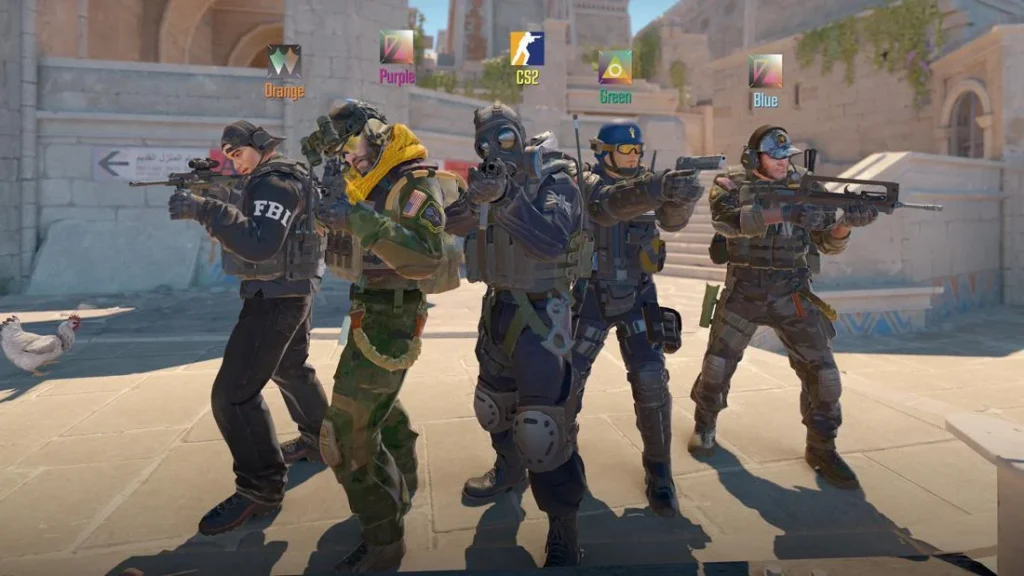
Furthermore, the scope of these simulations extended beyond Sony’s ecosystem. Content creators highlighted parallel projects recreating Valve Corporation’s seminal tactical shooter, Counter-Strike, as well as the cooperative zombie survival horror title, Left 4 Dead 2. In these experiences, players found themselves interacting with mechanics, weapon models, and physics engines that mirrored the original PC releases, entirely decoupled from official licensing or direct affiliation with Valve.
Chronology: How the Controversy Unfolded
The sequence of events that brought this technological marvel—and its subsequent disappearance—to the global gaming spotlight unfolded rapidly over the course of a few days in late October:
- October 26, 2026: Creator Redwing Works officially launches the "PlayStation Experience" project on the Roblox platform, introducing the fully interactive PS4 dashboard and its curated library of playable titles.
- October 27, 2026: Prominent online personalities take notice. Content creator SirDapper records footage showcasing the seamless operation of the emulated PS4 environment and publishes clips detailing the inclusion of high-fidelity replicas like Counter-Strike. Fellow YouTuber KreekCraft amplifies the discovery by sharing SirDapper’s clips, instantly igniting widespread discussion and controversy across social media and gaming forums.
- Late October 2026: The PlayStation Experience experience goes viral, accumulating over 178,700 visits in a remarkably short timeframe as thousands of curious users rush to test the digital marvel for themselves.
- October 29, 2026: Industry publication TweakTown reports that the PlayStation Experience content has been entirely removed from the platform. Investigative follow-ups by media outlets, including attempts by detikINET, confirm that the experience has been scrubbed from public search indices and is no longer accessible on Roblox.
Supporting Data and Technical Analysis
To understand the magnitude of this event, one must analyze the technical constraints and capabilities of the Roblox engine, commonly known as Roblox Studio. Traditionally powered by Lua (and its modern derivative, Luau) scripting languages, Roblox Studio is designed to handle physics calculations, networking, and rendering for standard virtual worlds.
Replicating a modern console’s dashboard alongside multiple fully realized games requires immense scripting ingenuity. Redwing Works and similar developers leveraged advanced UI manipulation, custom data-storing systems, and optimized rendering techniques to trick the engine into processing complex graphical assets that mimic external game engines.
- Traffic and Engagement: Despite its brief lifespan, the PlayStation Experience amassed an impressive 178,700+ visits before vanishing. This rapid trajectory underscores the viral nature of nostalgic software replication within massive multiplayer platforms.
- The Copyright Gray Area: While user-generated content platforms thrive on tributes, parodies, and homages, the inclusion of direct trademarked assets—such as the Sony PlayStation boot sequence, specific software applications, and third-party game titles without publisher consent—places these projects in direct violation of standard intellectual property laws.
Historically, platform holders like Sony Interactive Entertainment, Valve, and major game publishers maintain stringent policies regarding unauthorized distribution or emulation of their proprietary software. Although it remains unconfirmed whether formal legal takedown notices (DMCA requests) were issued by copyright holders or if Roblox’s internal automated moderation teams proactively removed the content, the swift eradication of the experience points to standard corporate policy enforcement.
Official Responses and Platform Governance
As user-generated platforms scale into multi-billion-dollar digital economies, the responsibility of moderation shifts from simple content filtering to complex legal arbitration regarding digital property.
Thus far, neither Sony Interactive Entertainment nor Valve Corporation has issued a formal public statement regarding the replication of their hardware dashboards and software libraries within Roblox. Similarly, Roblox Corporation has maintained relative silence on the specific mechanics behind the exploit or simulation, adhering to standard protocols of removing infringing or policy-violating experiences upon detection.
Industry analysts note that Roblox has been actively striving to mature its platform. The company has introduced age-rating systems, enhanced developer monetization tools, and stricter compliance guidelines to encourage older audiences and AAA brand partnerships. Incidents involving unauthorized software replication—often dubbed "metaverse-ception" by internet commentators—present a unique governance challenge. When a platform becomes so technologically flexible that users can emulate competing gaming hardware within its servers, defining the boundaries of fair use versus copyright infringement becomes increasingly difficult for trust and safety departments.
Implications for the Future of Game Development and Digital Platforms
The brief existence and subsequent deletion of the emulated PlayStation 4 environment inside Roblox carry profound implications for the future of interactive entertainment, software development, and intellectual property law.
1. The Evolution of User-Generated Engines
The fact that community developers can push a scripting engine past its intended design parameters to simulate entirely separate gaming platforms demonstrates the staggering talent within the modern gaming community. As development tools become more accessible, the gap between professional game development studios and hobbyist creators continues to narrow. Platforms like Roblox are no longer viewed merely as children’s games, but as legitimate sandboxes for advanced software engineering experiments.
2. Heightened Copyright Scrutiny
For creators, the incident serves as a cautionary tale. While paying homage to classic systems and titles generates immense viral traction, commercial platforms cannot afford to harbor unauthorized replicas of proprietary hardware and software indefinitely. Moving forward, platform holders and hosting services like Roblox will likely deploy more aggressive detection mechanisms to identify and purge unauthorized emulations before they capture public attention.
3. The Quest for Infinite Interoperability
Gamers increasingly desire unified digital ecosystems where barriers between platforms dissolve. While true cross-platform emulation within a single proprietary app presents insurmountable legal hurdles, experiments like the Roblox PlayStation Experience reveal a deep-seated consumer appetite for integrated, nostalgic digital spaces.
Ultimately, while the virtual PS4 inside Roblox is now gone—leaving behind only archived clips and memories—it has left an indelible mark on the discourse surrounding digital creativity. It proved that in the modern gaming landscape, the only real limits are imagination, technical ingenuity, and the watchful eye of copyright law.