Beyond Technical Tweaks: Sumatra’s Civil Society Demands a Paradigm Shift in Forestry Law

PADANG – In a move that signals a growing rift between state-led resource management and grassroots environmental justice, the Sumatra Regional Coalition has issued a stern ultimatum to the Indonesian government and the House of Representatives (DPR). The coalition is demanding a fundamental overhaul of Law No. 41 of 1999 concerning Forestry, arguing that current legislative efforts are insufficient to address the deepening ecological and humanitarian crises gripping the island.
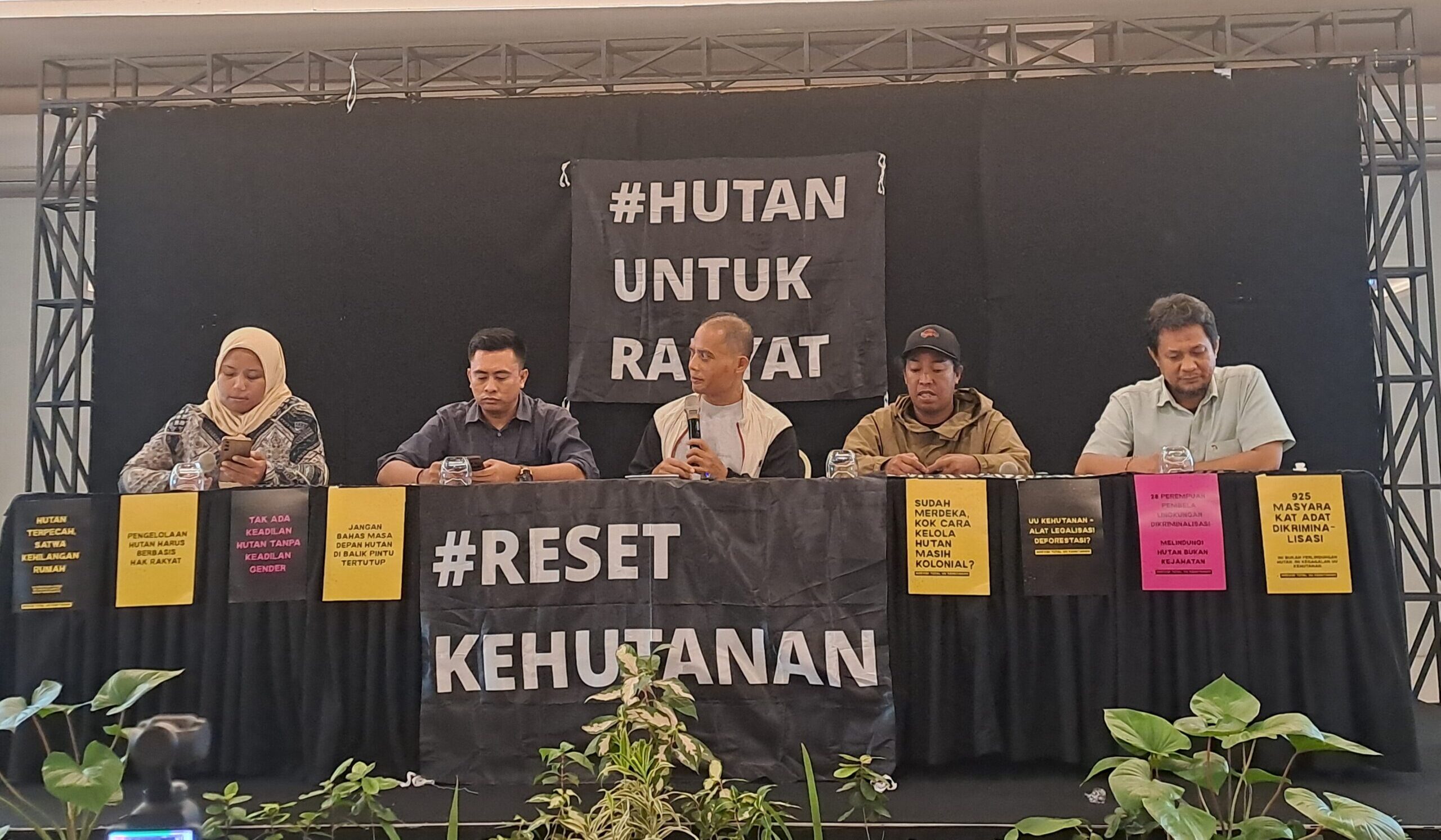
The demand was formalized during the "Declaration of Input for the Revision of the Forestry Law," held in Padang on May 29, 2026. The coalition, representing a broad alliance of civil society organizations and indigenous communities, asserts that any revision to the nation’s forestry framework must transcend technical amendments. Instead, it must address the core, substantive failures of a governance system that has prioritized extractive industries over ecological integrity and human rights.
The Human Cost of Ecological Collapse
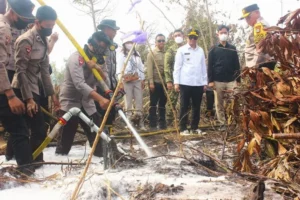
For the people of Sumatra, the urgency of this reform is not theoretical; it is a matter of survival. The coalition pointed to the catastrophic events of late 2025, which resulted in the deaths of more than 1,190 people and the displacement of 131,500 residents. While often categorized as "natural disasters," the coalition argues these tragedies are the direct, inevitable outcomes of systemic environmental degradation.
"The ecological disasters in Sumatra reveal a painful truth: forest destruction does not stop at the edge of a concession boundary," said Nora Hidayati, Advocacy Manager at the HuMa Indonesia Association. "It manifests as floods, landslides, crop failures, the loss of livelihoods, and a legacy of conflict passed down to future generations."

The coalition argues that decades of deforestation and the alteration of natural landscapes have rendered Sumatra’s environment incapable of sustaining its population. The dominance of state policies that favor plantation expansion, industrial logging, and mining has systematically dismantled the natural buffers that once protected communities from the volatility of climate change.
Chronology of a Failed Paradigm
The crisis in Sumatra is the result of a long-term accumulation of policy decisions. Over the last thirty years, the provinces of Aceh, North Sumatra, and West Sumatra have lost approximately 1.2 million hectares of forest cover. Strikingly, 690,777 hectares of this area were converted into industrial oil palm plantations.
The legislative trajectory of Law No. 41 of 1999 has been equally fraught. Since its inception, the law has undergone layers of revision, including a Government Regulation in Lieu of Law (Perpu) in 2004, the 2013 Law on Prevention and Eradication of Forest Destruction, and, most significantly, the 2023 Job Creation Law.
Between 2010 and 2017, the Constitutional Court (MK) presided over nine separate constitutional challenges to the forestry regime. While the court ruled in favor of plaintiffs in several instances—effectively challenging the state’s absolute control—these judicial victories rarely translated into systemic legislative change. Instead, they created a legal "gray zone" where the executive branch frequently interprets regulations in ways that bypass the spirit of the Court’s rulings.

The Colonial Hangover
Nora Hidayati emphasizes that the fundamental issue remains a "colonial mindset." The 1999 law, despite being born in the era of Reformasi, failed to shed the shackles of the Boschordonantie 1927 and the Domein Verklaring—legal frameworks used by the Dutch colonial administration to claim absolute state ownership of all "unclaimed" land.
"The current law places the state as the supreme owner and the people as intruders," Hidayati noted. "This paradigm treats the forest as an object to be licensed, taxed, and exploited, rather than an ecosystem that sustains life and a space where communities have thrived for centuries."
The coalition’s "Reset Forestry" agenda highlights five critical flaws in the 1999 law:
- Distorted State Control: The "Right of the State to Control" (HMN) has been misused to justify state ownership, overriding indigenous land rights.
- Reverse Burden of Proof: Indigenous communities are forced to prove their existence and land rights through arduous bureaucratic processes before they are recognized by the state.
- Extractive Bias: Policy orientation remains heavily skewed toward production, licensing, and large-scale industrial concessions.
- Absence of Conflict Resolution: There is no robust, institutionalized mechanism to resolve the rampant tenurial conflicts that plague Sumatra.
- Weak Ecological Recovery: The law lacks the legal teeth to prioritize the restoration of degraded ecosystems over economic output.
Eight Pillars for Reform
In response to these systemic failures, the Sumatra Regional Coalition has proposed eight concrete pillars for a new forestry law. These are not merely suggestions for amendment, but a blueprint for a complete legal transformation:
- Redefining the Forest: Move beyond administrative definitions. The forest must be recognized as a living ecosystem that holds ecological, cultural, and spiritual value.
- Reclaiming the Mandate: The state’s role should be defined as a facilitator and protector (stewardship), not an owner.
- Equal Legal Standing: Indigenous and community-led management models must be granted legal status equal to state or corporate entities.
- Institutionalized Land Rights: Social forestry schemes must be converted into permanent, secure land titles, not temporary access permits.
- Decentralized Governance: Empower local management units that are closer to the forest floor and more responsive to the needs of local communities.
- Mandatory Participation: Transparency and the principle of Free, Prior, and Informed Consent (FPIC) must be non-negotiable requirements for any forest-related policy or permit.
- Proactive State Responsibility: The state must actively identify and register indigenous forests, rather than waiting for marginalized communities to navigate a complex, exclusionary system.
- Special Protection for Small Islands: Small island ecosystems require unique protections against industrial development, with the authority to revoke any permits that threaten their ecological survival.
Implications for the Future
The coalition’s push for a new law comes at a time when international pressure to curb deforestation is at an all-time high. Global commitments to climate change, biodiversity preservation, and agrarian justice are creating a new landscape for forestry policy. The current Indonesian law is ill-equipped to interface with these international realities, lacking the mechanisms to integrate climate mitigation and restoration as primary objectives.
Rifai, a spokesperson for the Sumatra Regional Coalition, remains resolute. During the consolidation forum in Padang, which brought together legal experts and grassroots activists from across the island, he underscored that "pragmatic" revisions are no longer enough.
"We are not asking for a patch on a sinking ship," Rifai stated. "We are asking for a new vessel—one built on the reality that the forest is our life support system. If the government continues to treat the forest as a commodity, it will continue to harvest disaster for the people of Sumatra."
A Call for Justice
The implications of this movement extend far beyond the borders of Sumatra. As Indonesia positions itself as a global leader in forest conservation, the conflict between its legislative frameworks and the lived experiences of its indigenous people remains a critical test of its democratic integrity.

The "Reset Forestry" initiative serves as a poignant reminder that legal reform is not merely about changing text in a statute; it is about rewriting the social contract. For the thousands who lost their homes and loved ones in the recent disasters, the demand is clear: the state must pivot from being a landlord to a protector, ensuring that the forests of Sumatra are managed not for the short-term profit of a few, but for the long-term survival of the many.
As the debate moves forward, the coalition’s Naskah Akademik (Academic Paper)—a counter-proposal to the government’s draft—stands as a challenge to the DPR. It forces a choice: continue the colonial-era trajectory of extraction, or embrace a model of justice, sustainability, and community-led guardianship that is essential for a changing, warming world.