The Empty Desks of 2026: Indonesia’s Education Ministry Grapples with Declining Enrollment Trends
JAKARTA – As the 2026/2027 academic year commences, a stark reality has emerged across Indonesia’s primary education landscape: classrooms that were once hubs of activity now sit eerily quiet. The System for New Student Admissions (SPMB) has brought to light a growing demographic crisis, with several public primary schools (SD) struggling to fill even a fraction of their designated capacity.
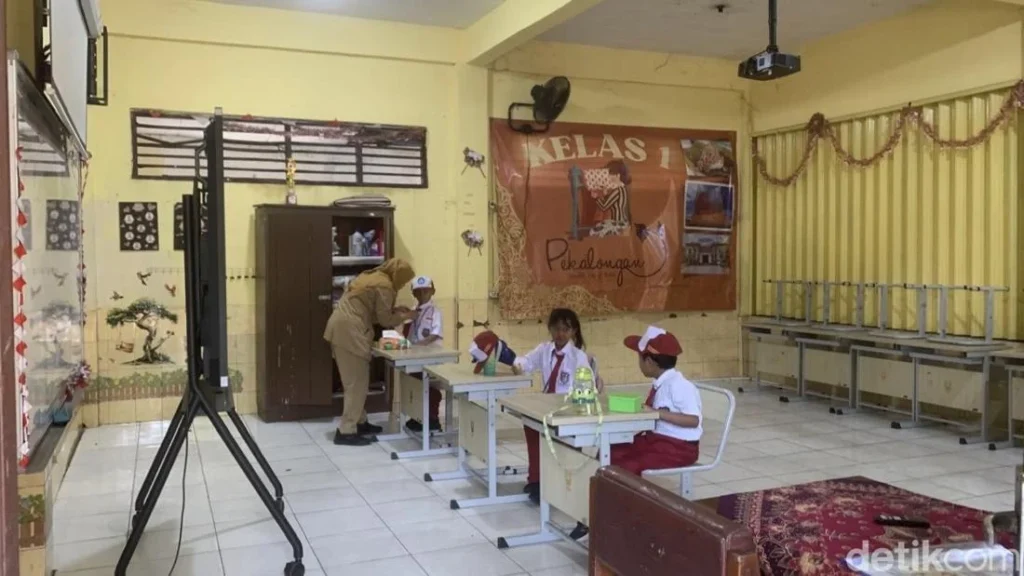
In one of the most poignant examples, SDN Purwoyoso 01 in the Ngaliyan district of Semarang, Central Java, reported an intake of only three new students for the current academic year. A walkthrough of the facility reveals a somber visual testament to this trend: stacks of unused desks and chairs, neatly arranged in the back of classrooms, waiting for students who never arrived. This is not merely a local anomaly in Central Java; it is a burgeoning national phenomenon that has forced the Ministry of Basic and Secondary Education (Kemendikdasmen) to reevaluate the future of public schooling in Indonesia.
The Anatomy of the Crisis: Why Are Classrooms Empty?
The decline in student enrollment is a multifaceted issue, stemming from a complex interplay of demographic shifts, evolving social preferences, and infrastructure planning. According to data provided by Kemendikdasmen, the primary drivers behind this downward trend are:
1. Demographic Shifts and Declining Fertility
The most fundamental factor is the change in the school-age population. With Indonesia witnessing a gradual shift in birth rates, particularly in urban centers, the demand for entry-level primary seats has naturally fluctuated.
2. Migration and Urbanization
As families migrate toward emerging economic hubs or move out of aging residential districts, the distribution of the school-age population has become uneven. Schools that were built in high-density areas decades ago are now finding themselves in neighborhoods with aging populations or, conversely, areas where residents have moved to new suburban developments.
3. The Rise of Religious-Based Education
A significant factor influencing current enrollment data is the shifting preference of parents. Many families are increasingly opting to enroll their children in religious-based schools—such as Madrasah Ibtidaiyah (Islamic primary schools) or other faith-based private institutions—believing that these environments offer a more specialized upbringing. This shift poses a challenge to the standard public school curriculum, which is struggling to compete for the hearts and minds of modern parents.
4. Geographical Constraints
Indonesia’s unique geography ensures that no two districts are alike. In remote or rural areas, the challenge is often access, whereas in cities like Semarang, the challenge is an oversupply of physical school buildings compared to the actual number of children living within walking distance.
Chronology of a Mounting Challenge
The alarm over school enrollment did not sound overnight. It is the culmination of several years of changing social dynamics that have finally reached a critical threshold in the 2026/2027 academic year.
- 2023–2024 (Initial Indicators): Reports from various regional education offices began to note a consistent decline in the number of applicants for state-run schools. While initially dismissed as a temporary fluctuation, the trend persisted.
- Early 2025 (Data Integration): The Ministry of Basic and Secondary Education initiated an intensive review of the Data Pokok Pendidikan (Dapodik), the national education database. The data revealed that an alarming number of schools were operating with fewer than 60 to 100 students in total, far below the operational efficiency threshold.
- Mid-2026 (The Crisis Point): With the start of the 2026/2027 school year, the reality manifested in schools like SDN Purwoyoso 01. Public outcry and media coverage, led by reports from detikJateng, forced the issue onto the national agenda.
- July 2026 (Government Response): Minister of Basic and Secondary Education, Abdul Mu’ti, formally addressed the issue, signaling a shift from passive observation to active policy intervention.
Supporting Data: The Dapodik Audit
The Kemendikdasmen has utilized the Data Pokok Pendidikan (Dapodik) to conduct a granular audit of the national school network. This data is the backbone of the government’s upcoming restructuring efforts.
Current metrics show that schools with fewer than 100 students are categorized as "high risk" for sustainability. In these institutions, the cost-per-student becomes disproportionately high, and the social environment for children—who thrive in larger, collaborative cohorts—is compromised.
The Ministry has officially transmitted these findings to the Ministry of Home Affairs (Kemendagri). This inter-ministerial coordination is essential because, while the Ministry of Education sets the standards, the physical management and administrative control of public schools fall under the jurisdiction of local governments (Pemda). This bureaucratic bridge is vital for executing any potential mergers or school closures.
Official Responses and Strategic Vision
Minister of Basic and Secondary Education, Abdul Mu’ti, emphasized that the government is not taking a "one-size-fits-all" approach to the crisis. Speaking on July 20, 2026, he outlined a vision centered on quality over quantity.
"We are committed to ensuring that every child has access to quality education, regardless of the size of the school," Mu’ti stated. "Our focus is not just on maintaining empty buildings, but on ensuring that the educational services provided are equitable and high-quality. We are working closely with local governments to rethink how these schools operate."
The Ministry’s Four-Pillar Strategy:
- Demographic Mapping: Creating a precise, real-time map of student populations versus existing infrastructure to prevent future over-investment in under-utilized areas.
- Capacity Evaluation: Reassessing the "carrying capacity" of every public school. If a school consistently fails to reach enrollment targets, local governments will be guided on whether to merge institutions or repurpose buildings for community needs.
- Data-Driven Planning: Moving away from traditional enrollment models toward a modern, data-informed strategy that anticipates population shifts before they impact the school system.
- Operational Support: For schools with limited enrollment that must remain open due to geographical isolation, the Ministry promises enhanced digital resources and teaching support to ensure the quality of education does not suffer due to the low student count.
Implications for the Future of Indonesian Education
The current crisis represents a turning point for Indonesia’s public education system. For decades, the primary objective was building enough schools to ensure universal access. Now, the objective has shifted toward the sustainability and quality of those schools.
The Challenge of School Mergers
Merging schools is a politically and socially sensitive issue. Local communities often view their neighborhood school as a central pillar of their identity. Closing a school—even one with only three students—can be seen as an abandonment of a neighborhood. The government faces the delicate task of balancing administrative efficiency with community sentiment.
Competition with Faith-Based Schools
The trend of parents choosing religious schools over public ones suggests that public schools may need to rethink their value proposition. The Ministry’s acknowledgement of this shift indicates that they are willing to examine the curriculum and extracurricular offerings to ensure public schools remain attractive and relevant in a diversifying educational market.
Long-Term Sustainability
If the 2026 trend continues, the physical landscape of Indonesia’s education system will look vastly different by 2030. We may see fewer, but better-equipped "mega-schools" in urban areas, and a more robust use of technology to supplement classroom learning in rural areas where school density is thinning.
Conclusion: A New Chapter
The image of desks stacked in the back of a room at SDN Purwoyoso 01 is more than just a logistical problem; it is a reflection of a changing Indonesia. As the nation matures, so too must its approach to education. The Kemendikdasmen’s commitment to evidence-based reform, coupled with proactive cooperation with local authorities, suggests that while the current situation is difficult, it is also an opportunity to build a more efficient, high-quality, and future-proof education system.
The coming months will be critical. As the Ministry and local governments begin to implement their restructuring plans, the focus will remain on the students—the three children in Semarang, and millions of others across the archipelago—whose right to a quality education remains the government’s primary mandate. The empty seats of today are the catalysts for the systemic improvements of tomorrow.