The AI Revolution in Game Development: How a $25,000 Winning Title Redefines the Role of the Developer
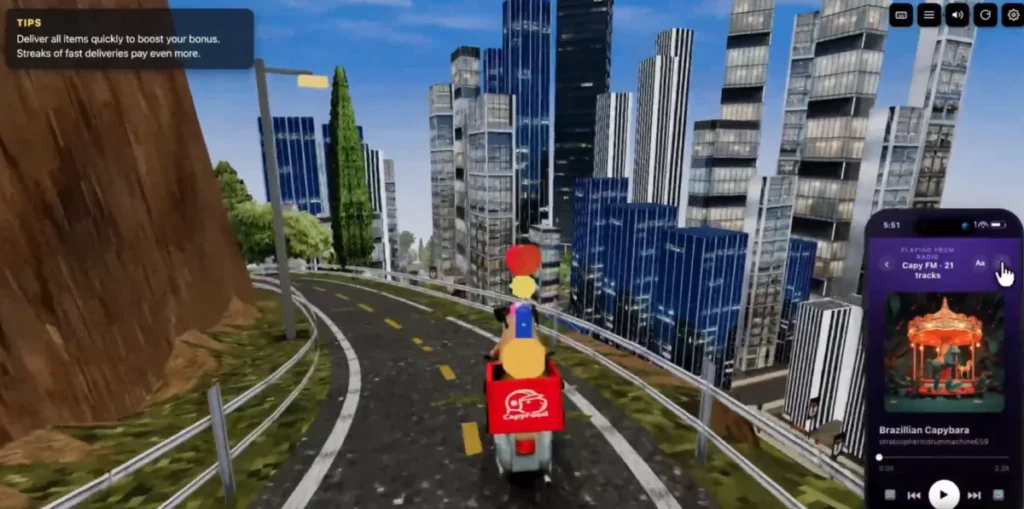
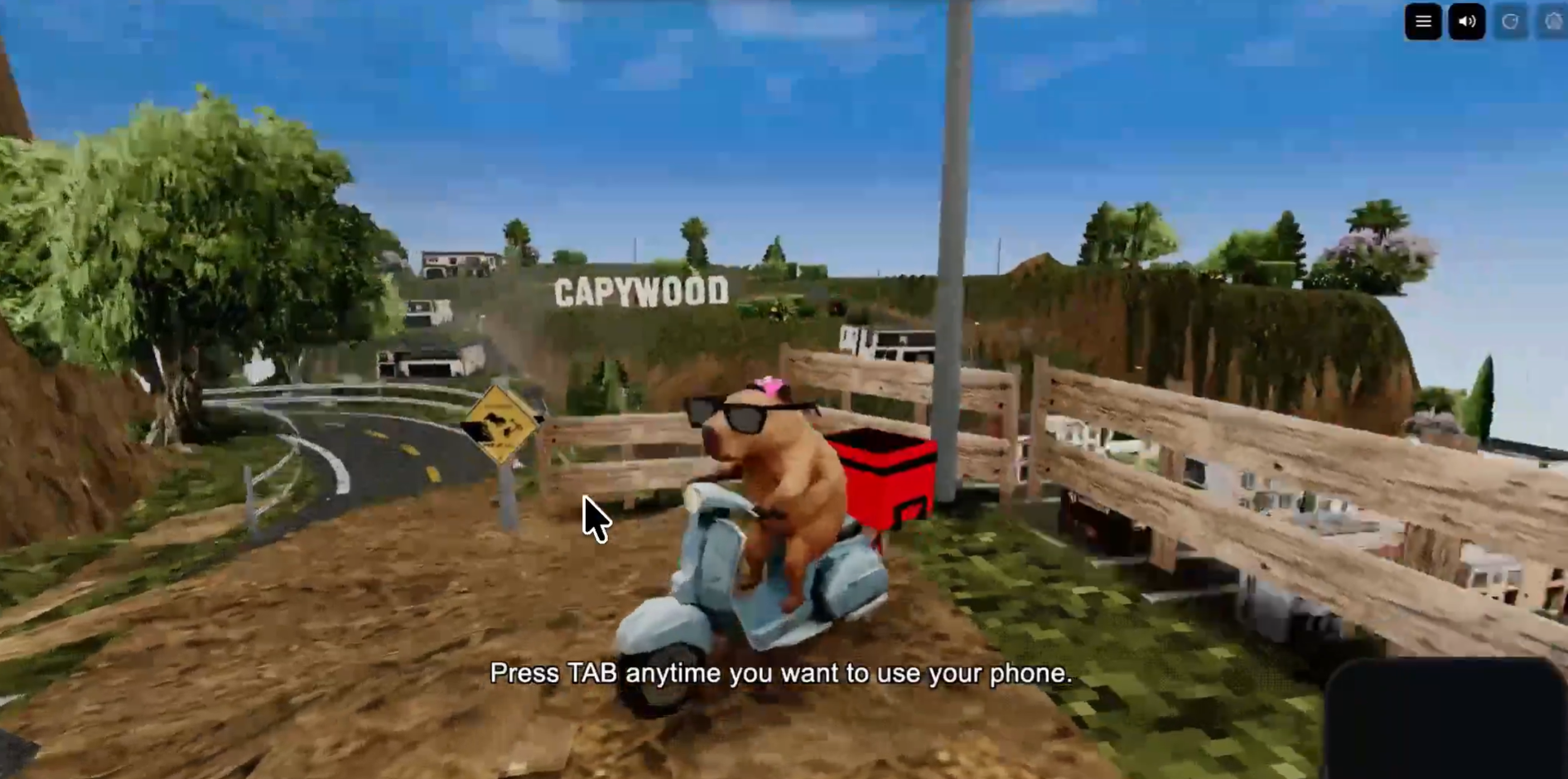
In an era where the boundary between human creativity and machine-generated content is blurring, a seismic shift is occurring in the video game industry. A recently concluded competition, Cursor Vibe Jam 2026, has provided a definitive—and somewhat provocative—glimpse into the future of software engineering. An iOS developer, known in the community as "Ieocoout," has secured the top prize of $25,000 for a game titled A Game About Capybaras Delivering Food. While the accolade itself is impressive, the methodology behind the title has sent shockwaves through the developer community: the project was developed almost entirely through AI-driven workflows in just two weeks.
This achievement marks a transition from AI being a mere "coding assistant" to serving as the central engine of production. As we stand at this technological crossroads, the story of A Game About Capybaras Delivering Food serves as both a blueprint for the future and a cautionary tale regarding the evolving nature of digital craftsmanship.
The Genesis of a Prize-Winning Project
The project began as an entry for the Cursor Vibe Jam 2026, a contest challenging participants to push the boundaries of what is possible with modern coding tools. Ieocoout, a developer with nearly a decade of professional experience in the iOS ecosystem, decided to pivot away from traditional, line-by-line manual coding. Instead, he embraced "vibe coding"—a paradigm where the developer focuses on high-level architecture and prompt engineering, leaving the heavy lifting of syntax and logic implementation to Large Language Models (LLMs).
Over a frantic fourteen-day period, Ieocoout utilized Claude Code to generate over 27,000 lines of functional code. The result was not a buggy, unplayable prototype, but a cohesive, polished, and competitive game that outperformed entries crafted through traditional methods.
Chronology of Development: A Two-Week Sprint
The timeline of this project underscores the efficiency gains provided by contemporary AI stacks.

- Days 1–3: Conceptualization and Prototyping. Ieocoout focused on the "core loop" of the game. Using Claude Code, he defined the game’s mechanics—delivering food as a capybara—and established the initial physics constraints.
- Days 4–8: Asset Pipeline Integration. Unlike traditional pipelines that require dedicated artists and sound designers, Ieocoout leveraged a suite of AI tools. He used GPT-based image generation for textures and logos, Tripo3D for 3D model generation, and Suno along with ElevenLabs for sound design and music production. The entire asset library was completed in under a week for less than $150 in total service costs.
- Days 9–11: The Technical Bottleneck. Interestingly, the AI was not a panacea. The developer encountered a significant hurdle when the AI failed to generate coherent 3D city layouts. This required the developer to step in and manually architect the game’s environment, highlighting the necessity of human intervention in spatial design.
- Days 12–14: Networking and Polish. Surprisingly, the implementation of multiplayer functionality proved smoother than expected. By utilizing Cloudflare WebSockets for server synchronization, Ieocoout managed to implement a stable multiplayer environment that the AI handled with relative ease.
The "Vibe Coding" Stack: Data and Infrastructure
The success of this project is a testament to the convergence of specialized AI agents. The developer did not rely on a single "magic button." Instead, he orchestrated a complex ecosystem of tools:
| Category | AI/Service Tool | Role |
|---|---|---|
| Logic/Code | Claude Code | Core engine logic and scripting |
| Visual Assets | GPT Images | Textures, UI, and logo design |
| 3D Modeling | Tripo3D | Mesh and object generation |
| Audio/SFX | Suno & ElevenLabs | Dynamic soundscapes and effects |
| Networking | Cloudflare WebSockets | Multiplayer synchronization |
The total cost—less than $150—stands in stark contrast to the tens of thousands of dollars typically required for similar game assets. This efficiency gap is already forcing indie studios to re-evaluate their budget allocations.
Implications for the Industry: The Developer as Architect
The victory of A Game About Capybaras Delivering Food has ignited a fierce debate within the gaming industry. Is this the death of the "traditional developer," or the birth of a new, more powerful iteration of the creator?
The Diminishing Technical Barrier
For years, the barrier to entry for game development has been high, requiring mastery of C++, C#, or complex engines like Unreal or Unity. The rise of AI-assisted development lowers this barrier significantly. When a developer can generate 27,000 lines of code in a fortnight, the "technical debt" of learning syntax is significantly reduced. This democratizes game development, allowing creative individuals with limited coding experience to bring their visions to life.
The Role of Human Oversight
Crucially, Ieocoout’s experience serves as a reminder that AI is not yet autonomous. His role shifted from "coder" to "orchestrator." He remained responsible for:

- High-level System Design: AI lacks the capacity to understand the "soul" or "hook" of a game.
- Debugging Complex Interdependencies: While AI writes code well, it struggles to understand how disparate systems interact in a complex, large-scale environment.
- Creative Curatorship: AI generated the assets, but the human selected them, refined them, and ensured they were cohesive.
The human developer is now a "curator of AI-generated outcomes." In this light, the developer’s expertise is more important than ever—not for writing syntax, but for ensuring the structural and thematic integrity of the project.
Industry Response and Future Outlook
While some traditionalists view this shift with skepticism, major players in the tech industry are already pivoting. Companies like Unity have already introduced "Unity AI" tools that allow for development via natural language prompts.
Industry analysts suggest that we are entering an era of "Hyper-Indie" development. We may soon see single-person studios producing games that previously required teams of fifty. However, there are significant concerns regarding intellectual property, the homogeneity of AI-generated aesthetics, and the potential for a flood of low-effort, "asset-flipped" titles.
The case of A Game About Capybaras Delivering Food suggests that the industry will likely bifurcate. On one hand, massive AAA studios will continue to use AI to augment human teams, allowing for more expansive, living worlds. On the other, a new generation of solo developers will use these tools to disrupt the market with innovative, highly experimental titles that would have been commercially unviable under traditional production costs.
Final Reflections: The Human Element
The core question raised by Ieocoout’s victory is not whether AI can replace developers, but whether it should. As the development process becomes faster and cheaper, the industry must grapple with the value of the "human touch."
If a game is created by an AI, does it possess the same artistic intent? When the friction of creation is removed, does the work lose its meaning? These are questions that will define the next decade of interactive entertainment. For now, one thing is certain: the landscape of game development has changed irrevocably. The "vibe coder" is here to stay, and they are armed with more than just a keyboard—they are armed with the collective intelligence of the digital age.
As we look toward the next iteration of the Cursor Vibe Jam or the next blockbuster indie hit, the focus will remain on the intersection of human vision and machine speed. Whether this leads to a new golden age of creativity or a saturation of machine-made mediocrity remains to be seen. One thing is clear: the developers of the future will be defined by their ability to guide the machine, not by their ability to out-code it.