Guardians of the Menoreh: How Village Communities are Rescuing Java’s Avian Treasures
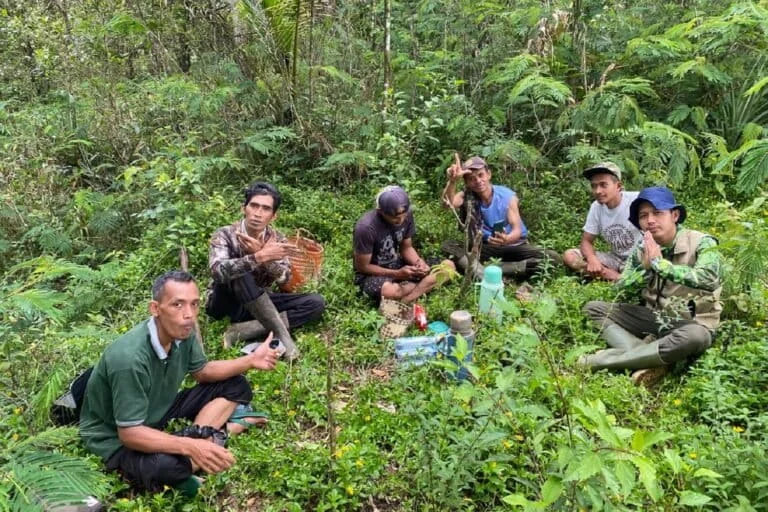
In the verdant, mist-covered landscape of the Menoreh Hills, a quiet revolution is taking place. Spanning the border regions of Yogyakarta and Central Java, these hills have long been a sanctuary for endemic Javanese bird species. However, this biodiversity hotspot has historically faced a persistent threat: the illegal poaching of songbirds destined for the lucrative black-market pet trade.
In a powerful display of grassroots environmentalism, residents of villages like Purwosari and Pandanrejo have shifted from being mere observers of ecological decline to becoming the frontline defenders of their avian neighbors. By enforcing local regulations and launching cross-village patrols, these communities are proving that conservation is most effective when it is led by those who live closest to the land.
A Growing Conflict: The Frontlines of Poaching
The conflict reached a boiling point this past May in the village of Purwosari, Kulon Progo, Yogyakarta. Members of the "Lestari Purwosari" group—an ecotourism collective—intercepted a poacher operating within their jurisdiction. The individual, who hailed from the nearby Sleman regency, was discovered armed with the typical apparatus of the trade: a high-decibel portable speaker used to broadcast recorded bird calls, sticky birdlime (pulut), and a makeshift cage.
Tegar Cahaya Putra, the lead initiator of the Lestari Purwosari group, recalls the incident vividly. "We spotted him on one of our hills, using technology to lure birds into his traps. Despite an initial warning from residents, he simply relocated to continue his activities," he explained.
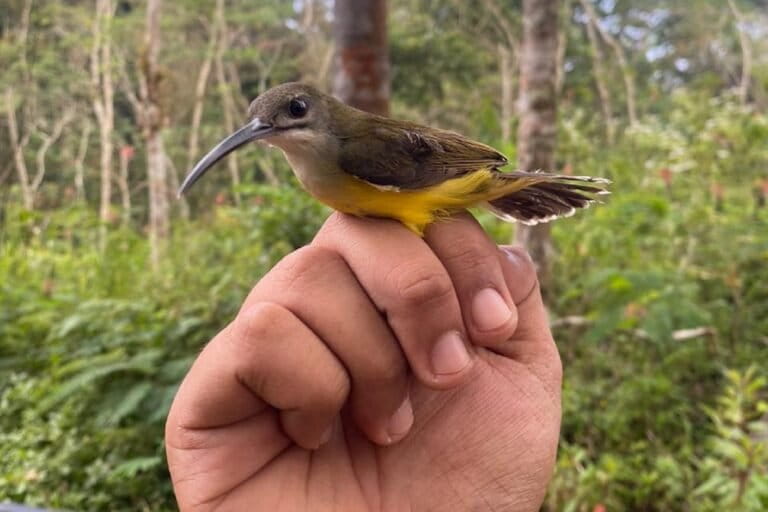
The village response was swift and coordinated. When news of the poacher’s defiance spread through a local WhatsApp group, residents surrounded the individual and escorted him to the community secretariat. There, the group confiscated his equipment, recorded his identity, and compelled him to sign a notarized statement vowing to cease all hunting activities. Crucially, the captured birds—including the Javanese white-eye (kacamata kuning), the straw-headed bulbul, and the chestnut-capped laughingthrush—were immediately released back into the wild.
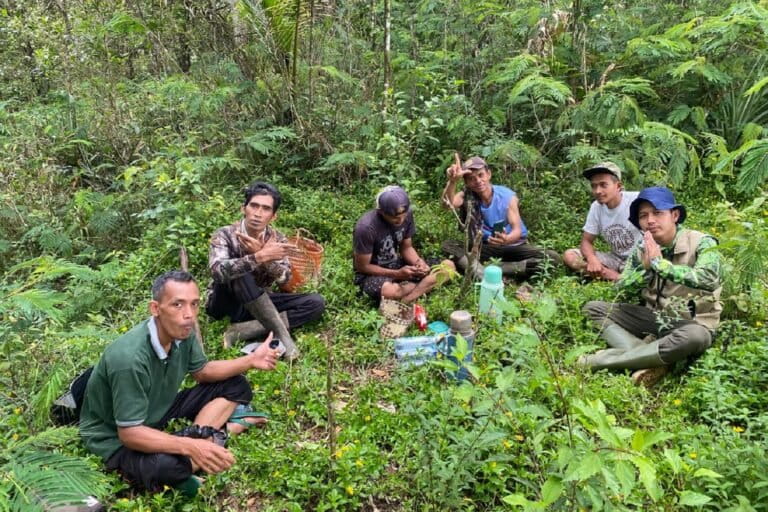
This was not an isolated incident. Shortly thereafter, the group apprehended a minor from a neighboring sub-district, Girimulyo. The teenager, a middle school student, had been using similar methods to catch birds for quick pocket money. These incidents underscore the persistent economic allure of poaching, even in areas where conservation efforts are well-publicized.
The Evolution of a Conservation Model
The path to this level of vigilance was not linear. For years, the Menoreh Hills experienced a haunting silence. By 2020, residents reported that the once-vibrant morning chorus of the forest had dwindled to sporadic, distant chirps.
"We were terrified," says Tegar. "We realized that if we didn’t act, our children would only know these birds through pictures."
Initially, the initiative faced significant pushback. Many residents had historically relied on hunting as a primary or supplementary source of income. To address this, the community, in collaboration with the Kanopi Indonesia Foundation, introduced a "nest adoption" program. This initiative provided a financial safety net, allowing former hunters to pivot toward conservation-related income streams, including birdwatching tourism and wildlife photography.
This shift in economic incentives sparked a fundamental change in perception. Residents began to view the birds not as commodities to be traded, but as vital natural assets. They recognized the birds’ roles in forest health—as pollinators and biological pest controllers—which directly benefits the local agricultural sector, where crops like coffee, cloves, cocoa, and durian rely on a healthy ecosystem.
Legislative Teeth: Village Regulations
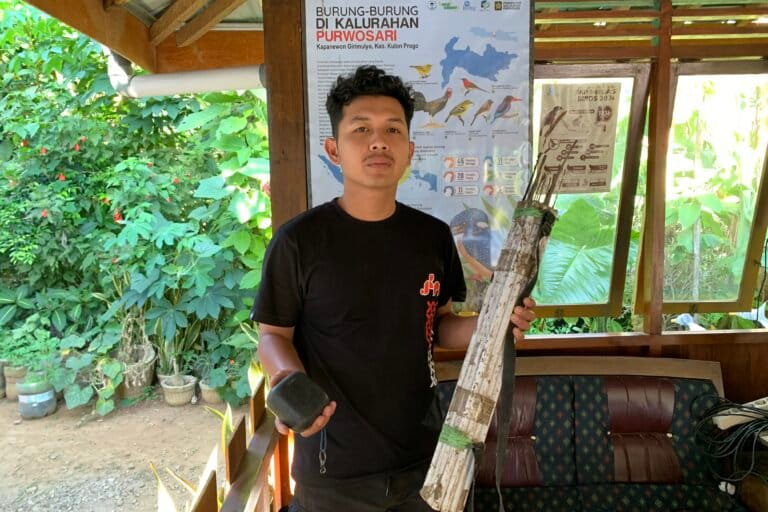
The growing environmental consciousness culminated in the enactment of formal local legislation. In 2022, the Purwosari Village Administration passed Regulation No. 9/2022, which explicitly prohibits the hunting of wildlife and mandates sanctions for violators.
Similar efforts have emerged in the village of Pandanrejo, located across the border in Purworejo, Central Java. Dwi Kristanto Sektyawan, the Village Head of Pandanrejo, notes that while his village implemented regulations as early as 2019, the effective enforcement only gained momentum in 2023.
"We are moving toward stricter measures," Kristanto explains. "We are planning to implement social sanctions, such as posting the photographs of captured poachers at the village office to act as a deterrent."
Cross-Border Cooperation: A Unified Front
The challenges of conservation in the Menoreh Hills are complicated by administrative boundaries. Poachers often exploit the fact that birds do not recognize borders, moving seamlessly between villages. Recognizing this, the conservationists of Purwosari and Pandanrejo have formed an unprecedented alliance.
When a resident from Pandanrejo was caught poaching in Purwosari, the communication was seamless. Tegar immediately reached out to Sugiyanto, the Conservation Coordinator for Pandanrejo. The collaboration between the two villages now extends to joint patrols, particularly in the border zones that serve as high-density habitats for native species.
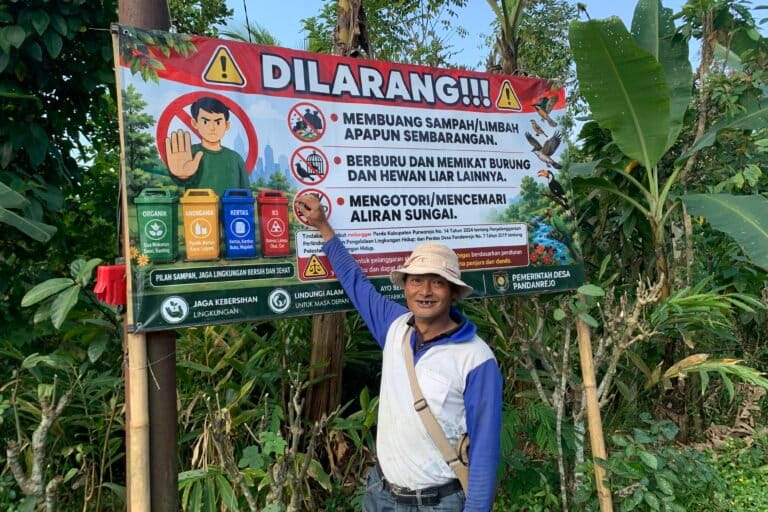
"This strategy is highly effective," says Sugiyanto. "It eliminates the ‘safe zones’ that poachers used to rely on. When we coordinate with groups from Donorejo and Jatimulyo, we essentially create a protected corridor that spans across the landscape."
Parman, coordinator of the Girimukti group in Donorejo, emphasizes that the success of their neighbors in Jatimulyo—who have been conserving the forest since 2015—serves as a template for the entire region. "We are one landscape. If one village fails to protect its borders, the entire ecosystem suffers," he notes.
Supporting Data: Why the Menoreh Hills Matter
The scientific justification for these efforts is compelling. Recent mapping efforts by the Kanopi Indonesia Foundation have identified at least 98 bird species in Purwosari and 52 in Pandanrejo. Among these are nine protected species and others that are classified as critically endangered.
Nurina Indriyani, Director of the Kanopi Indonesia Foundation, emphasizes that the community-led approach is the only sustainable way to manage such a vast area. "The villagers understand the intricacies of their forest better than any external agency," she says. "By linking their economic well-being to the presence of these birds, they have created a self-sustaining system of protection."
Indriyani notes that the ecological services provided by these birds—particularly the pollination of the region’s diverse agroforestry crops—are invaluable. "The birds are the forest’s gardeners. Without them, the agricultural output that these villagers rely on would eventually collapse."
Implications for the Future
The model established in the Menoreh Hills offers a blueprint for rural conservation across Indonesia. By combining traditional knowledge with modern legal frameworks and economic alternatives, these villages have moved beyond the "command and control" style of conservation.
However, the threat remains. The demand for songbirds in urban markets continues to drive individuals to test the boundaries of these villages. The success of the Menoreh model hinges on the continued vigilance of the residents and the support of regional authorities to ensure that local regulations are upheld with legal authority.
As the morning sun rises over the Menoreh peaks, the sound of birdsong is slowly returning to the valleys. For the people of Purwosari and Pandanrejo, that sound is not just a sign of a healthy forest; it is the sound of a community that has reclaimed its role as the steward of its own future.
The story of the Menoreh hills is a testament to the fact that while the threats to biodiversity are often global and systemic, the solutions—when rooted in local community empowerment—can be profoundly effective. Through their courage and cooperation, these villagers are ensuring that the skies of Java will remain filled with life for generations to come.