Festival Meskel 2026: Ethiopia’s Ancient Tradition of Light, Faith, and Prayers for Peace
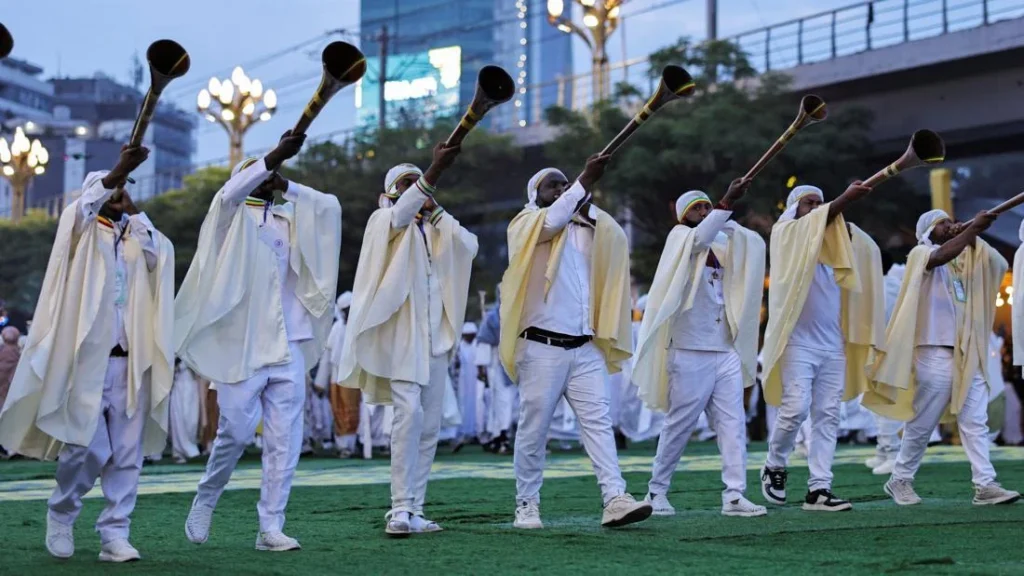
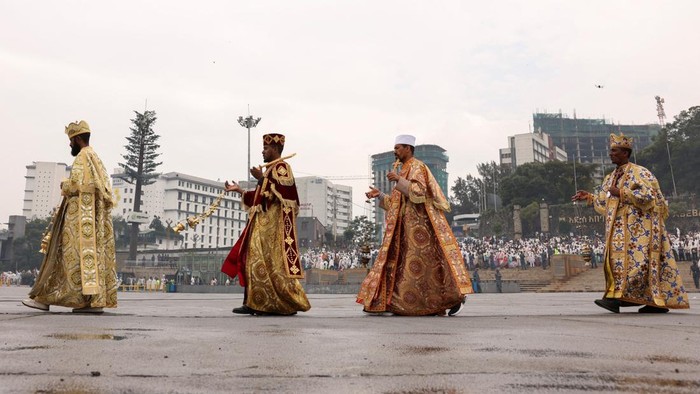
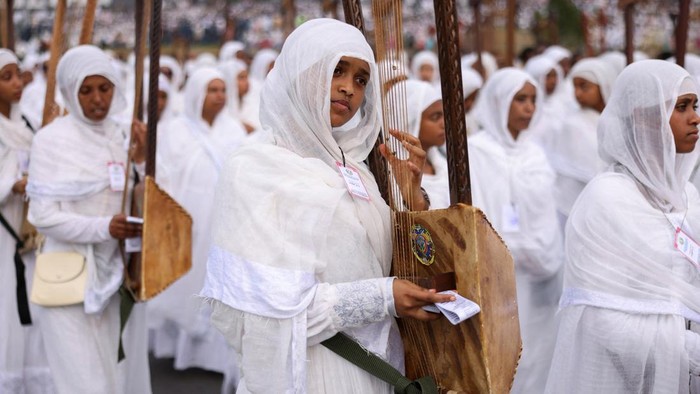
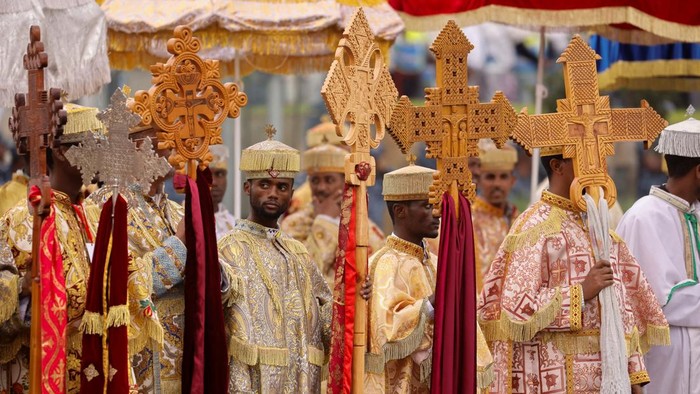
Addis Ababa — Amidst the sprawling expanse of Meskel Square in the heart of Ethiopia’s capital, thousands of voices rose in a resonant, spiritual harmony. Clad in traditional white robes, the Ethiopian Orthodox choir members sang sacred hymns under the September sky, their melodies weaving through the crisp air. This vibrant gathering marked the culmination of the annual Meskel Festival, a centuries-old celebration commemorating the fourth-century discovery of the True Cross—the crucifix upon which Jesus Christ was executed.
Captured through the lens of photojournalist Grandyos Zafna and international wire services like Reuters, the 2026 celebration offered the world a vivid window into a deeply rooted cultural and religious landscape. Yet, beyond the striking visual tapestry of blazing bonfires, colorful ceremonial vestments, and devout crowds, this year’s festival carried a profound underlying narrative: a collective yearning for peace, resilience, and unity in a nation navigating complex geopolitical and social landscapes.
Main Facts: The Essence of the Meskel Festival
The Meskel Festival is not merely a localized religious observance; it is a monumental cultural anchor for millions of Ethiopian Orthodox Christians. Celebrated annually on Meskel 17 in the Ethiopian calendar (typically falling in late September), the festival centers around the legendary unearthing of the True Cross by Empress Helena, mother of Roman Emperor Constantine the Great, in the fourth century. According to tradition, Empress Helena was guided to the burial site of the cross by the smoke of a massive bonfire she ordered to be lit.
Key elements defining the modern-day Meskel Festival include:

- The Demera Procession: The central ritual involves Demera, the ceremonial lighting of a towering bonfire decorated with daisies (known locally as Meskel flowers). This ritual directly mirrors the smoke signal that, according to tradition, revealed the location of the True Cross.
- UNESCO Recognition: Recognizing its immense historical and intangible cultural value, UNESCO inscribed the Meskel Festival onto its Representative List of the Intangible Cultural Heritage of Humanity in 2013.
- Seasonal Transition: Beyond its Christian theological significance, anthropological and agricultural records note that Meskel marks a crucial ecological turning point—signifying the end of the heavy monsoon rains and the arrival of spring and harvest seasons in the traditional Ethiopian calendar.
- Mass Participation: In Addis Ababa alone, tens of thousands of pilgrims, clergy members, and international tourists converge on Meskel Square, transforming the concrete plaza into a sea of white traditional garments, handheld crosses, and flickering candles.
Chronology: From Ancient Roots to Modern Observances
The history of the Meskel Festival spans over 1,600 years, evolving from an imperial Roman-Christian narrative into a distinctively Ethiopian tradition deeply intertwined with the identity of the Ethiopian Orthodox Tewahedo Church.
1. The Fourth-Century Origins
Historical accounts trace the genesis of the festival to the reign of Empress Helena. Following her pilgrimage to Jerusalem, she sought the cross of Jesus Christ. Her persistent efforts, aided by divine visions and local testimony, led to the discovery of three crosses on Golgotha. To identify the True Cross, a miracle allegedly occurred, healing a sick person (or raising a person from the dead) upon contact with the third cross. The smoke from the celebratory fires lit to announce the discovery became the blueprint for the Demera.

2. Arrival and Adaptation in Ethiopia
The celebration found a permanent spiritual home in Ethiopia, one of the oldest Christian nations in the world. The Ethiopian Orthodox Tewahedo Church embraced the narrative, weaving it into the liturgical calendar with unique local customs, choral traditions, and community gatherings that have remained largely unchanged for centuries.
3. The Eve of the Festival (Meskel Eve)
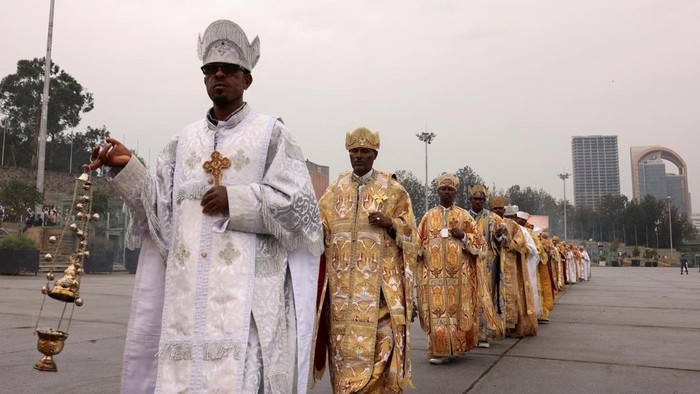
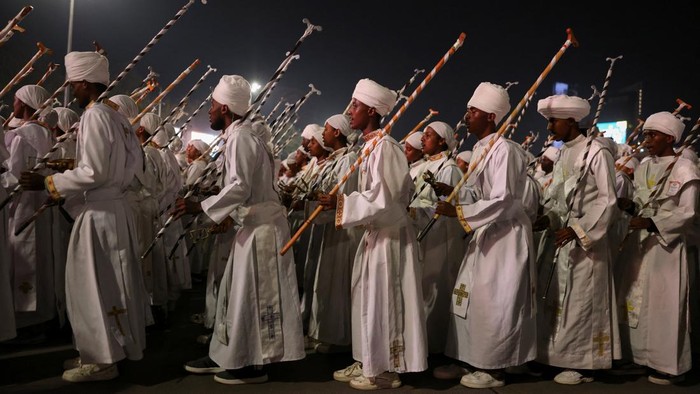
The 2026 festival began with preparations days in advance, culminating on September 26, 2026. As dusk fell across Addis Ababa, the atmosphere shifted from daytime processions to the luminous glow of thousands of torches. Church leaders, draped in gold-embroidered vestments, led the congregation in chanting ancient Ge’ez hymns.
4. The Demera Ignition
The climax of the evening occurred when religious leaders and civic dignitaries jointly lit the massive Demera bonfire at Meskel Square. As the flames licked the night sky, onlookers watched closely to see which direction the primary stack of wood would collapse—a traditional folk omen believed to foretell the fortunes, weather, and agricultural yield of the coming year.
Supporting Data and Cultural Context
The scale of the Meskel Festival is staggering, functioning as both a massive religious pilgrimage and a vital tourism catalyst for the Horn of Africa.
- Demographics: The Ethiopian Orthodox Tewahedo Church represents one of the largest Christian populations in Africa, accounting for roughly 40-43% of Ethiopia’s population of over 120 million people. Consequently, Meskel is observed simultaneously in virtually every city, town, and rural village across the country, making it one of the largest synchronized religious gatherings globally.
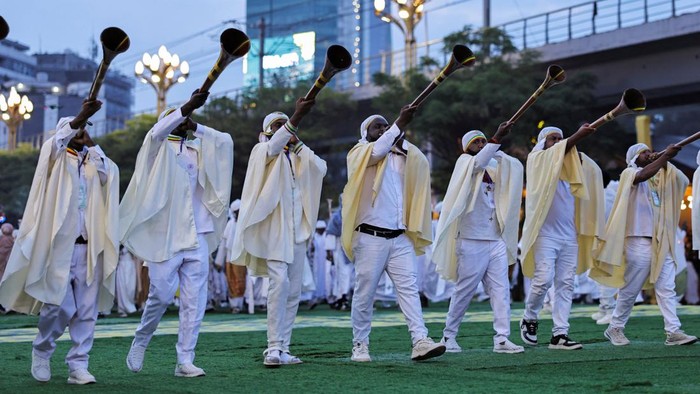
- The Role of the Choir: Unlike Western choral traditions, the Ethiopian Orthodox liturgical music (Zema), formulated by Saint Yared in the sixth century, relies on vocal resonance, sistrums (metal rattles), and prayer sticks (quamts). The rhythmic swaying and chanting of the choir members at Meskel Square provide the emotional heartbeat of the multi-hour ceremony.
- Environmental and Seasonal Markers: According to reports by the Associated Press and cultural anthropologists, the timing of Meskel coincides with the blooming of yellow daisies (Adey Abeba) across the Ethiopian highlands. This botanical bloom signals the retreat of torrential rains and the onset of sunnier days, linking spiritual rebirth directly with agricultural renewal.
Official Responses and Spiritual Reflections
While the grandeur of the liturgical performance captivated spectators, the 2026 festival took place against a backdrop of national introspection. Ethiopia has faced significant socio-political strains, including post-conflict recovery phases in regions such as Tigray and persistent regional security challenges.
Religious leaders and community elders used the platform of the Meskel Festival to deliver messages centered on forgiveness, reconciliation, and national unity.
"The Cross is a symbol of ultimate sacrifice, divine love, and endurance through suffering," declared a senior representative of the Ethiopian Orthodox Tewahedo Church during the Addis Ababa service. "As we light the Demera today, we pray that the light of truth dispels the darkness of division, hatred, and conflict from our land."
Government officials attending the ceremony echoed these sentiments, emphasizing that cultural heritage and shared traditions like Meskel serve as an indispensable glue holding Ethiopia’s diverse ethnic and linguistic communities together. Security forces and municipal authorities in Addis Ababa coordinated extensively to ensure the safety of the massive crowds, allowing pilgrims to partake in the holy day without disruption.
Implications: Tourism, Resilience, and Heritage Preservation
The successful execution of the 2026 Meskel Festival carries far-reaching implications for Ethiopia’s international image, tourism sector, and social fabric.
1. Tourism and Global Visibility
Despite travel advisories and geopolitical hurdles that have historically dampened international tourism to East Africa, events like Meskel demonstrate Ethiopia’s enduring appeal as a cradle of humankind and a destination of profound historical depth. Travel agencies and cultural ministries leverage high-profile wire photography—such as the images captured by Tiksa Negeri and distributed globally—to showcase the nation’s rich, unbroken intangible heritage.
2. Social Cohesion Through Tradition
In times of national friction, cultural and religious festivals act as safety valves for social tension. By prioritizing communal gathering, shared feasting, and collective prayer, events like Meskel reinforce social bonds that transcend political divides. Families separated by migration or economic hardship make deliberate efforts to reunite during this period, reinforcing familial support networks.
3. Safeguarding Intangible Heritage
As modernization, urbanization, and globalization accelerate, local communities face the constant challenge of preserving ancient practices. The formal recognition of Meskel by UNESCO has empowered local institutions in Ethiopia to document, protect, and pass down the intricate rituals of Zema chanting, wood preparation for the Demera, and traditional culinary preparations to younger generations.
Conclusion
As the embers of the Demera slowly faded into ash at Meskel Square, the spirit of the 2026 festival left an indelible mark on its participants. It reaffirmed that faith, culture, and history remain powerful forces of resilience in Ethiopia. Through the hauntingly beautiful chants of the Orthodox choir and the collective prayers for peace echoing through Addis Ababa, the festival proved once again why it stands as one of humanity’s most enduring expressions of hope and heritage.