Unlocking Productivity: The Science and Art of Pruning Mango Trees for Faster Flowering
September 27, 2026 – Many homeowners face the frustrating reality of a lush, emerald-green mango tree that refuses to yield a single fruit. While the canopy may be thick and healthy, the lack of flowering often turns an asset into a mere ornamental disappointment. However, agricultural experts suggest that the solution does not lie in expensive chemical stimulants, but in the precise, strategic application of pruning. By understanding the physiological "switch" that transitions a tree from vegetative growth to reproductive flowering, gardeners can effectively force their mango trees to bloom.
The Physiological Basis: Why Pruning Works
The frustration of a non-fruiting tree is rooted in a fundamental biological struggle within the plant: the competition between vegetative and generative phases. A tree’s energy is a finite resource. When a mango tree is allowed to grow unchecked, it focuses its photosynthetic output on expanding its leaf canopy and strengthening its branches.
According to the seminal research by Ramírez and Davenport (2010), published in Scientia Horticulturae, the leaves of a mango tree continuously synthesize a specific chemical messenger known as a "florigenic promoter." Under normal, dense conditions, this energy is often diverted toward maintaining the existing foliage.
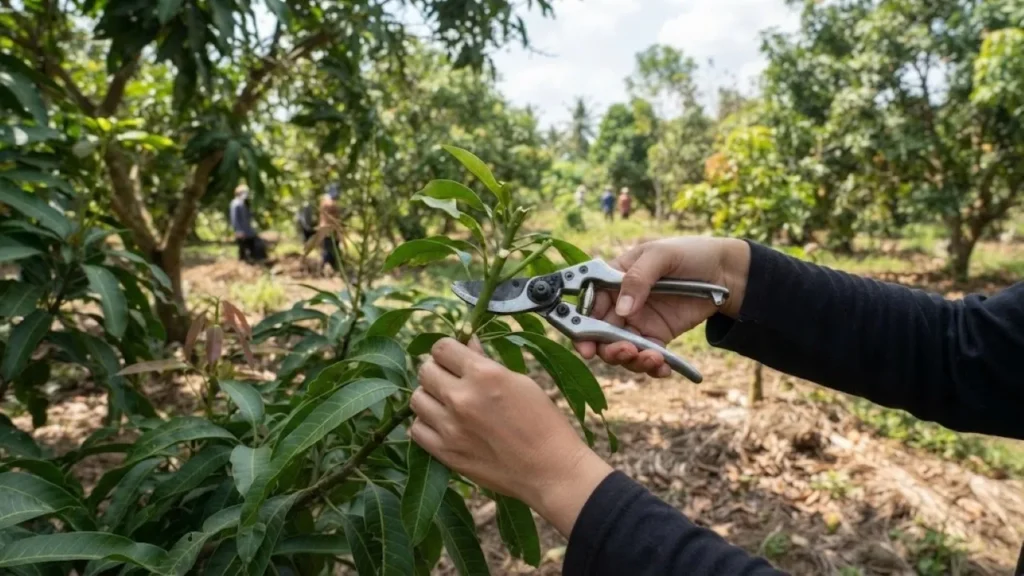
Pruning serves as a physiological reset. By employing techniques like "tipping" (removing the terminal buds), gardeners can induce a synchronized growth flush across the entire canopy. This action does two critical things: it removes the lingering inhibitors left over from the previous season and triggers the tree to shift its metabolic focus toward reproductive success. Furthermore, by thinning the canopy, sunlight is allowed to penetrate the interior branches. This increases the efficiency of photosynthesis, allowing carbohydrates—the fuel for flower development—to accumulate in the productive wood rather than being wasted on shaded, non-functional leaves.
Chronology: The Critical Window for Pruning
Timing is the most significant factor in the success of any pruning regimen. Pruning at the wrong time can actually delay flowering or stress the tree into a prolonged vegetative state.
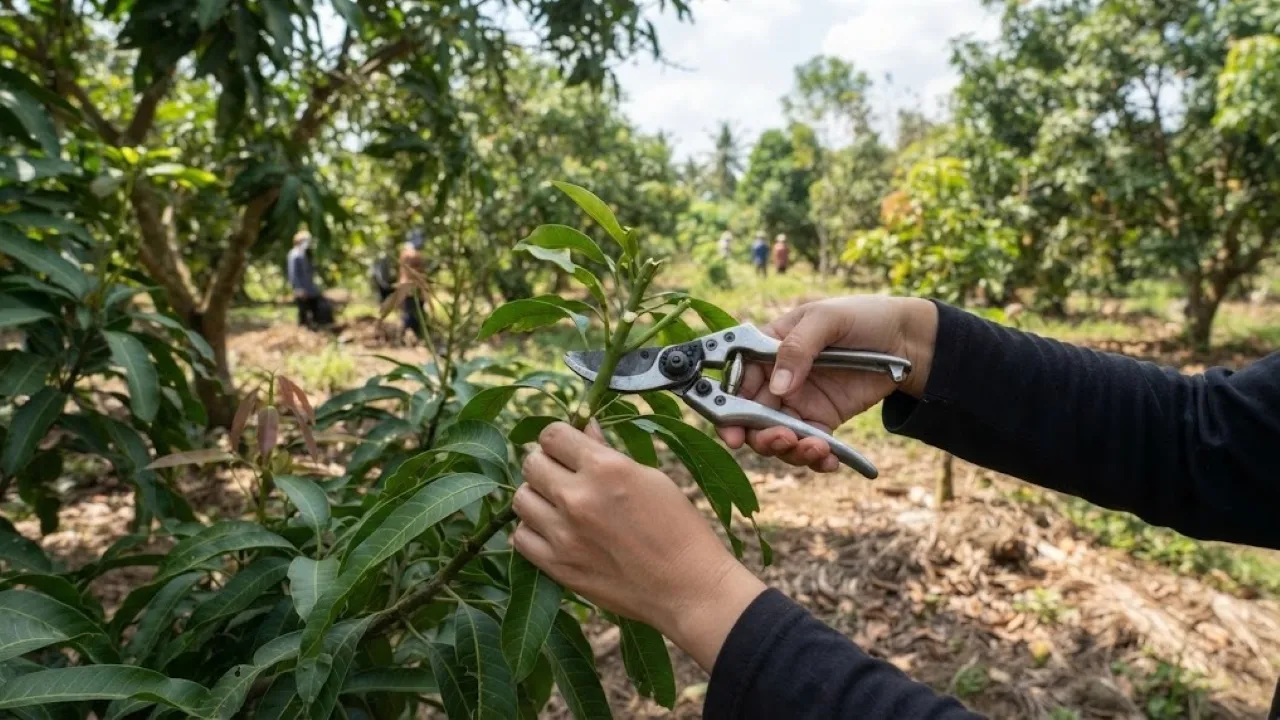
- Post-Harvest Recovery (The Ideal Time): The most effective window to prune is immediately after the final harvest of the season. At this stage, the tree has concluded its reproductive cycle and has not yet committed energy to the next flush of vegetative growth. In tropical climates like Indonesia, this typically coincides with the transition into the dry season.
- The Danger of "Inter-Season" Pruning: Pruning while the tree is already in a state of flowering or early fruit set is strictly advised against. Doing so risks removing potential fruit-bearing branches and disrupting the hormonal signals that have already initiated the reproductive process.
- Pre-Rainy Season Precautions: Gardeners should avoid heavy pruning immediately preceding the monsoon or rainy season. Excess moisture during this time triggers aggressive vegetative growth (leaves and stems) rather than flowers, as the tree prioritizes survival and expansion over reproduction.
Supporting Data and Pruning Categories
Professional arborists categorize pruning based on the tree’s life stage and specific goals. Each technique serves a distinct function in the quest for a fruit-heavy harvest.
| Type of Pruning | Ideal Timing | Primary Objective |
|---|---|---|
| Structural Pruning | Early juvenile stage | Establishing a strong, open-center framework |
| Tipping (Terminal) | Immediately post-harvest | Synchronizing new growth and inducing floral buds |
| Maintenance Pruning | Throughout the year | Removing dead wood, water sprouts, and crossing branches |
| Rejuvenation | When yield drops | Revitalizing old, unproductive, or "leggy" branches |
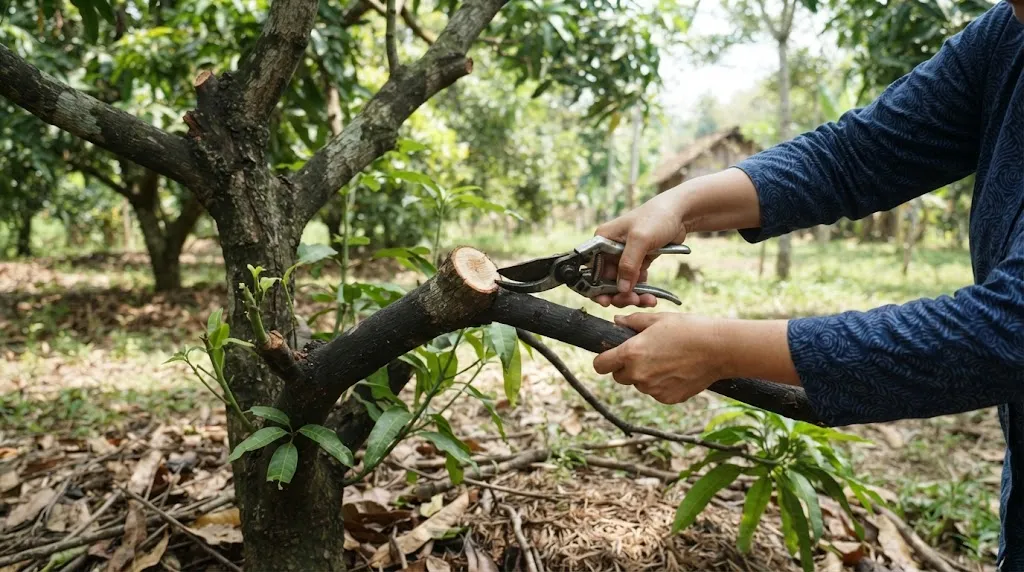
Structural pruning, performed when the tree is young, involves cutting back the central leader to encourage the development of 3–4 strong, well-spaced primary scaffolds. This creates a "goblet" shape that maximizes light penetration. As the tree matures, tipping becomes the most powerful tool in the gardener’s arsenal. Davenport’s research suggests that effective tipping can increase the number of lateral, flower-bearing branches by five to ten times compared to an unpruned tree.
Official Guidelines and Expert Best Practices
The transition from a vegetative tree to a productive one requires more than just a pair of shears; it requires a holistic approach to orchard management.
The "Water Stress" Technique
Interestingly, the National Mango Board and various horticultural researchers emphasize the role of controlled water stress. Once the tree has been pruned and the new flush of leaves begins to mature, a period of mild, calculated water deficit can be beneficial. By withholding water until the leaves show slight signs of drooping, the grower can "shock" the tree into a state of maturity. When irrigation is resumed, the tree often interprets the shift as an environmental signal to initiate flowering.
Nutritional Balancing
A common mistake is the over-application of nitrogen. Nitrogen is the engine of vegetative growth. When a gardener over-fertilizes with nitrogen during the pre-flowering stage, the tree will produce a massive canopy of leaves at the expense of flowers.
To shift the tree into a reproductive mode, growers should switch to fertilizers with a higher ratio of phosphorus (P) and potassium (K) once the new growth from the pruning has begun to harden. Phosphorus is essential for the development of flower panicles, while potassium regulates the flow of water and nutrients within the plant, ensuring that the developing buds have the strength to survive the transition to fruit.
Common Pitfalls: Mistakes to Avoid
Even with the best intentions, several common errors can undermine the pruning process:
- Over-pruning (The "Hat-racking" Error): Removing more than 25–30% of the canopy at one time can cause the tree to enter a state of shock, leading to "sunscald" on the exposed bark and a surge of unwanted, unproductive water sprouts.
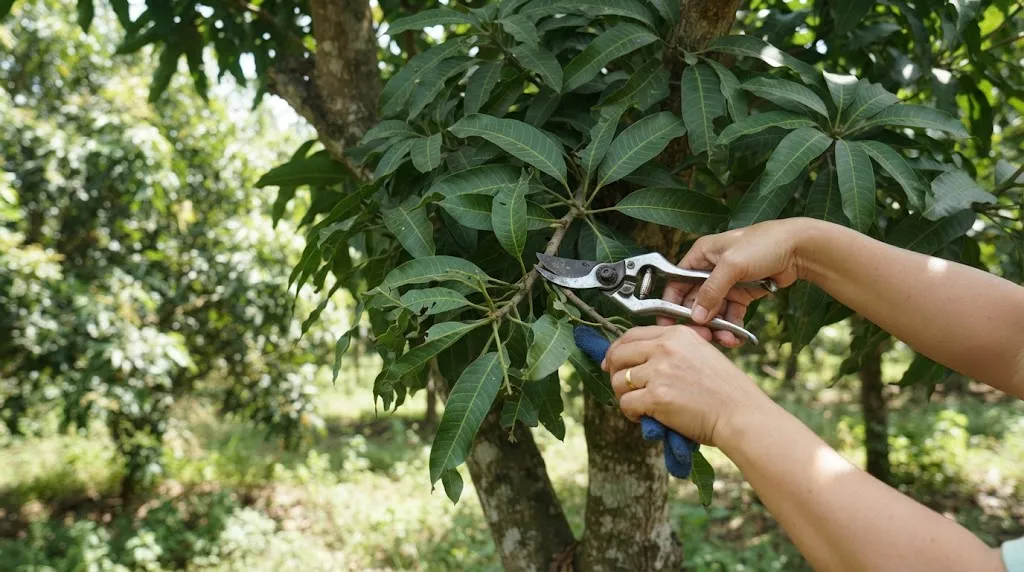
- Dull Tools: Using blunt shears causes jagged cuts that do not heal properly. These wounds serve as entry points for pathogens and fungi, which can lead to systemic disease that inhibits flower production. Always use sanitized, sharp bypass pruners.
- Neglecting Sanitation: After pruning, any debris—especially diseased or dead wood—must be removed from the base of the tree. Leaving this material behind encourages pests that target emerging flower buds.
Implications for the Home Orchard
The implementation of these techniques has profound implications for the backyard gardener. By moving away from "letting nature take its course" toward a system of intentional, seasonal management, homeowners can significantly shorten the time between planting and the first harvest.
Furthermore, this knowledge democratizes fruit production. It removes the reliance on expensive, potentially harmful plant growth regulators (PGRs) that are often marketed to desperate gardeners. When a tree is pruned correctly, the tree’s own internal signaling system is optimized.
Frequently Asked Questions (FAQ)
Q: How long does it take for a tree to flower after pruning?
A: It is not instantaneous. After the pruning and the subsequent "hardening" of the new leaves, the tree typically requires several weeks to months to initiate floral buds. Success depends on the tree’s age, the local microclimate, and the gardener’s consistency in post-pruning care.
Q: Is pruning alone enough, or do I need chemical boosters?
A: Pruning is the primary driver of reproductive growth, but it must be supported by the correct environment. While you do not necessarily need chemical boosters, your tree will perform exponentially better with proper soil nutrition (P and K) and careful water management.
Q: Can I prune a very old, neglected tree?
A: Yes, through "rejuvenation pruning." This is a more aggressive process that involves cutting back major limbs to encourage new, vigorous growth. However, this should be done in stages over 2–3 years to avoid stressing the tree too severely.
In conclusion, the key to a productive mango tree is not in how much you feed it, but in how you guide its energy. By respecting the biological cycles of the mango tree and applying precise, seasonal pruning, any gardener can transform a leafy, unproductive tree into a source of abundant, delicious fruit.