Behind the Cabin Door: Decoding the Hidden Language and Safety Protocols of Commercial Aviation
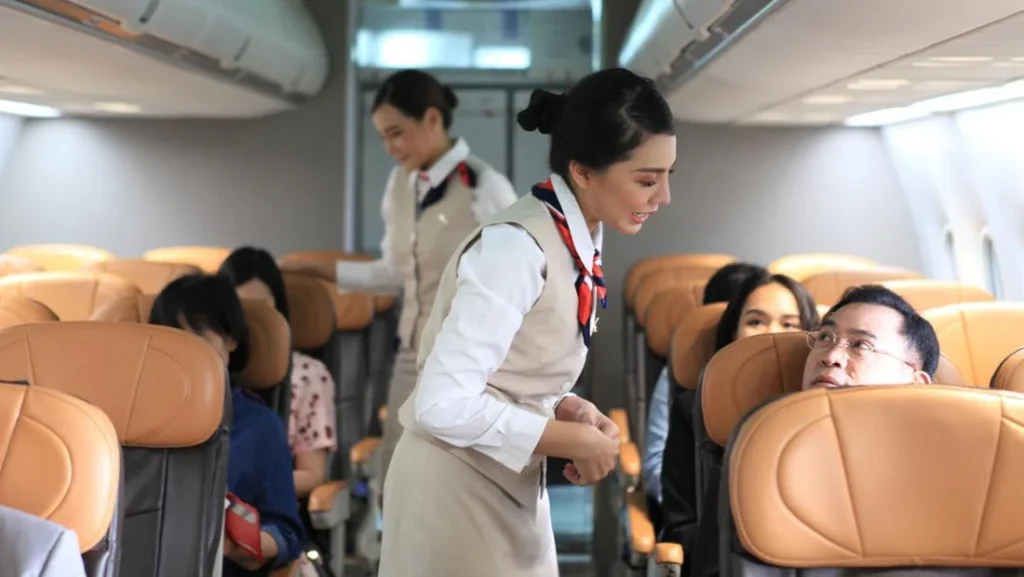
JAKARTA — To the average traveler, boarding a commercial airliner is a routine experience: scanning a boarding pass, navigating the narrow aisle, stowing carry-on luggage, and settling into a seat. Yet, beneath the calm demeanor of the flight attendants and the hum of the jet engines lies a deeply synchronized, highly regulated choreography of communication. Long before the aircraft reaches cruising altitude, a sophisticated lexicon of internal codes, hand signals, and verbal checks is deployed across the flight deck and the cabin.
While passengers are often lulled into complacency by the safety demonstrations and the drone of pre-flight announcements, a complex operational language is actively keeping them safe. Understanding this hidden vocabulary not only demystifies air travel but also highlights the rigorous layers of redundancy and protocol that make modern aviation the safest mode of transportation in human history.
Main Facts: The Anatomy of Aviation Communication
At the heart of pre-flight preparation is a series of standardized commands that dictate how an aircraft transitions from a stationary terminal vehicle into a pressurized, airborne vessel. Among the most common phrases heard over the interphone system are "arm doors" and "cross-check."
According to guidelines from major carriers like Qantas Airlines, these phrases are uttered at the very beginning of a flight. They serve as a critical operational milestone, signaling that the cabin doors are configured—or "armed"—meaning that if a door were to be opened in an emergency, an inflatable evacuation slide would automatically deploy. Conversely, upon landing, passengers will frequently hear instructions to disarm these doors, preventing accidental deployment when the aircraft reaches the gate.
However, the aviation industry is vast, and terminology is rarely monolithic. Justin Crabbe, a commercial pilot based in Canada and the CEO and founder of private aviation firms Jettly and BlackJet, notes that definitions can vary significantly depending on context, airline, and whether the speaker is a member of the cabin crew or the flight deck.
"A cross-check for flight attendants can mean checking the cabin doors to ensure they are properly locked and secured for cabin pressurization," Crabbe explains. Meanwhile, for the pilots stationed up front, a cross-check carries an entirely different, highly technical weight. For the flight crew, it generally means cross-referencing primary flight instruments against standby instruments to guarantee data accuracy.
Beyond routine operations, aviation professionals utilize a tiered system of emergency and situational codes. From urgent distress calls like "pan-pan" to situational identifiers such as "code yellow" for minor medical incidents and playful internal idioms like "code mermaid" for restless passengers who insist on changing seats, the aviation lexicon is designed for absolute efficiency and, when necessary, discretion.
Chronology: A Step-by-Step Breakdown of Pre-Flight Protocols
To truly appreciate the necessity of these verbal codes, it is helpful to examine the chronological sequence of a commercial flight’s departure preparations. Every step is bound by strict regulatory frameworks mandated by international aviation authorities such as the Federal Aviation Administration (FAA) or the European Union Aviation Safety Agency (EASA).
Phase 1: Boarding and Cabin Securement
As passengers file into the aircraft, the cabin crew initiates the first phase of safety checks. Overhead bins are monitored, luggage is secured, and aisles are cleared. During this time, the doors remain disarmed. This ensures that if ground personnel or catering staff need to open a door, an emergency slide will not accidentally deploy, which could cause catastrophic injuries on the tarmac and result in millions of dollars in equipment damage.
Phase 2: Door Arming and the "Cross-Check"
Once the boarding door is closed and the jetbridge is retracted, the aircraft transitions to flight mode. The lead flight attendant or purser will issue a command over the interphone—often echoing instructions from the captain—directing the crew to "arm doors and cross-check."
At this juncture, flight attendants physically manipulate a lever or pin on the door to connect the evacuation slide mechanism to the door frame. The "cross-check" component requires a crew member on one side of the aircraft to walk across the aisle or visually verify that their counterpart on the opposite side has successfully armed their door. This dual-verification process eliminates single-point human error.
Phase 3: Taxi, Takeoff, and Instrument Cross-Checking
While the cabin crew secures the interior, the flight deck undergoes its own intense sequence of checks. As the aircraft pushes back from the gate and taxis toward the active runway, the pilots execute what Justin Crabbe describes as the cockpit cross-check.
During the takeoff roll, the pilot flying and the pilot monitoring perform a continuous visual and auditory validation of flight instruments. For instance, the digital primary flight display (PFD) indicating airspeed must be cross-checked against the analog standby airspeed indicator.
"If both sets of indicators differ significantly, a critical decision must be made: either to abort the takeoff while still on the ground or to carefully reconsider the aircraft’s airworthiness once airborne," Crabbe notes. This moment underscores how vital cross-checking is not just for customer service or cabin flow, but for the fundamental physics of flight safety.
Supporting Data: The Science of Redundancy
Aviation safety is built upon the philosophy of redundancy. No single system, human or mechanical, is ever trusted blindly. Statistical data from aviation safety boards worldwide demonstrates that the vast majority of accidents involve a "chain of errors" rather than a single catastrophic failure. Standardized terminology and cross-checking protocols are specifically engineered to break that chain before it leads to disaster.
According to safety audits, procedural communication errors historically contributed to a significant percentage of approach and landing incidents. By enforcing strict verbal confirmations—such as repeating back clearances, confirming altimeter settings, and executing verbal cross-checks—airlines drastically reduce the likelihood of miscommunication between crew members who may be facing high-stress, high-workload environments.
Furthermore, the implementation of crew resource management (CRM) training in the late 20th century revolutionized how flight and cabin crews interact. CRM mandates that junior crew members must speak up if they notice a discrepancy during a cross-check, effectively dismantling rigid hierarchical barriers that once prevented copilots or flight attendants from questioning a captain’s actions. Today, the cross-check is a democratic safety tool: everyone holds the authority to verify, and everyone holds the responsibility to report discrepancies.
Official Responses and Industry Perspectives
Aviation authorities and industry leaders continuously refine these protocols to adapt to modern aircraft technology and evolving security landscapes.
Major commercial carriers emphasize that passenger safety briefings and cabin codes are not static; they evolve through continuous feedback loops involving pilots, flight attendants, and safety regulators. In official statements, airline operators frequently remind the traveling public that while interior codes may sound mysterious, they are deeply rooted in standardized checklists designed to eliminate ambiguity.
Justin Crabbe highlights that the divergence in how cabin crew and flight deck crew define terms like "cross-check" reflects the specialized nature of aviation roles. "The definition depends entirely on who is speaking and the operational environment they are managing," he says. "For passengers, it is easy to view the flight as a passive experience, but behind the cockpit door and down the galley aisles, every word spoken is part of a tightly wound safety net."
Industry analysts point out that as aircraft become increasingly automated—with fly-by-wire systems and advanced flight management computers—the human element of verbal cross-checking becomes even more crucial. Automation can sometimes lead to complacency, making the verbalization of "cross-check" a vital cognitive anchor that keeps flight crews actively engaged in monitoring their environment.
Implications: What This Means for the Everyday Passenger
For the millions of individuals who board commercial flights daily, the intricate web of aviation terminology carries profound implications, primarily centered on trust, personal responsibility, and situational awareness.
1. Trust in Operational Rigor
Passengers can take profound comfort in the realization of how seriously commercial aviation takes verification. The fact that two flight attendants must visually confirm each other’s door-arming procedures, and that pilots must cross-reference digital screens with analog backups, illustrates an industry that refuses to leave safety to chance. Every flight is governed by layers of redundant checks designed to catch mistakes long before they manifest as emergencies.
2. Passenger Compliance as a Safety Factor
While travelers do not need to memorize the intricacies of cabin codes, passenger compliance remains a critical component of the aviation ecosystem. When flight attendants request that tray tables be stowed, seatbacks placed in an upright position, and seatbelts fastened, they are extending the aircraft’s safety protocols to the passengers themselves.
As noted by aviation safety experts, a loose carry-on item or an unfastened seatbelt during unexpected turbulence can turn into a dangerous projectile, undermining the careful preparations executed by the crew. Passengers are encouraged to view themselves not merely as customers, but as active participants in the cabin safety culture.
3. The Future of Aviation Communication
As global aviation moves toward increasingly integrated digital systems, the lexicon of flight will undoubtedly continue to evolve. Yet, regardless of whether instructions are transmitted via analog interphones, digital tablets, or automated cockpit displays, the underlying principle will remain unchanged: communication must be precise, verified, and universally understood.
Next time you board an aircraft and hear the low murmur of the crew exchanging codes over the interphone before takeoff, you can listen with a new appreciation. Those brief, seemingly cryptic words—arm doors, cross-check—are the audible heartbeat of a global industry dedicated to ensuring that every journey ends safely on the ground.