Romantic Gesture or Public Nuisance? Beijing Concert Proposal Sparks Intense Debate Over Etiquette and Viral Culture
BEIJING — Public proposals at live music events have long been romanticized in popular culture, often viewed as the pinnacle of grand gestures. Yet, as the line between private milestones and public spectacles continues to blur, a recent incident at a massive stadium concert in Beijing, China, has ignited a fierce national conversation about concert etiquette, spatial awareness, and the boundaries of public romance in the age of social media.
What was intended to be an unforgettable, fairy-tale moment for an engaged couple instead devolved into a flashpoint of public irritation, security intervention, and massive online backlash. The event has cast a critical spotlight on the growing trend of hijacking shared cultural spaces for personal announcements—a phenomenon increasingly fueled by the pursuit of viral fame.
The Anatomy of a Spectacle: What Happened at the Bird’s Nest
The controversy unfolded on the evening of September 12 at the iconic Beijing National Stadium, universally known as the "Bird’s Nest." The venue was packed to capacity with tens of thousands of fervent fans gathered to witness a live performance by renowned mainland Chinese balladeer Zhao Lei. Known for his deeply emotional lyricism and intimate musical style, Zhao’s concerts are immersive experiences where fans hang on every note.
However, for a significant portion of the audience in the lower bowl, the focus was abruptly yanked away from the stage. In the midst of the performance, a male concertgoer standing in the front seating areas suddenly rose, turned to his female companion, and executed a dramatic marriage proposal.
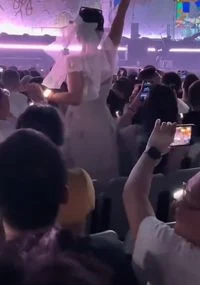
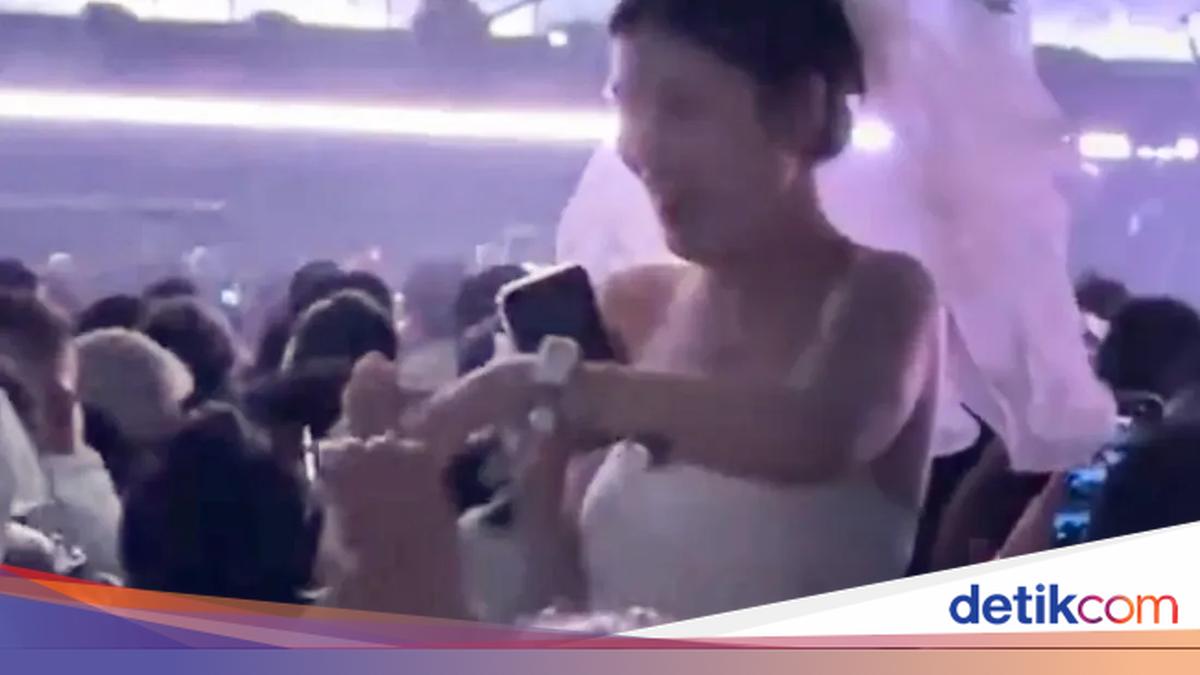
Footage captured by surrounding attendees and subsequently uploaded to Chinese social media platforms shows the sheer scale of the disruption. The woman, outfitted remarkably for a stadium rock concert in a full white bridal gown complete with a traditional veil, looked overwhelmed with emotion. As the moment peaked, she stood up on her seat, turned her back to the stage, and began waving enthusiastically at the distant performers and cameras, seemingly oblivious to the immediate surroundings.
The Disruption Mounts
While grand gestures are sometimes met with indulgent applause, this particular display quickly wore out its welcome. According to eyewitnesses and subsequent video evidence, the couple remained standing—blocking the sightlines of everyone seated directly behind them—for upwards of five uninterrupted minutes.
As the obstructed fans struggled to catch glimpses of Zhao Lei performing live, frustration bubbled over. A chorus of disgruntled attendees began shouting in unison, demanding that the couple sit down.
The disturbance was not limited to the prolonged standing ovation. Prior to the formal proposal, the couple had reportedly attempted to amplify their celebration by distributing wedding candies to nearby strangers, tossing the sweets haphazardly into the crowd. The unorthodox distribution method prompted complaints to venue staff, eventually forcing security guards to intervene and order the couple to cease handing out the treats.
Viral Explosion: 110 Million Views and a Divided Internet
If the incident had remained confined to the physical stadium, it might have been chalked up to an isolated moment of poor concert etiquette. Instead, smartphones captured the entire ordeal, and the footage was uploaded to Chinese social media ecosystems, where it exploded in popularity.
Within days, hashtags and discussions surrounding the "Bird’s Nest Proposal" amassed over 110 million views. The digital jury was split, exposing a deep cultural fracture over how public spaces should be shared.
The Critics: "We Paid for Zhao Lei, Not Your Wedding"
The overwhelming majority of online commentators sharply criticized the couple, arguing that their actions violated the unwritten social contract of live entertainment.
- The Ticket Value Argument: Critics emphasized that thousands of fans had spent considerable sums of money—and often endured grueling ticket-purchasing lotteries—specifically to watch Zhao Lei perform. They argued that hijacking a concert for a private ceremony is fundamentally disrespectful to both the artist and fellow patrons.
- Spatial Selfishness: Commentators pointed out that wearing a voluminous wedding dress and standing on seats for extended periods demonstrates a severe lack of situational awareness. "If you want to get married, rent a venue or do it after the show," wrote one top-rated comment on Weibo. "No one bought a ticket to be an unwilling extra in your personal romantic drama."
The Defenders: Context and Empathy
Conversely, a vocal minority urged the public to exercise restraint and empathy, suggesting that the backlash had crossed into cyberbullying.
- Romance vs. Realism: Supporters argued that while the timing was clumsy, the intent was pure. They suggested that public proposals are inherently high-stress emotional gambles and that onlookers could afford a few minutes of patience.
- Alternative Solutions: Even within the defense camp, many conceded that the couple could have handled the situation with more tact—such as keeping their seats, exchanging rings quietly, or waiting until the final encore concluded to minimize disruption.
The intense scrutiny ultimately took a toll on the individuals involved. Following the viral explosion of the video, the couple reportedly panicked over the relentless online identification and harassment, reaching out to local authorities and demanding that platforms scrub the footage from the internet.
A Broader Trend: Concert Proposals as Manufactured Viral Moments
While the Beijing incident drew unique levels of ire, proposals at major musical acts in China are far from unprecedented. In recent years, stadium and arena tours have increasingly doubled as backdrops for public declarations of love, often orchestrated with varying degrees of cooperation from the headlining artists.
The Spectrum of Artist Reactions
Different performers handle these disruptions in vastly different ways, setting the tone for how audiences respond:
- The Accommodating Host: During a string of concerts in September, several couples staged proposals during performances by singer Li Ronghao in Chengdu. Li leaned into the spontaneous celebrations, publicly acknowledging the couples from the stage and playfully remarking that he felt less like a touring musician and more like an ordained wedding emcee.
- The Ambivalent Middle Ground: Many artists remain neutral, quietly continuing their sets while security manages the crowd dynamics, leaving fans to police the social boundaries themselves.
The Dark Side: Ticket Scalping and "Romance Economics"
The monetization and gamification of concert romance have created a secondary market that stretches far beyond simple disruptions. The pursuit of viral-ready proposals has driven commercialized trends deeply into the ticketing ecosystem.
- Numerology and Scalping: At a recent Jay Chou concert in Hong Kong, specific seats bearing the numbers "13" and "14" gained legendary status among fans and scalpers alike. In Mandarin, the numbers yi-san yi-si sound phonetically similar to phrases denoting "lifelong eternity" (yi sheng yi shi). Consequently, these specific seats became heavily targeted by scalpers.
- Exorbitant Markups: Reports revealed that tickets for seats 13 and 14 were resold by illegal scalpers for staggering sums, peaking at 12,013 yuan (approximately USD $1,650 or IDR 31.9 million).
- The "Dramaturgy" Tips: Industry insiders have revealed that professional ticket scalpers and event promoters have even begun circulating guides on how couples can maximize their chances of being caught by the stadium’s giant LED projection screens. The advice often encourages increasingly dramatic, public stunts, operating on the premise that the more disruptive the action, the higher the probability of capturing the camera operator’s attention.
Legal and Institutional Ramifications
The convergence of unauthorized public spectacles, viral social media culture, and ticket market manipulation has not gone unnoticed by authorities.
The Crackdown on Ticket Scalping (Huangniu)
The exploitation of romantic numbers by scalpers touches upon a broader, highly sensitive economic issue in China. Ticket scalping—locally known as huangniu—is strictly illegal. Regulatory bodies have implemented stringent real-name ticketing systems across major sports and entertainment venues to curb the black market.
However, inventive scalpers continuously find loopholes, utilizing algorithmic bots and social engineering to snap up emotionally significant seats. Under Chinese law, engaging in large-scale illegal ticket resale can lead to severe administrative penalties, detention, and, in severe cases involving organized syndicates, criminal prosecution and prison sentences.
Venue Security Protocols
In the wake of the Beijing incident, industry analysts anticipate that stadium management companies and concert organizers will tighten security protocols regarding audience behavior. Venues are expected to brief security teams to clamp down more swiftly on audience members standing on seats, blocking aisles, or attempting unscheduled stage-adjacent interruptions.
Implications: The Future of Live Music Etiquette
The viral Beijing proposal serves as a cautionary tale for the modern entertainment landscape. As concerts evolve from simple musical performances into hyper-connected, broadcast-quality digital events, the temptation to use them as personal stages grows stronger.
However, the severe backlash faced by the couple underscores a shifting collective mood among concertgoers. Audiences are increasingly protective of their physical space, their financial investment, and their uninterrupted connection with the artists they paid to see.
Moving forward, the unwritten rule of the concert hall is being forcefully rewritten by public consensus: The spotlight belongs to the artist on stage, and shared spaces demand shared respect. Whether future romantics will heed this warning—or continue to chase the elusive algorithmic high of a viral proposal—remains to be seen.