
Driving Global Roads: How the Indonesia-Made Toyota Avanza Conquers International Markets
JAKARTA — For over two decades, the Toyota Avanza has cemented its legacy as an undisputed icon of the Indonesian automotive landscape. Often affectionately dubbed the "Seibu Mobil Keluarga" (Car of the Family Million), the multi-purpose vehicle (MPV) has consistently dominated domestic sales charts, routinely battling for the top spot as Indonesia’s best-selling vehicle month after month.
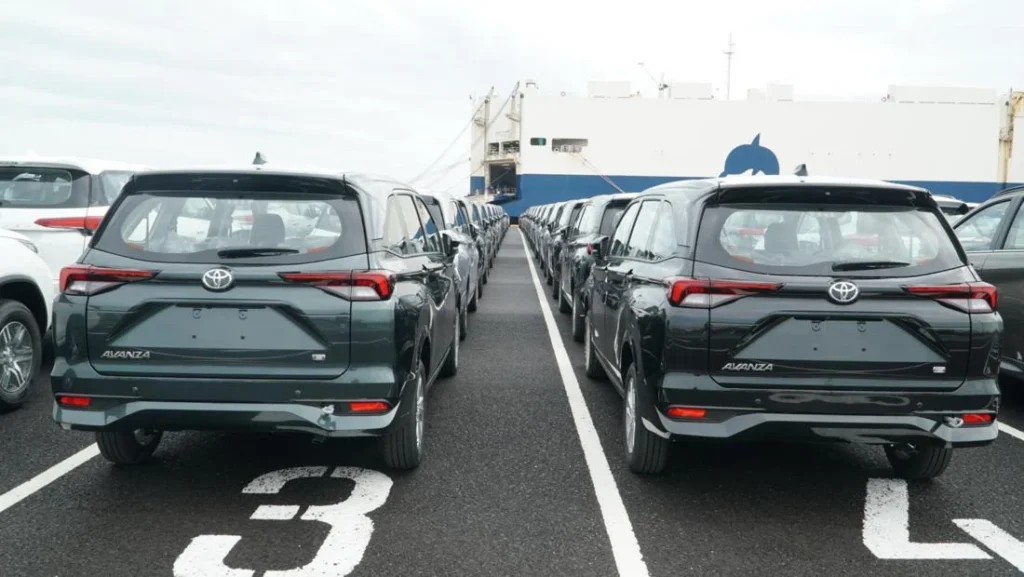
However, the enduring appeal of the Avanza extends far beyond the archipelago. Built with precision, reliability, and adaptability in mind, the Indonesian-made Avanza has quietly transformed into a global export powerhouse. Recent data from the Association of Indonesian Automotive Industries (GAIKINDO) reveals that as of August 2026, the locally manufactured MPV is exported in Completely Built-Up (CBU) form to six distinct international markets across Asia and Latin America.
From the bustling streets of Manila to the historic avenues of Lima, and stretching as far as the Middle East, the Avanza serves as a shining testament to the high standards of Indonesian manufacturing. This comprehensive report explores the global journey of the Toyota Avanza, breaking down its export milestones, regional market performances, official insights, and the profound economic implications of Indonesia’s rising automotive footprint on the world stage.
Main Facts: The Global Footprint of Indonesia’s Favorite MPV
The Toyota Avanza is no longer just a domestic champion; it is a critical pillar of Indonesia’s automotive export economy. According to official GAIKINDO figures released up to August 2026, six countries actively import the CBU version of the Avanza from Indonesia: Peru, Qatar, Myanmar, Bangladesh, the Philippines, and Mexico.
The sheer scale of these exports highlights the trust international consumers place in Indonesian automotive assembly lines. The manufacturing plants in Indonesia—overseen by Toyota Motor Manufacturing Indonesia (TMMIN)—adhere to stringent global quality control measures, ensuring that an Avanza driving through the desert highways of Qatar matches the structural integrity and performance of one navigating the mountainous terrains of Peru or the congested urban centers of the Philippines.
Among the importing nations, the Philippines stands out as the primary destination, absorbing the vast majority of exported units. Meanwhile, Latin American markets like Peru and Mexico demonstrate a voracious appetite for affordable, spacious, and fuel-efficient three-row MPVs, solidifying the Avanza’s position as a truly versatile global vehicle.
Chronology: The Evolution from Domestic Icon to Global Export Commodity
To understand how the Avanza achieved its current international status, it is essential to trace its journey from a local market disruptor to a global export commodity.
The Inception and Domestic Dominance (Early 2000s–2010s)
Introduced in the early 2000s, the Toyota Avanza was co-developed by Toyota and Daihatsu primarily to address the needs of Southeast Asian families looking for an affordable, reliable, rear-wheel-drive, multi-passenger vehicle. It quickly replaced older sedan and station wagon models, revolutionizing the Indonesian car market. By offering generous cabin space, high ground clearance suitable for tropical weather and uneven roads, and low maintenance costs, the Avanza captured the hearts of millions.
Venturing Beyond Borders (2010s–2020)
As domestic production capacity grew and the quality of local component suppliers matured, Toyota Indonesia set its sights on regional expansion. Initial export waves began targeting neighboring ASEAN nations and select emerging markets. The adaptability of the platform allowed engineers to tweak specifications—such as offering both manual transmissions (MT) and continuously variable transmissions (CVT), alongside various engine displacements—to cater to diverse regulatory frameworks and consumer preferences abroad.
The Modern Era of Global Export (2024–2026)
By 2026, the export pipeline for the Avanza had matured significantly. The introduction of newer, more modern generations of the Avanza—featuring sophisticated styling, advanced safety suites, and improved fuel efficiency—accelerated international demand. GAIKINDO data through August 2026 captures a thriving ecosystem where thousands of units leave Indonesian ports monthly, bound for six distinct nations across three continents, marking a golden era for Indonesian automotive manufacturing.
Supporting Data: Breakdown of Avanza Exports by Country
Numbers tell the true story of the Avanza’s international success. In the first eight months of 2026, thousands of units were shipped overseas, reflecting strong demand across different economic landscapes.
1. The Philippines: The Primary Hub
The Philippines is, by far, the largest international market for the Indonesia-built Avanza. During the first eight months of 2026 alone, an astounding 15,168 units were shipped to the archipelago.
In the Philippine market, Toyota offers the Avanza in four distinct trim levels, with three utilizing a fuel-efficient 1.3-liter engine and the highest-tier variant boasting a punchy 1.5-liter engine. Transmission options include both manual and modern CVT systems. Pricing in the Philippines reflects its competitive positioning, ranging from approximately 844,000 Philippine pesos (roughly IDR 239 million) for base variants, up to 1.071 million pesos (approximately IDR 303 million) for the top-of-the-line trim.
2. Peru: Latin America’s Stronghold
Securing the second position is Peru, which imported 3,190 units of the Avanza between January and August 2026. Peruvian consumers value the Avanza for its rugged durability, making it an ideal choice for both urban commuting and longer inter-city journeys characterized by varied topography.
3. Mexico: Expanding North American Reach
Mexico represents the third-largest export destination, accounting for 2,289 units during the same eight-month period. The Mexican market demands high standards of safety and comfort, and the Indonesian-made Avanza has successfully met these criteria, appealing to budget-conscious families and fleet operators alike.
4. Qatar: Middle Eastern Aspirations
Breaking into the Middle Eastern market is no small feat, given the region’s extreme climate and preference for heavy-duty SUVs. Nevertheless, Qatar imported 249 units of the Avanza in 2026, proving that the compact MPV’s air conditioning efficiency and reliable powertrain can withstand demanding desert conditions.
5. Myanmar: Southeast Asian Neighbor
Myanmar continues to be a steady regional partner, importing 128 units of the Avanza. The vehicle’s compact footprint combined with its high passenger capacity makes it well-suited for Myanmar’s evolving urban infrastructure.
6. Bangladesh: South Asian Footprint
Rounding out the list is Bangladesh, which imported 19 units of the Avanza. While smaller in volume, this market presence underscores the global versatility and broad appeal of the Indonesian-manufactured platform.
| Rank | Destination Country | Export Volume (Jan–Aug 2026) | Primary Engine/Trim Options |
|---|---|---|---|
| 1 | Philippines | 15,168 units | 1.3L MT, 1.3L CVT, 1.5L CVT |
| 2 | Peru | 3,190 units | Standard Export Specs |
| 3 | Mexico | 2,289 units | Standard Export Specs |
| 4 | Qatar | 249 units | Standard Export Specs |
| 5 | Myanmar | 128 units | Standard Export Specs |
| 6 | Bangladesh | 19 units | Standard Export Specs |
Official Responses and Industry Insights
The remarkable performance of the Toyota Avanza in international markets has drawn glowing remarks from industry leaders, government officials, and manufacturing executives.
Representatives from GAIKINDO have repeatedly emphasized that the consistent growth in CBU vehicle exports validates the competitiveness of Indonesia’s automotive sector. Industry analysts note that achieving success in markets like Mexico and the Philippines requires meeting rigorous international homologation standards, including strict crash-test safety requirements, emissions compliance, and quality benchmarks set by parent companies in Japan.
Management at Toyota Motor Manufacturing Indonesia (TMMIN) has credited the success of the Avanza to the dedication of local Indonesian engineers and factory workers. “Our goal has always been to build vehicles that not only satisfy the domestic consumer but also stand shoulder-to-shoulder on the global stage,” noted a senior TMMIN representative in a recent industry briefing. “The trust shown by importers like Peru, Mexico, and the Philippines is proof that Indonesian manufacturing prowess is recognized worldwide.”
Furthermore, local component suppliers have praised the multiplier effect of the Avanza’s export success. With thousands of units leaving assembly lines every month, hundreds of local tier-one and tier-two automotive parts manufacturers in Indonesia secure stable business operations, driving technological advancement and skill enhancement across the entire supply chain.
Implications: What the Avanza’s Global Success Means for Indonesia
The thriving export numbers of the Toyota Avanza carry profound economic, strategic, and industrial implications for Indonesia as it strives to position itself as a premier manufacturing hub in Southeast Asia.
1. Strengthening the National Trade Balance
At a macro-economic level, automotive exports play a vital role in bolstering Indonesia’s foreign exchange reserves and improving the national trade balance. By exporting tens of thousands of Completely Built-Up units annually—complemented by automotive components and CKD (Completely Knocked Down) packs—the automotive sector acts as a vital shield against global economic volatility.
2. Elevating the "Made in Indonesia" Brand
For decades, global manufacturing dominance was associated with nations like Japan, South Korea, Germany, and the United States. The success of the Avanza across Latin America, the Middle East, and Asia signals a paradigm shift. "Made in Indonesia" is increasingly synonymous with quality, reliability, and value for money. This positive brand association paves the way for other Indonesian manufactured goods to enter international markets with greater ease.
3. Employment and Human Resource Development
The manufacturing of vehicles for both domestic and international consumption generates hundreds of thousands of direct and indirect jobs. From assembly line operators and supply chain logistics coordinators to software engineers and quality assurance specialists, the Avanza ecosystem fosters continuous human capital development. Workers trained under Toyota’s stringent global manufacturing principles acquire world-class technical skills that elevate the nation’s overall workforce competency.
4. Driving the Transition Toward Future Mobility
As the global automotive industry transitions toward electrification and sustainable mobility, the strong financial foundation provided by high-volume internal combustion engine (ICE) and hybrid models—such as the Avanza—funds research and development for future technologies. The operational revenue generated through robust domestic and international sales enables manufacturers to invest heavily in green infrastructure, local battery supply chains, and eco-friendly factory operations in Indonesia.
Conclusion
The journey of the Toyota Avanza is much more than a commercial success story of a popular family car. It is a powerful narrative of industrial maturation, international trust, and economic resilience. From commanding the congested streets of Jakarta to being unloaded at ports in Manila, Lima, and Mexico City, the Indonesian-made Avanza demonstrates that local manufacturing excellence can conquer the world. As production lines continue to hum and global demand remains steady, the Avanza stands tall as a proud ambassador of Indonesian engineering on the global stage.