Solo Indian Backpacker Detained by Taliban in Afghanistan: A Close Call with Authoritarian Restriction
KABUL — What began as an adventurous, off-the-beaten-path journey through Central and South Asia turned into a harrowing ordeal for an Indian content creator and solo backpacker. Arunima IP, hailing from the town of Palakkad in the southern Indian state of Kerala, found herself face-to-face with the grim realities of life under Taliban rule in Afghanistan. Detained at gunpoint for hours, her experience underscores the severe perils faced by independent travelers—particularly women—navigating the restrictive legal and social landscapes enforced by the de facto Afghan government.
Main Facts
The incident, which unfolded over a tense 24-hour period in early September, highlights the precarious nature of tourism in Afghanistan since the Taliban regained power in August 2021.
- The Subject: Arunima IP, a digital content creator and independent traveler from Kerala, India.
- The Incident: Detained by armed Taliban members while traveling solo through remote Afghan villages.
- The Trigger: Violating strict local edicts regarding solo female travel, failure of local fighters to read foreign travel documents, and non-compliance with rigorous Islamic dress codes (specifically, leaving her face uncovered).
- The Duration: Roughly 24 hours of captivity and high-stakes interrogation, followed by a tense transit out of the region.
- The Current Status: Arunima has since been released, safely transitioned away from the immediate area, and is currently en route to Uzbekistan while awaiting a visa for Iran. Neither the Taliban administration nor the Embassy of India in Kabul has issued an official statement regarding the incident.
Chronology of Events: From Exploration to Captuse
To understand the gravity of Arunima’s situation, it is necessary to trace the timeline of her expedition, which shifted rapidly from cultural documentation to a fight for freedom and survival.
Phase 1: Entering the Unknown
Arunima arrived in Afghanistan two weeks prior to her detention, utilizing her digital platforms to document the daily lives of citizens in remote villages. For the first week, her travels proceeded largely without major incident. As a backpacker accustomed to immersive travel, she relied on public transportation and local interactions to capture authentic narratives of a nation largely isolated from the international community.
Phase 2: The Interception
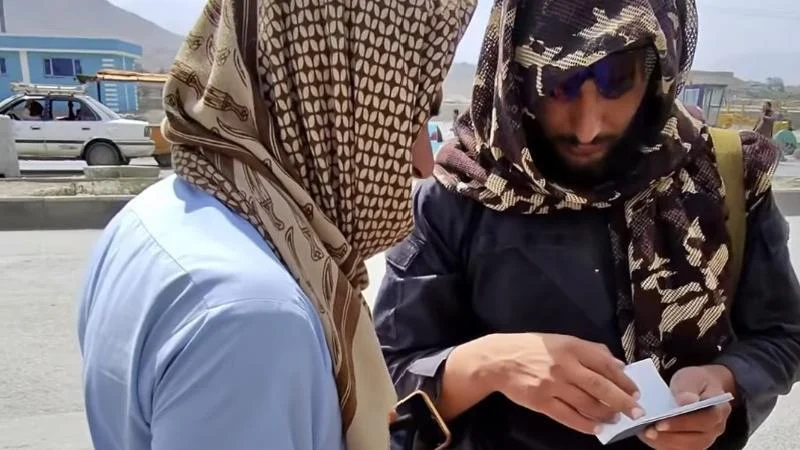
On Monday, September 7, her journey took a sharp, frightening turn. While moving through a rural district, her progress was abruptly halted by armed members of the Taliban. In video footage subsequently shared to her YouTube channel, heavily armed men can be seen stopping her, asserting authority as state-sanctioned regional guardians.
"In Afghanistan, they check us at every checkpoint like this," Arunima stated in her vlog, documenting the tense initial encounter.
Upon demand, she handed over her Indian passport. However, the situation deteriorated quickly when the fighters proved unable to read or comprehend foreign travel documents. Unfamiliar with international passports and suspicious of a lone foreign woman, the armed guards escalated the situation.
Phase 3: Hours of Terror
Confined and subjected to aggressive questioning, Arunima described enduring hours of psychological torment.
"I spent hours in tension to the point where I felt as though I could die. I was so terrified," she recalled.
The primary legal justification provided by her captors for her detention was her status as a solo female traveler. Under the Taliban’s stringent interpretations of Islamic law, women are barred from traveling significant distances without a mahram (a male guardian). Furthermore, every armed member acts with broad, decentralized policing powers, creating an arbitrary enforcement mechanism where local fighters operate with impunity.
Compounding the interrogation was her attire. Unlike the local women in the village, all of whom kept their faces strictly covered up to the margin of their eyes, Arunima’s face remained visible.
"What is my mistake? I am traveling alone as a woman in a country that bans women from traveling without a companion," she expressed in her video documentation. Realizing the peril of her position, she actively advocated for her own deportation to escape potential escalation.
Phase 4: The SOS and Release
Recognizing the deteriorating security of her detention, Arunima managed to transmit an emergency SOS message across her social media networks.
"Please help me contact the Indian embassy," she wrote, a digital cry for help that galvanized online followers and international observers alike.
The pressure—combined perhaps with internal deliberations among local commanders regarding the diplomatic fallout of detaining a foreign national—resulted in her release. Approximately 24 hours after the initial capture, on Tuesday morning, Arunima posted a brief update to her Instagram account, bringing immense relief to her supporters: "I am safe now."
Phase 5: The Post-Release Escape
Freedom, however, did not immediately equate to safety. By nightfall, Arunima boarded a local truck bound for Banyan. Her journey through the region drew intense, unsettling scrutiny from locals. In a society where women rarely venture outside unaccompanied, her physical presence on a public truck turned heads and sparked immediate suspicion.
At a roadside tea stall during the transit, several armed local men approached her to demand answers and capture photographs of her without consent. Realizing she remained highly vulnerable, she continued her hurried exit from the territory. As of the latest reports, she is traveling toward the Uzbek border—some 500 kilometers away—while she waits for her Iranian visa to be processed, maintaining acute vigilance against further Taliban patrols.
Supporting Data: The Landscape of Risk in Taliban-Controlled Afghanistan
Arunima’s harrowing experience is not an isolated anomaly, but rather a reflection of the systemic realities governing Afghanistan today. Analyzing the broader statistical and geopolitical context reveals why her detention occurred and the systemic dangers inherent in modern Afghan tourism.
The Collapse of Consular Protections
Since the Taliban takeover in August 2021, India—like the vast majority of the international community—does not officially recognize the Islamic Emirate of Afghanistan. While India maintains a "technical team" at its embassy in Kabul to oversee humanitarian aid and basic diplomatic engagements, consular protections for Indian nationals traveling independently in the country are severely constrained. Independent travelers entering Afghanistan do so entirely at their own risk, often bypassing official advisories issued by New Delhi warning citizens against all travel to the war-torn nation.
Restrictions on Women’s Rights and Movement
The Taliban’s Ministry for the Propagation of Virtue and the Prevention of Vice has systematically dismantled the rights of women and girls. Key statistics and edicts regarding female movement include:
- The Mahram Edict: Women are officially prohibited from traveling distances exceeding 72 kilometers (approx. 45 miles) without a male relative.
- Public Space Bans: Access to public parks, gyms, amusement parks, and beauty salons has been entirely revoked.
- Employment and Education: Secondary and university education for girls remains suspended, and female participation in the workforce is restricted to vital sectors like healthcare and select humanitarian fields.
Because these rules apply universally, foreign women are frequently scrutinized. While some vloggers manage to navigate urban centers under strict chaperone supervision, independent backpackers exploring rural hinterlands inevitably clash with local commanders who view non-compliant foreign women as a cultural and ideological threat.
Official Responses and Diplomatic Silence
As of publication, the response from official entities has been notably muted, reflecting the delicate diplomatic tightrope required when dealing with the Taliban regime.
The Taliban Administration
No official statement has been released by the central government in Kabul or local provincial directorates regarding Arunima IP’s detention. The lack of commentary is characteristic of decentralized governance structures within the Taliban; local commanders often act autonomously, detaining individuals under local interpretations of Sharia law without logging formal charges through a centralized judicial framework. When foreign nationals are involved, regional leaders frequently defer to higher-ups or quietly release the individual to avoid unwanted international scrutiny that could jeopardize the Taliban’s ongoing quest for global diplomatic recognition.
The Indian Government
The Ministry of External Affairs (MEA) in New Delhi has not issued a formal press briefing concerning Arunima’s ordeal. Indian authorities have consistently maintained a strict advisory stance, urging all citizens to avoid travel to Afghanistan due to persistent security threats, including terrorism, arbitrary detention, and the lack of robust consular services. Observers note that while the Indian government monitors the safety of its citizens abroad quietly through diplomatic channels, public commentary is often withheld until the individual concerned reaches absolute safety outside the jurisdiction of hostile actors.
Implications for Solo Travel, Content Creation, and Journalism
Arunima IP’s detention carries far-reaching implications for the global community of travel vloggers, independent explorers, and geopolitical analysts.
The Rise of "Risk Tourism" and Digital Creators
In the era of social media monetization, platforms like YouTube and Instagram have incentivized content creators to seek out increasingly unique, dangerous, and restricted destinations to boost engagement and subscriber counts. Afghanistan, post-2021, has paradoxically emerged as a hotspot for a niche segment of "dark tourism" and adventure vloggers eager to showcase what life is like under a militant regime. Arunima’s case serves as a stark warning that digital platforms cannot shield creators from physical realities on the ground. When an emergency strikes, social media SOS messages are poor substitutes for functional consular protection.
The Weaponization of Bureaucratic Ignorance
A troubling element of Arunima’s detention is the inability of the armed guards to read or interpret standard international travel documents. This points to a broader institutional deficit: as experienced civil servants, judges, and administrators fled Afghanistan or were purged following the 2021 regime change, governance has been largely militarized. Fighters stationed at rural checkpoints often possess little formal education regarding international law, diplomatic immunity, or the basic mechanics of foreign passports. For travelers, this means that carrying legal documentation offers zero guarantee of safe passage if the local enforcer lacks the literacy to verify it.
Shifting Perceptions of Safety
Ultimately, this incident reinforces the grim reality that Afghanistan remains fundamentally unsafe for independent civilian travel—particularly for solo women. While Arunima managed to escape her ordeal with her life and freedom intact, her story will likely serve as a powerful deterrent to other explorers considering off-the-grid expeditions in the region. As the international community continues to grapple with how to engage—or isolate—the Taliban administration, individual travelers remain vulnerable pawns caught between the allure of adventure and the unforgiving mechanics of authoritarian rule.