
Neglect in the Heart of the Capital: The Two-Year Stagnation of SDN 09 Kebayoran Lama Selatan
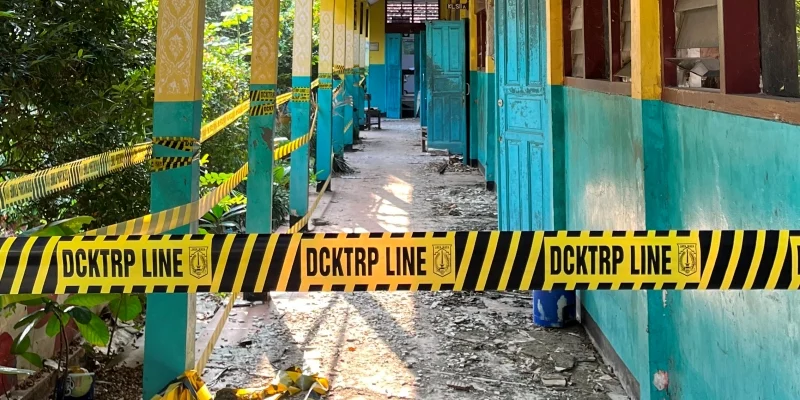
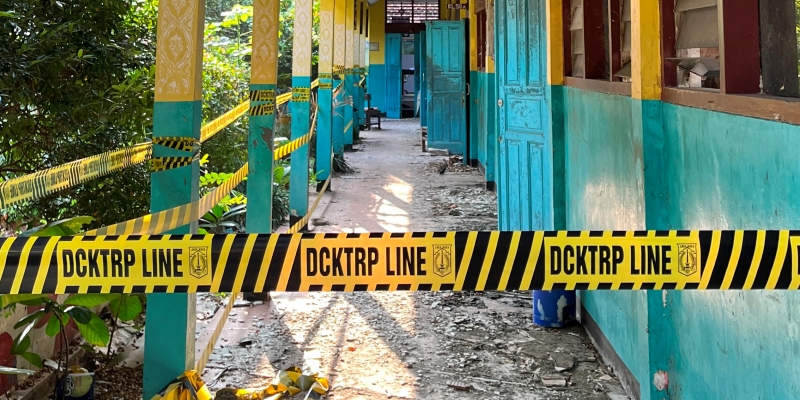
JAKARTA – In the heart of Indonesia’s bustling capital, where skyscrapers signify rapid modernization and the government boasts of multi-trillion rupiah educational budgets, a harrowing sight persists in South Jakarta. The ruins of SDN 09 Kebayoran Lama Selatan stand as a stark, decaying monument to bureaucratic inertia. For over two years, the school building, which suffered a catastrophic collapse in late 2024, has remained a derelict site marked by fading police lines—a silent testament to what many activists and citizens are calling an inexcusable failure of governance.
The Reality of the Ruin: A Chronology of Neglect
The crisis began in late 2024 when the structural integrity of SDN 09 Kebayoran Lama Selatan failed, leading to a partial collapse of the facility. What should have been an immediate priority for the Jakarta Provincial Government’s Department of Education has instead devolved into a protracted saga of administrative delay.
As of July 2026, the site remains untouched, save for the weeds growing through the cracked concrete and the weathered police tape fluttering in the wind. The timeline of this neglect is particularly damning:
- Late 2024: The initial structural failure occurs, rendering the building unsafe for students and staff.
- Early 2025: Hopes for immediate reconstruction are raised, but budgetary allocations are shuffled or delayed, stalling the procurement process.
- Mid-2025: Local residents and parents begin expressing frustration as the school year commences without any sign of construction equipment or contractor mobilization.
- Early 2026: Despite public outcry, the building remains a ruin, forcing a second academic year of displacement for the student body.
- July 2026: Public criticism reaches a boiling point as activists demand accountability for the two-year stagnation.
The Human Cost: Displacement and Educational Disruption
The most profound victims of this bureaucratic quagmire are the 270 students enrolled at SDN 09 Kebayoran Lama. The collapse did not just destroy a building; it uprooted a community.
Currently, these hundreds of children are forced to conduct their daily learning activities by "piggybacking" on the facilities of SDN 11 Kebayoran Lama Selatan. This arrangement, while functional in the short term, is unsustainable and detrimental to the quality of education. Overcrowded classrooms, split-shift schedules, and the psychological impact of being "guests" in another school have created an environment that is far from conducive to academic excellence.
For parents, the frustration is compounded by the fact that the Jakarta Provincial Government consistently promotes education as a top-tier budgetary priority. The irony of the situation—a massive education budget existing alongside a collapsed, abandoned school—is not lost on the citizens of South Jakarta.
The Political Fallout: Criticism of Leadership and Accountability
The situation has drawn sharp condemnation from civil society organizations. Rudy Darmawanto, Chairman of the activist group Poros Rawamangun, has been vocal in his assessment of the crisis, labeling the two-year delay either an act of gross negligence or a deliberate administrative failure.
"It is utterly nonsensical that a school building remains in ruins for over two years," Darmawanto stated during an interview on Friday, July 24, 2026. "The public is shocked and perceives a deep-seated abnormality in how the government handles this. Even the Governor of Jakarta, Pramono Anung, should be concerned, as this reflects poorly on his administration’s ability to manage basic public infrastructure."
Darmawanto’s critique strikes at the heart of the current administration’s credibility. He argues that the failure to rebuild a single elementary school in two years suggests a lack of responsiveness and a detachment from the realities faced by the average citizen. The implications for the current leadership are severe; if the city government cannot manage the restoration of a school, how can it be trusted with larger, more complex urban development projects?
The Call for Resignation
The intensity of the criticism has led to calls for institutional housecleaning. Darmawanto has explicitly demanded that the Head of the Education Department (Kadisdik) either resign or face non-activation. "This is not just about a building; it is about the fundamental duty of the state to provide a safe learning environment for its children. If the leadership cannot fulfill this basic mandate, they have no business remaining in their positions," he added.
Financial Discrepancies: The Budget Paradox
A central point of contention is the massive allocation of funds to the education sector in the DKI Jakarta provincial budget. Every year, the provincial government presents a budget that highlights record-breaking spending on education, including scholarships, teacher salaries, and infrastructure maintenance.
When the public sees a school left in ruins for 24 months, the disconnect between the planned budget and the executed budget becomes a subject of intense scrutiny. Economists and urban analysts suggest that this case study highlights three major systemic flaws in Jakarta’s public works management:

- Procurement Inefficiency: The bidding and tender processes for public school renovations are often bogged down by excessive red tape, leading to years of delays before a single brick is laid.
- Lack of Emergency Protocols: There appears to be no "fast-track" mechanism for schools that suffer catastrophic damage, forcing them to wait for the standard annual budgetary cycle.
- Accountability Vacuum: When a project is delayed, there is rarely a clear individual or department held responsible for the delay, leading to a culture of complacency where "waiting for next year’s budget" becomes a convenient excuse for inaction.
Broader Implications for the Pramono Anung Administration
The scandal of SDN 09 Kebayoran Lama Selatan is more than a local infrastructure failure; it is a political liability. As Governor Pramono Anung navigates the challenges of governing a complex, multi-layered city like Jakarta, the "school of ruins" serves as a visible symbol of administrative stagnation.
The perception that the government is "not responsive" is one of the most dangerous narratives for any elected official. In the eyes of the public, the school represents a breach of the social contract. Education is a sacred trust, and by failing to provide a safe space for these 270 children, the government has inadvertently signaled that the needs of the city’s future generations are not as pressing as the administrative convenience of its bureaucrats.
Moving Forward: The Path to Resolution
To rectify this situation, observers suggest that immediate, decisive action is required:
- Transparency Audit: The Jakarta Provincial Government must release a full, public report on why the reconstruction has been delayed for two years, including a breakdown of the budget intended for the project and where those funds were redirected.
- Immediate Mobilization: The Governor’s office must issue an executive order to prioritize the reconstruction of SDN 09 Kebayoran Lama Selatan, cutting through the red tape that has hindered the project for 24 months.
- Institutional Reform: The Education Department requires an internal overhaul to ensure that infrastructure maintenance is proactive rather than reactive, and that disaster response for public facilities is prioritized as a matter of public policy.
Conclusion
The ruins of SDN 09 Kebayoran Lama Selatan are a blot on the landscape of a city that aspires to be a global hub. While the authorities might focus on the complexities of procurement laws and administrative cycles, the parents and students are focused on the reality of a lost education.
As the second anniversary of the collapse passes, the question remains: How long must a community wait before their children are given back their right to a safe school? The answer to this question will ultimately serve as a litmus test for the effectiveness and integrity of the current administration. For the 270 students of SDN 09, the time for excuses has long since expired; the time for action is now.