From Dilapidated Walls to Modern Learning Hubs: The Transformation of SMAN 8 Kupang
KUPANG, Indonesia – For years, students at SMAN 8 Kupang, located in the heart of East Nusa Tenggara, navigated an educational environment that was as physically crumbling as it was demotivating. Cracked walls, peeling paint, and overcrowded classrooms were the grim reality for hundreds of teenagers striving for a better future. However, a recent government-led revitalization project has breathed new life into the campus, marking a pivotal shift in the local educational landscape.
During a recent journalistic visit conducted by the Ministry of Communication and Digital on Tuesday (July 21, 2026), the stark contrast between the past and the present was on full display. The transformation—funded by a significant state allocation—has turned a dilapidated facility into a modern, "glowed-up" sanctuary for learning, proving that infrastructure is not merely about aesthetics, but about the dignity of the student experience.
The Weight of Environment: How Crumbling Walls Stifled Potential
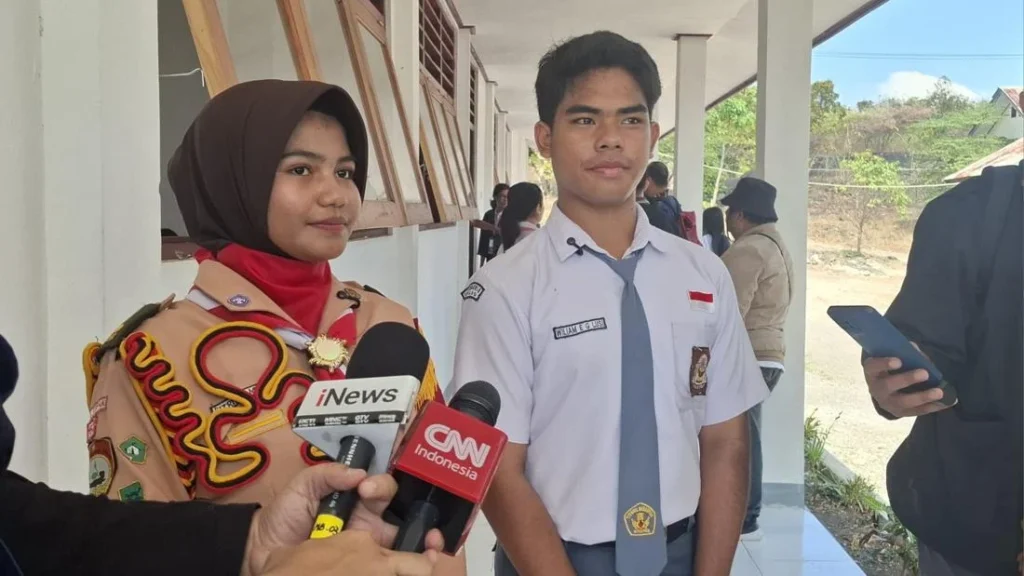
William Evan Gabriello Sosi, an 11th-grade student at SMAN 8 Kupang, remembers the old building with a mixture of nostalgia and relief that it is finally in the past. For William and his peers, the physical state of the classroom was not just a background detail; it was a constant psychological barrier to academic success.
"Before the renovation, the walls were crumbling, the paint was peeling off in strips, and everything just felt perpetually dirty," William explained during the media tour. "It’s hard to focus on complex subjects like mathematics or history when you are constantly distracted by the decay around you. The environment directly influenced my mood and my ability to stay concentrated."
For many students in the region, such conditions were accepted as the norm. However, the psychological toll of learning in a deteriorating space often led to disengagement. The dust, the visual clutter of cracked masonry, and the sense of neglect transmitted a subtle message to students: that their education was not a priority.
A Strategic Investment: The Revitalization of SMAN 8 Kupang
The turning point for the school came when the government channeled Rp 1.2 billion into a comprehensive revitalization project. This budget was specifically allocated to construct four new, state-of-the-art classrooms, providing a modern environment that complies with contemporary safety and comfort standards.
The impact was immediate. The new classrooms feature pristine walls, ergonomic furniture, and an overall layout designed to facilitate better pedagogical interactions.
"Everything is cleaner now; it’s aesthetically pleasing," William noted. "The walls are smooth, the paint is fresh, and there is a sense of security that wasn’t there before. It makes me feel like I actually want to come to school every day."
Syahrini Rismayanti Said, a student in the 12th grade, echoed this sentiment. Having witnessed the transition firsthand, she emphasized that the physical upgrade has translated into a mental upgrade for the student body. "There are so many changes," Syahrini said. "We can finally learn properly because everything has been renovated. The atmosphere is just more conducive to academic rigor."
Decongesting the Classroom: Beyond Infrastructure
Beyond the fresh coat of paint and the new construction, the most significant change at SMAN 8 Kupang has been the reduction in classroom density. For years, the school struggled with severe overcrowding, a common issue in rural and semi-urban Indonesian schools.
Previously, a single classroom would host upwards of 40 students, creating a chaotic environment where noise levels made individual instruction nearly impossible. Nonia, a 12th-grade student, described the old setup as suffocating.
"It was so noisy because there were too many of us," Nonia recalled. "When you have 40 people in a space designed for fewer, you feel physically cramped, and it’s hard to breathe, let alone focus. Now, we have about 30 students per class. It’s calm, it’s organized, and I can finally focus on what the teacher is saying."
The improved student-to-teacher ratio is supported by the addition of new, high-quality desks and interactive whiteboards. These technological additions, combined with the extra physical space, have transformed the classroom from a holding pen into a dynamic learning center.
The Path Forward: Unfinished Business and Student Aspirations
While the students of SMAN 8 Kupang are deeply grateful for the government’s investment, their experience has also sharpened their awareness of what remains to be done. In a candid dialogue with government representatives, the students voiced their hopes for the future of their school.
Addressing the Topography
One of the most pressing issues identified by the students is the school’s natural surroundings. The school grounds are heavily dominated by jagged coral rock, a characteristic feature of the Kupang landscape. While natural, these rock formations present significant safety and accessibility issues. "Almost every open space on our campus is covered in sharp, uneven rocks," William pointed out. The students hope for a landscaping project that would clear these areas, creating safe spaces for physical education and social interaction.
The Need for a Dedicated Aula (Assembly Hall)
Perhaps the most urgent request is for a dedicated multipurpose hall, or aula. Currently, SMAN 8 Kupang lacks a standalone space for school-wide assemblies, cultural events, or community gatherings.
"We really need an aula," William stated. "Right now, if we have an event, we have to borrow classroom space or use shared areas, which disrupts the learning schedule. Because our space is limited, we have to take turns using whatever area is available. Having a dedicated building would change everything."
For the students, the aula is not just a luxury; it is a necessity for fostering a sense of school spirit and community—a critical component of the holistic education they are striving to achieve.
Implications for National Educational Policy
The story of SMAN 8 Kupang serves as a microcosm for the broader challenges and successes of Indonesia’s national education strategy. The investment of Rp 1.2 billion is a testament to the government’s commitment to "equitable distribution" of educational quality, but it also highlights the "last-mile" problems that remain.
Infrastructure as a Pedagogical Tool
The transformation at SMAN 8 Kupang proves that school architecture is a vital component of the "hidden curriculum." When the state invests in clean, safe, and comfortable buildings, it signals to students that they are valued, thereby increasing their motivation and academic engagement. This is not just about brick and mortar; it is about human capital development.
The Necessity of Localized Solutions
The students’ request regarding the coral rocks and the need for an aula highlights the importance of context-sensitive planning. Standardized building designs often fail to account for the unique geological or social needs of specific regions like Kupang. Future policy interventions would benefit from a more collaborative approach, where student and teacher feedback informs the architectural design process.
Conclusion: A Bright Future Built on Solid Foundations
The revitalization of SMAN 8 Kupang is a milestone in the school’s history. It represents a shift from a culture of endurance to a culture of excellence. By providing the basic infrastructure—clean walls, adequate space, and functional equipment—the government has cleared the path for these students to pursue their ambitions without the burden of a failing environment.
As these students look toward their futures, they do so with a newfound sense of confidence. They have seen what change looks like, and they are now ready to advocate for the next phase of their school’s evolution. Whether it is clearing the rocky grounds or building a hall where their voices can echo clearly, the students of SMAN 8 Kupang are clearly engaged in the process of shaping their own academic destiny.
For now, the focus remains on the classroom. With the new facilities in place, the teachers and students of SMAN 8 Kupang are no longer just surviving the school day—they are thriving in it. The "glow up" of their campus is more than just a fresh look; it is the foundation upon which the next generation of Kupang’s leaders will be built.