Race Against Time: Ministry of Human Rights Directs Urgent Field Assessments for Survivors of Past Violations in Yogyakarta
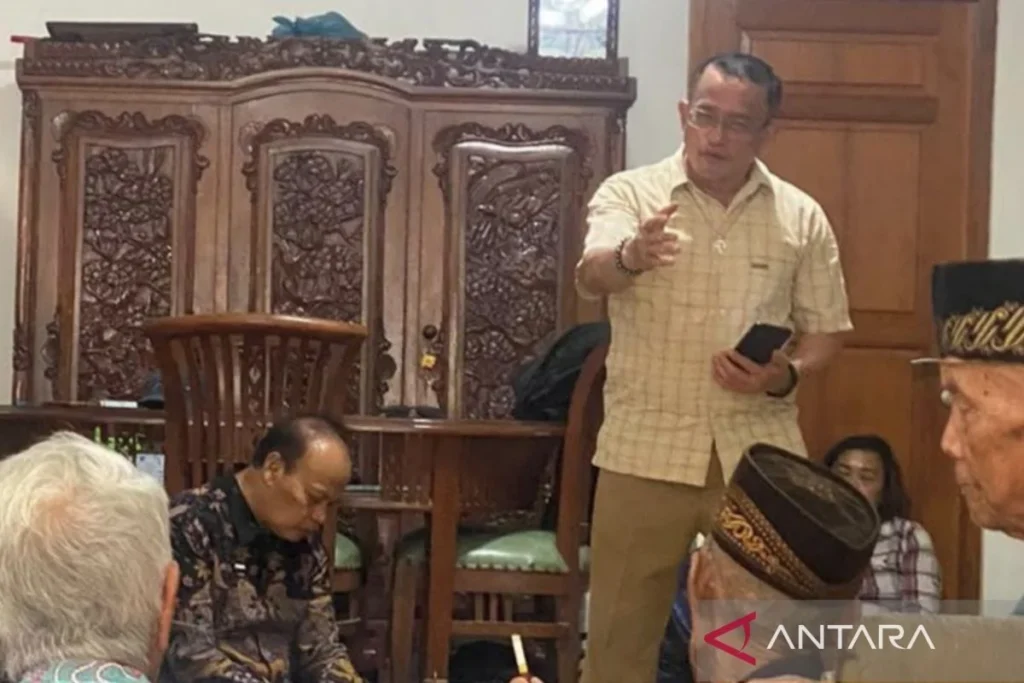
JAKARTA — Despite ongoing administrative revisions to crucial governing decrees, the newly established Indonesian Ministry of Human Rights (Kementerian Hak Asasi Manusia, or KemenHAM) has mobilized field teams to the Special Region of Yogyakarta (DIY). The mission is clear: to fast-track the identification and validation of the needs of aging survivors of past gross human rights violations.
The ministry’s decision to proceed with field operations, even as the government refines the legal framework under Presidential Instruction (Instruction of the President/Inpres) No. 2 of 2023, underscores a deep sense of historical urgency. For many survivors—now in the twilight of their lives—this initiative represents the first time the Indonesian state has directly acknowledged their suffering on their doorsteps.
Main Facts: Direct State Intervention in Yogyakarta
Between July 21 and July 26, 2026, KemenHAM officials deployed across several districts in Yogyakarta, including Sleman, Gunungkidul, Bantul, Kotagede, and Yogyakarta City. The primary objective of this intensive field deployment is to directly record, verify, and assess the socioeconomic, medical, and psychological needs of individuals recognized as victims of past state-sponsored violence and systemic abuses.
YOGYAKARTA FIELD ASSESSMENT SCHEDULE (JULY 21–26, 2026)
┌─────────────────────────────────────────────────────────────┐
│  July 21: Sleman Regency (Initial Deployment & Verification) │
│  July 22–24: Bantul Regency & Gunungkidul Regency           │
│  July 25: Kotagede District                                 │
│  July 26: Yogyakarta City (Final Synthesis & Reporting)     │
└─────────────────────────────────────────────────────────────┘
The initial findings from the ground in Sleman Regency revealed a sobering reality: a vast majority of the verified survivors are elderly citizens who have spent decades living in the shadows of historical trauma, completely isolated from state welfare, social assistance, or formal restitution. For these survivors, the physical arrival of ministry personnel marks a historic departure from decades of official silence.
Recognizing that the target demographic is rapidly shrinking due to natural mortality, KemenHAM has opted to bypass bureaucratic pauses. Rather than waiting for the finalization of the revised Inpres No. 2/2023—which is being adapted to reflect the country’s updated cabinet structure—the ministry is utilizing the existing 2023 regulatory framework to justify and execute immediate data collection.
Chronology: The Evolution of Non-Judicial Settlement
The current field operations in Yogyakarta are the latest chapter in Indonesia’s complex, multi-decade struggle to address past gross human rights violations. The modern push for non-judicial settlement can be traced through several key administrative and legislative milestones:
1. The Genesis of the PPHAM Team (2022)
In August 2022, the Indonesian government established the Non-Judicial Settlement Team for Past Gross Human Rights Violations (Tim PPHAM) through Presidential Decree No. 17 of 2022. This team was tasked with compiling historical data, acknowledging state omissions, and recommending concrete recovery programs for victims across 12 designated historical tragedies, including the 1965–1966 anti-communist purges, the mysterious shootings (Petrus) of the 1980s, and the May 1998 riots.
2. The Promulgation of Inpres No. 2/2023 (March 2023)
Following the PPHAM team’s recommendations, President Joko Widodo issued Presidential Instruction (Inpres) No. 2 of 2023. This instruction mandated 19 ministries and state agencies to implement recovery programs, spanning physical rehabilitation, housing, healthcare access, and educational support.
3. The 2024–2025 Cabinet Restructuring
With the transition to a new administration under President Prabowo Subianto, the massive Ministry of Law and Human Rights (Kemenkumham) was restructured. To elevate the status of human rights advocacy, the government split the ministry, creating a standalone Ministry of Human Rights (KemenHAM) under the newly formed Coordinating Ministry for Law, Human Rights, Immigration, and Correctional Services.
4. The Revision Process of Inpres No. 2/2023 (Early 2026)
Because the original 2023 Presidential Instruction was drafted under the old ministerial structure, a formal revision became legally necessary. The revision aims to position the newly minted KemenHAM as the official leading sector (leading sector) for the execution of PPHAM recommendations, streamlining command chains that were previously fractured across multiple agencies.
5. Immediate Field Deployment (July 21–26, 2026)
Choosing not to wait for the completion of the legislative revisions, KemenHAM officially launched its field verification campaign in Sleman, Yogyakarta, on July 21, 2026. The campaign is scheduled to run through July 26, covering five major administrative zones in the province.
Supporting Data: Demographics and the Urgency of Transitional Justice
The push for rapid data collection is driven by demographic realities. The survivors of events such as the 1965–1966 tragedies are now well into their 80s and 90s.
ESTIMATED SURVIVOR AGE COHORTS IN ACTIVE ASSESSMENT AREAS (2026)
┌─────────────────────────────────────────────────────────────┐
│  Age 80+: ██████████████████████████████ (65% of survivors) │
│  Age 70-79: ██████████████ (25% of survivors)               │
│  Age under 70: █████ (10% of survivors)                      │
└─────────────────────────────────────────────────────────────┘
*Data based on initial KemenHAM field samples from Sleman and Bantul.
According to human rights organizations and KemenHAM’s preliminary reports, the mortality rate among the designated victim pool has accelerated over the past five years. Many survivors suffer from chronic health conditions, lack adequate pensions, and carry the social stigma of past political associations that has historically limited their access to public services.
Key Focus Areas of the Current Yogyakarta Assessment:
- Medical Needs: Access to specialized geriatric care, mental health support for lingering trauma, and inclusion in the National Health Insurance (JKN-KIS) scheme under preferential terms.
- Economic Reparations: Direct cash transfers, housing assistance, and livelihood support for families of victims who experienced generational economic displacement.
- Civil Status and Documentation: Rectifying historical discrepancies in civil registries, national identity cards, and land ownership records that resulted from political blacklisting in the 20th century.
Official Responses: Institutional Accountability and Parliamentary Oversight
The proactive stance of the Ministry of Human Rights has drawn significant attention from both executive officials and legislative overseers.
Statement from the Ministry of Human Rights
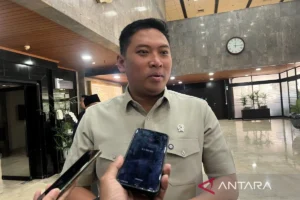
Osbin Samosir, the Director of Human Rights Services at KemenHAM, emphasized that the human element of transitional justice must always supersede bureaucratic timelines.
"We cannot afford to let administrative transitions stall our moral obligations," Samosir stated. "Many of these victims are of advanced age; indeed, a significant number have passed away without ever seeing their rights restored or their dignity acknowledged by the state. We are continuing our data collection under the active authority of Inpres No. 2/2023. By doing so, we ensure that when the revised instruction is finalized, we will have an actionable database ready for immediate execution."
Samosir added that the revised Inpres will solidify KemenHAM’s role as the central coordinator of the PPHAM recommendations. This structural change is expected to drastically reduce inter-ministerial red tape, which has historically slowed down the distribution of compensation and healthcare packages.
Legislative Support and the Role of DPR Commission XIII
The legislative branch has also intensified its oversight of the human rights recovery roadmap. The House of Representatives (DPR) Commission XIII, which oversees human rights and civil liberties, recently convened a formal Hearing (Rapat Dengar Pendapat or RDP) specifically focused on past violations.
Parliamentarians pressed KemenHAM to ensure that the ongoing validation process is transparent, inclusive, and free from political manipulation. Members of Commission XIII stressed that the validation must reach remote rural areas, where victims are often harder to locate and lack the means to contact government representatives.
Integrating the "State Apology" into the Human Rights Roadmap
Furthermore, KemenHAM has announced that it is actively integrating a formal framework for state apologies into its long-term human rights roadmap. This roadmap seeks to balance material reparations with symbolic, moral reparations, ensuring that institutional reforms are paired with public acts of remembrance to foster genuine national reconciliation.
Implications: Redefining Indonesia’s Human Rights Landscape
The Ministry of Human Rights’ field operations in Yogyakarta carry profound implications for the future of transitional justice, governance, and social cohesion in Indonesia.
IMPACT TRAJECTORY OF KEMENHAM'S PROACTIVE RECOVERY INITIATIVE
┌──────────────────────┐     ┌──────────────────────┐     ┌──────────────────────┐
│  Immediate Term      │  ─> │  Medium Term         │  ─> │  Long Term           │
│  • Field validation  │     │  • Revised Inpres    │     │  • National          │
│  • Direct medical    │     │    codifies KemenHAM │     │    reconciliation    │
│    & social aid      │     │    as lead authority │     │  • Institutionalized │
│  • High-resolution   │     │  • Targeted welfare  │     │    safeguards        │
│    survivor database │     │    disbursal         │     │    against recurrence│
└──────────────────────┘     └──────────────────────┘     └──────────────────────┘
1. Shifting the Bureaucratic Paradigm
Historically, Indonesian initiatives concerning past human rights violations have been criticized by civil society for being overly cautious, slow-moving, and bogged down by legalistic debates. By launching field assessments prior to the finalization of the revised presidential instruction, KemenHAM is setting a new precedent for proactive governance. This approach signals a shift toward a victim-centered model, where the immediate, physical needs of elderly survivors are prioritized over administrative perfection.
2. Strengthening the Legitimacy of Non-Judicial Resolutions
For decades, the debate over past human rights abuses in Indonesia has been polarized between those advocating for judicial trials (prosecuting perpetrators) and those advocating for non-judicial settlements (focusing on truth-seeking and reparations).
While judicial accountability remains a critical demand of many advocacy groups, the concrete, visible implementation of non-judicial remedies through KemenHAM’s current efforts provides tangible relief. If successful, this dual-track approach could demonstrate that non-judicial mechanisms can offer meaningful, restorative justice to victims who cannot afford to wait for protracted court trials that may take decades to materialize.
3. Streamlining Inter-Agency Coordination
The impending revision of Inpres No. 2/2023 to position KemenHAM as the "leading sector" addresses one of the most persistent bottlenecks in Indonesian public administration: inter-agency coordination.
Previously, when tasks were divided among 19 separate ministries without a single, powerful coordinating body, initiatives frequently stalled. Empowering a dedicated Ministry of Human Rights to oversee and audit the contributions of other ministries (such as the Ministry of Health, Ministry of Social Affairs, and Ministry of Public Works) could dramatically increase the efficiency of state-sponsored welfare programs.
4. Preventing Recurrence Through Localized Reconciliation
By anchoring the data collection process in local communities like Sleman and Gunungkidul, KemenHAM is laying the groundwork for localized, bottom-up reconciliation.
The validation of survivors’ stories at the district and sub-district levels helps dismantle the long-standing social stigmas associated with past political conflicts. When local government officials, community leaders, and younger generations witness the state actively validating and caring for these elderly citizens, it fosters a culture of empathy, historical awareness, and collective vigilance against the recurrence of systemic human rights abuses.