Investigation Launched After Viral Video Exposes Contaminated Teh Botol Sosro Cartons Amid Jakarta Protests
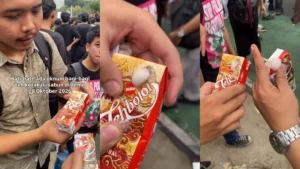
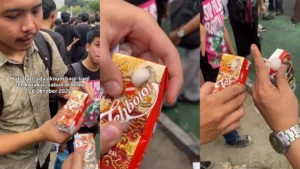
JAKARTA — A viral video circulating across social media platforms has triggered widespread public concern and prompted a swift corporate response after footage revealed a popular brand of bottled tea, Teh Botol Sosro in carton packaging, producing soapy lather and emitting a distinct chemical odor resembling dish soap. The incident came to light during a mass demonstration in Central Jakarta, raising alarming questions regarding product tampering, public safety, and consumer protection during large-scale public events.
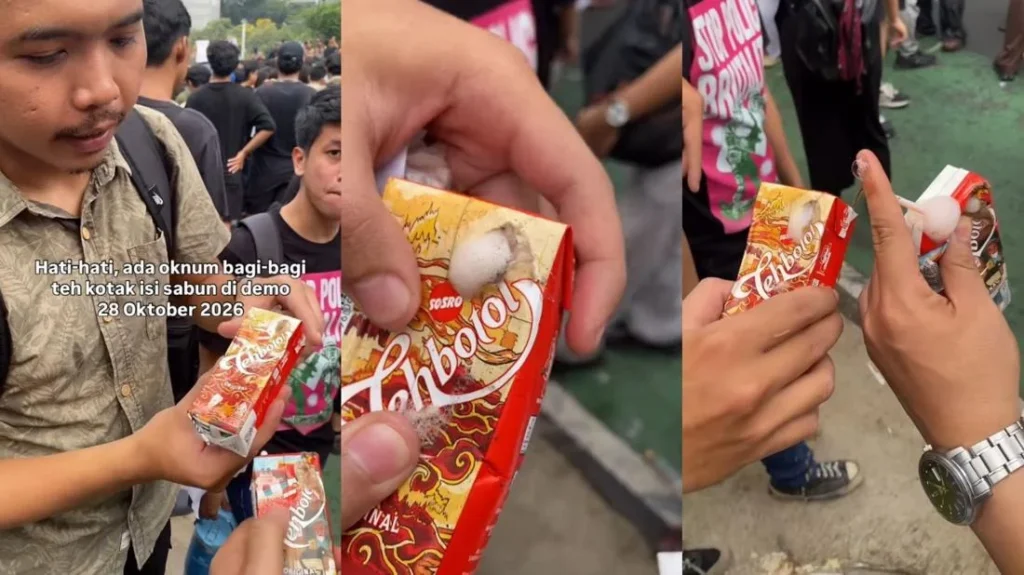
The video, originally posted on the Instagram account @juanardya, captures a disturbing anomaly within a batch of beverage cartons distributed at the protest site on Wednesday, October 28, 2026. As investigations by consumer advocates, public health observers, and the corporate manufacturer begin to unfold, the incident serves as a stark reminder of the vulnerabilities inherent in food and beverage distribution during civil unrest.
Main Facts of the Incident
The core of the controversy centers around a series of physical anomalies discovered in a specific batch of Teh Botol Sosro carton packages distributed or abandoned in the vicinity of the Central Jakarta demonstrations.
According to the documentation provided by the uploader, the contaminated cartons exhibited several distinct physical markers:
- Unusual Lathering: Upon light compression, the beverage cartons expelled a thick, white foam closely resembling soap suds rather than the standard carbonation-free liquid tea.
- Chemical Odor: Witnesses who inspected the fluid reported an overpowering scent characteristic of commercial dishwashing liquid or synthetic detergents.
- Tampering Evidence: Close inspection of the packaging revealed identical, minute puncture marks—resembling those made by a syringe needle—precisely positioned on every compromised carton.
- Palate Disruption: Individuals who inadvertently ingested the liquid reported an intensely bitter and chemical taste, diverging sharply from the sweet, jasmine-infused profile iconic to the brand.
The discovery immediately halted consumption among those in the immediate vicinity, averting what could have been a widespread mass poisoning event. Nevertheless, the psychological impact and the breach of basic food safety protocols have left the public deeply unsettled.
Chronology of Events
To understand how the contaminated beverages entered the public sphere, investigators have reconstructed the timeline of events based on eyewitness testimonies and digital footprints.
Wednesday, October 28, 2026: The Discovery
The incident unfolded against the backdrop of a high-tension political demonstration in Central Jakarta. As crowds gathered to voice their demands, various groups and charitable entities distributed free food and beverages to sustain the participants.
Juan, the owner of the Instagram account @juanardya and the primary eyewitness, received one such carton of Teh Botol Sosro. Initially suspecting nothing amiss, Juan handled the package casually. However, physical anomalies immediately drew his attention.
"As soon as you squeeze it, foam and tea squirt out from the hole. At first, I thought, well, it’s normal for packaged drinks to foam up a bit if they are shaken," Juan explained during an interview with detikcom on Thursday, October 29, 2026.
The Suspicion Deepens
Skeptical of the excessive bubbling, Juan examined the carton more closely. He noticed a recurring physical pattern that defied standard manufacturing defect parameters: every single carton he inspected featured a microscopic puncture wound located in the exact same spot on the packaging.
Prompted by this anomaly, Juan decided to perform a sensory check.
"I tried smelling the odor, and it really did smell like soap—just like dishwashing soap. So, I can confirm with certainty that it carried a strong chemical soap scent," he continued.
Recognizing the severe health hazards, Juan and his peers issued immediate verbal warnings to surrounding protesters, advising them against consuming any of the beverages from that particular batch. Despite these warnings, it was later revealed that at least one individual had already consumed a portion of the tainted liquid before the contamination was widely publicized, reporting an immediately off-putting, bitter flavor profile.
Thursday, October 29, 2026: Viral Amplification and Corporate Outreach
The video gained rapid traction on Instagram and cross-posted to platforms like X (formerly Twitter) and TikTok, accumulating hundreds of thousands of views within hours. The rapid dissemination caught the attention of PT Sinar Sosro, the parent company and manufacturer of Teh Botol Sosro.
By Thursday afternoon, representatives from the corporate entity reached out directly to Juan to gather preliminary evidence, secure samples, and initiate a formal internal investigation into the breach.
Supporting Data and Context: Food Safety During Public Demonstrations
The incident has opened a broader conversation regarding the logistics of food and beverage distribution during mass gatherings in Indonesia. Public health and logistics experts point out several systemic vulnerabilities that arise during protests and demonstrations:
- Unregulated Supply Chains: During mass actions, anonymous donations of food and drinks are frequently distributed by unverified third parties. Unlike official retail channels, these supplies often bypass standard quality control checkpoints.
- The Mechanics of Package Tampering: Paper-based carton packaging (such as Tetra Pak or similar aseptic packaging used for liquid refreshments) is inherently softer than rigid glass bottles or heavy-duty plastics. This makes them uniquely susceptible to surreptitious injection or adulteration using hypodermic needles or fine syringes, which leave behind minimal visual evidence unless closely scrutinized.
- Precedent of Product Sabotage: While rare in Indonesia’s formal retail sector, incidents of malicious product tampering—often referred to in criminology as "copycat product contamination"—occasionally surface during periods of heightened social tension or civil unrest. Malicious actors may seek to cause public panic, discredit specific brands, or inflict indiscriminate harm.
Public health specialists emphasize that consuming synthetic detergents or dishwashing liquids can lead to acute gastrointestinal irritation, mucosal burns, nausea, vomiting, and, in severe cases of systemic toxicity or aspiration, life-threatening complications. The fact that the victims narrowly avoided mass consumption is being hailed as a stroke of fortunate vigilance.
Official Responses and Corporate Action
In the wake of the viral video and mounting public anxiety, PT Sinar Sosro issued an immediate response. Corporate representatives have acknowledged the gravity of the situation and assured both the consumer and the broader public of their full cooperation with investigative authorities.
Statement from PT Sinar Sosro
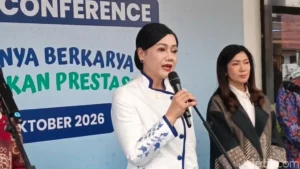
The management of Teh Botol Sosro released a preliminary statement thanking the public—and specifically the uploader, Juan—for bringing the matter to light.
- Internal Audit and Batch Tracing: Quality assurance teams have been mobilized to trace the specific production codes, distribution channels, and batch numbers associated with the compromised cartons found in Central Jakarta.
- Laboratory Analysis: Retrieved samples are currently undergoing rigorous chemical analysis in certified laboratories to identify the exact foreign substance present in the containers and to determine whether the contamination occurred during the manufacturing/packaging phase or via post-factory malicious tampering.
- Plea for Vigilance: The company has strongly urged consumers to carefully inspect all packaged beverages before consumption, looking specifically for damaged seals, unusual punctures, or compromised packaging integrity, and to report any suspicious findings directly to their official customer service channels.
"We take matters concerning product safety, hygiene, and consumer welfare with the utmost seriousness. We are currently conducting a comprehensive investigation into the findings circulated in the video to ascertain the facts," a corporate spokesperson noted.
Law enforcement agencies in Jakarta have also indicated that they are monitoring the situation. While no formal criminal report has been lodged by victims at the time of writing, authorities retain the jurisdiction to step in if preliminary findings point toward intentional sabotage or criminal negligence aimed at disrupting public order.
Implications for Consumers and Manufacturers
The Teh Botol Sosro contamination scare carries far-reaching implications for both consumer habits and industrial manufacturing practices in Indonesia:
1. Shifts in Consumer Behavior
Consumers are expected to exercise heightened skepticism regarding unsealed or anonymously donated food and beverages at public events. The incident serves as a visceral reminder that convenience must not overshadow basic safety checks, particularly in high-stress, densely populated environments like political rallies and street protests.
2. Packaging Innovation and Security
For manufacturing giants, the event highlights the perpetual challenge of packaging security. While aseptic cartons are favored for their environmental profile, cost-effectiveness, and ease of transport, their vulnerability to needle punctures suggests that manufacturers may need to invest in tamper-evident over-caps, protective outer seals, or structural enhancements that make unauthorized penetrations instantly noticeable.
3. Corporate Crisis Management
The swift engagement by PT Sinar Sosro illustrates modern corporate crisis communication strategies. By reaching out to the whistleblower directly within 24 hours and committing to transparent investigations, the company aims to mitigate long-term reputational damage and reassure loyal customers that product integrity remains a core operational priority.
Conclusion
The viral Teh Botol Sosro soap-contamination incident in Central Jakarta has transitioned from a localized social media curiosity into a serious public safety discussion. While investigations by both PT Sinar Sosro and independent observers continue to unravel how the foreign substance entered the packaging, the event stands as a critical cautionary tale.
As the authorities and corporate entities work to finalize their findings, the primary takeaway for the public remains clear: vigilance in food and beverage safety is paramount, especially in environments where the line between public goodwill and malicious intent can easily be blurred. Consumers are advised to remain alert, check packaging integrity rigorously, and report any irregularities immediately to protect public health and community well-being.