Indonesia Overhauls Energy Import Architecture: Government Steps In to Cut Out Middlemen and Secure Long-Term Supplies
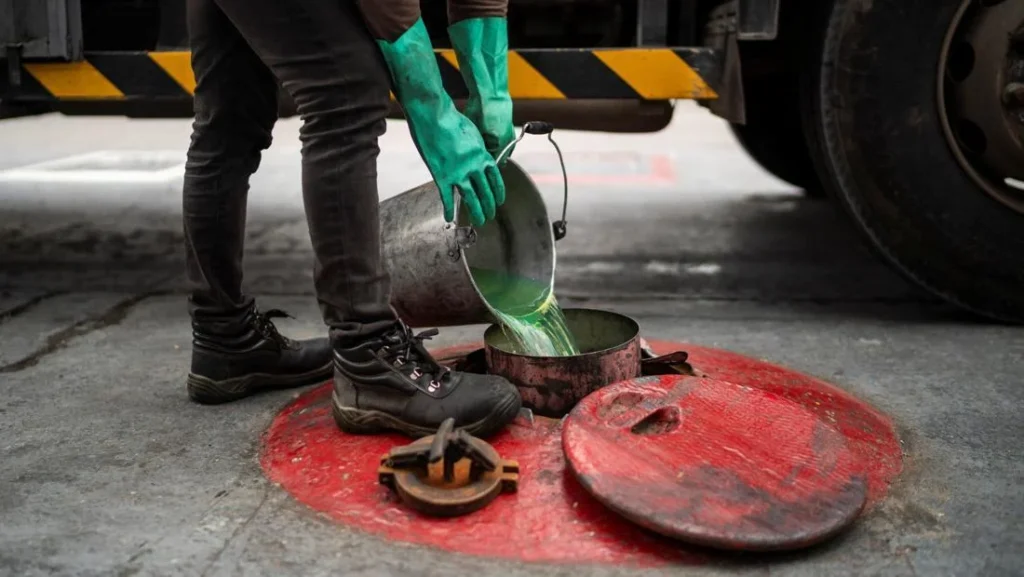
JAKARTA — In a sweeping policy shift aimed at bolstering national energy security and streamlining procurement, the Indonesian government has fundamentally altered the mechanism for importing crude oil, refined fuel products, and liquefied petroleum gas (LPG). Under a newly enacted presidential decree, the traditional business-to-business ($btext-to-b$) tender system has been replaced with direct government-to-government ($gtext-to-g$) and government-to-business ($gtext-to-b$) frameworks.
The reform strips state-owned energy giant PT Pertamina (Persero) of its longstanding authority to independently handle foreign energy procurement through commercial tenders. Instead, the responsibility has been shifted to a designated Public Service Agency (Badan Layanan Umum / BLU)—specifically, the Research and Development Centre for Oil and Gas Technology (Lemigas).
The new framework is codified under Presidential Regulation (Perpres) Number 107 of 2026, marking one of the most aggressive structural interventions in Indonesia’s downstream and energy trade sectors in decades.
Main Facts
The core of the new energy import regulation transforms how Indonesia sources vital petroleum and gas commodities from international markets.
- Shift in Procurement Mechanism: The procurement of crude oil, fuel products, and LPG has transitioned from commercial business-to-business tenders to direct state-backed $gtext-to-g$ or $gtext-to-b$ negotiations.
- New Managing Agency: PT Pertamina no longer manages these foreign procurement operations. The mandate is now held by Lemigas, operating under the classification of a Public Service Agency (BLU).
- Legal Foundation: The transition is legally mandated by Presidential Regulation (Perpres) No. 107/2026.
- Elimination of Intermediaries: The policy explicitly bans the use of third-party brokers, agents, and more than 30 previously utilized "shell companies" that historically acted as intermediaries in Indonesian energy imports.
- Strategic Advantages: According to cabinet leadership, the new architecture enables direct state-level lobbying, eliminates protracted bureaucratic red tape, secures long-term supply contracts, and serves as an instrument to strengthen broader bilateral trade relations.
Chronology of the Policy Shift
The journey toward transforming Indonesia’s energy procurement strategy has evolved over several years amid growing scrutiny over supply chain efficiency, transparency, and vulnerability to global price volatility.
Phase 1: Heightened Scrutiny Over Commercial Tenders (2022–2024)
For decades, Indonesia relied on a commercial $btext-to-b$ model where Pertamina’s integrated trading subsidiary, PT Pertamina International Shipping (PIS) and Integrated Supply Chain (ISC), managed procurement. However, repeated geopolitical shocks—including the post-pandemic supply chain crunch and the eruption of the Russia-Ukraine conflict—exposed vulnerabilities in reliance on open-market spot tenders and layered brokerage structures. Observers and lawmakers frequently questioned why state fuel imports occasionally involved complex chains of intermediaries, driving up administrative costs.
Phase 2: Consolidation of Downstream and Energy Policy (2024–2025)
Following structural reorganizations within Indonesia’s cabinet, the focus shifted heavily toward energy self-sufficiency, downstream industrialization (hilirisasi), and optimization of state assets. The Ministry of Energy and Mineral Resources (ESDM), working alongside newly established coordinating bodies, began drafting frameworks to insulate the national economy from spot-market shocks and opaque broker pricing.
Phase 3: Promulgation of Perpres No. 107/2026 (October 2026)
The turning point arrived with the signing of Presidential Regulation Number 107 of 2026. The regulation formally stripped commercial entities of exclusive import procurement rights for strategic hydrocarbons, redirecting state-managed imports through Lemigas as the designated BLU.
Phase 4: Official Announcement (Late October 2026)
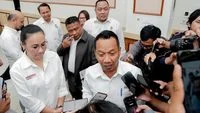
Minister of Coordinating for Downstream and Energy Transition Bahlil Lahadalia formally unveiled the policy to the public and press at the Presidential Palace complex in Jakarta on Thursday, October 29, 2026. Bahlil emphasized that the state was taking immediate control of international resource acquisition to protect national interests.
Supporting Data and Context
Indonesia remains a net importer of crude oil and petroleum products due to domestic consumption levels outstripping domestic refining capacity and stagnating domestic crude production, which hovers below 600,000 barrels per day (bpd). Meanwhile, demand for LPG has surged on the back of government household conversion programs and growing commercial sectors, forcing the country to import roughly 70% to 75% of its total LPG requirements, primarily from the Middle East and the United States.
Historically, the procurement of these massive volumes involved complex tender documents, shipping logistics brokers, and intermediary trading houses. According to government disclosures, over 30 shell companies and opaque entities frequently positioned themselves between producer nations and Indonesian procurement channels, adding administrative friction and variable margins to the final landed cost of energy.
By routing negotiations through Lemigas under $gtext-to-g$ and $gtext-to-b$ frameworks, the state aims to deal directly with national oil companies (NOCs) and sovereign resource holders in exporting countries such as Saudi Arabia, the United Arab Emirates, the United States, and neighboring producers.
Official Responses and Ministerial Statements
Minister of Coordinating for Downstream and Energy Transition Bahlil Lahadalia pulled no punches when addressing the press regarding the eradication of market intermediaries. Speaking at the Presidential Palace, Bahlil laid bare the inefficiencies of the legacy system.
"So there are no longer those 30-odd shell companies, they are gone. Now, the government directly conducts lobbying and closes deals with other nations that possess energy sources," Bahlil stated firmly on Thursday, October 29, 2026.
Bahlil, who also retains his portfolio as the Minister of Energy and Mineral Resources (ESDM), underscored that direct state engagement fundamentally alters procurement timelines and contract stability.
"With this, I can assure you that this cuts down procedures that used to be so long, and then we are able to execute long-term contracts," he added.
Beyond administrative streamlining, Bahlil highlighted the diplomatic utility of the new policy. In international commerce, state-backed resource procurement functions as a powerful instrument of foreign policy and bilateral economic diplomacy.
"And thirdly, this becomes a communication tool in the context of bilateral relations between countries. For example, if we purchase LPG from the United States—and indeed we have been doing so, please go ahead—that is what the state will directly communicate with the United States," Bahlil explained.
When pressed by journalists on whether bypassing commercial tenders and leveraging Lemigas would directly translate to cheaper fuel and gas prices for the Indonesian public, Bahlil maintained a cautious posture, deflecting the direct assertion with a brief quip:
"That’s for you to say," he remarked with a smile.
Implications of the New Energy Architecture
The transition from commercial tenders to state-managed $gtext-to-g$ and $gtext-to-b$ procurement carries far-reaching implications for Indonesia’s political economy, corporate landscape, and geopolitical standing.
1. Operational Shifts for PT Pertamina
For Pertamina, the regulation marks a significant contraction of its commercial autonomy regarding raw material and fuel imports. While Pertamina remains the primary off-taker, distributor, and refiner utilizing the imported commodities, the initial procurement phase is decoupled from its internal supply chain subsidiaries. This allows Pertamina to focus more intensively on upstream exploration, domestic refining capacity upgrades ( melalui RDMP projects), and retail distribution infrastructure.
2. Enhanced Transparency and Anti-Corruption Measures
The explicit elimination of more than 30 shell companies and intermediaries directly addresses long-standing criticisms from governance watchdogs regarding opacity in fuel procurement. By conducting negotiations at the state-to-state level, the margin for speculative markups, rent-seeking behavior, and administrative corruption is substantially reduced.
3. Geopolitical Leverage and Economic Diplomacy
Energy security is increasingly intertwined with foreign policy. By shifting procurement to a $gtext-to-g$ format, Jakarta leverages its massive purchasing power as a major energy importer to negotiate favorable trade terms, secure technological investments, and smooth over potential geopolitical friction points with key supplier nations. Bilateral talks for energy supply can now be bundled with broader economic partnerships, such as critical mineral exports, infrastructure financing, and agricultural trade.
4. Long-Term Price Stability vs. Market Flexibility
While long-term contracts secured through government-to-government agreements protect the national budget from sudden spot-market spikes—such as those seen during global crises—critics note that rigid long-term structures can occasionally prevent the state from capitalizing on temporary slumps in global commodity prices. The success of the Lemigas-led model will ultimately depend on the agility of the bureaucracy in managing price formulas and hedging strategies.
5. Institutional Capacity of Lemigas
Entrusting Lemigas—historically a technical research and testing institution—with the monumental task of international energy procurement requires a rapid scaling up of its commercial, legal, and logistical capabilities. Ensuring that the agency possesses transparent oversight, robust auditing mechanisms, and world-class negotiation expertise will be critical to preventing administrative bottlenecks.
Conclusion
The enactment of Presidential Regulation No. 107/2026 represents a watershed moment for Indonesia’s energy sector. By dismantling the fragmented, broker-heavy tender model and centralizing procurement through Lemigas via direct state-to-state diplomacy, the administration of President Prabowo Subianto is signaling a decisive turn toward state-directed economic nationalism.
As the new mechanism rolls out, all eyes will be on how effectively Lemigas can manage multi-billion-dollar energy flows, whether long-term contracts deliver fiscal relief to the state budget, and how international supplier nations respond to Indonesia’s centralized negotiating stance.