From Academic Failure to Culinary Authority: How One Man Became South Korea’s First Ramyeon Critic
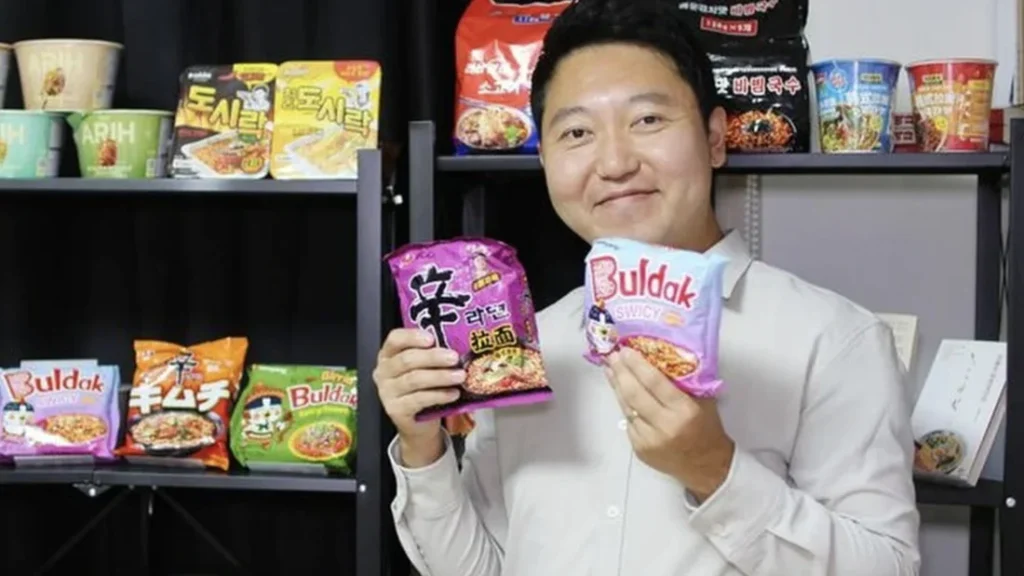
JAKARTA – To the casual observer, a packet of instant noodles is merely a convenient, low-cost meal—a relic of student life or a late-night quick fix. However, for Ji Young-jun, the man who has cemented his status as South Korea’s first professional ramyeon critic, these crinkly strands of wheat represent a complex intersection of history, socioeconomic resilience, and cultural identity.
Having cataloged over 2,300 varieties of domestic and international noodles, Ji has transformed what was once a personal hobby born of frustration into a respected professional discipline. His journey offers a unique lens through which to view the meteoric rise of the Korean food industry on the global stage.
The Genesis: Finding Purpose in the Military PX
The story of Ji Young-jun is one of serendipitous reinvention. Years ago, Ji found himself at a crossroads that many young Koreans dread: he faced consecutive failures in the grueling entrance exams for South Korea’s top universities. Dejected and uncertain about his future, he enlisted in the military to fulfill his mandatory service.
It was within the confines of the military’s Post Exchange (PX) that Ji found his calling. Surrounded by shelves stocked with various instant noodle brands, he formulated a goal that would dictate the trajectory of his life. "Before finishing my service, I set a simple goal for myself: ‘Let’s taste every single instant noodle available here,’" Ji recalled in an interview with the South China Morning Post.
That modest objective evolved into an all-consuming passion. By 2013, he began documenting his findings on social media, treating every bowl with the analytical rigor of a food critic. He was heavily inspired by Hans Lienesch, the American founder of The Ramen Rater, who achieved global fame for his comprehensive reviews of instant noodles. Recognizing a void in his home country, Ji realized that while Korea was the spiritual and culinary home of high-quality instant noodles, it lacked a dedicated, professional voice to curate and critique the industry.
"If there was no Hans Lienesch in Korea, I wanted to step up and be that person," Ji noted. Driven by this mission, he eventually resigned from his teaching position to pursue his obsession full-time.
Chronology of a Noodle Pioneer
- The Early Years (2010-2012): Following his military service, Ji began experimenting with different brands, documenting flavor profiles and noodle textures.
- The Public Debut (2013): Ji launched his social media presence, shifting from a private enthusiast to a public critic, filling a vacuum in the Korean food media landscape.
- The Professional Shift (2016-2018): Leaving his formal teaching career, Ji committed entirely to the documentation of instant noodles, expanding his scope from domestic brands to global varieties.
- Academic Contributions (2024): He published The Chronicles of ‘Ramyeon’ – A History of Korean Instant Noodles, a scholarly work that has since been translated for markets in Japan and Russia.
- Current Projects (2025): Ji released Ramyeon with Science and Common Sense, further cementing his reputation as an expert, and continues to advocate for the professionalization of the industry.
The Socio-Cultural Significance of Korean Ramyeon
To understand why Ji is so invested in ramyeon, one must understand its history in Korea. While the concept of instant noodles was invented by Japanese entrepreneur Momofuku Ando in 1958, the product took on a distinctly Korean identity when Samyang Foods introduced it to the peninsula in 1963.
Ji explains that the Korean penchant for spicy, robust flavors forced the industry to evolve rapidly. The development of legendary products like Nongshim’s Shin Ramyun (1986) and Samyang’s Buldak Ramen (2012) represents a pivot toward bold, globally recognized flavor profiles.
"I attribute the massive success of Korean instant noodles to two main factors: the extraordinary balance of flavor and quality, and the way the product harmoniously integrates heat," Ji says. This unique "Korean-style" spice has become a global cultural marker, so much so that even international brands—like Indomie—have begun utilizing Korean K-pop groups (such as NewJeans) as brand ambassadors to capture that "Korean essence."
Even more intriguing is the geopolitical reach of these products. Reports indicate that North Korea has begun mimicking successful South Korean products like Shin Ramyun and Buldak, rebranding them for export to China under names like "Spicy Kimchi Mixed Noodles," proving that the cultural influence of the ramyeon boom transcends borders.
Debunking the "Unhealthy" Narrative
One of the most significant aspects of Ji’s work is his staunch defense of ramyeon against its critics. In modern health circles, instant noodles are often demonized as high-sodium, low-nutrition "junk food." Ji argues that this is a reductionist perspective that overlooks the product’s role as a vital food staple.
"The reputation of ramyeon as an unhealthy food in the modern era is not because the ramyeon itself is toxic," Ji asserts. "It is because it has become a scapegoat for modern lifestyle diseases born from excess calories and a lack of physical activity."
Ji argues that the socioeconomic value of a meal that costs less than a dollar—and which provides both satiety and comfort—is often ignored. He highlights the efforts of Korean manufacturers who work tirelessly to improve the nutritional profile and quality of these products while keeping them affordable. For millions of people globally, these noodles have played a crucial role in food security and cost-of-living management.
Future Trends: Fusion and Innovation
Looking toward the future, Ji points to a post-Buldak era. The initial craze for extreme spice is now giving way to a more sophisticated "fusion" trend. Manufacturers are increasingly drawing inspiration from Western staples like pasta and spaghetti to appeal to international palates.
Ji highlights several innovations, such as:
- Samyang’s Tangle series: Focusing on pasta-like textures.
- Nongshim’s Shin Ramyun Toomba and Rosé flavors: Blending the traditional spicy base with creamy, Western-inspired sauces.
- Paldo’s Arih Modern Noodle series: Developed in collaboration with global stars like BTS, signaling a move toward premium, celebrity-backed quality.
These products, Ji suggests, are the next stage in the industry’s evolution. "By taking inspiration from Western favorites, the Korean instant noodle industry is showing incredible versatility," he observes.
Implications and The Path Ahead
Ji’s ultimate vision is one of academic and cultural legitimacy. He is not merely interested in eating noodles; he is interested in their institutionalization. His long-term goals include establishing an official ramyeon museum and lobbying for the creation of university departments dedicated to the study of the instant noodle industry.
He wants to ensure that the global community recognizes ramyeon not just as a quick-fix food, but as a significant pillar of modern culinary culture. As he looks to the next two decades, his commitment remains unwavering.
"Even 10 or 20 years from now, I want to be actively working to share the true value and charm of noodles with the world," Ji concluded.
For the man who failed his college entrance exams, the path to success proved to be far more unconventional than his peers. By turning his attention to the humble ramyeon packet, Ji Young-jun has managed to turn a simple, everyday comfort into a global subject of study, proving that with enough passion and research, even the most mundane of items can tell a profound story about the world we live in.