Elevating Hair Care: How Advanced Drying Technology is Redefining Daily Hair Maintenance
JAKARTA — In the fast-paced modern lifestyle, efficiency often dictates our daily grooming habits. Among the various routines, drying hair using electric appliances has become a staple for millions. However, convenience has historically come at a steep price for hair health. The constant, aggressive exposure to excessive heat from conventional hair dryers strips the hair shaft of its natural moisture, leading to severe dryness, frizz, split ends, and unmanageable textures.
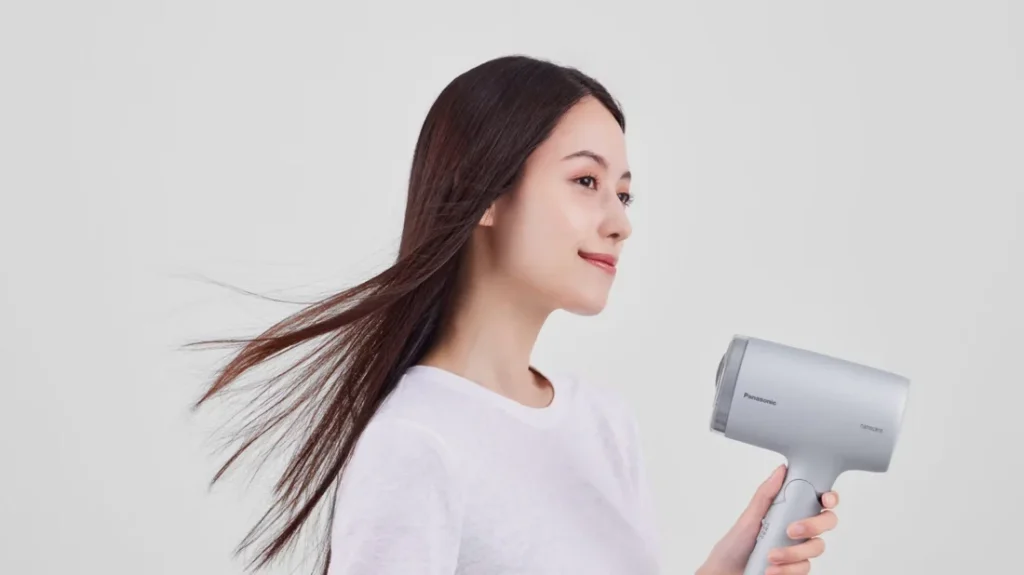
Recognizing this pervasive dilemma, beauty tech innovators have shifted their focus from mere heat output to moisture retention. Leading this charge is global electronics giant Panasonic, which has introduced a specialized lineup of hair dryers integrated with proprietary moisture-infusing technologies. Designed to protect both the hair strands and the scalp, these devices aim to bridge the gap between rapid styling and rigorous hair health maintenance.
Main Facts
The core of Panasonic’s modern hair care innovation lies in its signature nanoe™ technology, a breakthrough scientific approach to hair drying. Unlike traditional models that rely solely on thermal evaporation—which often damages the hair cuticle—nanoe™ technology works by drawing moisture from the surrounding air and creating ultra-fine, moisture-rich particles. These invisible particles are then infused into the hair cuticles during the drying process, significantly reducing static, locking in hydration, and smoothing out frizz.
The current market landscape features three standout models from Panasonic’s portfolio, each tailored to different consumer needs, lifestyles, and hair care priorities:
- Panasonic nanocare Hair Dryer EH-NA27: Engineered for maximum portability and everyday practicality, featuring a lightweight, foldable frame and versatile airflow modes.
- Panasonic Hair Dryer EH-NA0J (1600W): A high-end luxury variant equipped with advanced nanoe™ MOISTURE+ and Mineral technologies, offering eighteen times more moisture infusion and intelligent thermal sensors.
- Panasonic nanocare Hair Dryer EH-NA7M: A balanced mid-to-high tier device focused on comprehensive scalp care, designed to mitigate dandruff and itchiness while keeping hair sleek and manageable.
Chronology of Hair Dryer Evolution: From Heat Blowers to Moisture Infusers
To understand the significance of modern innovations like the Panasonic nanocare series, it is essential to look back at how hair-drying technology has evolved over the decades.
The Early Era: Raw Thermal Power (1920s–1980s)
When handheld hair dryers first emerged in the early 20th century, their primary function was simple: blow hot air to accelerate the evaporation of water. Early models were heavy, manufactured from solid metals, and posed significant electrical and burning hazards. By the late 20th century, designs became lighter and more ergonomic with the introduction of plastic casings and more powerful direct-current motors. However, the underlying physics remained unchanged: heat was the sole mechanism for drying. Dermatologists and trichologists frequently warned consumers about thermal damage, noting that high temperatures could boil water trapped inside the hair shaft, resulting in "bubble hair" syndrome and structural breakage.
The Ionic Revolution (1990s–2010s)
As consumer awareness regarding hair damage grew, manufacturers introduced ionic technology in the late 1990s and 2000s. By generating negative ions, these dryers broke down water droplets on the hair surface faster, reducing drying time and neutralizing static electricity. While this was a major step forward, ionic dryers still lacked a mechanism to actively restore or preserve the hair’s internal moisture balance, often leaving fine or chemically treated hair feeling dry over prolonged use.
The Modern Era: Smart Thermal Control and Moisture Infusion (2020s–Present)
Entering the current decade, the focus has shifted toward holistic hair and scalp wellness. Consumers no longer just want dry hair quickly; they demand salon-quality finishes without structural compromise. Panasonic’s development of the nanoe™ and nanoe™ MOISTURE+ platforms marks the pinnacle of this evolution. By combining moisture-generation particles, intelligent temperature-regulating microprocessors (Smart Care sensors), and dual-mineral coatings, contemporary hair dryers function less like heating elements and more like sophisticated skin- and hair-care treatment devices.
Supporting Data and Technical Breakdown
To appreciate the engineering behind these products, a closer examination of their technical specifications and performance metrics is necessary.
1. Panasonic nanocare Hair Dryer EH-NA27: The Traveler’s Companion
- Target Audience: Commuters, frequent travelers, and individuals seeking lightweight, no-nonsense everyday performance.
- Key Specifications: Compact, foldable chassis; quick-dry nozzle attachment.
- Performance Modes: Features a three-speed/heat configuration consisting of Turbo (for rapid drying), Set (for styling precision), and Cool (to lock cuticles and set hairstyles).
- Data Context: Weighing significantly less than traditional professional dryers, the EH-NA27 addresses arm fatigue—a common complaint among users with long, thick hair. Its localized airflow concentration allows for efficient drying without exposing the scalp to prolonged, unmitigated heat spots.
2. Panasonic Hair Dryer EH-NA0J (1600W): The Flagship Innovation
- Target Audience: Consumers dealing with severely damaged, color-treated, or dehydrated hair who demand professional-grade home treatment.
- Key Specifications: 1600-watt power output, integrated nanoe™ MOISTURE+ and Mineral technology emitters.
- Advanced Features: Smart Care dual-sensor system that continuously monitors ambient and air output temperatures, automatically modulating heat to prevent thermal spikes.
- Data Context: According to Panasonic’s internal laboratory metrics, the EH-NA0J delivers 18 times more moisture directly into the hair cuticle compared to standard ionic dryers. The inclusion of mineral ions helps tighten the cuticle layer, making hair up to two times more resilient against UV damage and friction from brushing.
3. Panasonic nanocare Hair Dryer EH-NA7M: The Scalp-Centric Solution
- Target Audience: Individuals struggling with scalp sensitivity, dandruff, persistent itchiness, and frizz.
- Key Specifications: Ergonomic foldable design, specialized scalp-drying mode, quick-dry nozzle.
- Performance Modes: Balanced airflow optimized for lower-temperature scalp health.
- Data Context: Traditional dryers often focus exclusively on the hair strands, neglecting the scalp skin. Over-drying the scalp can disrupt its natural lipid barrier, leading to irritation and flaking. The EH-NA7M’s nanoe™ deployment is specifically calibrated to hydrate the stratum corneum of the scalp, helping to alleviate dryness-induced itching and maintain a balanced scalp microbiome.
Industry and Official Perspectives
The launch and sustained promotion of moisture-retentive hair care appliances reflect a broader shift within the personal care electronics industry. Speaking on the modern consumer’s transition toward wellness-oriented grooming, industry analysts note that beauty technology is increasingly mimicking skincare science.
"Hair care is no longer treated in isolation from skincare," explains a prominent Southeast Asian beauty tech market researcher. "Consumers have become hyper-aware of skin barriers, hydration levels, and pH balances. They now apply these exact standards to their hair and scalp. Devices that merely blow hot air are rapidly becoming obsolete because modern users understand that thermal abuse leads to long-term follicular and structural degradation."
Panasonic representatives emphasize that the incorporation of nanoe™ technology is the result of years of rigorous research into moisture dynamics.
"Our objective has always been to move beyond functional utility into meaningful consumer benefit," a Panasonic product development spokesperson stated during a regional briefing. "When designing units like the EH-NA0J and EH-NA7M, our engineering teams focused on the biological reality of human hair. Water is essential to elasticity and shine. By engineering a device that actively feeds moisture back into the hair shaft while drying it, we eliminate the historic trade-off between speed and health."
Dermatologists and trichologists have also weighed in, validating the medical and cosmetic rationale behind sensor-driven, low-damage drying tools. Medical professionals frequently point out that chronic heat damage alters the protein structure of the hair cortex (specifically keratin bonds), rendering hair porous and brittle. Tools equipped with automatic thermal regulation sensors—such as the Smart Care system found in high-end Panasonic models—actively mitigate this risk by capping the maximum localized temperature, preserving the integrity of the hair protein matrix.
Implications for Consumers and the Future Market
The widespread availability of advanced hair dryers like the EH-NA27, EH-NA0J, and EH-NA7M carries several profound implications for the consumer market and personal grooming habits.
1. Shift from Remedial to Preventive Hair Care
Historically, consumers relied heavily on remedial products—such as deep conditioning masks, intensive oils, and chemical leave-in treatments—to repair the damage caused by daily styling tools. With the advent of moisture-infusing dryers, the paradigm is shifting toward preventive care. By neutralizing damage at the drying stage, users can significantly reduce their reliance on corrective treatments, saving both time and financial resources in the long run.
2. Democratization of Salon-Quality Maintenance
Advanced hair treatments were once exclusive to high-end salons equipped with professional-grade vaporizers and specialized hydration hardware. By condensing these technologies into compact, user-friendly, and sometimes foldable consumer devices, brands are democratizing hair health. Consumers can now replicate salon-grade moisture treatments in their own homes, regardless of whether they are traveling with the compact EH-NA27 or performing an intensive care routine with the flagship EH-NA0J.
3. Heightened Consumer Expectations and Market Competition
As brands like Panasonic continue to push the boundaries with mineral ions, dual sensors, and moisture-multiplying particles, the baseline expectation for personal care appliances will rise. Consumers will no longer tolerate basic single-speed hair dryers that leave hair frizzy and parched. This technological arms race will likely force competing manufacturers to invest heavily in research and development, ultimately benefiting the end-user through smarter, safer, and more efficient beauty tools.
Conclusion
The evolution of the humble hair dryer from a simple thermal hazard into a sophisticated instrument of wellness illustrates the rapid intersection of technology and personal care. Panasonic’s curated lineup—spanning the travel-friendly EH-NA27, the ultra-hydrating flagship EH-NA0J, and the scalp-soothing EH-NA7M—demonstrates that modern grooming does not require compromising health for convenience.
By understanding individual hair and scalp needs, selecting the appropriate technological tool, and prioritizing moisture retention over raw heat, consumers can transform their daily routine into an act of sustained self-care. As the beauty tech landscape continues to advance, the future of hair maintenance looks brighter, smoother, and infinitely more hydrated.