Crisis at the Crossroads: The Jatiwaringin Landfill Fire and the Urgent Call for Waste Reform
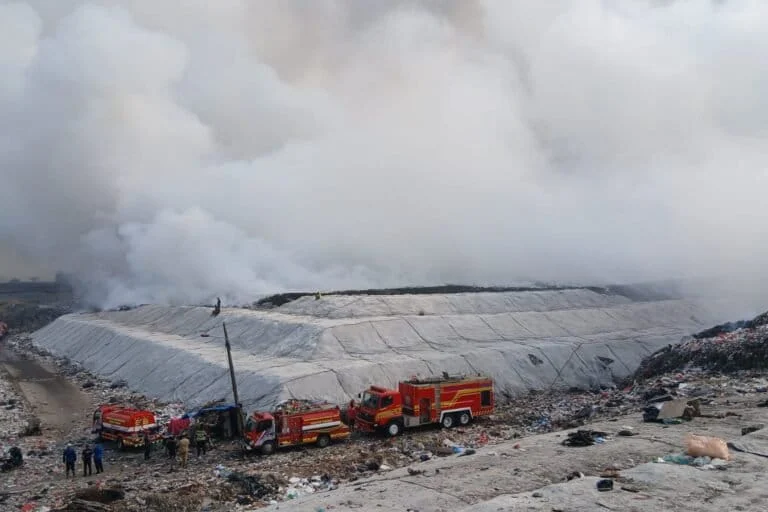
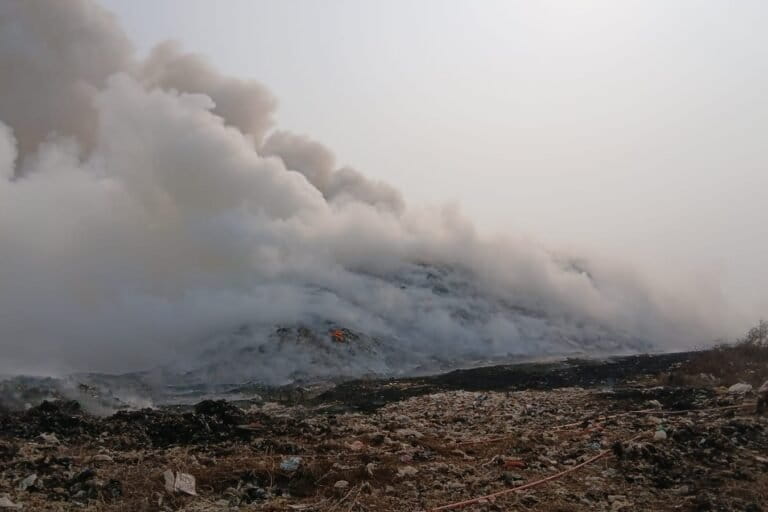
The scorching heat of the summer sun beating down on the Jatiwaringin Landfill in Mauk, Tangerang Regency, became a catalyst for disaster on June 30. As plumes of acrid, black smoke billowed into the sky, it wasn’t just the smell of burning refuse that filled the air—it was the scent of a systemic failure in Indonesia’s waste management infrastructure. The fire, which engulfed approximately two hectares of the facility, has ignited a fierce debate regarding the sustainability of the "open dumping" method and the government’s long-term strategy for waste disposal.
A Chronicle of the Blaze: The Struggle to Contain the Uncontainable
The incident began on the northern edge of the Jatiwaringin site, a sprawling landscape of accumulated waste. Local authorities suggest that the combination of extreme heat, powerful winds, and the inherently volatile nature of decaying organic matter created the perfect storm for combustion.
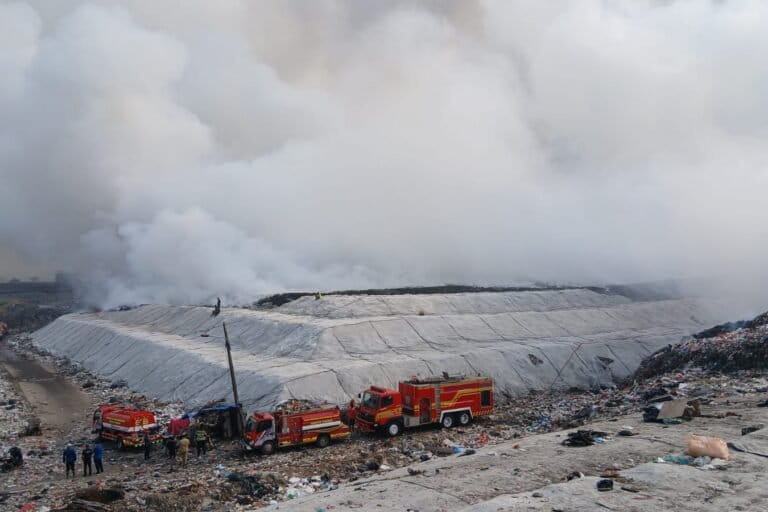
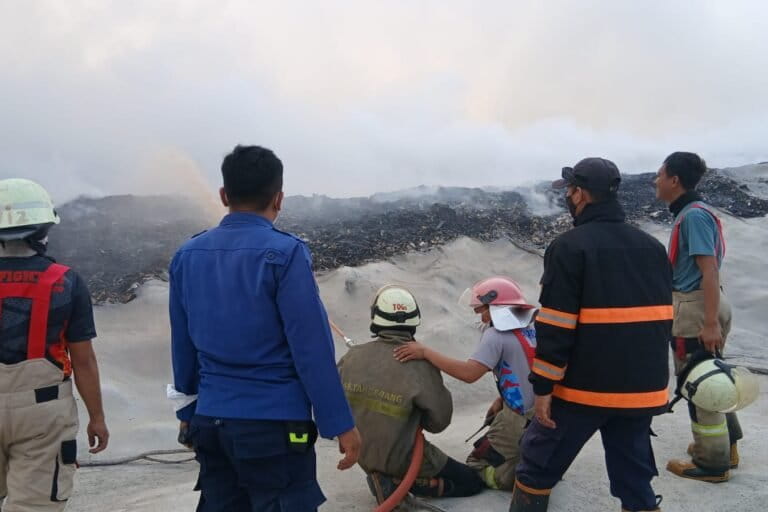
As the flames spread across the mountainous heaps of trash, the Tangerang Regency Government acted swiftly. The Regional Disaster Management Agency (BPBD) deployed 30 personnel and six fire trucks to the scene. However, the battle against the blaze proved to be a daunting task. Ahmad Ruslan, Head of the Fire and Rescue Division at BPBD, noted that the site’s topography and the nature of the fuel—compressed, dry, and deep-seated trash—made traditional firefighting methods remarkably ineffective.
"The conditions at the location significantly hindered our suppression efforts," Ruslan remarked during the initial phase of the operation. The firefighters had to navigate deep into the core of the waste mounds, where fire often smolders internally, fueled by methane gas, long after the surface flames have been suppressed.
The struggle was compounded by a lack of readily available water and the erratic, high-velocity winds that caused burning, lightweight materials to fly across the site, sparking secondary fires. By early July, a collaborative effort involving the Department of Environment and Hygiene (DLHK) and BPBD, supported by advanced techniques such as water bombing and direct injection of water into the layers of refuse, managed to reduce the active fire area from 70% to roughly 3.6%.
The Human Cost: Public Anxiety and Health Risks
For the residents of Mauk, the fire was a harbinger of a nightmare they had seen play out elsewhere. Candra, a local resident, voiced the collective fear of the community: "People here are terrified. We’ve seen what happened to the landfills in Tangerang City, where the fires burned for days, and the smoke became unbearable. We are worried about our children."
The primary concern among the populace is the threat of respiratory ailments. The combustion of mixed waste—which includes plastics, chemicals, and decomposing organic matter—releases toxic fumes that pose immediate risks for Acute Respiratory Infection (ISPA). Many families began making plans to evacuate their children even before the situation was fully brought under control.
To mitigate the health crisis, the DLHK coordinated with the local sub-district administration to deploy medical teams from the Rajeg and Mauk Community Health Centers (Puskesmas). These teams remain on standby to provide emergency assistance should residents show signs of smoke-related illness.
Official Responses and National Policy Shifts
The incident in Mauk reached the highest levels of government. Minister of Environment Jumhur Hidayat issued a stark reminder to regional leaders nationwide, emphasizing the need for enhanced mitigation strategies, particularly in the face of the intensifying El Niño climate phenomenon.
"We must ensure that there is zero tolerance for activities that could trigger fires around landfill sites," Hidayat stated. "Local governments must prepare adequate water sources, position firefighting infrastructure in close proximity to dump sites, and prioritize early-stage mitigation."
This directive aligns with the Ministry’s Circular Letter No. 11/2026, which serves as a mandatory guideline for local governments to fortify their waste management facilities against the threats posed by extreme heat and prolonged droughts. The Minister’s intervention highlights a shift toward a more proactive, centralized oversight of waste facilities, which have historically been managed with varying degrees of competence at the local level.
The Structural Failure: Why We Are Stuck in a Loop
The Jatiwaringin fire is not an isolated event; it is a recurring symptom of a flawed system. Wahyu Eka Setyawan, Urban Justice Manager at the Indonesian Forum for the Environment (WALHI), argues that the root cause lies in the reliance on "open dumping"—a practice that is both environmentally catastrophic and inherently dangerous.
"These fires are an inevitable outcome of excessive waste accumulation," Setyawan explains. "Inside these massive piles, methane gas accumulates. Methane is highly flammable and acts as a heat trap. Once a spark hits, it doesn’t just burn the surface; it creates a subterranean fire that is incredibly difficult to extinguish."
WALHI contends that the government’s focus remains stubbornly fixed on "downstream" solutions—building more landfills or investing in high-cost, controversial technologies like Waste-to-Energy (PSEL) plants. While these facilities are intended to modernize waste disposal, they often mask the deeper issue: the volume of waste reaching these sites is unsustainable.
Reclaiming the "Upstream": The Case for Circularity
The core of the argument from environmental advocates is the necessity of a paradigm shift toward "upstream" waste management. According to Law No. 18/2008, the responsibility for waste management starts at the source. Yet, the implementation of these legal frameworks has been sluggish and largely superficial.
"If we do not address waste at the source—by enforcing reduction, reuse, and recycling—the landfills will continue to overflow," Setyawan asserts. "We have provided recommendations to the Ministry of Environment regarding the management of organic waste, but these are currently stuck in the form of non-binding executive decrees rather than strong ministerial regulations."
The lack of accountability for producers is another significant hurdle. While the Ministry of Environment and Forestry (KLHK) Regulation No. 75/2019 exists to manage plastic waste, it lacks the necessary legal teeth to hold large corporations accountable for the lifecycle of their packaging. Critics point out that without clear legal consequences or a mandatory roadmap for waste reduction, producers have little incentive to pivot toward sustainable alternatives.
The Future of Waste in Indonesia
The planned transition of the Jatiwaringin site into a Waste-to-Energy (PSEL) facility adds another layer of complexity. While the government views PSEL as a silver bullet to solve the waste crisis and generate electricity, environmental groups remain skeptical. They argue that PSEL facilities require a constant, massive stream of waste to operate profitably, which may discourage the very upstream waste reduction efforts needed to achieve a circular economy.
The crisis in Mauk is a wake-up call. As climate change increases the frequency of extreme weather events, the vulnerability of Indonesia’s landfill-dependent waste management system will only grow. The path forward requires more than just better firefighting equipment or new incinerators. It requires:
- Rigorous Source Segregation: Mandating the separation of organic and inorganic waste at the household and industrial levels.
- Producer Responsibility: Implementing strict, legally binding regulations that force manufacturers to take back and recycle their packaging.
- Decentralized Composting: Investing in community-level composting and waste processing facilities to keep organic waste—the primary source of methane—out of landfills.
- Institutional Accountability: Moving beyond non-binding decrees to enforce existing environmental laws with real-world consequences for non-compliance.
As the smoke clears in Mauk, the residents are left to wonder if the next fire is already smoldering beneath the surface. The Jatiwaringin incident serves as a poignant reminder that until Indonesia tackles the "upstream" reality of its waste generation, it will remain trapped in a cycle of fire, smoke, and systemic despair. The challenge of the coming decade will be to transform how we view waste: not as something to be buried and forgotten, but as a resource that must be managed with precision, responsibility, and foresight.