
Beyond the Numbers: Decoding the Complex Relationship Between Economic Growth and Economic Development

In the realm of macroeconomics, terms are often used interchangeably in casual conversation, yet they represent fundamentally different trajectories for a nation’s prosperity. When we observe a new hospital rising from a vacant lot, or an intricate network of light rail transit (LRT) systems transforming a city’s skyline, we are witnessing the physical manifestation of economic shifts. However, distinguishing between "economic growth" and "economic development" is essential for understanding whether a nation is merely expanding its balance sheet or truly elevating the quality of life for its citizens.
The Conceptual Divide: Growth vs. Development
At its core, the distinction lies in the scope and the ultimate objective of the metrics used. Economic growth is a quantitative measure. It is the increase in the market value of goods and services produced by an economy over a specific period, typically adjusted for inflation. It is a reflection of the "size" of the economy—often measured via the Gross Domestic Product (GDP). If the GDP increases, the economy is growing. It is a sterile, numerical assessment that focuses on fiscal health, stock market performance, and inflationary trends.
Conversely, economic development is a qualitative and normative concept. It encompasses not just the expansion of wealth, but the improvement of the human condition. It touches upon the values, standard of living, and social welfare of the population. While growth is the engine, development is the destination. A nation can experience economic growth—a surge in GDP—without necessarily experiencing economic development if that wealth is concentrated in the hands of a few or fails to translate into better healthcare, education, and infrastructure for the populace.
Chronology of Economic Evolution
To understand these concepts, one must look at how nations have historically navigated their paths to prosperity.
The Industrial Era: The Primacy of Growth
During the mid-20th century, the global economic narrative was dominated by the pursuit of GDP. Post-war reconstruction and the Industrial Revolution necessitated rapid production. Governments focused on industrial output, manufacturing, and trade volume. During this period, "growth" was the primary target; if the numbers went up, policymakers were satisfied. The assumption was that a rising tide would lift all boats—a theory known as "trickle-down economics."
The Shift Toward Human-Centric Development
By the late 20th century, economists began to realize that GDP growth alone was an insufficient indicator of success. The 1990s saw a paradigm shift, popularized by the United Nations Development Programme (UNDP) and the introduction of the Human Development Index (HDI). Economists began to ask: "What good is a high GDP if life expectancy is low, literacy rates are stagnant, and inequality is rampant?" This ushered in the era of development-focused policy, where infrastructure projects, healthcare, and education became the primary benchmarks of progress.
Supporting Data: The Indicators of Divergence
To differentiate between these two concepts, analysts look at four critical pillars that help illustrate the gap between raw economic output and societal progress.
1. The PDB (GDP) Paradox
While both concepts are tied to the Gross Domestic Product, their relationship with it differs. Economic growth is defined by the rise in GDP. It is the fundamental metric of success. Economic development, however, views GDP as merely a resource. The focus shifts from "How much did the GDP grow?" to "How is the increased GDP being utilized to improve societal outcomes?"
2. Demographic Integration
A critical differentiator is the relationship between GDP and population size. Economic development considers the per capita reality. If an economy grows by 3% but the population grows by 5%, the average citizen is actually poorer. Development economics meticulously tracks the percentage of GDP growth against the growth of the population to ensure that wealth creation outpaces demographic pressure, thereby raising the standard of living. Growth-focused models often ignore this internal distribution, focusing solely on the aggregate figure.
3. Technological Advancement and Infrastructure
Infrastructure projects, such as the construction of the Jakarta-Bogor-Depok-Bekasi (Jabodebek) LRT and MRT systems, serve as perfect case studies. When a government invests in these systems, it is an act of economic development. It is not just about the money spent (the cost); it is about the technological leap, the reduction in commute times, the increase in productivity, and the modernization of urban life. Economic growth would view this project merely as a line item of public expenditure; development economics views it as an investment in human capital and future efficiency.
4. The Welfare Threshold
The final indicator is the welfare of the citizenry. Growth is often blind to the nature of production. A country could increase its GDP by selling hazardous goods or depleting natural resources, which technically counts as "growth." Economic development, however, evaluates whether the growth is sustainable and equitable. Does the rise in GDP correspond to a decline in poverty? Are public services more accessible? Does the average person have a higher quality of life? If the answer is no, then the nation has experienced growth, but not development.
Official Perspectives and Policy Implications
Global financial institutions, such as the World Bank and the International Monetary Fund (IMF), have increasingly emphasized that sustainable growth is impossible without parallel development.
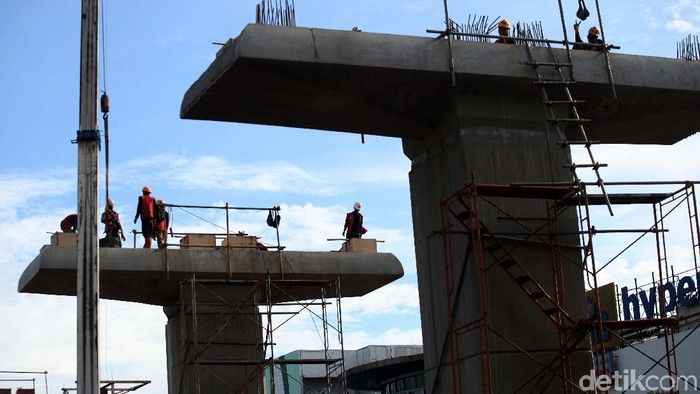
In emerging markets, the policy trend has shifted toward "Inclusive Growth." This approach suggests that governments should prioritize policies that ensure the benefits of economic expansion reach the marginalized sectors of society. For example, when setting the price of public transport—like the LRT—policymakers must balance the need to remain fiscally sustainable (a growth concern) with the need to ensure the service is affordable for the average commuter (a development concern).
The Role of Infrastructure in Development
The investment in mass transit systems is a strategic move to break the "poverty trap." By providing reliable transport, governments allow lower-income workers to access better-paying jobs in urban centers. This is the definition of development: creating the conditions where individuals can improve their own economic status.
Implications for the Future: A Holistic Approach
The implication of this distinction is profound for future policy-making. As the global economy grapples with challenges like climate change, digital transformation, and social inequality, the old metric of GDP is proving inadequate.
- Sustainability: Future development must be environmentally sustainable. Growth that destroys the environment is essentially borrowing from the future to pay for the present.
- Quality of Life: Metrics like the "Gross National Happiness" or the "Genuine Progress Indicator" are gaining traction, suggesting that governments should be held accountable for the health, education, and happiness of their citizens, not just the thickness of their wallets.
- Technological Inclusion: As AI and automation reshape the workforce, development will depend on a country’s ability to upskill its population. A country with high GDP but an unskilled, displaced workforce is not experiencing true development.
Conclusion
Understanding the difference between economic growth and economic development is more than an academic exercise; it is the foundation of informed citizenship. While economic growth provides the necessary financial capital to build the hospitals, transit systems, and schools of tomorrow, economic development provides the moral and social framework to ensure those assets serve the public good.
As we look toward the future, we must stop asking "How much did we grow?" and start asking "How did we develop?" The former measures the size of our economy, but the latter measures the strength of our society. By balancing the two, nations can achieve a prosperity that is not only robust but also lasting and equitable for all.
For students and professionals looking to dive deeper into these macroeconomic concepts, understanding the interplay between fiscal policy, national income, and social welfare is key. Platforms like Ruangguru provide comprehensive resources to help master these complex theories, ensuring that the next generation of leaders understands that numbers are only half the story.