Strengthening Ties: King Abdullah II of Jordan’s State Visit to Indonesia Signals Strategic Partnership
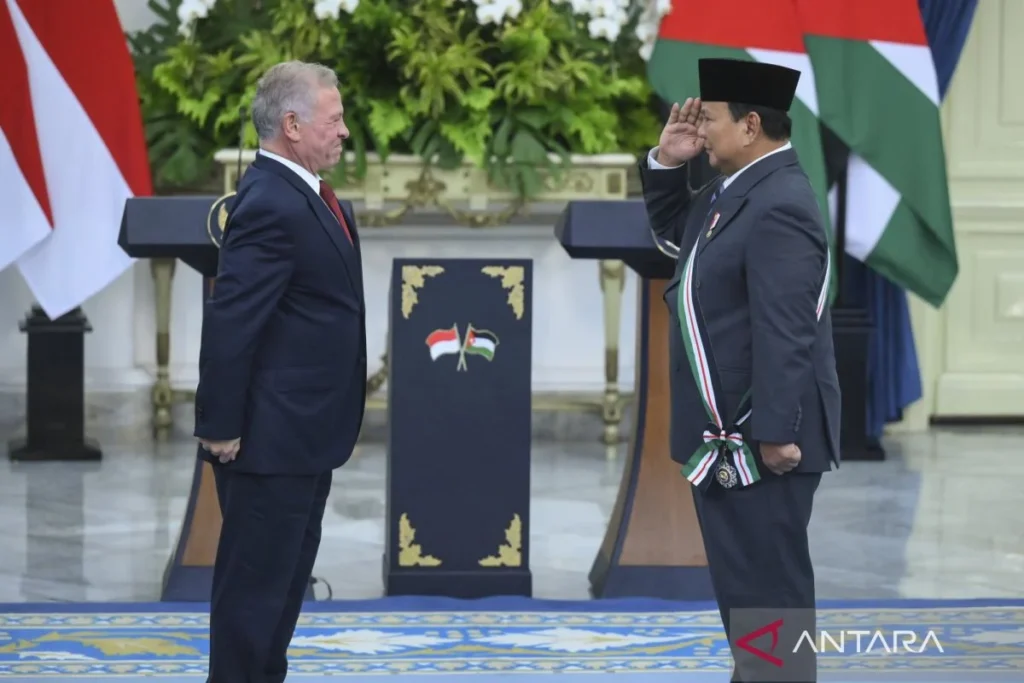
JAKARTA – In a significant diplomatic maneuver aimed at bolstering Middle Eastern-Southeast Asian relations, King Abdullah II of Jordan arrived in Jakarta on Friday for a high-stakes state visit. The visit serves as a cornerstone for deepening bilateral ties between the Hashemite Kingdom and the Republic of Indonesia, centered on economic synergy, strategic cooperation, and the enduring personal friendship between the two nations’ leaders.
The arrival of the Jordanian monarch is not merely a ceremonial affair; it represents a calculated effort to institutionalize cooperation between Jakarta and Amman, particularly through the involvement of Danantara Indonesia (Daya Anagata Nusantara), the nation’s newly formed sovereign wealth fund.
The Diplomatic Itinerary: A Meeting of Minds
King Abdullah II’s schedule in Jakarta is packed with high-level engagements designed to translate long-standing political goodwill into tangible economic outcomes. Upon his arrival, the King proceeded to hold a formal bilateral summit with President Prabowo Subianto.
The primary focus of these discussions, according to official sources, includes the signing of critical Memoranda of Understanding (MoUs). While the specifics of these agreements are broad, ministerial briefings have indicated a heavy emphasis on resource security—most notably in the procurement and management of phosphate, a vital commodity for Indonesia’s agricultural sector where Jordan maintains significant global leverage.
Following the presidential summit, King Abdullah II is slated to engage with representatives from Danantara Indonesia. This meeting underscores the importance of the sovereign wealth fund as a vehicle for future investment, signaling that Jordan views Indonesia as a long-term strategic partner in its "Asia-Pacific Pivot."
Chronology of an Enduring Partnership
The visit to Jakarta is part of a larger diplomatic tour for King Abdullah II, which includes high-level stops in Japan, Vietnam, Singapore, and Pakistan. However, the Indonesia leg holds a unique character due to the deeply personal history shared by the two heads of state.
The Foundation of Friendship
The bond between President Prabowo Subianto and King Abdullah II predates their current high offices. Their relationship was forged in the demanding environment of military service. Both leaders are alumni of the prestigious U.S. Army Infantry School at Fort Benning, Georgia. This shared experience in elite military training, characterized by discipline, strategic thinking, and mutual respect, provided the foundation for a decades-long friendship.
The April 2025 Precursor
Diplomatic momentum began accelerating on April 14, 2025, when President Prabowo conducted a state visit to Amman. During that trip, the two leaders held a private, "four-eyes" meeting at the Al-Husseiniya Palace. That summit was pivotal in aligning the two countries on regional security issues and humanitarian efforts, setting the stage for the current reciprocal visit by the King.
Profile: King Abdullah II, A Statesman of Global Stature
Born on January 30, 1962, in Amman, King Abdullah II is the eldest son of the late King Hussein bin Talal and Princess Muna Al-Hussein. His lineage is distinguished, as he is a direct descendant of the Prophet Muhammad (SAW) in the 41st generation.
Educational Background
The King’s education reflects a globalized upbringing that has undoubtedly informed his cosmopolitan approach to governance:
- Early Years: Islamic Educational College, Amman.
- Secondary Education: St. Edmund’s School, UK; Deerfield Academy, USA.
- Higher Education: Royal Military Academy Sandhurst, UK (1980); Pembroke College, University of Oxford (1982); and the Edmund A. Walsh School of Foreign Service at Georgetown University (1987-1989).
Military and Career Path
Before ascending the throne, the King pursued a distinguished military career:
- 1981–1993: Served in the Royal Jordanian Army, rising through the ranks.
- 1993–1994: Deputy Commander of the Jordanian Special Forces.
- 1994–1999: Commander of the Jordanian Special Forces.
In 1999, following the passing of his father, King Hussein, he ascended to the throne, inheriting a nation that serves as a moderate, stabilizing force in the turbulent Middle East.
Personal Life and Interests
Married to Queen Rania Al-Abdullah in 1993, the couple has four children: Crown Prince Hussein, Princess Iman, Princess Salma, and Prince Hashem. Beyond the royal duties, the King is known for a rigorous physical lifestyle, holding qualifications as a pilot and an experienced paratrooper. His personal interests, which include rally car racing, scuba diving, and the curation of antique weaponry, offer a glimpse into a multifaceted personality often described by peers as "dynamic and accessible."
Supporting Data: Why This Visit Matters
The strategic importance of this visit is underscored by three key areas of interest:
1. The Phosphate Corridor
Indonesia is one of the world’s largest agricultural producers, requiring massive imports of fertilizer components. Jordan, possessing one of the world’s largest reserves of phosphate rock, is a natural partner for Indonesia. The discussions with Danantara reflect a move to stabilize supply chains and potentially foster joint ventures in downstream processing, which would boost the value-added output of the Indonesian agricultural sector.
2. Geopolitical Alignment
In an era of shifting global alliances, both Jordan and Indonesia have maintained a policy of "active neutrality." Both nations have called for de-escalation in regional conflicts and prioritize humanitarian diplomacy. By aligning their voices on the global stage, they increase their leverage in international forums like the UN and the OIC (Organization of Islamic Cooperation).
3. Economic Diversification
For Indonesia, the visit is a test case for how Danantara can attract foreign capital and expertise. Jordan, while smaller in GDP than Indonesia, serves as a gateway to Middle Eastern markets. For Jordan, Indonesia represents a vast consumer market of 280 million people—a critical destination for Jordanian exports and service-sector expansion.
Official Responses and Diplomatic Sentiment
The reception in Jakarta has been overwhelmingly positive. Senior officials within the Indonesian Ministry of Foreign Affairs have emphasized that King Abdullah II views President Prabowo as a leader who is steering Indonesia in a "highly positive direction."
In his recent statements, President Prabowo highlighted the necessity of learning from Jordan’s experience in maintaining regional stability. "Our nations share not just a past in the military trenches, but a vision for a future where economic security ensures peace for our people," a presidential spokesperson noted.
Conversely, the Jordanian side has expressed appreciation for Indonesia’s consistent stance on regional humanitarian crises. The "Kilas Balik" (Retrospective) reports published by national media emphasize that this is not merely a new agreement, but the cementing of a "brotherhood between nations."
Implications for the Future
The implications of this visit extend far beyond the signing ceremonies at the Merdeka Palace.
- For Indonesia: The visit signals a shift toward more robust middle-power diplomacy. By deepening ties with Jordan, Indonesia is signaling to other Middle Eastern nations that it is open for business and strategic partnership, particularly under the framework of the new administration’s economic goals.
- For Jordan: Indonesia offers a stable, high-growth environment for the Jordanian private sector. The King’s focus on the "Asia-Pacific Pivot" suggests that Amman is looking to move away from over-reliance on traditional Western markets and toward the emerging powerhouses of Asia.
- Regional Stability: Both nations act as anchors of moderation in their respective regions. Increased intelligence sharing, military cooperation (given the leaders’ backgrounds), and economic interdependency will likely lead to a more coordinated approach to counter-terrorism and regional security, benefiting both Southeast Asia and the Levant.
Conclusion
As King Abdullah II concludes his visit, the consensus among observers is that the relationship between the two nations has transitioned from a historical friendship into a strategic alliance. With the foundation laid by personal trust between the leaders and the economic infrastructure provided by Danantara, the partnership between Jakarta and Amman is poised to become a vital axis of cooperation in the years to come. The visit is a reminder that in modern international relations, the most enduring treaties are often those rooted in the personal convictions and shared history of those who lead.