KPK Detains Langkat Regent Syah Afandin in Multi-Regional Corruption Sweep

JAKARTA – The Indonesian Corruption Eradication Commission (KPK) has launched a high-stakes operation involving the arrest of the Regent of Langkat, Syah Afandin, amidst allegations of systematic corruption linked to regional project kickbacks. The operation, which spanned several cities in North Sumatra, has sent shockwaves through the local government, marking a significant escalation in the KPK’s ongoing efforts to sanitize provincial administration in Indonesia.
The Arrest: Clearing the Confusion
Debunking Misinformation Regarding the Location of Arrest
In the immediate aftermath of the operation on July 2, 2026, rumors circulated across local media outlets and social platforms suggesting that Syah Afandin had been apprehended while attending a prestigious gathering of the Association of Indonesian Regency Governments (APKASI).
However, KPK Spokesperson Budi Prasetyo moved swiftly to clarify the narrative during a press briefing at the KPK’s Merah Putih Building in Jakarta on Friday, July 3, 2026. Prasetyo explicitly denied that the Regent was detained during a public event or official governmental conference.
"To clear up the confusion regarding the arrest, we can confirm that the Regent was not picked up at an APKASI event. That is inaccurate information," Prasetyo stated. "The fact is that the Regent was secured at his private residence located in the city of Medan."
This clarification underscores the tactical precision of the KPK’s intelligence-led operation, which focused on intercepting the primary target at his home base rather than creating a public spectacle at an official venue.
Chronology of the Operation
A Coordinated Three-Region Sweep
The operation, which unfolded throughout Thursday, July 2, 2026, was not localized to a single point but was a complex, multi-regional effort. KPK investigators conducted simultaneous actions across three distinct territories: the Regency of Langkat, the City of Binjai, and the provincial capital, Medan.
Phase 1: The Initial Sweeps
The KPK task force moved in on multiple locations identified through months of surveillance. The objective was to secure both suspects and critical evidence simultaneously to prevent the destruction of documents or the concealment of illicit assets. By the end of the day, seven individuals had been taken into custody.
Phase 2: Preliminary Interrogations
Following their initial apprehension, all seven individuals—which included regional officials, civil servants, and private contractors—were transported to the Polrestabes Medan (Medan Metropolitan Police) headquarters. This location served as a tactical staging ground for the KPK to conduct initial forensic interrogations and verify identities before determining the next steps of the investigation.

Phase 3: Transfer to Jakarta
By Friday afternoon, the KPK determined that the investigation required higher-level scrutiny. Out of the seven people detained, Syah Afandin was selected for immediate transfer to the capital. He was flown to Jakarta to undergo intensive questioning at the KPK’s headquarters, while the remaining six individuals stayed in Medan to assist with further evidence gathering.
Supporting Data and Evidence
Uncovering the Roots of the Graft
During the operation, investigators seized a substantial amount of cash, totaling hundreds of millions of rupiah. According to preliminary findings released by the KPK, these funds are believed to be "fee" payments—a euphemism for bribes—extracted from contractors in exchange for the awarding of government projects.
The investigation has specifically zeroed in on two key government departments within the Langkat Regency administration:
- The Department of Education: Projects related to school infrastructure and educational procurement are under intense scrutiny.
- The Department of Housing and Settlement (Perkim): Infrastructure projects, including local housing developments and public utility settlements, appear to have been leveraged as a vehicle for the alleged kickback scheme.
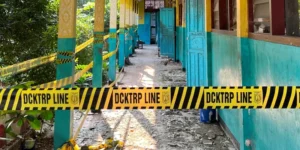
The KPK has already moved to secure the crime scene. In a bid to preserve evidence, investigators have placed official KPK seals on several locations, most notably the office of the Langkat Regent. This symbolic and legal move prevents unauthorized access to archives, digital servers, and physical records that may document the illicit flow of funds.
Official Responses and Legal Implications
The KPK’s Stance on Regional Corruption
The arrest of Syah Afandin represents a critical moment for the KPK, which has faced mounting pressure to demonstrate effectiveness in investigating corruption at the regency level. Budi Prasetyo emphasized that the KPK’s actions are strictly evidence-based.
"We are currently in the process of mapping the entire financial structure of these alleged bribes," Prasetyo told reporters. "The seized funds are just the tip of the iceberg. We are looking at a broader network of procurement manipulation that has likely persisted for some time."
The Legal Framework
Under Indonesia’s Corruption Eradication Law, the officials involved face severe penalties. If found guilty of accepting bribes related to public procurement, they could face lengthy prison sentences, heavy fines, and the potential revocation of their political rights. The KPK is utilizing the Law on the Eradication of Criminal Acts of Corruption, which allows for the pursuit of both the bribe-givers (private sector contractors) and the bribe-takers (government officials).
Implications for Langkat Regency
Governance in the Shadow of Scandal
The detention of the Regent has created a sudden power vacuum in Langkat. With the head of the regency currently in the custody of the KPK, the provincial government must now navigate the legal and administrative implications of a leader being incapacitated by a criminal investigation.

Impact on Regional Projects
With the offices of the Department of Education and the Department of Housing and Settlement effectively paralyzed by the ongoing investigation, many public projects are expected to stall. This will inevitably affect the local economy and the delivery of public services to the residents of Langkat.
A Message to Local Officials
Political analysts view this arrest as a "wake-up call" for regional leaders across Indonesia. The KPK’s ability to conduct a multi-regional operation—moving from the outskirts of Langkat into the heart of Medan—demonstrates that no regional official is beyond the reach of federal anti-corruption oversight.
"The KPK is signaling that local autonomy does not mean local immunity," said an observer from a national transparency watchdog. "The use of the term ‘fee’ for project procurement is an old, toxic practice in Indonesian regional politics. If the KPK can successfully prosecute this case, it will force a significant shift in how regional budgets are managed and how procurement contracts are auctioned."
Looking Ahead: The Road to Trial
As of July 3, 2026, the investigation remains in its early stages. The KPK has 24 hours from the time of arrest to determine the formal legal status of the detainees, specifically whether to name them as official suspects and proceed to detention. Given the evidence already seized—the cash, the sealed offices, and the testimonies—most legal experts expect that the KPK will move to formalize the charges against Syah Afandin and several of his key subordinates.
The public, meanwhile, remains in a state of anticipation. In Langkat, citizens have expressed mixed reactions—ranging from anger over the betrayal of public trust to cautious optimism that the KPK will uncover the full extent of the systemic corruption that may have hindered regional development for years.
The KPK has pledged to keep the public informed as the investigation progresses. For now, the focus remains on the interrogation at the Merah Putih Building, where the Regent’s responses to the evidence presented could potentially implicate even more high-ranking officials in the regional administration.
As the legal proceedings continue, the case of Syah Afandin will undoubtedly be remembered as a pivotal chapter in the ongoing battle against corruption in Indonesia’s decentralized government structure. Whether this leads to genuine reform in project procurement or merely serves as another headline in a long history of graft remains to be seen. However, one thing is certain: the era of "business as usual" for project management in Langkat has come to a sudden and dramatic end.