Parliament Pushes to Restore Soeharto-Era Bulog Warehouses for Better Rice Quality
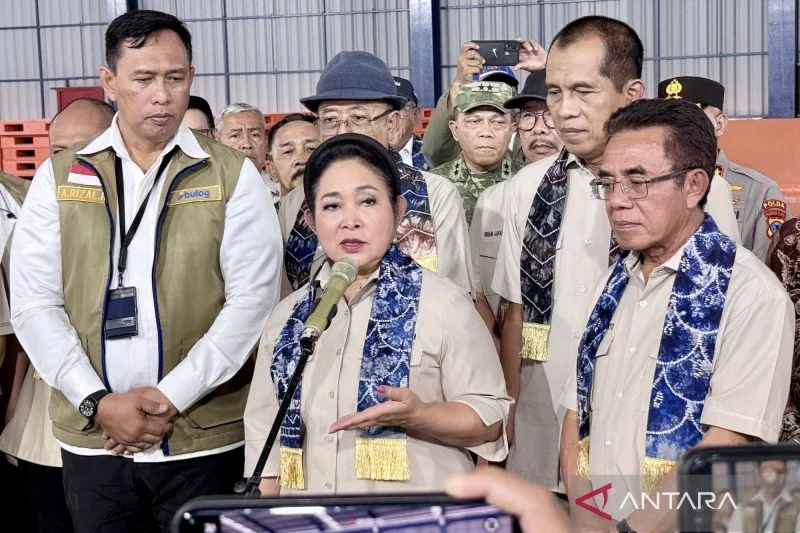
BANJARBARU, SOUTH KALIMANTAN — In a strategic move to reinforce Indonesia’s agricultural resilience and modernize its aging logistics infrastructure, the Chairperson of Commission IV of the House of Representatives (DPR RI), Siti Hediati Soeharto—widely known as Titiek Soeharto—officially inaugurated a newly revitalized Perum Bulog warehouse in Banjarbaru, South Kalimantan.
The facility, which boasts a storage capacity of 3,500 metric tons, represents a significant milestone in a broader national initiative to upgrade decades-old food storage infrastructure. Many of these facilities were originally constructed during the administration of her father, Indonesia’s second president, Soeharto.
The inauguration, which took place on Friday, is part of an ambitious national modernization campaign by the state logistics agency, Perum Bulog. The agency plans to revitalize approximately 81 strategic warehouses across the Indonesian archipelago. The primary objective of this massive undertaking is to boost national storage capacity, minimize post-harvest losses, maintain the quality of stored grain, and ultimately support the government’s target of achieving absolute food self-sufficiency (swasembada pangan).
1. Main Facts: The Banjarbaru Revitalization and National Scope
The newly inaugurated warehouse in Banjarbaru is designed to serve as a critical logistical hub for South Kalimantan, a province that plays a vital role in the food supply chain of the Kalimantan region. With its upgraded 3,500-ton capacity, the facility is now equipped with modern storage technologies intended to preserve the quality of rice and sugar over extended periods.
+-------------------------------------------------------------+
|               BULOG WAREHOUSE MODERNIZATION AT A GLANCE      |
+-------------------------------------------------------------+
| Location of Pilot Project : Banjarbaru, South Kalimantan    |
| New Storage Capacity      : 3,500 Metric Tons               |
| Total National Target     : 81 Warehouses Nationwide        |
| Average Age of Facilities : ~45 Years (Built circa 1981)    |
| Primary Commodities       : Rice, Paddy, and Refined Sugar  |
+-------------------------------------------------------------+
During her working visit, Titiek Soeharto emphasized that the revitalization of these physical assets is critical to ensuring that Bulog can absorb local farmers’ harvests effectively. By upgrading the physical infrastructure, Bulog aims to prevent grain deterioration, which has historically been a major challenge for tropical food storage.
The Banjarbaru facility is the first of 81 scheduled warehouse upgrades across Indonesia. This nationwide overhaul highlights the government’s recognition that food security is not merely about agricultural production, but is equally dependent on post-harvest preservation and efficient supply chain logistics.
2. Chronology: Parliamentary Inspection and the Inauguration Ceremony
The inauguration of the Banjarbaru warehouse was the culmination of an official parliamentary working visit (Kunjungan Kerja) by Commission IV of the DPR RI to South Kalimantan. The delegation, led by Titiek Soeharto, arrived in the province to conduct a comprehensive assessment of regional food reserves, market price stability, and the operational readiness of Perum Bulog’s local offices.
Step-by-Step Account of the Parliamentary Visit:
- Arrival and Briefing: The parliamentary delegation arrived at the Bulog regional office in South Kalimantan, where they received detailed briefings from local Bulog administrators regarding current rice stocks, distribution challenges, and the absorption rate of locally produced paddy.
- On-Site Quality Inspection: Prior to the formal ribbon-cutting ceremony, Titiek Soeharto and members of Commission IV personally inspected the interior of the Banjarbaru warehouse. The delegation examined the physical condition of the stored rice, verified sugar reserve levels, and evaluated the warehouse’s temperature and humidity control mechanisms.
- The Inauguration Ceremony: Following a satisfactory inspection, Titiek Soeharto officially inaugurated the revitalized 3,500-ton warehouse. The ceremony was attended by senior officials from Perum Bulog, local government representatives, and agricultural cooperative leaders.
- Dialogue with Local Farmers: The visit concluded with an open dialogue between the parliamentary delegation, Bulog officials, and local farmers. The discussions focused on optimizing the pricing mechanism for government-purchased rice and ensuring that the newly upgraded facility directly benefits the surrounding agricultural communities.
3. Supporting Data: The Logistics of Aging Infrastructure
The necessity of this revitalization program becomes clear when examining the historical and physical data of Indonesia’s state-owned food storage network.
According to data presented during the visit, a vast majority of Perum Bulog’s active warehouses were constructed during the New Order (Orde Baru) era under President Soeharto, particularly during the late 1970s and early 1980s.
The Challenge of Aging Infrastructure
These warehouses, averaging 45 years of age, were designed using construction standards and storage technologies from nearly half a century ago. While these facilities have proved remarkably durable, they face several modern operational limitations:
- Poor Insulation and Moisture Control: Older concrete structures are highly susceptible to moisture seepage, which elevates humidity levels inside the warehouse. High humidity accelerates the growth of mold, yellowing of rice grains, and pest infestations.
- Inadequate Pest Management: Traditional warehouse designs make pest control difficult, requiring frequent chemical fumigation that can impact the long-term quality and safety of the food supply.
- Inefficient Loading and Unloading Space: The layout of older warehouses often restricts the use of modern logistical equipment, such as forklifts and automated conveyor belts, leading to slower distribution times and higher labor costs.
Technical Upgrades in the Revitalized Facilities
The revitalization program addresses these structural deficiencies by incorporating modern industrial warehousing standards:
OLD WAREHOUSE DESIGN (1980s)           MODERNIZED BULOG WAREHOUSE (2026)
----------------------------           ---------------------------------
- Passive ventilation only             - Controlled mechanical ventilation
- High vulnerability to moisture       - Polyurethane insulation & moisture barriers
- Manual loading and stacking          - Forklift-friendly layouts & pallets
- High post-harvest degradation rate   - Advanced pest monitoring & hermetic options
By rolling out these upgrades to 81 target warehouses nationwide, Perum Bulog aims to drastically reduce its annual storage loss rate, which currently costs the state billions of rupiah in degraded commodities.
4. Official Responses: Parliamentary and Agency Perspectives
Speaking to the press after the inauguration, Titiek Soeharto highlighted the dual historical and practical significance of the project. She noted that preserving and upgrading these legacy assets is the most cost-effective and sustainable way to strengthen the nation’s food safety net.
"We conducted this direct inspection of the rice and sugar stocks in the region to ensure supply adequacy and to verify that the commodities managed by Bulog meet high-quality standards. This revitalization is expected to significantly increase the storage capacity of our warehouses so we can store more rice while keeping its quality perfectly preserved over time."
— Siti Hediati "Titiek" Soeharto, Chairperson of Commission IV DPR RI
She further explained that while the warehouses built during her father’s presidency have served the nation well for 45 years, modern challenges require modern infrastructure.
"Most of Bulog’s warehouses across various regions are legacies of President Soeharto’s era. Although they are still functional today, they require urgent rehabilitation and modernization to support optimal food storage," she added.
Bulog’s Commitment to Regional Integration
Representatives from Perum Bulog welcomed the parliamentary oversight and expressed their commitment to accelerating the revitalization of the remaining 80 targeted warehouses. Bulog officials in South Kalimantan confirmed that the Banjarbaru warehouse has already begun absorbing local harvests. The facility processes and packages rice from local farmers before distributing it to regional markets, thereby stabilizing prices and ensuring a steady income for rural communities.
5. Implications: Strategic Path to Food Self-Sufficiency
The modernization of Bulog’s storage network carries profound implications for Indonesia’s macroeconomic stability, national security, and agricultural sovereignty.
Redefining Food Self-Sufficiency (Swasembada Pangan)
Under the current political administration, achieving food self-sufficiency has once again become a primary national objective, mirroring the historic achievement of 1984 when Indonesia received international recognition from the Food and Agriculture Organization (FAO) for its agricultural self-reliance.
However, modern food self-sufficiency cannot be achieved solely by increasing crop yields. It requires a highly efficient, climate-resilient post-harvest logistics system. As climate change triggers unpredictable weather patterns, such as prolonged dry seasons (El Niño) and intense wet seasons (La Niña), the ability to store surplus grain safely for years becomes a critical national defense mechanism against food insecurity.
Socio-Economic Impact on Farmers and Markets
The revitalization of these warehouses has several direct socio-economic benefits:
- Price Stabilization: With greater and more reliable storage capacity, Bulog can intervene more effectively in the market to prevent price spikes during the lean season (paceklik) and prevent price collapses during peak harvest seasons.
- Empowering Local Agriculture: Upgraded warehouses allow Bulog to purchase larger quantities of wet paddy directly from local farmers, reducing their reliance on predatory middlemen who exploit lack of storage options.
- Reduced Import Reliance: By preserving domestic harvests longer and with less spoilage, Indonesia can significantly reduce its dependency on imported rice, preserving foreign exchange reserves and strengthening national sovereignty.
Conclusion
The inauguration of the revitalized Banjarbaru warehouse is more than just a routine infrastructure project; it is a symbolic and practical bridging of Indonesia’s agricultural past with its future. By modernizing the robust infrastructure legacy of the New Order era, Commission IV of the DPR RI and Perum Bulog are laying down the concrete foundations necessary to secure Indonesia’s food supply chain for the next half-century.